
Economy
Nigeria’s Tax Revenue to GDP Ratio Rises to 7%

By Modupe Gbadeyanka
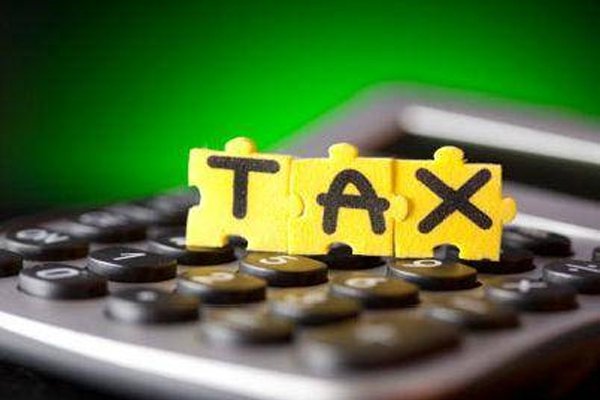
For a while, the tax revenue to Gross Domestic Product (GDP) ratio of Nigeria had been at a paltry 6 percent, but this figure has risen now to 7 percent.
Minister of Finance, Mrs Zainab Ahmed, while speaking on Wednesday at a function in Abuja, disclosed that the tax to GDP ratio of Africa’s largest economy was presently at 7 percent.
However, she said this figure was still low, challenging revenue generation agencies in the country to brace up and broaden the non-revenue base of government.
Mrs Ahmed, who spoke at the unveiling of federal government’s Strategic Revenue Growth Initiatives (SRGI) for sustainable revenue generation in all sectors of the economy, noted that government plans to achieve “sustainability revenue generation to optimally collect revenues, so we always maintain fiscal buoyancy and resilience.”
She said thereafter, government will identify new revenue streams and enhance the enforcement with regards to revenue collection on our existing revenue streams.
According, when the above is achieved, another move would be to create a “cohesion between revenue generating entities and equipping them with cutting-edge tools and expertise needed to support high performance, so we can turnaround our current performance on revenue outturn to meet revenue targets that we are charged with.”
“The revenue initiatives have been broken into clear implementable portfolios for each relevant MDA and I believe that these are well thought out initiatives targeted at improving our tax base and collections, ensuring we have big data to work with, deploy a single trade platform, among many others,” Mrs Ahmed said.
She further that, “We have faced difficulty in mobilising domestic funds necessary for human capital development and infrastructure that are both drivers of sustainable economic growth.
“Our current revenue to GDP ratio of about seven percent is unsatisfactory and we are keen on exerting all efforts in turning this around.
“The case remains the same with our current contribution between oil and non-oil revenues to oil and non-oil GDP, for which our analysis on oil revenue to oil GDP reveals as 39 percent while non-oil revenue to non-oil GDP as 4.2 percent.
“Our VAT revenue to GDP in Nigeria for example stands at 0.8 percent, which compares unfavourably to the ECOWAS average of 3.4 percent. So also, is our excise revenue which is 4.1 percent, compared to Ghana at 15 percent or Kenya at 19.5 percent.”
Last year, Executive Secretary of the Federal Inland Revenue Service (FIRS), Mr Babatunde Fowler, had said his agency would make efforts to increase the national tax revenue to GDP ratio to at least 20 percent by December 31, 2018.
However, with the latest information by his boss, the Finance Minister, this target was never met by the tax agency.
“Revenue authorities nationwide should ensure that all efforts are made to increase the national tax revenue to the Gross Domestic Product ratio to at least 20 percent by December 31, 2018,” FIRS had said in a communiqué issued last September.
Business Post reports that some Nigerians still find it difficult to pay tax to government because of issue of transparency on the part of government. Citizens provide virtually every basic things for themselves, including water, electricity, shelter, food, sometimes roads and others.
Though the number of people in the tax net is increasing by the day, a lot of taxpayers still have to be captured by government. At the moment, the tax base is nearly 20 million in a population of nearly 200 million.




By Dipo Olowookere
One of the companies offering underwriting services in Nigeria, Guinea Insurance Plc, has been given the nod to issue about 5,295,200,000 units of its shares to shareholders at a unit price of N1.10.
The stocks would be allotted to investors through a rights issue designed to raise about N5.8 billion as part of the organisation’s strategies to raise funds to boost its capital base.
The National Insurance Commission (NAICOM) asked operators in the country’s insurance sector to increase their minimum capital requirements, just like their counterparts in the banking ecosystem, which have till March 31, 2026, to comply.
For insurance companies, their deadline is July 2026, and the regulator recently emphasised that it had no plans to extend this as being thought.
The Commissioner for Insurance, Mr Olusegun Omosehin, at a high-level media briefing in Lagos, emphasised that “The July 31 deadline is sacrosanct,” noting that, “It is embedded in the law, and as a regulator, we do not have the powers to alter a date set by an Act of the National Assembly” as the timeline is a statutory requirement under the Nigeria Insurance Industry Reform Act of 2025.
“We would not be drawn into a last-minute rush or entertain pleas for extensions,” Mr Omosehin warned. Guinea Insurance is raising additional funds from the exercise by offering to shareholders two new ordinary shares for every three ordinary shares held as of the close of business on January 21, 2026.
Business Post reports that the rights issue opened on Wednesday, March 25, 2026, and will close on Friday, May 1, 2026.
In a notice signed by its secretary, Ms Chinenye Nwankwo, it was explained that, “This capital raise forms part of the company’s strategic initiatives to strengthen its capital base, enhance underwriting capacity, and position the company for sustained growth and improved service delivery,” a part of the disclosure stated, urging shareholders “to take up their rights in full or in part.”

By Dipo Olowookere
The bulls remained in control of the Nigerian Exchange (NGX) Limited on Thursday, helping the market record a marginal growth of 0.02 per cent amid weak investor sentiment.
During the session, the market breadth index was negative after Customs Street finished with 30 appreciating stocks and 37 depreciating equities.
The gains were largely driven by the banking and consumer goods indices, which closed higher by 0.26 per cent and 0.18 per cent, respectively.
Profit-taking occurred in the other sectors, with the insurance counter down by 0.82 per cent, the industrial goods sector weakened by 0.21 per cent, and the energy index lost 0.16 per cent.
When the bourse closed for the day, the All-Share Index (ASI) increased by 32.14 points to 200,957.89 points from 200,925.75 points, and the market capitalisation moved up by N21 billion to N128.998 trillion from N128.977 trillion.
Premier Paints rose by 10.00 per cent to N34.10, Zichis appreciated by 10.00 per cent to N12.54, Legend Internet improved by 9.92 per cent to N7.98, John Holt grew by 9.87 per cent to N17.25, and McNichols soared by 9.76 per cent to N6.75.
On the flip side, University Press fell by 9.17 per cent to N5.45, Sunu Assurances slumped by 8.88 per cent to N4.31, Veritas Kapital depreciated by 6.98 per cent to N2.00, FTN Cocoa tumbled by 6.67 per cent to N5.60, and NGX Group lost 6.46 per cent to trade at N168.75.
A total of 678.1 million shares valued at N33.1 billion exchanged hands in 42,222 deals yesterday versus the 538.0 million shares worth N25.4 billion traded in 45,641 deals on Wednesday, showing a drop in the number of deals by 7.49 per cent, and a jump in the trading volume and value by 26.04 per cent and 30.32 per cent apiece.
The surge in the activity level was due to the 134.6 million units of Access Holdings shares traded for N3.5 billion, and the 105.5 million units of Wema Bank shares exchanged for N2.8 billion. Veritas Kapital transacted 74.2 million units for N147.8 million, Zichis traded 23.3 million units valued at N290.8 million, and UBA sold 18.1 million units worth N852.5 million.

By Adedapo Adesanya
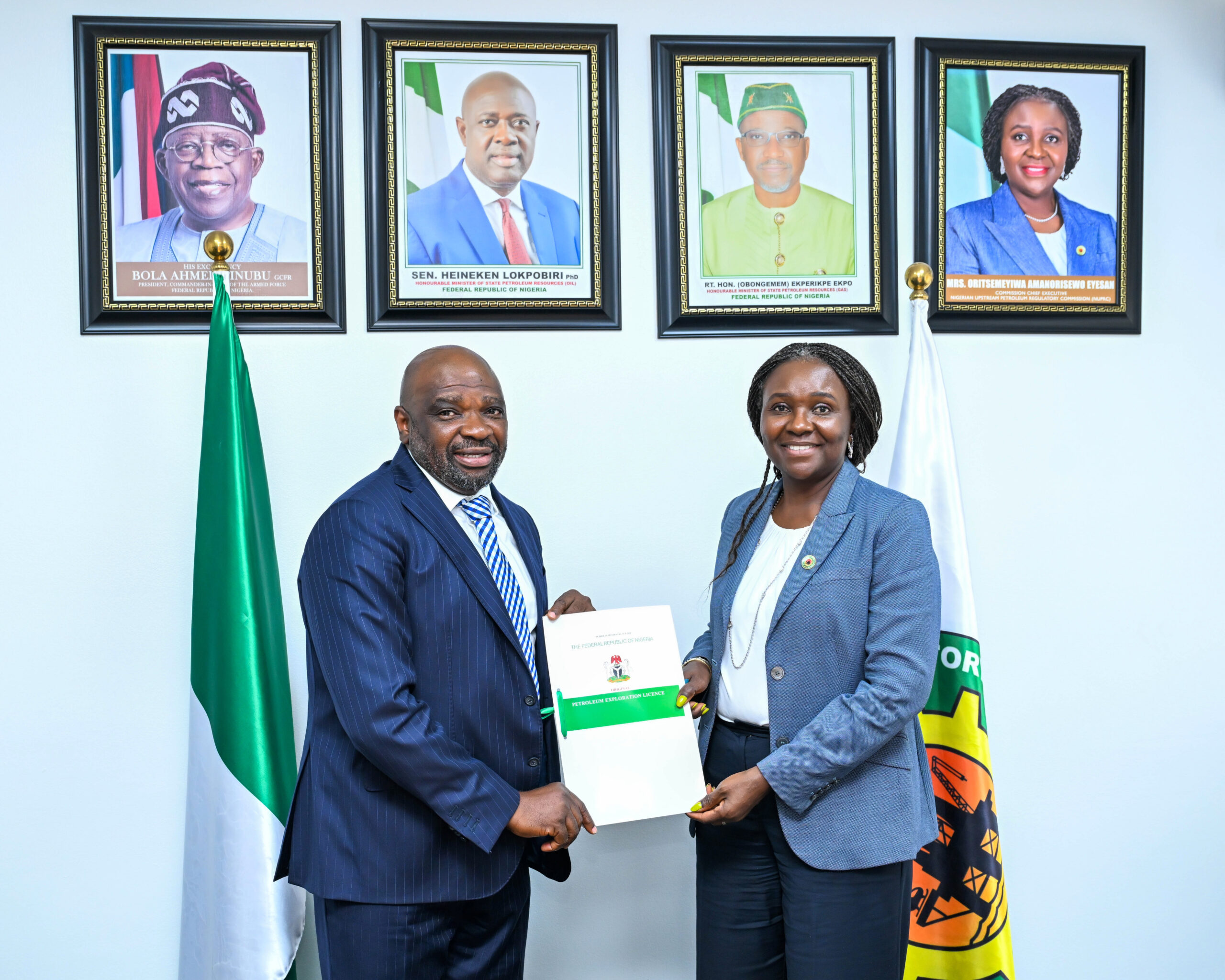
The Nigerian Upstream Petroleum Regulatory Commission (NUPRC) has signed a Petroleum Exploration Licence (PEL) No. 5 agreement with SeaSeisGeophysical Limited, paving the way for a major offshore data acquisition project aimed at boosting oil and gas exploration.
The agreement, executed in Abuja, authorises SeaSeis, in partnership with global data firm TGS, to undertake the acquisition and processing of new 3D seismic and gravity data.
The PEL 5 project spans approximately 11,700 square kilometres offshore the Eastern Niger Delta, covering water depths ranging from 400 to 2,800 metres.
The initiative is expected to enhance subsurface understanding, improve prospectivity, and support more efficient development of Nigeria’s hydrocarbon resources, in line with provisions of the Petroleum Industry Act (PIA) 2021.
Speaking at the signing ceremony, the chief executive of NUPRC, Mrs Oritsemeyiwa Eyesan, said the licence underscores the commission’s commitment to data-driven exploration, transparency, and long-term value creation for the country’s oil and gas industry.
She noted that the project would provide critical geological data needed to attract investment and unlock new opportunities in Nigeria’s upstream sector.
In his remarks, the Managing Director of SeaSeisGeophysical Limited, Mr Goke Adeniyi, described the PEL 5 project as the company’s largest in Africa, highlighting the vast potential within Nigeria’s offshore energy landscape.
The partnership is expected to strengthen collaboration between regulators and industry players while advancing efforts to optimise resource development and sustain growth in the sector.
Recall that the upstream oil sector regulator is slashing the time it takes to approve applications to revive idle oil wells from weeks to hours as Nigeria, which is Africa’s top crude producer, seeks to take advantage of high energy prices triggered by the conflict in the Middle East.
The country is also fast-tracking approvals for evacuations and barges at production facilities and export terminals to let barrels get to buyers quickly, as buyers turn to suppliers such as Nigeria and Angola on the African continent.







-
 Feature/OPED6 years ago
Davos was Different this year
-
Travel/Tourism10 years ago
Lagos Seals Western Lodge Hotel In Ikorodu
-

 Showbiz3 years ago
Estranged Lover Releases Videos of Empress Njamah Bathing
-
 Banking8 years ago
Sort Codes of GTBank Branches in Nigeria
-

 Economy3 years ago
Subsidy Removal: CNG at N130 Per Litre Cheaper Than Petrol—IPMAN
-

 Banking3 years ago
Sort Codes of UBA Branches in Nigeria
-

 Banking3 years ago
First Bank Announces Planned Downtime
-

 Sports3 years ago
Highest Paid Nigerian Footballer – How Much Do Nigerian Footballers Earn