Economy
CBN’s Forex Supply to BDCs Damaging Economy—Analysts
By Modupe Gbadeyanka
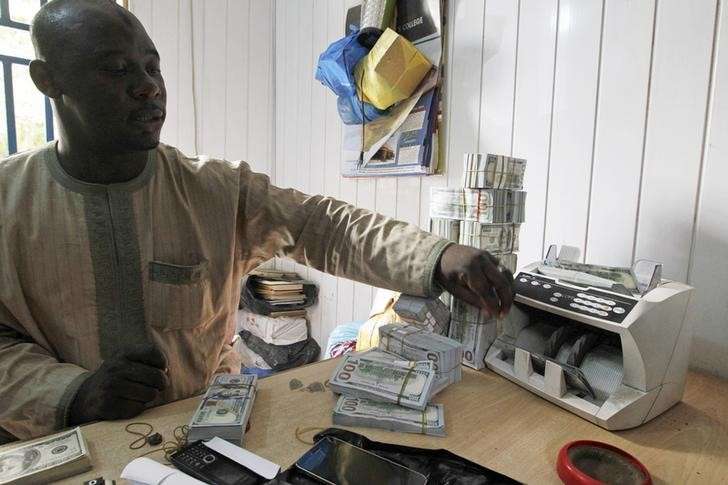
The Central Bank of Nigeria (CBN), as part of its commitment to keep the exchange rate of the Naira and Dollar stable at the foreign exchange (forex) market, started the supply of forex to authorized traders at the market.
The first was to make forex readily available to investors as well as exporters of some essential products and materials and it created the Investors and Exporters (I&E) FX window.
Thereafter, the apex bank started the regular supply of forex to Bureau De Change Operators (BDCs) and since then, the exchange rate at the commercial banks and BDCs has been narrowed, which many had called for in the past.
According to the International Monetary Fund (IMF), the CBN operates up to five different forex market segments and they are the CBN official window rate of N305/$1, a retail/wholesale window rate of N325-330/$1, the I&E window rate of N360/$1, the invisible transactions through BDC and SMEs separate window rate of N360-365/$1, and some government transactions (e.g. FAAC allocations) at a rate closer to N320-325/$1.
But analysts at Investment One believe the supply of forex to BDC operators is doing the nation’s economy more damage than good. In a report last week, it said, “Evidently, the adoption of liberal dollar supply to BDCs has done much harm to the economy.”
In the report titled Multiple Exchange Rates, one of the firm’s analysts opined that, “The multiple exchange rate regime that we operate promotes currency speculation at the expense of real production domestically.
“You would see some traders who would sell dollar at a higher price in a window having accessed it at a cheaper price in another window, taking advantage of price differences in the market.”
It was stated in the report that BDCs may have graduated from merely meeting the retail requirements of travelers to becoming hard-core suppliers of foreign exchange for money laundering and trafficking purposes!
The motivation for money laundering and currency trafficking has taken root from the free access to public sector dollars made available to BDCs by CBN. Here is another report that puts more colour to the picture.
While currency speculation has led to the depreciation in Naira on several occasions, other illegal practices by politically exposed persons have starved the industrial and manufacturing sector of forex for raw materials, machinery and spare parts hence inhibiting potential for economy growth and development, the report disclosed.
Investment One advised the CBN to return to the regime of a single market for forex like Nigeria did in 1987 before it introduced the multiple foreign exchange policy to facilitate non-oil inflows into the Deposit Money Banks and mitigate the depreciation in the local currency.
The investment company noted that, “Our neighboring country, Ghana grows faster, and yes, they operate a flexible market-based exchange rate regime.”
However, it pointed out that, “Of course, no two economies are the same. However, economists have always favoured a single exchange rate system over a multiple exchange regime. Former CBN Governor, Professor Charles Soludo, speaks in support of the above in this write up.”
Economy
UK Backs Nigeria With Two Flagship Economic Reform Programmes
By Adedapo Adesanya
The United Kingdom via the British High Commission in Abuja has launched two flagship economic reform programmes – the Nigeria Economic Stability & Transformation (NEST) programme and the Nigeria Public Finance Facility (NPFF) -as part of efforts to support Nigeria’s economic reform and growth agenda.
Backed by a £12.4 million UK investment, NEST and NPFF sit at the centre of the UK-Nigeria mutual growth partnership and support Nigeria’s efforts to strengthen macroeconomic stability, improve fiscal resilience, and create a more competitive environment for investment and private-sector growth.
Speaking at the launch, Cynthia Rowe, Head of Development Cooperation at the British High Commission in Abuja, said, “These two programmes sit at the heart of our economic development cooperation with Nigeria. They reflect a shared commitment to strengthening the fundamentals that matter most for our stability, confidence, and long-term growth.”
The launch followed the inaugural meeting of the Joint UK-Nigeria Steering Committee, which endorsed the approach of both programmes and confirmed strong alignment between the UK and Nigeria on priority areas for delivery.
Representing the Government of Nigeria, Special Adviser to the President of Nigeria on Finance and the Economy, Mrs Sanyade Okoli, welcomed the collaboration, touting it as crucial to current, critical reforms.
“We welcome the United Kingdom’s support through these new programmes as a strong demonstration of our shared commitment to Nigeria’s economic stability and long-term prosperity. At a time when we are implementing critical reforms to strengthen fiscal resilience, improve macroeconomic stability, and unlock inclusive growth, this partnership will provide valuable technical support. Together, we are laying the foundation for a more resilient economy that delivers sustainable development and improved livelihoods for all Nigerians.”
On his part, Mr Jonny Baxter, British Deputy High Commissioner in Lagos, highlighted the significance of the programmes within the wider UK-Nigeria mutual growth partnership.
“NEST and NPFF are central to our shared approach to strengthening the foundations that underpin long-term economic prosperity. They sit firmly within the UK-Nigeria mutual growth partnership.”
Economy
MTN Nigeria, SMEDAN to Boost SME Digital Growth
By Aduragbemi Omiyale
A strategic partnership aimed at accelerating the growth, digital capacity, and sustainability of Nigeria’s 40 million Micro, Small and Medium Enterprises (MSMEs) has been signed by MTN Nigeria and the Small and Medium Enterprises Development Agency of Nigeria (SMEDAN).
The collaboration will feature joint initiatives focused on digital inclusion, financial access, capacity building, and providing verified information for MSMEs.
With millions of small businesses depending on accurate guidance and easy-to-access support, MTN and SMEDAN say their shared platform will address gaps in communication, misinformation, and access to opportunities.
At the formal signing of the Memorandum of Understanding (MoU) on Thursday, November 27, 2025, in Lagos, the stage was set for the immediate roll-out of tools, content, and resources that will support MSMEs nationwide.
The chief operating officer of MTN Nigeria, Mr Ayham Moussa, reiterated the company’s commitment to supporting Nigeria’s economic development, stating that MSMEs are the lifeline of Nigeria’s economy.
“SMEs are the backbone of the economy and the backbone of employment in Nigeria. We are delighted to power SMEDAN’s platform and provide tools that help MSMEs reach customers, obtain funding, and access wider markets. This collaboration serves both our business and social development objectives,” he stated.
Also, the Chief Enterprise Business Officer of MTN Nigeria, Ms Lynda Saint-Nwafor, described the MoU as a tool to “meet SMEs at the point of their needs,” noting that nano, micro, small, and medium businesses each require different resources to scale.
“Some SMEs need guidance, some need resources; others need opportunities or workforce support. This platform allows them to access whatever they need. We are committed to identifying opportunities across financial inclusion, digital inclusion, and capacity building that help SMEs to scale,” she noted.
Also commenting, the Director General of SMEDAN, Mr Charles Odii, emphasised the significance of the collaboration, noting that the agency cannot meet its mandate without leveraging technology and private-sector expertise.
“We have approximately 40 million MSMEs in Nigeria, and only about 400 SMEDAN staff. We cannot fulfil our mandate without technology, data, and strong partners.
“MTN already has the infrastructure and tools to support MSMEs from payments to identity, hosting, learning, and more. With this partnership, we are confident we can achieve in a short time what would have taken years,” he disclosed.
Mr Odii highlighted that the SMEDAN-MTN collaboration would support businesses across their growth needs, guided by their four-point GROW model – Guidance, Resources, Opportunities, and Workforce Development.
He added that SMEDAN has already created over 100,000 jobs within its two-year administration and expects the partnership to significantly boost job creation, business expansion, and nationwide enterprise modernisation.
Economy
NGX Seeks Suspension of New Capital Gains Tax
By Adedapo Adesanya
The Nigerian Exchange (NGX) Limited is seeking review of the controversial Capital Gains Tax increase, fearing it will chase away foreign investors from the country’s capital market.
Nigeria’s new tax regime, which takes effect from January 1, 2026, represents one of the most significant changes to Nigeria’s tax system in recent years.
Under the new rules, the flat 10 per cent Capital Gains Tax rate has been replaced by progressive income tax rates ranging from zero to 30 per cent, depending on an investor’s overall income or profit level while large corporate investors will see the top rate reduced to 25 per cent as part of a wider corporate tax reform.
The chief executive of NGX, Mr Jude Chiemeka, said in a Bloomberg interview in Kigali, Rwanda that there should be a “removal of the capital gains tax completely, or perhaps deferring it for five years.”
According to him, Nigeria, having a higher Capital Gains Tax, will make investors redirect asset allocation to frontier markets and “countries that have less tax.”
“From a capital flow perspective, we should be concerned because all these international portfolio managers that invest across frontier markets will certainly go to where the cost of investing is not so burdensome,” the CEO said, as per Bloomberg. “That is really the angle one will look at it from.”
Meanwhile, the policy has been defended by the chairman of the Presidential Fiscal Policy and Tax Reforms Committee, Mr Taiwo Oyedele, who noted that the new tax will make investing in the capital market more attractive by reducing risks, promoting fairness, and simplifying compliance.
He noted that the framework allows investors to deduct legitimate costs such as brokerage fees, regulatory charges, realised capital losses, margin interest, and foreign exchange losses directly tied to investments, thereby ensuring that they are not taxed when operating at a loss.
Mr Oyedele also said the reforms introduced a more inclusive approach to taxation by exempting several categories of investors and transactions.
-
Feature/OPED6 years agoDavos was Different this year
-
Travel/Tourism9 years ago
Lagos Seals Western Lodge Hotel In Ikorodu
-
Showbiz3 years agoEstranged Lover Releases Videos of Empress Njamah Bathing
-
Banking7 years agoSort Codes of GTBank Branches in Nigeria
-
Economy3 years agoSubsidy Removal: CNG at N130 Per Litre Cheaper Than Petrol—IPMAN
-
Banking3 years agoFirst Bank Announces Planned Downtime
-
Banking3 years agoSort Codes of UBA Branches in Nigeria
-
Sports3 years agoHighest Paid Nigerian Footballer – How Much Do Nigerian Footballers Earn