
Jobs/Appointments
Interswitch Addresses Nigerian ‘Brain-Drain’ Narrative

The exodus of talent from developing economies known as the ‘brain-drain’ syndrome remains a critical issue of concern, affecting not only the human resource development index of these economies but also cascading into numerous additional multiplier effects that militate against socio-economic growth and development.
It appears the trend of highly-skilled Nigerian professionals from diverse fields, notably in sectors like health, technology and education, leaving the shores of the country for Europe, America and Canada in search of greener pasture is accentuating almost on daily basis.
Companies in the technology innovation space in Nigeria, especially fintechs and banks are witnessing an increasing trend in which the prime of our software engineering talent are being head-hunted and recruited by the best companies in the world, then herded off to North America, Middle East, Western and Eastern Europe, with attractive and widely unmatchable employment offers. Ironically, the bulk of these young men and women attended Nigerian universities and have been nurtured by local fintechs to the level where they’re able to comfortably compete with the best from anywhere in the world, and as such appear attractive to these foreign technology enterprises.
According to a recent feature published by Quartz Africa, the exodus follows a decade of triumphs for the ecosystem which has recorded several startup and tech hub launches and attracted hundreds of millions of dollars in investment. The report interestingly highlights that while Lagos is the most valuable of Africa’s biggest tech ecosystems, it is also the least lucrative for software engineers, drawing comparisons between earnings of developers in Lagos against elsewhere and estimating that software engineers in Lagos earn around $5,000 less annually – a shortfall which is very likely causing many to seek higher-paying opportunities elsewhere.
For the Interswitch Group, it has become a case of seeing the glass as half-full, rather than being despondent, as far as the situation is concerned. With a view to not only promote the study of STEM (Science, Technology, Engineering and Mathematics) in Nigeria, but also to consciously re-frame the narrative around the issue of brain-drain of talented Nigerians to other markets, Interswitch recently recruited a number of Software Engineers to participate in a six-month internship programme at the organization. According to the company, this vision draws analogies from the renaissance that Nigeria has witnessed, notably in the entertainment sector (i.e. music and movies), which have boomed in recent years on the strength of the sheer resilience and sprit of enterprise of Nigerians, without a necessary dependence on government intervention.
These young Nigerians, who are currently being trained under the Interswitch Internship Programme, were selected through a careful process after a widespread call was made for newly graduated software engineers to apply. The six-month intensive training will be focused on teaching the graduates basic engineering theories as well as real – life application and is designed to be an ongoing effort.
Founder and Group Chief Executive Officer at Interswitch, Mr Mitchell Elegbe, shed light on the company’s determination to ensure that these graduates develop into great engineers who can not only contribute to the growth of the local economy but can also go on to compete in the global tech marketplace, with potential benefits that would accrue to Nigeria, their home country.
He said, “At Interswitch, we have a maxim that speaks to the capacity to ‘see beyond the big picture’, and that is exactly what we have chosen to do, against the backdrop of the seemingly negative sentiment around what appears to be the exacerbating loss of valuable talent to foreign markets. Instead of complaining about the problem, we are taking the “bull by the horns” and challenging the prevalent mindset.
“We strongly believe that Interswitch is well positioned to contribute to re-writing the narrative around the issue of brain-drain from Africa.
“The reality is that whilst we may not be able to contain the exodus in the short term, the onus lies on tech firms like ours to aggressively raise a new generation of talent not just to meet our own recruitment requirements, but to replenish the talent pipeline for the local industry.
“Our view is that we are in a position to champion this cause by grooming technology talent who are not only relevant within the local context but essentially also able to compete in a globalized world in which talent is in geographical flux”.
Mr Elegbe further elucidated that Interswitch recognizes fintech talent export as a trend that can positively impact the economy and indeed the future of Nigeria.
He highlights that “Many years ago, we witnessed the remarkable growth of nascent industries such as what we call ‘Nollywood’ and of course, the music industry, into what today are significant economic and reputational capital contributors capable of contributing to the nation’s economy, harnessing local skills and technologies”.
Besides being trained by the experts at Interswitch, he adds that some of the graduate interns who excel during the programme will be considered for subsequent full-time employment at Interswitch. While the others would be prepped to add value to the burgeoning wider technology and entrepreneurship landscape in Nigeria, others may be inclined to choose to expose themselves to opportunities on the global scene.
These opportunities offer some latent, currently overlooked but highly feasible benefits to the Nigerian economy, including a potential to boost the trend of international remittances into the country with obvious positive economic impact.
Interswitch interestingly takes a view that the “brain drain” trend should not be an indicator of doom as the world is invariably starting to recognize that Nigeria has a talent pool of tech-savvy workforce who can contribute to this fast evolving and growing global economy.
Commenting on the academy and internship programme, Babafemi Ogungbamila, Group Chief Information Officer at Interswitch further volunteers that “At Interswitch we believe that the exposure that these young men and women will have would augment their commendable effort at self-investment, with a view to becoming best-in-class developers and architects.
“These young people will represent the next generation of fintech entrepreneurs who after their stints abroad/ or during their stints abroad will build the next amazon, google or whatever will change the world 3-5 years from now. We have a unique opportunity to globally brand Nigeria as the source of uniquely qualified computing expertise and with time, the home of technological ingenuity.”
Babafemi further said, “The interns will spend the first three months with Interswitch, learning the theoretical application of software engineering. This will be more of a classroom arrangement, but the next three months after that will be spent gaining hands-on work experience in engineering and software development.
“In line with our company culture, we do not just want to train young people, but we want to equip them with those skills and experiences that will make them software engineers who can compete favourably with their counterparts globally.
“Our Human Resources department, together with the Technology group, are working hard to ensure these fresh graduates are developed not only to become great engineers but also to integrate relevant work-place readiness skills that are critical in the dynamic contemporary context of the world we currently live in, and this is going to be an ongoing initiative.”
For Interswitch Group, the leading Pan-African digital payment solutions providers, the internship programme is geared at creating a positive net-effect by training more individuals in software engineering, thereby helping to stabilize talent locally in fintech (in view of the exodus to other markets), thereby driving national development.
This is one of the ways the organization hopes to contribute to the reduction of the high rate of unemployment in the country, having consistently embarked on sustainable social responsibility projects; a case in point being the ongoing InterswitchSPAK which is geared towards the promotion of interest in STEM studies for senior secondary students in Nigeria.














By Adedapo Adesanya
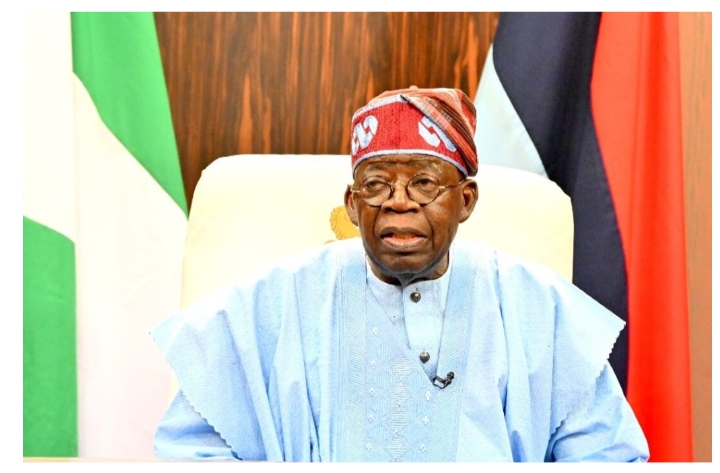
President Bola Tinubu has approved the appointment of Mr Shu’aibu Shehu Aliyu as the Executive Secretary of the Petroleum Technology Development Fund (PTDF).
Mr Aliyu, a professor, is to replace Mr Ahmed Galadima Aminu, who recently resigned to participate in the 2027 governorship election in Adamawa State.
In a statement by a spokesperson to the President, Mr Bayo Onanuga, on Thursday, it was disclosed that the appointment of Mr Sule Ahmed Abdulaziz as the chief executive of the Transmission Company of Nigeria (TCN) has been renewed for a second and final term.
These appointments are said to take effect immediately.
Professor Aliyu, the new PTDF helmsman, is a distinguished academic and seasoned administrator with extensive experience in research, education, and institutional leadership. His appointment underscores the President’s commitment to strengthening key institutions in the petroleum sector and advancing capacity development for Nigeria’s energy industry.
“The President expects him to leverage his wealth of experience to reposition the PTDF for greater impact in human capital development, innovation, and strategic support for the oil and gas sector in line with national priorities.
“President Tinubu renewed Engineer Abdulaziz’s appointment following a comprehensive assessment of his performance and leadership of the nation’s transmission network.
“Under his stewardship, TCN has recorded notable improvements in grid stability, transmission capacity expansion, and system modernisation, reinforcing its critical role in Nigeria’s electricity value chain.
“Engr. Abdulaziz brings over three decades of experience in the power sector and has also strengthened regional electricity integration through his leadership in the West African Power Pool (WAPP).
“President Tinubu urges both appointees to discharge their responsibilities with diligence, integrity, and a strong sense of national service,” the statement said.

By Adedapo Adesanya
The Nigerian National Petroleum Company (NNPC) Limited saw its workforce rise by 12.2 per cent to 6,247 at the end of 2025 from 5,566 in the corresponding period of 2024, according to its latest employee data.
The state oil firm stated that its employees increased by 14.3 per cent from 5,495 recorded at the end of the first quarter of 2025 to 6,280 at the end of the second quarter of 2025.
Its staff strength, however, dropped by 0.11 per cent to 6,273 workers in the third quarter of 2025 and further shrank by 0.41 per cent to 6,247 in the last quarter of the year under review.
Giving a breakdown of its workforce in terms of gender, the NNPC disclosed that at the end of the fourth quarter, 5,044 employees, representing 80.7 per cent of its workforce, were males, while 1,203 employees, representing 19.3 per cent of its total workforce, were females.
Further breakdown revealed that Junior Staff 2 (JS 2) and Junior Staff 1 (JS1) cadres had one staff member and 175 staff members, respectively, at the end of the fourth quarter of 2025, as against one staff and 187 staff members, respectively, recorded in the third quarter of 2025.
In addition, the Senior Staff Seven (SS7) cadre had 31 employees, remaining the same as in the previous quarter, while the SS6 cadre dropped to 1,010 staff, from 1,012 staff recorded at the end of the third quarter of 2025.
The SS5, SS4, SS3, SS2 and SS1 staff cadre recorded 1,076 staff, 164 staff, 389 staff, 471 staff and 1,829 staff, respectively, in the quarter under review, compared with 1,076 staff, 164 staff, 391 staff, 478 staff and 1,835 staff, respectively, recorded in the third quarter of 2025.
Management Six (M6) cadre had 695 staff in the second quarter of 2025, compared with 699 staff in the same category in the previous quarter, while M5, M4, M3, M2 and M1 cadres had 237 staff, 117 staff, 47 staff, seven staff and one staff respectively, compared with 243 staff, 116 staff, 44 staff, seven staff and one staff in the corresponding cadres in the third quarter of 2025.
Further analysis of the NNPC workforce across different cadres showed that JS2 and JS1 accounted for 0.02 per cent and 2.75 per cent of its total workforce, respectively, while SS7, SS6, SS5, SS4, SS3, SS2 and SS1 cadres accounted for 0.50 per cent, 16.17 per cent, 17.22 per cent, 2.63 per cent, 6.23 per cent, 7.54 per cent and 29.28 per cent of the state oil company’s total workforce, respectively.
In addition, NNPC’s M6, M5, M4, M3, M2 and M1 cadres accounted for 11.13 per cent, 3.79 per cent, 1.87 per cent, 0.75 per cent, 0.11 per cent and 0.02 per cent, respectively.
In general, the NNPC Limited noted that it had 173 employees in its junior staff category; 4,970 employees in its senior staff category, and 1,104 employees in its management category.
It also reported that in its middle management cadre, it has 932 employees, accounting for 14.92 per cent of its total workforce, while the top management cadre had 172 employees, accounting for 2.75 per cent of its total workforce.

By Adedapo Adesanya
President Bola Tinubu has appointed Mr Ibrahim Ida as Chairman of the Corporate Affairs Commission (CAC).
Mr Ida holds an MSc in Banking and Finance from the University of Ibadan (1983) and an LLB from the University of Abuja (2003). Before being elected to the Senate in 2017 to represent Katsina Central, he served as the Commissioner of Finance for Katsina State and as the Permanent Secretary of the Federal Civil Service.
His appointment comes as the CAC faces legislative scrutiny over its books. The commission is part of a group of agencies that the House of Representatives Public Accounts Committee (PAC) recommended zero allocation for the year 2026, for allegedly failing to account for public funds appropriated to them.
The committee, at an investigative hearing held in February, accused CAC and some other ministries, departments and agencies (MDAs) of shunning invitations to respond to audit queries contained in the Auditor-General for the Federation’s annual reports for 2020, 2021 and 2022.
It asked the National Assembly not to continue to appropriate public funds to institutions that disregard accountability mechanisms.
President Tinubu also nominated seven people to fill vacant commissioner positions at the National Population Commission (NPC) as Federal Commissioners to represent their respective states in the National Population Commission. The nominees are;
1. Kolawole Oladipupo Alabi – Ekiti State
2. Nasiru Mu’azu – Zamfara State
3. Usman Abubakar Tuggar – Bauchi State
4. Dr Isaka Alada Yahaya – Kwara State
5. Prof. Sadiq Isah Radda – Katsina State
6. Suleiman Umar – Jigawa State
7. Hon. Chiso Abdullahi Dattijo – Sokoto State
The appointments, which complement other Federal Commissioners already sworn in, are subject to confirmation by the National Assembly.
The President also appointed Mr Yusuf Mohammed of Kano State as Chairman of the Federal Polytechnic, Kaltungo, and confirmed the appointment of Mr Bala Mohammed Bello as his Special Adviser on Political Economy.
Mr Bello, from Kebbi State, holds a Bachelor’s Degree in Accounting and an MBA from Ahmadu Bello University, Zaria. Before this appointment, he was a Deputy Governor at the Central Bank of Nigeria (CBN). He also served as Executive Director (Corporate Services) at the Nigerian Export-Import Bank (NEXIM) from 2017 to 2022.
-
 Feature/OPED6 years ago
Davos was Different this year
-
Travel/Tourism10 years ago
Lagos Seals Western Lodge Hotel In Ikorodu
-

 Showbiz3 years ago
Estranged Lover Releases Videos of Empress Njamah Bathing
-
 Banking8 years ago
Sort Codes of GTBank Branches in Nigeria
-

 Economy3 years ago
Subsidy Removal: CNG at N130 Per Litre Cheaper Than Petrol—IPMAN
-

 Banking3 years ago
Sort Codes of UBA Branches in Nigeria
-

 Banking3 years ago
First Bank Announces Planned Downtime
-

 Sports3 years ago
Highest Paid Nigerian Footballer – How Much Do Nigerian Footballers Earn