

Economy
Nigerian Stocks to Further Succumb to External Shocks This Week

By Modupe Gbadeyanka
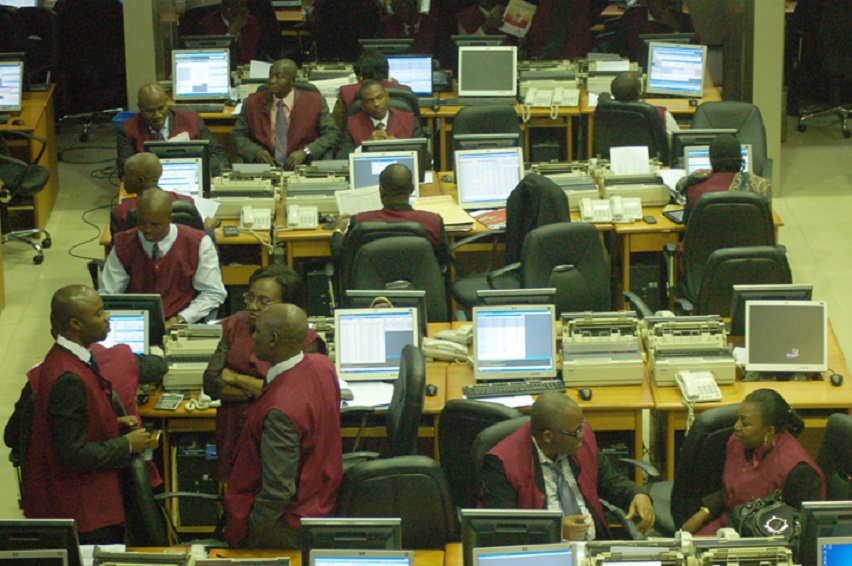
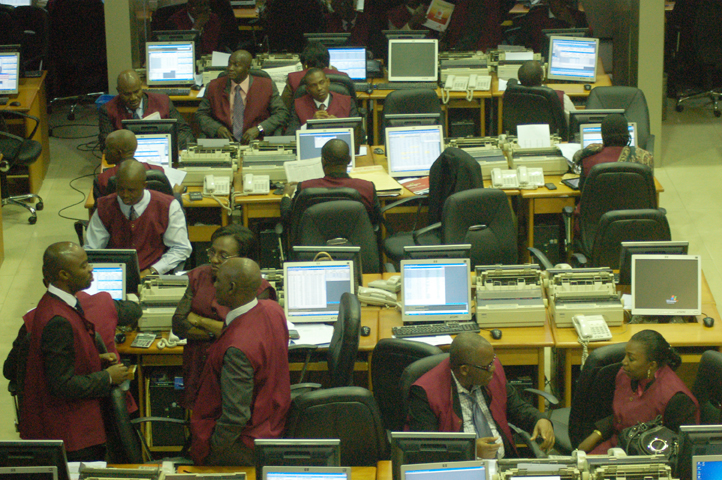
The Nigerian Stock Exchange (NSE) will further experience sell offs this week, as uncertainty in the global market weigh on the local market.
This is the view of some financial analysts, who said more foreign portfolio investors will exit the local bourse for better yields outside.
The Nigerian stock market, which was one of the best performers in 2017, having recorded a growth of over 40 percent, is presenting at -17.20 percent.
The local bourse has struggled in most parts of this year as a result of low investor confidence, especially with the political tensions in the land.
Another factor that has contributed to this is the raising of rates by the United States Federal Reserve System this year, which has made investors to exit emerging markets in droves. Another increase is expected to happen next month when they meet on December 18 and 19, 2018.
The decline in the prices of crude oil in the global market has also had an effect on the Nigerian market, which is fuelling speculations that the local authorities may likely devalue the Naira, with the external reserves facing south lately.
Last Friday, the Brent crude oil price went below $60 for the first time since October 2017 to $59 per barrel at the international market, which Nigeria’s foreign reserves depreciated to $41.5 billion on Thursday.
With fears of a possible devaluation, some investors are already selling off their Naira investments, stocks inclusive, to buy up some Dollars in order not to render their money worthless when the unexpected eventually happens.
Analysts at Business Post believe that with above fears in the psyche of investors, the Nigerian stock market will further be under selling pressure this week.
“We do not expect the market to return to the green territory at the close of this trading week. This is because some external factors will continue to weigh on the local bourse.
“We are of the view that the political tensions in the country, as the 2019 campaigns pick up gradually, will also continue to have a negative impact on the market,” Business Post analysts opined.
Last week, the All Share Index (ASI) went down by 1.2 percent week-on-week to settle at 31,678.70 points, while the market capitalisation reduced by N138.6 billion week-on-week to finish at N11.565 trillion.
According to analysts at Cowry Asset, “We expect the local bourse to close negatively (this week) as bearish activity is sustained.
“Speculators are expected to continue scrapping the market for short term gains amid attractive valuations and dividend yields.”
For those at Afrinvest, “We expect an undulating trend in market performance as the impact of bargain hunting in fundamentally sound stocks is expected to be countered by subsequent sell offs.
“However, we maintain our bearish outlook on the market over the near-term.”
“In the short to medium term, we expect the negative performance for the equities market to persist, amidst growing political concerns ahead 2019 elections, and absence of a positive market trigger.
“However, positive macroeconomic fundamentals remain supportive of recovery in the long term,” analysts at Cordros Research said.









By Aduragbemi Omiyale
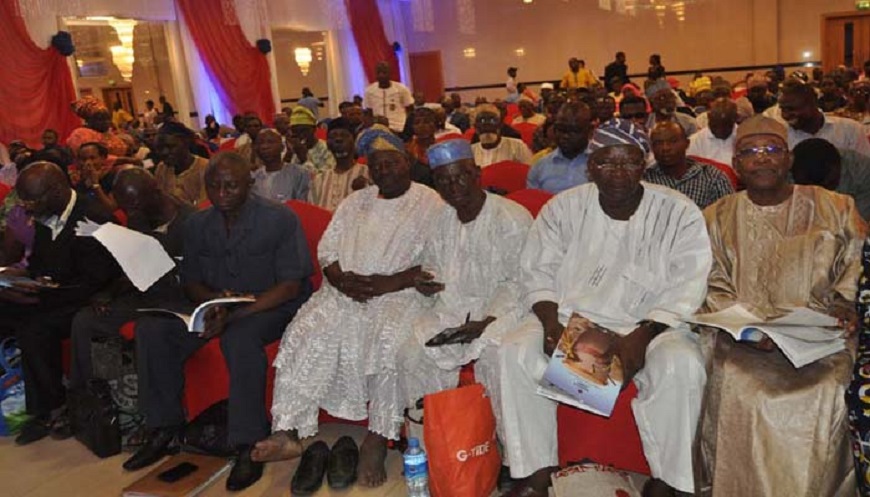
Shareholders of Dangote Cement Plc have been assured of lasting value for their investment and trust in the cement producing firm.
This assurance was given by the chief executive of Dangote Cement, Mr Arvind Pathak, at the company’s Annual General Meeting (AGM), where shareholders approved the payment of N753.8 billion as dividend for the 2025 financial year.
The cement brewer paid a cash reward of N45 per share for the year, a 50 per cent increase in dividend payout from the N30 per share a year earlier, reaffirming the company’s position as one of the most rewarding investments on the Nigerian Exchange (NGX).
The increase follows the company’s outstanding 2025 financial performance and underscores its unwavering commitment to shareholder value creation.
It was the highest dividend payout in the history of Dangote Cement and reflects the strength of its earnings capacity, robust cash generation ability, and disciplined execution of its growth strategy
Dangote Cement delivered a landmark financial performance in 2025. Earnings per share rose significantly to N59.86, demonstrating the company’s resilience and operational excellence despite prevailing macroeconomic challenges.
Mr Pathak said the dividend increase is backed by the organisation’s strong financial performance and healthy balance sheet.
“The decision to increase our dividend by 50 per cent to N45 per share demonstrates the strength of Dangote Cement’s earnings capacity and cash generation capability.
“As we continue to execute our pan-African growth strategy, we remain committed to creating lasting value for our shareholders, investing in the future of the business, and supporting Africa’s industrial development. Our shareholders have stood by us throughout our journey, and we are delighted to reward that trust with another significant increase in returns,” he stated.
The chief executive noted that the firm continues to strengthen its footprint across Africa through strategic investments and capacity expansion projects.
In 2025, Dangote Cement commissioned a 3-million-tonne-per-annum grinding plant in Côte d’Ivoire, reinforcing its presence in West Africa and increasing total installed capacity to 55 million tonnes per annum (Mta) across eleven African countries.
He added that the Company remains focused on its long-term objective of expanding installed capacity to 80Mta by 2030, while driving operational efficiency, increasing exports, enhancing sustainability initiatives, and improving shareholder returns.
On his part, the chairman of Dangote Cement, Mr Emmanuel Ikazoboh, said the increase in dividend payout reflects the company’s determination to reward shareholders for their continued confidence and support.
“Our commitment remains to create sustainable value for all stakeholders. This significant increase in dividend demonstrates the strength of our business model, our disciplined approach to capital allocation, and our confidence in the future. We are grateful for the trust our shareholders have placed in us over the years and remain committed to delivering superior returns while maintaining the highest standards of corporate governance and operational excellence,” he stated.
The organisation’s dividend history has continued to set benchmarks in the Nigerian capital market. Over the past 15 years, Dangote Cement has distributed more than N3.3 trillion in dividends to shareholders, reinforcing its reputation as a dependable creator of long-term wealth.
The latest dividend increase follows a previous 50 per cent rise from N20 per share to N30 per share, underscoring a consistent record of rewarding shareholders.

By Aduragbemi Omiyale
Stock trading on the world’s leading blockchain ecosystem and digital asset infrastructure provider, Binance, has hit a significant milestone, surpassing $1 billion in assets under management (AUM) in 30 days since launch.
This milestone follows the recent achievement by bStocks, Binance’s tokenised 1:1 US securities, which hit $100 million in AUM within two weeks of launch.
Since the platform began stock trading on June 1, 2026, it has recorded more than $3 billion in total trading volume.
Stock trading on Binance gives users access to over 7,000 US stocks and ETFs, settled in stablecoins, directly within the app alongside their existing crypto holdings.
Analysis showed that the average daily inflows stood at $42 million, while approximately 73 per cent of users come from emerging markets, with one in 7 visitors to Binance’s stock trading page registering an account; of those new sign-ups, nearly 90 per cent went on to place a trade.
In addition, fractional orders averaged 35 per cent of equity trading volume, with users able to participate from as little as $5, while almost 71 per cent of equity holdings are allocated to the Technology sector, with almost half (48 per cent) of that directed toward Semiconductors.
Nearly 740 of the 7,000 available stocks and ETFs have already been traded, with the Technology sector generating approximately 23 times the trading volume of other sectors, underscoring the conviction that Binance users have behind these positions.
The allocation patterns are consistent with a financially literate user base actively managing sector exposure rather than trading indiscriminately.
Binance Research projects that by 2031, crypto exchanges as a category could channel $2 trillion in incremental capital into global equity markets and bring 300 million new investors into the asset class.
“A billion dollars in 30 days is a sign of the demand that has been waiting decades for a door to walk through. The walls that kept most of the world out of US stocks were never as solid as they looked. We built this for the hundreds of millions of people who never had a way in,” the Head of Exchange and Trading at Binance,” Shunyet Jan, stated.
Expansion across Africa is often framed as a market opportunity.
New customers, growing adoption, and expanding digital ecosystems continue to attract businesses into multiple African markets. Yet for many companies, growth across the continent becomes difficult to sustain beyond initial entry.
Across African markets, businesses must operate within different tax regimes, currency environments, banking systems, and capital access frameworks. These differences introduce financial complexity that directly impacts how companies manage cash flow, allocate capital, and sustain operations across jurisdictions.
Over time, these issues increase financial risk and slow growth, limiting the ability of emerging growth companies and established businesses alike to scale sustainably.
Financial Advisory as a Strategic Growth Enabler
According to Velex Advisory, managing this complexity requires more than accounting. It requires a structured approach to how financial decisions are made across the business.
“Poor financial management and structure is one of the biggest challenges businesses across Africa face, especially as they expand. In many cases, growth happens faster than the systems supporting it, which then leads to cash flow pressure, inefficiencies across markets, and difficulty sustaining that growth,” says Jonathan Nwanze, Finance Manager, Velex Advisory West Africa.
Businesses, therefore, need structured, strategic financial advisory to help them:
- Align their financial structure and capital structure with the expansion strategy
- Manage capital across multiple jurisdictions, and maintain visibility across revenue and cost centers.
- Prepare for investment, funding, and capital raising
- Ensure compliance without limiting operational flexibility.
This is what enables businesses to move from operating to scaling with clarity, financial flexibility, and control across markets.
How Velex Advisory Structures Finance for Scalable Growth
Financial advisory is one of Velex Advisory’s core service areas, supporting businesses by aligning financial strategy with how they operate and expand across African markets.
Rather than treating finance as a back-office function, the firm works with companies to ensure that financial decisions support business growth, market entry, and long-term sustainability across multiple jurisdictions.
“Scaling across multiple markets requires more than access to capital. It requires discipline in how that capital is structured, deployed, and managed across the business,” says Vadim Mildov, Executive Chairman, Velex Group.
At Velex Advisory, financial advisory is delivered as a structured, hands-on process that connects financial planning with operational and strategic decision-making across the business.
This includes:
i) Tax Advisory
Operating across multiple markets requires careful alignment with different tax regimes.
Velex Advisory supports clients in structuring their operations to ensure tax efficiency while maintaining compliance with local regulations. This includes corporate tax positioning, cross-border tax considerations, and aligning tax structures with revenue flows, business plans, and overall financial goals.
ii) Financial and Investment Analysis
As businesses scale, financial visibility becomes increasingly important.
Velex Advisory provides financial and investment analysis to help businesses assess performance, evaluate growth opportunities, and prepare for investment or expansion. This includes supporting investment readiness, understanding valuation, and identifying financial risks across markets.
iii) Banking Advisory and Assurance
Access to banking infrastructure and financial institutions varies significantly across African markets.
Velex Advisory supports businesses in establishing and managing banking relationships, navigating local financial infrastructure, and aligning capital and liquidity structures with operational needs. This includes guidance on liquidity management, capital planning, and financial systems that support cross-border operations.
Connecting Financial Structure to Business Growth
Financial advisory does not operate in isolation. Velex Advisory also supports businesses across key operational and legal functions that directly impact how companies operate and expand.
“Financial structuring and legal structuring are deeply connected. Decisions around transactions, partnerships, and expansion have direct implications on risk exposure and long-term sustainability,” explains Laura Gacho, Legal Manager, Velex Advisory East Africa.
On the legal side, the firm provides support in licensing and regulatory compliance, intellectual property and data protection, and transaction advisory, including joint ventures, M&A transactions, capital raises, and strategic partnerships.
From a business advisory perspective, Velex Advisory works with clients on business establishment and development, market entry and growth strategy, human resources consulting, and due diligence and valuation support, ensuring that operational, structural, and strategic decisions are aligned from the outset.
By integrating business, legal, and financial advisory services, Velex Advisory supports companies in building structures that are not only compliant but capable of sustaining long-term success and growth across African markets.
As part of the broader Velex Group and working alongside Velex Hub and Velex Investments, the firm connects advisory, investment readiness, and expansion strategy into a single, coordinated approach across markets.

-
 Feature/OPED6 years ago
Davos was Different this year
-
Travel/Tourism10 years ago
Lagos Seals Western Lodge Hotel In Ikorodu
-

 Showbiz3 years ago
Estranged Lover Releases Videos of Empress Njamah Bathing
-
 Banking8 years ago
Sort Codes of GTBank Branches in Nigeria
-

 Economy3 years ago
Subsidy Removal: CNG at N130 Per Litre Cheaper Than Petrol—IPMAN
-

 Banking3 years ago
Sort Codes of UBA Branches in Nigeria
-

 Banking3 years ago
First Bank Announces Planned Downtime
-

 Sports3 years ago
Highest Paid Nigerian Footballer – How Much Do Nigerian Footballers Earn