

Banking
Fitch Affirms Fidelity Bank at ‘B-‘; Outlook Stable

By Dipo Olowookere
Fidelity Bank Plc’s Long-Term Issuer Default Rating (IDR) has been affirmed at ‘B-‘ by Fitch Ratings with the Outlook Stable. A statement yesterday from Fitch said it also affirmed Fidelity Bank’s National Long-Term Rating at ‘BBB(nga)’.
According to Fitch, the IDRs of Fidelity Bank are driven by its standalone creditworthiness, as defined by its Viability Rating (VR) as with that of other Nigerian banks, which are highly conditioned by Nigeria’s operating environment, with the fragile economic recovery restraining banks’ growth prospects and asset quality.
The statement said Fidelity Bank’s VR further reflects a moderate franchise, weak profitability, potentially vulnerable asset quality, some weaknesses in the bank’s funding and liquidity profile as well as adequate capitalisation.
It added that the stable outlook reflects Fitch’s base case expectation that Fidelity Bank’s credit profile is unlikely to change significantly over a one-to-two year period. Fidelity Bank operates exclusively in Nigeria, accounting for 4 percent of banking system assets at end-2017.
The bank’s impaired loans (stage 3 loans under IFRS 9) ratio (7.5% at end-1H18) is slightly lower than the sector average. However, Stage 2 loans are high, measuring at 21% of gross loans at end-1H18, as is the case for many Nigerian banks. Reserve coverage of impaired loans (88% at end-1H18) increased significantly following the implementation of IFRS 9, which we view positively.
Fidelity Bank is exposed to large credit concentrations. The 20-largest loans represented 53% of gross loans and 252% of Fitch Core Capital (FCC) at end-1H18. Fidelity Bank is also exposed to the oil sector, which accounted for 23% of gross loans at end-1H18.
Profitability is weak, but in line with most similarly-sized peers’. Fidelity Bank’s operating profit/risk-weighted assets ratio was 1.8% in 2017, which is weak by emerging markets standards. Weak profitability metrics reflect a low net interest margin, given a high cost of funding that is reflective of Fidelity Bank’s more expensive deposit base. Weak profitability also reflects a high cost-income ratio (68% in 2017) and loan impairment charges that have eroded around 30%-40% of pre-impairment operating profit in recent years.
“We view Fidelity’s capital position as no more than adequate with a FCC ratio of 16.8% at end-1H18. Capital, in our view, is vulnerable to deterioration in asset quality,” Fitch said.
It noted that Fidelity Bank’s loans/customer deposits ratio (92% at end-1H18) is higher than peers’, explained by a higher proportion of non-deposit funding.
In 2017, Fidelity Bank issued a five-year senior unsecured $400 million bond, easing its foreign currency liquidity position. Of this, $256 million was used to repay a $300 million Eurobond in May 2018. Near-term debt repayments are limited, with the next large repayment being in 2022 when the Eurobond becomes due.
Fitch said single-depositor concentration is in line with peers’, with the 20 largest customer deposits accounting for 20% of the total at end-1H18.
It added that Fidelity Bank’s senior unsecured debt is rated in line with the bank’s Long-Term IDR and, therefore, has been affirmed at ‘B-‘.
In Fitch’s view, the likelihood of default on these instruments reflects the likelihood of default of the bank. The Recovery Rating (RR) of ‘RR4’ indicates average recovery prospects in case of default.
Fitch said it believes that sovereign support to Nigerian banks cannot be relied upon given Nigeria’s weak ability to provide support, particularly in foreign currency.
In addition, there are no clear messages of support from the authorities regarding their willingness to support the banking system. Therefore, the Support Rating (SR) and Support Rating Floor (SRF) are ‘5’ and ‘No Floor’, respectively.
“This reflects our view that senior creditors cannot rely on receiving full and timely extraordinary support from the Nigerian sovereign if any of the banks become non-viable,” the rating agency said.
It said Fidelity Bank’s Long-Term IDR is sensitive to a change in its VR, pointing out that downside pressure is most likely to result from a material weakening of loan credit quality, including the migration of stage 2 loans to stage 3, putting pressure on capital adequacy.













By Modupe Gbadeyanka
The six edition of the Hackaholics of Wema Bank Plc has produced 20 top finalists shared equally between two streams, Ideathon and Hackathon.
The Hackathon finalists are Rapid DEV, Secure IT, Neurafeed, Trust Lock Babcock, Pulse Track, IlluminiTrust, Trust Lock FUTA, Fix Fraud AI, KASH Flow and VOC AI.
The Ideathon finalists include PLOY, Fertitude, VarsityScape, Mama ALERT, StockMed, Chao, All Arbitrate, FarmSlate, Sane AI and Cycle X.
They emerged after a two-day pre-pitch held on December 16 and 17, 2025, for the grand finale slated for Friday, December 19, 2025.
They grand finale of Hackaholics 6.0 will convene the top players in Africa’s tech and innovation ecosystem, creating an avenue for these finalists to not only put their creativity to the ultimate test but also give their solutions visibility to potential investors for additional funding opportunities beyond the prizes to be won.
The prizes to be won for the Ideathon include N25 million for the winner, N20 million for the first runner-up, N15 million for the second runner-up and N5 million each for two women-led teams.
In the Hackathon category, the first to fourth-place winners will receive N20 million, N15 million, N10 million and N5 million, respectively.
The pre-pitch saw the top 43 contenders battle in a game of innovation and problem solving, presenting compelling pitches for a chance to make it to top 10 in their respective streams.
After a rigorous stretch of pitches and presentations, the top 20 emerged, securing their spot in the grand finale of Hackaholics 6.0.
“Hackaholics started off as a hackathon and morphed into an ideation. For Hackaholics 6.0, the sixth edition, we decided to give both the builders of new solutions and the refiners of existing ones, an opportunity to make meaningful impact.
“For us at Wema Bank, we understand that innovation isn’t just building from scratch. Sometimes, it’s looking at what exists and developing new ways to optimise that and create more efficiency. This is the idea behind our two-stream Ideathon-Hackathon structure.
“Every year, Hackaholics shows us just how eager and motivated Nigerian youth are when it comes to exploring creativity and innovation, and we are honoured to be the institution that provides them with the platform and resources to put this drive to good use.
“We toured seven cities, indulged 1,460 participants and discovered hundreds of remarkable ideas; some of which needed some refining and some of which deserved to move to the next stage.
“For those who needed to go back to the drawing board, we provided useful guidance and for the top contenders, we were able to shortlist to the top 43, who proceeded to the pre-pitch. To every participant, Wema Bank is proud of you. This is just the beginning,” the chief executive of Wema Bank, Mr Moruf Oseni, said.


By Adedapo Adesanya
The Nigeria Customs Service (NCS) says it will enforce penalties against designated banks that delay the remittance of customs revenue, in a move aimed at strengthening transparency and safeguarding government earnings.
This was disclosed in a statement on the NCS official account on X, formerly known as Twitter and signed by its spokesman, Mr Abdullahi Maiwada, who said the delays undermine the efficiency, transparency, and integrity of government revenue administration.
“The Nigeria Customs Service has noted instances of delayed remittance of customs revenue by some designated banks following reconciliation of collections processed through the B’odogwu platform,” the statement read.
“Such delays constitute a breach of remittance obligations and negatively impact the efficiency, transparency, and integrity of government revenue administration.
“In line with the provisions of the Service Level Agreement executed between the Nigeria Customs Service and designated banks, the Service hereby notifies stakeholders of the commencement of enforcement actions against banks found to be in default of agreed remittance timelines.”
Mr Maiwada disclosed that any bank that fails to remit collected Customs revenue within the prescribed timeline will be liable to penalty interest calculated at three per cent above the prevailing Nigerian Interbank Offered Rate for the period of the delay.
He added that affected banks would be formally notified of the delayed amounts, the applicable penalty, and the deadline for settlement.
“Accordingly, any designated bank that fails to remit collected Customs revenue within the prescribed period shall be liable to penalty interest calculated at three per cent above the prevailing Nigerian Interbank Offered Rate for the duration of the delay.
“Affected banks will receive formal notifications indicating the delayed amount, applicable penalty, and the timeline for settlement,” the statement read.

By Aduragbemi Omiyale
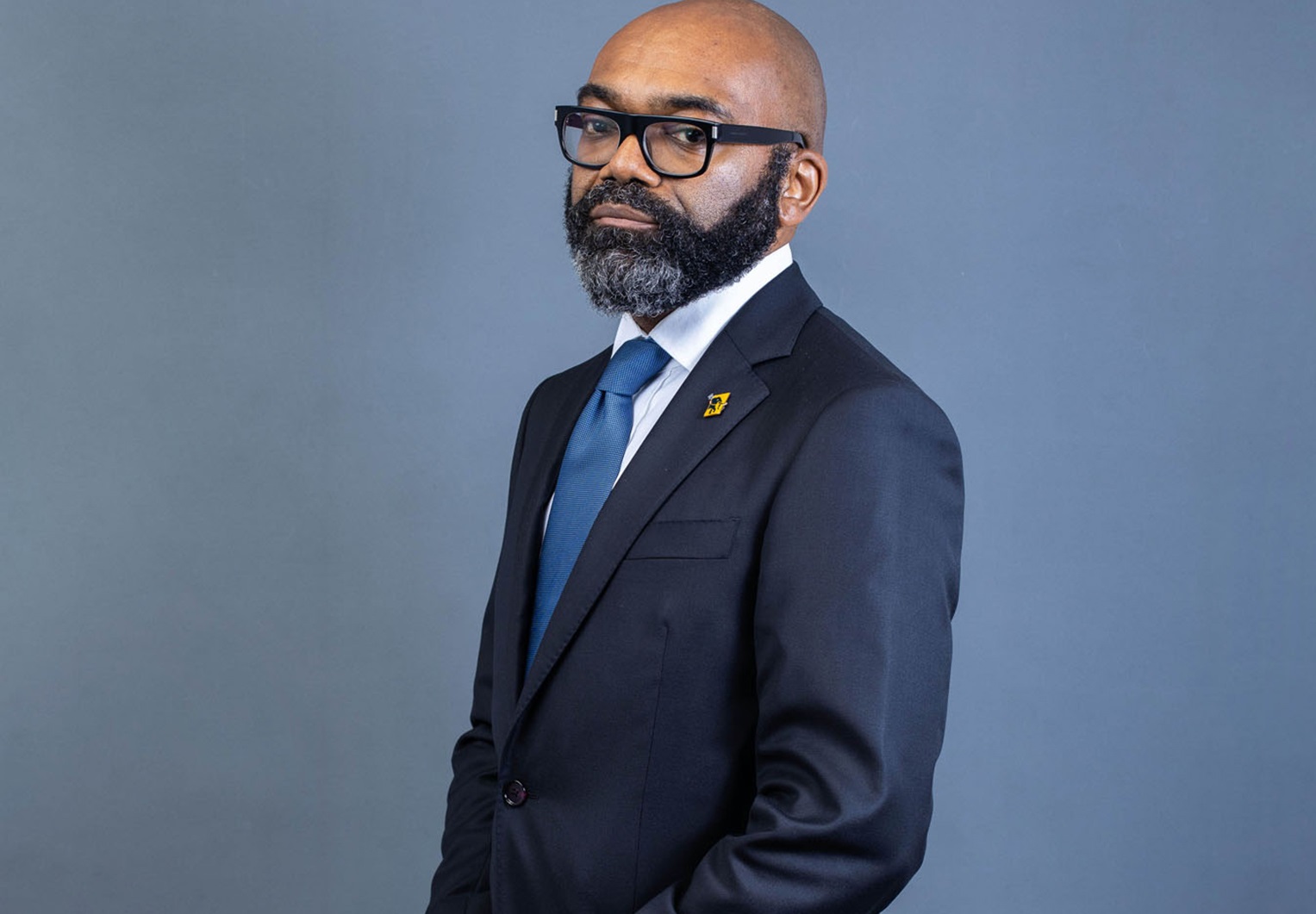
The deputy managing director of First Bank of Nigeria (FBN) Limited, Mr Ini Ebong, has offloaded some shares of FBN Holdings Plc, the parent firm of the banking institution.
A regulatory notice from the Nigerian Exchange (NGX) Limited confirmed the development on Thursday.
It was disclosed that the transaction occurred on Friday, December 12, 2025, on the floor of the stock exchange.
The sale involved about 11.8 million shares, precisely 11,783,333 units traded at N31.14 per share, amounting to about N366.9 million.
Mr Ebong, who studied Architecture from University of Ife and obtained Bachelor and Master of Science degrees, became the DMD of First Bank in June 2024. Prior to this appointment, he was Executive Director, Treasury and International Banking since January 2022.
He was previously the Group Executive, Treasury and International Banking, a position he held since 2016 after serving as the bank’s Treasurer from 2011 to 2016.
Before joining First Bank, he was the Head of African Fixed Income and Local Markets Trading, Renaissance Securities Nigeria Limited, the Nigerian registered subsidiary of Renaissance Capital. He also worked with Citigroup for 14 years as Country Treasurer and Sales and Trading Business Head.
He has a passion for market development and has worked actively to drive change and internationalisation of the Nigerian financial markets: foreign exchange, fixed income and securities.
He has worked closely with regulatory bodies such as the Central Bank of Nigeria (CBN) and the Debt Management Office (DMO) in assisting with the development of fresh monetary and foreign exchange policies, to broaden and deepen markets and open them up to international practices.
At various times he has facilitated and delivered courses and seminars on a wide variety of subjects covering Money Markets, Securities and Foreign exchange trading and market risk management subjects to regulators, corporate customers, banks and market participants.











-
 Feature/OPED6 years ago
Davos was Different this year
-
Travel/Tourism9 years ago
Lagos Seals Western Lodge Hotel In Ikorodu
-

 Showbiz3 years ago
Estranged Lover Releases Videos of Empress Njamah Bathing
-
 Banking7 years ago
Sort Codes of GTBank Branches in Nigeria
-

 Economy3 years ago
Subsidy Removal: CNG at N130 Per Litre Cheaper Than Petrol—IPMAN
-

 Banking3 years ago
First Bank Announces Planned Downtime
-

 Banking3 years ago
Sort Codes of UBA Branches in Nigeria
-

 Sports3 years ago
Highest Paid Nigerian Footballer – How Much Do Nigerian Footballers Earn