

Economy
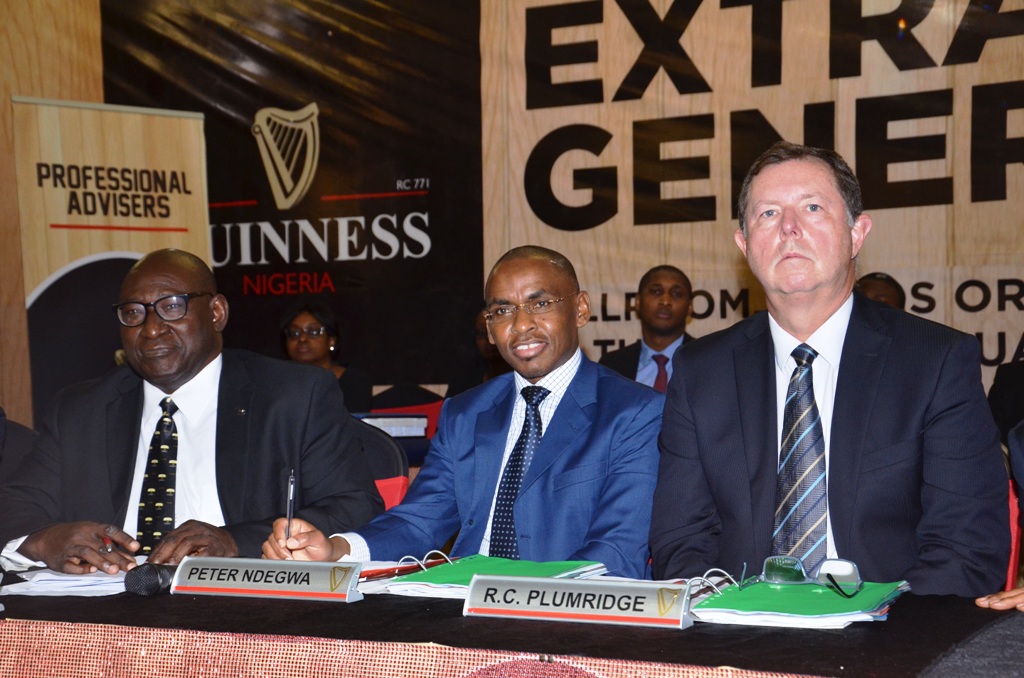
Guinness Nigeria Shares Trade Flat After Attacking Presidency

By Dipo Olowookere
Shares of Guinness Nigeria Plc on Monday closed flat on the floor of the Nigerian Stock Exchange (NSE), Business Post reports.
This occurred after the brewery company was lambasted last weekend for using an uncouth language on the presidency and interfering in local politics.
Last Friday, a debate was held for the vice presidential candidates of five of the political parties contesting in the 2019 elections.
The debate, which took place at the Transcorp Hilton Abuja, had Mr Ganiyu Galadima of the Allied Congress Party of Nigeria (ACPN), Mrs Khadija Abdullahi of the Alliance for New Nigeria (ANN), Mr Yemi Osinbajo of the All Progressives Congress (APC), Mr Peter Obi of the Peoples Democratic Party (PDP) and Mrs Umar Getso of the Young Progressives Party (YPP) participating.
During the exercise, which was aired live on local television stations from 7pm, a member of President Muhammadu Buhari Media Team, Mr Johannes Tobi, reacted to the figures quoted by candidate of the opposition party, PDP, on Twitter, which Guinness Nigeria, through its official Twitter handle, violently responded to, calling the presidency “goat.”
“I knew this PDP man, Peter Obi, would start with lies and contrived data,” the presidency posted on Twitter and when Guinness Nigeria was to respond to this, it said, “Shut up your dirty mouth goat.”
This generated reactions on social media over the weekend, with many lambasting the company for interfering in politics.
Most companies try to stay away from local politics so as not to get in trouble when an opposition finally clinches power like it happened in 2015 in Nigeria when the present government snatched power from the PDP at the polls.
On Saturday morning, the company managing the official Twitter handle of Guinness Nigeria apologised for the offensive response to the presidency’s view of local politics.
“Good morning everyone. My name is Oduntan Odubanjo, the Commercial Director of Terragon Ltd, managers of Guinness Nigeria Twitter handle.
“I hereby apologise without reserve for the offensive tweet earlier sent in error from the Guinness Nigeria Twitter handle to Johannes Tobi.
“The message has absolutely nothing to do with Guinness Nigeria and was not sent or authorised by the company. This is a full and unreserved apology to Johannes Tobi for the unwarranted message and also to our client, Guinness Nigeria, for the embarrassment caused by this matter.
“The offending tweet was sent entirely in error by a team member who will have no further access to the Guinness Nigeria account. Please be assured that appropriate learnings have been taken from this incident and proper internal measures are being taken to address this incident.
“We thank you for your acceptance of these sincere regrets and apologies,” the statement by Terragon Limited read.
On Monday, shares of Guinness Nigeria on the local bourse remained at the level it finished last Friday, N73 per unit.

Business Post reports that the investorstraded a total of 109,887 units of the brewery giant’s equities on the floor ofthe exchange yesterday in 23 deals valued at N8 million.



By Adedapo Adesanya
The Nigerian National Petroleum Company (NNPC) Limited has announced the signing of six strategic agreements with key partners, ranging from Memorandum of Understanding (MoU), Gas Supply Agreement (GSA) and other gas transportation deals, marking a significant milestone in Nigeria’s journey towards industrial revitalisation and enhanced energy security.
The agreements, executed on the sidelines of the ongoing 25th NOG Energy Week in Abuja on Tuesday, include: an MoU with Ajaokuta Steel Company Limited, ASCL; a Gas Sale Aggregation Agreement with Ajaokuta Steel Company Limited; a GSA with UTM FLNG; a Network Entry Agreement with Chevron Nigeria Limited; a Network Entry Agreement with AGPC, and a Network Entry Agreement with NNPC Exploration & Production Limited.
According to the chief executive of the NNPC, Mr Bayo Ojulari, the agreements underscore the state oil company’s commitment to advancing the federal government’s gas-based industrialisation agenda, driving sustainable economic growth and enhancing Nigeria’s energy security.
“What we are witnessing today is not just about signing agreements. It is about igniting the engine of Nigeria’s industrialisation. Gas is the key. It is a source of revenue and profit. It is also the only product that can have that level of industrial impact on Nigeria, more than any other hydrocarbon,” Mr Ojulari stated.
He particularly described the agreements as a testament to NNPC’s shared commitment to transparency, efficiency, and a standardised framework for Nationwide gas utilisation, which will unlock new supply capacity for the domestic market and solidify the role of gas as a catalyst for economic transformation.
Mr Ojulari noted that the agreements signal a new era of strategic partnerships that will drive local content, enhance energy security and accelerate Nigeria’s journey towards becoming a global industrial powerhouse.
He described NNPC as the partner of choice. “We are on a journey, even as we look forward to greater collaboration with industry partners.”
A cornerstone of the signing ceremony was the agreement with Ajaokuta Steel Company Limited. In the MoU, NNPC and ASCL committed to extend collaboration beyond gas supply, aiming to catalyse the production of raw materials for oil and gas pipes, a critical enabler for major infrastructure projects such as the African- Atlantic Gas Pipeline and the Escravos -Lagos Pipeline System (ELPS).
The MoU is anchored on two major pillars: the revitalisation of the Ajaokuta Steel Complex and the expansion of domestic gas utilisation through the Nigerian Gas Transportation Network Code.
This was complemented by the execution of a 20-year Gas Sale and Aggregation Agreement between NNPC E&P Limited, Gas Aggregation Company of Nigeria Ltd/Gte and ASCL.
This agreement will see the supply of 3MMscf/d of Firm Contract Volumes and 47MMscf/d of Interruptible Contract Volumes to be used as feedstock for the power plant servicing the steel complex.
NNPC Ltd/Seplat JV also took a major step towards commercialising Nigeria’s vast natural gas resources by signing a 15-year Wet Gas Sale and Purchase Agreement WGSPA between the NNPC Ltd/Seplat Energy Producing Nigeria Unlimited Joint Venture and UTM FLNG Limited.
Under the agreement, the Joint Venture will supply 200 million standard cubic feet of gas per day (MMscf/d) to the UTM Floating LNG project, providing the long-term feedgas certainty required to support financing and position the project for a Final Investment Decision (FID) in the fourth quarter of 2026.
Further demonstrating its commitment to a regulated and efficient gas market, NNPC announced the successful migration of legacy interconnection agreements to the new Nigerian Gas Transportation Network Code. This involved the signing of Network Entry Agreements with three major gas producers.
These agreements, signed with Chevron Nigeria Limited, CNL, AGPC, and NEPL, will inject up to 800MMscf/d of natural gas into the domestic transportation network. This will serve Nigeria’s power plants, Gas-Based Industries (GBIs), and industrial clusters, significantly enhancing network connectivity and operational flexibility while improving the security of gas supply.
By Adedapo Adesanya
The International Monetary Fund (IMF) has retained Nigeria’s economic growth projections at 4.1 per cent for 2026 and 4.3 per cent for 2027, expressing confidence that ongoing macroeconomic reforms will continue to support the country’s recovery.
The projections, contained in the IMF’s July 2026 World Economic Outlook (WEO) Update titled “Global Economy in Crosscurrents of War and Technology”, remain unchanged from the forecasts released in April, despite mounting global uncertainties stemming from the conflict in the Middle East.
According to the report released yesterday, Nigeria’s growth outlook is being supported by improved macroeconomic stability and favourable terms of trade arising from its status as an oil-exporting nation.
However, the Bretton Woods institution warned that rising prices of essential goods could offset part of these gains by worsening poverty and food insecurity across the country.
The report stated that, “Nigeria is supported by improved macroeconomic stability and favourable terms of trade effects, though higher prices for essentials are expected to further aggravate poverty and food insecurity.”
Speaking during the IMF’s virtual briefing on the July 2026 World Economic Outlook Update for Sub-Saharan Africa and Nigeria, Division Chief in the IMF’s Research Department, Ms Deniz Igan, described Nigeria as one of the region’s stronger-performing large economies, noting that policy reforms have strengthened macroeconomic stability.
“Just to give you a sense, the two largest economies in the region, Nigeria is expected to grow at 4.1 per cent, quite stable, and this is supported by improved macroeconomic stability and favourable terms of trade, with Nigeria being an oil exporter,” Ms Igan said.
She, however, cautioned that inflationary pressures on essential commodities remain a major concern.
“At the same time, tighter prices, so there is some offset to that positive terms of trade effect because higher prices for essentials are expected to aggravate poverty and food insecurity,” she added.
The lender also retained Nigeria’s 2027 growth forecast at 4.3 per cent, as it noted that recent economic reforms are laying the foundation for sustained expansion despite persistent global headwinds.
For the global economy, the IMF projected growth to moderate to 3.0 per cent in 2026 from 3.5 per cent recorded in 2025, attributing the slowdown largely to the economic impact of the Middle East conflict, which is expected to offset part of the gains from the accelerating artificial intelligence-driven technology cycle.
For Sub-Saharan Africa, the IMF projected economic growth of 4.3 per cent in 2026 before improving to 4.5 per cent in 2027. The latest forecast represents a 0.1 percentage point upward revision from the Fund’s April outlook.
Ms Igan noted that the region had experienced broad-based economic recovery in 2025 before the outbreak of the Middle East conflict altered the growth trajectory.
“Let me start by noting that we actually had seen a broad-based pickup in growth in 2025 in the region. We had an acceleration of growth to 4.5 per cent.
“Now, the war obviously has clouded the outlook for 2026, and we are now projecting a softening of growth to 4.3 per cent in the region as a whole,” she said.

By Aduragbemi Omiyale
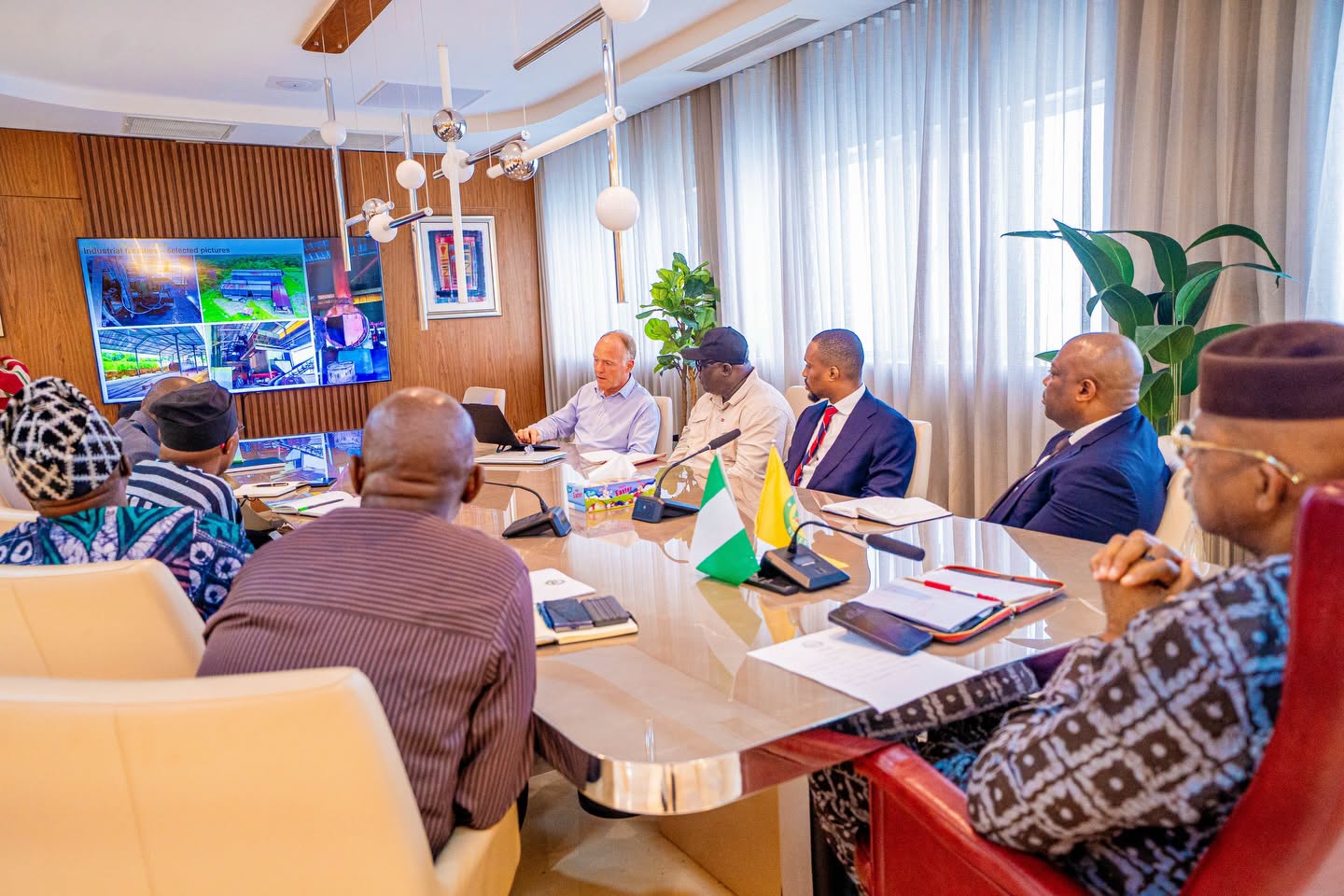
Presco Plc has concluded plans to establish operations in Ogun State as part of efforts to expand its footprint, boost earnings, and deliver more value to shareholders.
The news of the operations was announced by the Governor of Ogun State, Mr Dapo Abiodun, after he received a delegation from the company.
Presco is one of the leading integrated oil palm firms in Nigeria. It is listed on the Nigerian Exchange (NGX) Limited.
The Governor expressed his joy over the decision of Presco to situate its factory in the Gateway State.
He disclosed that the organisation has promised to have an initial investment of about $100 million in Ogun State, noting that this “validates the confidence investors continue to place in our administration’s deliberate policies aimed at creating an enabling business environment.”
According to him, beyond strengthening the state government’s agricultural transformation agenda, the project is expected to generate thousands of direct and indirect jobs, enhance food security, stimulate economic growth, and increase the state’s revenue.
“As we continue to implement our Building Our Future Together agenda, we remain committed to attracting strategic investments that will diversify our economy, create sustainable opportunities for our people, and reinforce Ogun State’s position as Nigeria’s preferred investment destination,” Mr Abiodun stated.
