

Technology
9mobile Speaks on Exit of Adrian Wood from Teleology


By Modupe Gbadeyanka
Nigeria’s fourth largest telecommunications company, 9mobile, formerly known as Etisalat Nigeria, has reacted to news of the exit of Mr Adrian Wood, from Teleology Holdings Limited, the new owners of the telco.
Yesterday, news went viral that Mr Wood has been pushed out of the company few months after his firm was announced as the preferred bidder of debt-ridden 9mobile.
In a statement signed by the Director of Regulatory and Corporate Affairs at 9mobile, Oluseyi Osunsedo, which was made available to Business Post on Wednesday night, it was disclosed that Mr Wood “allowed the same avarice, rascality, impatience and knavery that characterized his turbulent association with, and inglorious exits from several other companies to manifest again so early in 9mobile.”
The company emphasised that having made efforts to assemble a reliable team to pursue its goals, it won’t allow any distractions to stop it from achieving its mission of remaining resolutely focused on rewarding its loyal customers and attracting new ones with the best telecom services in Nigeria.
Below is the full statement:
While remaining resolutely focused on rewarding our loyal customers and attracting new ones with the best telecom services in Nigeria, Emerging Markets Telecommunication Services Ltd. trading as 9mobile deems it necessary to respond to the myriad of false, misleading, and malicious media reports currently in circulation.
In the aftermath of the protracted mismanagement of an otherwise healthy company, and eventual default on its loans by the previous owners, 9mobile was acquired by Teleology Nigeria Limited, following an internationally competitive and exhaustive bidding process led by Barclays Africa, with participation of the Central Bank of Nigeria (CBN), Nigeria Communications Commission (NCC) and thirteen Nigerian banks including GT Bank, Zenith Bank, Access Bank and others.
This process, which was well covered by the Nigerian media, was concluded with the initial deposit of $50 million and a further payment of $251 million as settlement to the banks who took over the company. These payments as well as further due diligence and technical evaluations led to the clearance of the sale by the NCC, and handover of 9mobile to the new owners, who announced a Board on 12 November 2018 with His Royal Highness Prince Nasiru Ado Bayero as the new Chairman.
Teleology Nigeria Limited is a consortium including several local and foreign investors. While every partner in the consortium was delivering and meeting their obligations to the partnership in terms of financial resources, physical availability for crucial meetings and extensive network to help build the business, Mr. Adrian Wood’s Teleology Holdings Limited, which only owned a minority stake in Teleology Nigeria Limited, failed severally and wholly to meet theirs. Mr. Wood was not personally present for all the critical presentations made by the consortium during the bid process and failed abjectly with his financing arrangements with Swiss-based UBS Bank. In all these failings, other partners in the consortium filled the gap and pushed ahead until the sale was completed.
Since taking over the company, and without any assistance from Mr. Wood or Teleology Holdings, the Board has revived and enhanced relationships with key vendors and core business accounts; improved business relationships with suppliers; enhanced its core network capabilities to deliver network efficiency competitively with other operators. With the assistance of leading global consultants, the company is also undertaking a complete review of its operational, regulatory, financial and technical architecture. On these basis, 9mobile has emerged from a period of uncertainty over the past two years to attain an active subscriber base of 16 million, representing a net increase of over 1 million subscribers in the last 6 weeks alone.
The company’s core strategy in the short to medium term shall be underpinned by cost efficiency, innovative product development, network efficiency and strategic technical partnerships. We believe that this approach towards organic growth is more sustainable in building a strong Nigerian telecom operator, which taps into the deep technical expertise of the Nigerian labour force than an approach motivated by short-term financial gain advocated by Mr. Wood and his associates.
It is regrettable that Mr. Wood has allowed the same avarice, rascality, impatience and knavery that characterized his turbulent association with, and inglorious exits from several other companies to manifest again so early in 9mobile. While we wish him well in his future endeavors, we unequivocally assure our customers, suppliers, partners, regulators, and stakeholders that the Board is committed to continuing the upward mobility of 9mobile. Having invested so heavily in buying the company, and assembling a reliable team to pursue our goals, we want to categorically state that no distractions can stop us from this mission.



By Adedapo Adesanya
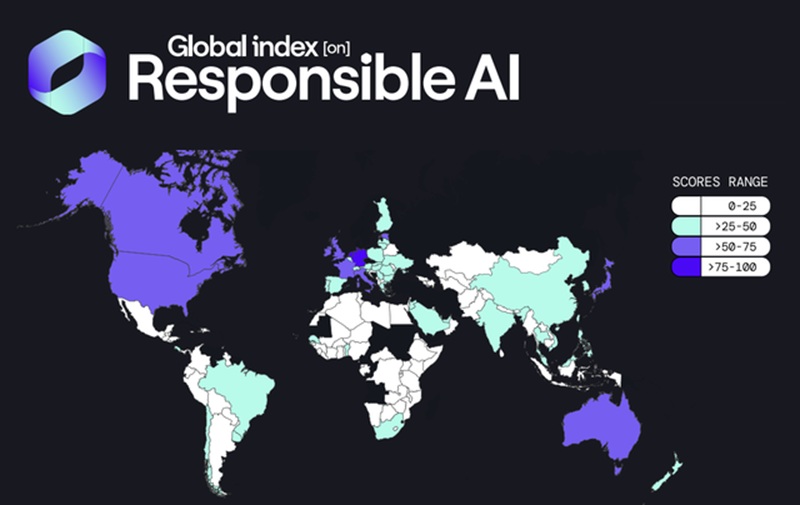
Nigeria has emerged as Africa’s highest-ranked country in the latest Global Index on Responsible AI (GIRAI), climbing 42 places globally in just two years.
Nigeria rose from 80th globally in 2024 to 38th in the world with a score of 45.93.
The GIRIA ranking boosts Nigeria’s appeal as a destination for AI talent, innovation and investment.
According to the Cape Town-based independent research and policy think tank, the ranking is one of the world’s most comprehensive assessments of responsible AI. It evaluates 135 countries across five pillars: inclusion and diversity, ethics and sustainability, labour and skills, trust and safety, and AI use in public services.
Despite that rapid adoption, the report found that public governance capacity remains weak. Average GIRAI scores stand at only about 35 out of 100 globally, while evidence of implementation exists in just 55 per cent of countries with responsible AI frameworks, dropping to 45% across the Global South.
Nigeria’s rise reflects deliberate policy efforts to strengthen its AI ecosystem.
According to the Minister of Communications, Innovation and Digital Economy, Mr Bosun Tijani, the government has accelerated work on its National Artificial Intelligence Strategy (NAIS), expanded digital public infrastructure, invested in digital skills, developed governance frameworks for emerging technologies, and strengthened international partnerships to ensure AI is deployed responsibly.
“This recognition is a testament to Nigeria’s deliberate efforts to build an AI ecosystem that is inclusive, responsible, and aligned with our development priorities,” he said.
“We believe that Africa must not only participate in the AI revolution but also contribute meaningfully to shaping how these technologies are governed and deployed globally.
“Our focus remains on creating the infrastructure, talent, and policy environment that will enable AI to deliver real value for our people and support President Bola Tinubu’s vision of building a $1 trillion economy,” he added.
The report identified Nigeria as a global “Bright Spot” for combining AI skills development with safeguards for children and vulnerable groups.
The index noted that Nigeria is among the few African countries that have attempted to simultaneously prepare citizens for an AI-driven future while strengthening protections against the risks posed by emerging technologies.
It highlighted the National Artificial Intelligence Strategy, which mandates AI literacy programmes, teacher training and broader capacity-building initiatives across the country.
The report also cited the Federal Government’s flagship 3 Million Technical Talent (3MTT) programme for delivering structured AI and machine learning training through a hybrid model designed to reach young people nationwide.
In terms of regulation, GIRAI recognised the Nigeria Data Protection Act and the General Application and Implementation Directive (GAID) 2025 for introducing enhanced safeguards for children’s personal data, including parental consent requirements and restrictions on decisions based solely on automated processing.
The report said these initiatives position Nigeria as an example of how governments can pursue AI adoption without overlooking digital rights and citizen protection.
By Modupe Gbadeyanka
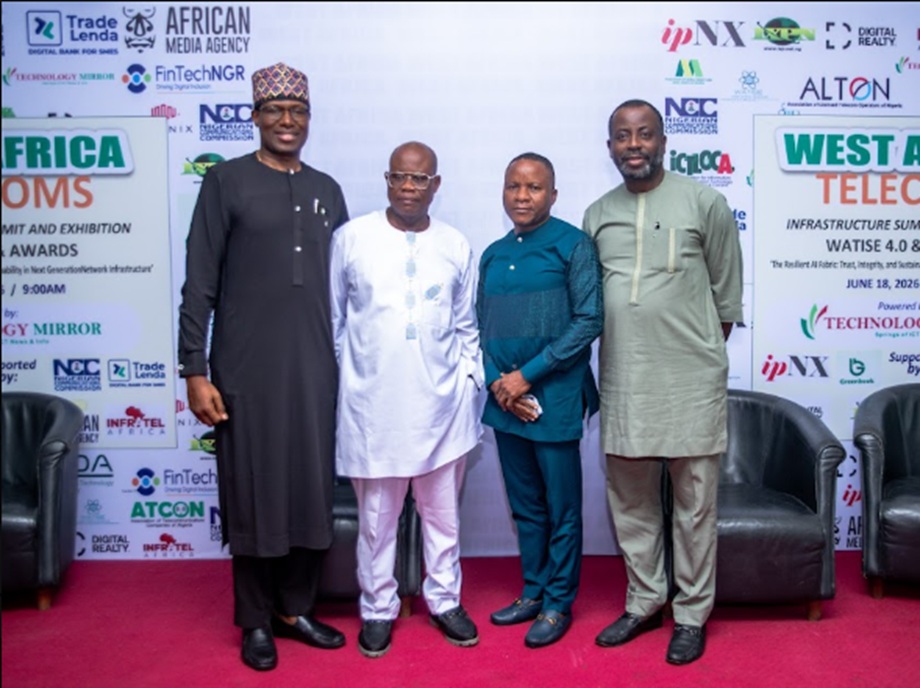
The need for accessible, affordable and locally relevant Artificial Intelligence (AI) to drive Africa’s digital future has been emphasised by the Managing Director of ipNX, Mr Ejovi Aror.
Mr Aror, whose paper was presented by the company’s Director of Strategic Business Initiatives, Mr Olusola Teniola, at the West Africa Telecoms Infrastructure Summit and Exhibition (WATISE) on June 18, 2028, said AI is not a new concept, but has been in existence since 1955 and is an integral part of today’s digital ecosystem, with intelligent algorithms already embedded in so-called ‘traditional’ telecommunications networks and services.
At the event held in Lagos, Mr Aror, in his paper titled Next-G Telecoms Infrastructure and Ethical AI in Networking Management, stated that, “Artificial Intelligence already shapes how networks are managed, optimised, and secured. The conversation is not about whether AI will transform telecommunications, but how we can ensure that its benefits are responsibly deployed.”
He emphasised that while Africa may not have played a leading role during the earliest stages of AI development, the continent still has a significant opportunity to shape the next phase of innovation by developing technologies that address local challenges and realities.
“Africa does not need to be solely a consumer of AI technologies developed elsewhere. There is a unique opportunity to build solutions that reflect our local contexts, address our specific needs, and create value for our economies and communities,” he stated.
The presentation also highlighted the importance of ethical considerations in AI deployment, particularly as intelligent systems become increasingly involved in network operations, service delivery, decision-making processes, and customer interactions.
Mr Aror stressed that the development of AI must be guided by principles of transparency, accountability, privacy, and inclusivity to ensure that innovation delivers meaningful benefits to society.
He further noted that the success of AI across Africa will depend on continued investment in digital infrastructure, including broadband connectivity, data centres, cloud platforms, and reliable telecommunications networks capable of supporting advanced digital services.
The discussions at WATISE 2026 reinforced the strategic importance of the telecommunications industry as the foundation of Nigeria’s digital economy. While stakeholders highlighted the role of telecom infrastructure in enabling innovation across various sectors, participants underscored the need for improved digital literacy, public awareness, and responsible use of emerging technologies.
ipNX was recognised at the event as the Best Customer-centric Telecoms Operator. As Nigeria’s leading technology and connectivity provider, the brand remains committed to advancing the infrastructure, innovation, and collaborative partnerships required to unlock the full potential of AI and support Africa’s digital transformation.

By Adedapo Adesanya
Latest data from the Nigerian Communications Commission (NCC) has revealed that Nigeria’s teledensity rose to 86.73 per cent in April 2026, up from 85.67 per cent recorded in March, as active mobile subscriptions increased to 188.01 million, reflecting sustained expansion in access to telecommunications services across the country.
Teledensity refers to the number of active telephone connections (mobile or fixed-line) per 100 people in a specific geographic area.
This growth was driven largely by increasing demand for mobile voice and data services, as more Nigerians integrated digital communication into their daily lives for work, education, commerce, and social interaction.
The NCC’s report provided a detailed breakdown of operator performance, with MTN Nigeria retaining its dominant position as the largest mobile network operator. MTN recorded 96,391,419 active subscribers, accounting for more than half of the country’s total mobile subscriptions.
Airtel Nigeria followed with 64,670,018 subscribers, maintaining its stronghold as the second-largest provider. Globacom, the indigenous operator, recorded 23,178,597 subscribers, while 9mobile had 3,538,021 active subscribers during the period.
The competitive dynamics among these operators continued to shape the market, with each vying for greater market share through innovative data plans, network expansion, and enhanced customer service offerings.
The commission’s data also highlighted a significant technological shift in network usage, as consumers increasingly migrated to faster broadband technologies. Fourth-generation technology remained the dominant mobile network platform, accounting for 54.41 per cent of total network connections in April, up from 53.76 per cent in March.
This steady increase underscored the growing preference for high-speed internet capable of supporting video streaming, online gaming, remote work, and digital learning.
Similarly, fifth-generation technology continued its steady growth trajectory, with its market share rising from 4.20 per cent in March to 4.34 per cent in April. The gradual rollout of 5G infrastructure by operators in major cities and urban centres has begun to yield tangible results, offering lower latency and faster download speeds that are expected to drive innovation in sectors such as healthcare, agriculture, and manufacturing.
In contrast, the share of second-generation subscriptions declined to 35.93 per cent from 36.74 per cent, reflecting a gradual but clear shift away from legacy networks to higher-speed broadband services.
The third-generation segment remained relatively stable, accounting for 5.32 per cent of total connections compared with 5.30 per cent recorded in March.
This stability suggested that while 2G users were upgrading, a core group of subscribers still relied on 3G networks, particularly in rural and underserved areas where more advanced infrastructure was not yet fully deployed.
The report further showed that of the total subscriptions, 154,347,260 were on mobile GSM networks, while fixed wired internet subscriptions stood at 156,662. Voice over Internet Protocol services accounted for 220,166 subscriptions, indicating a niche but growing interest in internet-based voice communication alternatives.
The NCC also reported significant growth in broadband subscriptions, which increased to 120,684,625 in April from 117,710,397 in March.
Consequently, broadband penetration improved to 55.67 per cent from 54.30 per cent recorded in the previous month. The commission attributed this increase to continued investment in broadband infrastructure by both private operators and government-backed initiatives, as well as the growing adoption of high-speed internet services by households and businesses seeking to leverage digital tools for productivity and connectivity.
Despite the encouraging growth in broadband subscriptions, total internet data consumption declined slightly during the month. According to the report, internet usage fell marginally to 1,414,848.70 terabytes from 1,422,764.54 terabytes recorded in March.
The report suggested that while more Nigerians were gaining internet access, overall data consumption remained relatively stable, possibly due to factors such as price sensitivity, data bundle optimisation, and the varying intensity of usage across different user segments.
This moderation in consumption did not detract from the broader positive trend of expanding connectivity and digital inclusion. The NCC noted that the telecommunications sector continued to play a critical role in the nation’s economy, contributing 9.19 per cent to Nigeria’s Gross Domestic Product (GDP) in the first quarter of 2026.
This contribution underscored the sector’s transformation from a mere utility provider to a foundational pillar of economic activity, enabling everything from fintech transactions and e-commerce to remote governance and digital entertainment.
The commission added that sustained investment in broadband infrastructure, wider deployment of 5G networks, and improved quality of service would further accelerate digital inclusion, spur innovation across industries, and drive inclusive economic growth in the country.
It also emphasised the need for continued policy support, regulatory stability, and collaborative efforts between the public and private sectors to bridge the remaining digital divide and ensure that the benefits of connectivity reach every corner of the nation.
