

Banking
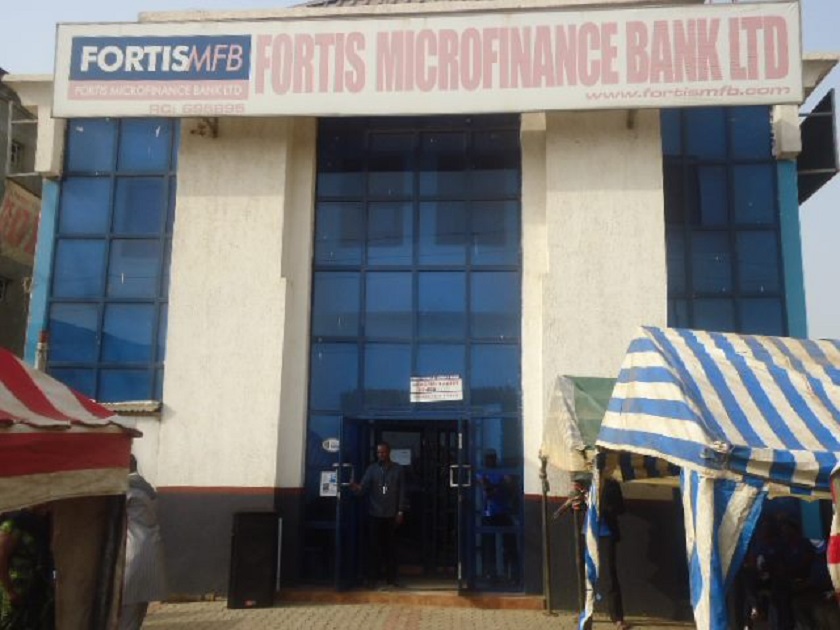
Real Reasons Fortis MFB was Liquidated—NDIC

By Modupe Gbadeyanka
The Nigeria Deposit Insurance Corporation (NDIC) has explained why it took the critical decision to liquidate Fortis Microfinance Bank Plc some days ago.
The action did not go down well with some stakeholders in the financial industry, especially shareholders of the collapsed bank.
For example, the National Coordinator of Progressive Shareholders Association of Nigeria (PSAN), Mr Boniface Okezie, had said instead of liquidating the lender, NDIC and the Central Bank of Nigeria (CBN) should have made efforts to save the company.
He claimed that the regulators aggravate problems in the financial industry through liquidation, passing a wrong signal to foreign investors and making Nigerian shareholders ultimate victims.
Also, a financial analyst, Mr Garba Kurfi, who heads APT Securities and Fund, was quoted by Daily Trust as blaming the CBN and NDIC for the liquidation.
According to him, managing affairs of the bank, its resale or the appointment of a new management would have been better for its depositors and other banks that had business relationship with Fortis as well as the economy at large.
But reacting in a statement, the NDIC emphasised that efforts were made by regulators to savage Fortis MFB.
Head of Communications and Public Affairs at NDIC, Mr Mohammed Kudu Ibrahim, noted that operators in the banking system are aware that the liquidation of ailing banks was always the last option adopted by the agency after other cost-effective resolution options have failed.
In all instances, the safety of depositor’s funds is the primary concern of the corporation, he said in the statement.
He stated that depositors of banks always come first in the order of settlement of claims in the liquidation process.
“On the other hand, the shareholders of failed banks are always the last to be paid after the settlement of their depositors and creditors.
“It is however, common knowledge that shareholders are part of the governance structure of the affected banks, through the control they exercise over the Board and Management of their banks during the Annual General Meetings and Extra Ordinary General Meetings, as well as through appointment of Directors and Auditors of their banks. Accordingly, they cannot be absolved from the misdeeds of their Boards,” he said.
Mr Ibrahim added that, “With particular reference to the liquidation of the Fortis MFB, it would be recalled that Fortis MFB was licensed by the Central Bank of Nigeria (CBN) in 2007 and listed on the Nigerian Stock Exchange (NSE).
“However, in 2016, the shares of the bank were suspended due to failure to submit its 2016 audited accounts. It should be noted that the various examinations and supervisory interventions of CBN and NDIC revealed that the bank was being run in an unsafe and unsound manner leading to huge non-performing loans, high cost of funds (foreign and domestic borrowings, and fixed/term deposits), exorbitant administrative and personnel costs (especially high emoluments to successive CEOs), and poor corporate governance practices, all of which impacted negatively on its financial condition. As a consequence, the bank was illiquid, could not honour its obligations to its depositors, and became insolvent.”
“The unhealthy condition of the bank degenerated to the extent that the CBN removed the Management of Fortis MFB Plc in February 2018 and appointed a four (4) person Interim Management Committee (IMC) to take over the control and management of the bank.
“The IMC which comprised of officers drawn from the CBN and NDIC, as well as an independent Chairman, were mandated to steer the bank back to sustainability. The IMC managed the affairs of
Fortis MFB Plc for a period 10 months during which it did all it could to resuscitate the bank and began reimbursing depositors, using funds advanced by CBN for that purpose.
“The above is contrary to the claim by Mallam Garba Kurfi, that the CBN/NDIC made no prior attempt to salvage the ailing bank before its eventual liquidation. Unfortunately, due to the mismanagement of the bank by its erstwhile Board and Management, it could not be salvaged, hence its eventual liquidation.
“The general public is therefore urged to disregard the misleading claims in the publication and to remain assured that the NDIC will always be faithful and alive to its responsibilities in protecting Nigerian Depositors at all times,” he added.



By Modupe Gbadeyanka
First Bank of Nigeria has been directed to pay one of its staff members, Mr Joseph Simeon Akor, a total of N5.2 million for wrongfully terminating his employment.
This order was given by Justice Zaynab Mohammed Bashir of the Port Harcourt Judicial Division of the National Industrial Court, Business Post learned.
The judge held that the claimant successfully established that the lender breached the terms of his employment by failing to comply with the disciplinary procedure contained in its Staff Employee Handbook after commencing investigations into allegations of misconduct and by paying him less than the prescribed half of his basic salary during suspension.
The court found that although the bank retained the contractual right to terminate the employment, the action was wrongful for failing to comply with its own contractual obligations and disciplinary framework.
Justice Bashir further held that, having elected to terminate Mr Akor’s employment on the ground that his services were no longer required rather than dismissing him for misconduct, First Bank of Nigeria could not rely on alleged misconduct to deny him the financial entitlements accruing during his suspension.
In delivering the judgment, the judge ordered the financial institution to pay N3.2 million as the balance of the claimant’s salaries and allowances withheld during his suspension, and N2 million as general damages for the breach of the terms of his employment.
From the facts, Mr Akor informed the court that he was employed by First Bank of Nigeria in May 2005 and rose to the position of Deputy Manager before his employment was terminated in December 2018 following allegations of misconduct.
He argued that the allegation was never substantiated. Yet, he was suspended, paid only about N31,000 monthly instead of half of the basic salary prescribed by the Bank’s Staff Employee Handbook, and eventually had his employment terminated. In contrast, the investigation into the allegation was still ongoing.
He further maintained that First Bank of Nigeria breached the provisions of its Staff Employee Handbook by failing to conclude investigations before terminating his employment and by withholding part of his salaries, allowances and other benefits during his suspension despite the allegation not being established.
In defence, First Bank contended that Mr Akor was accorded a fair hearing through disciplinary proceedings, that his employment was lawfully terminated because his services were no longer required, and that he was not entitled to the unpaid balance of his suspended salary, having left the bank’s employment while still on suspension.
The company further claimed that the reason stated in the termination letter that the services of Mr Akor were no longer required was sufficient in law and that the court could not import any other reason into the letter.
In opposition, Mr Akor’s counsel, O. G. Tony Ogidi, submitted that First Bank failed to comply with its disciplinary procedure under the Staff Employee Handbook, terminated the employment of his client before the conclusion of investigations, and failed to justify the termination in accordance with the provisions of the Handbook.
The counsel further argued that the termination letter merely stated that the services of Mr Akor were no longer required without assigning any reason and maintained that the bank acted contrary to the provisions of its Staff Employee Handbook by paying Mr Akor substantially less than half of his basic salary during his suspension.


By Aduragbemi Omiyale
Flutterwave has secured a strategic investment from Circle Ventures to expand its USDC payments and settlement infrastructure across Africa.
This funding support aligns with Flutterwave’s mission to modernise cross-border money movement on the continent, allowing merchants to collect locally and settle in USDC, reducing delays and costs while enabling near-instant settlement beyond traditional banking hours.
“This support from Circle Ventures is about backing the rails that will power the next era of global money movement from Africa.
“Stablecoins like USDC are no longer an experiment; they are becoming core financial infrastructure. By embedding USDC settlement into our current payments infrastructure, we are building a system that lets businesses move money at the speed of the internet.
“This fundamentally changes how payments from Africa connect to the world, and it positions Flutterwave as the default stablecoin gateway for the continent,” the chief executive of Flutterwave, Mr Olugbenga ‘GB’ Agboola, stated.
Business Post gathered that Flutterwave attracted this investment after its participation in the launch of Circle Payments Network in 2025.
At the core of this investment is Flutterwave’s strategy to position stablecoins as critical financial infrastructure to provide reliable and fast settlements in Africa.
Global stablecoin circulation currently exceeds $300 billion, with Africa emerging as one of the fastest-growing regions for its adoption.
By expanding its platform into a multi-rail payment system that includes fiat, cards, bank transfers and stablecoins, Flutterwave is enabling businesses to choose the fastest, cheapest and most reliable settlement option for their needs.
By Aduragbemi Omiyale
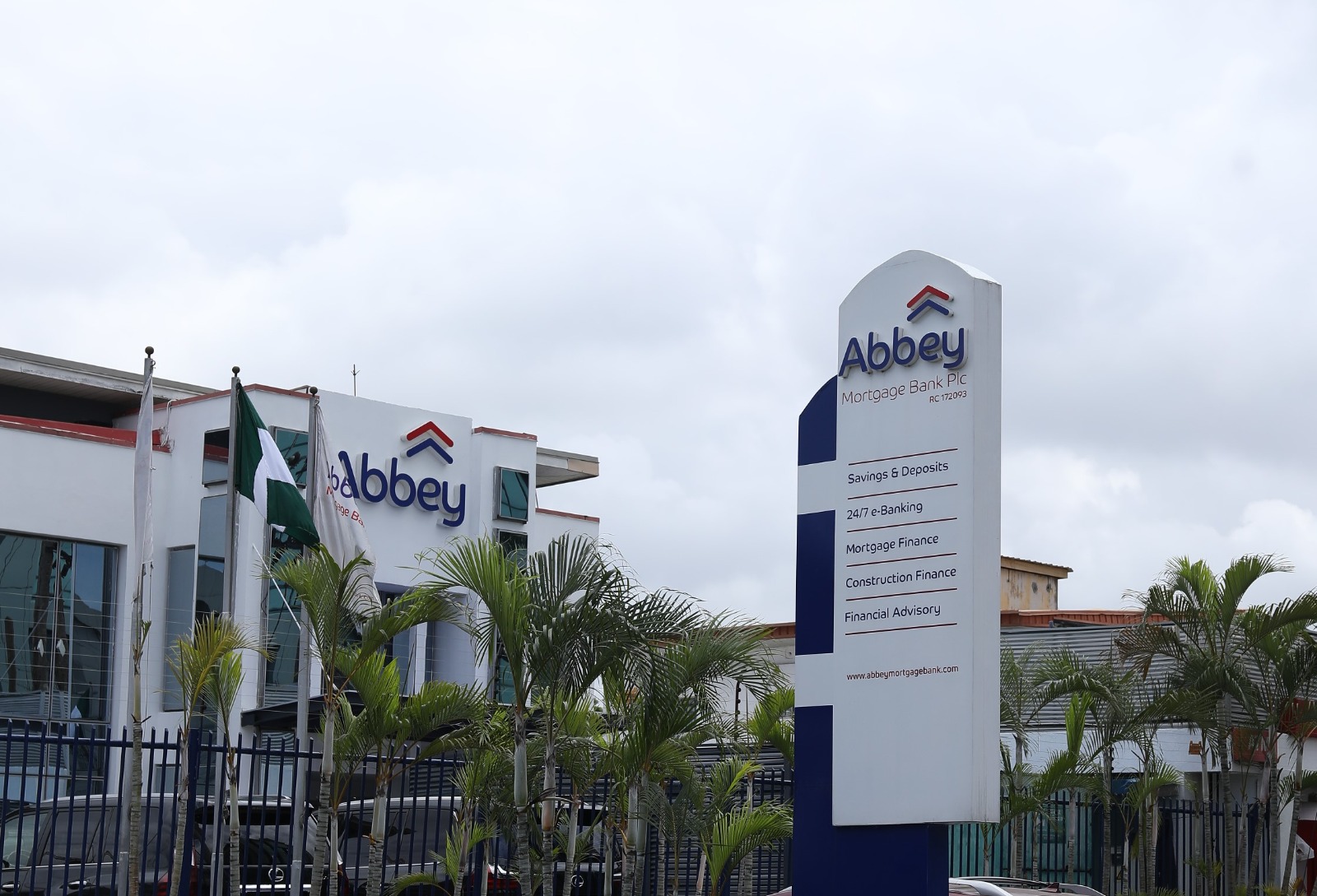
Foremost Nigerian real estate lending institution, Abbey Mortgage Bank Plc, has rebranded to Abbey Bank Plc.
This is to reflect its new status as a full-fledged financial institution as against its previous status as a bank for only the real estate sector.
The company, which trades its securities on the Nigerian Exchange (NGX) Limited, informed the investing community of its transformation.
This was in line with the approval granted by shareholders to the board of the organisation to change the name at an Extraordinary General Meeting (EGM) in January 2025.
The NGX Regulation Limited last week confirmed the name change via a circular signed by Bonaventure Onwuji on behalf of its Head of Issuer Regulation Department.
“Trading license holders and the investing public are hereby notified that the change of name of Abbey Mortgage Bank Plc to Abbey Bank Plc has been implemented by Nigerian Exchange Limited.
“This is in line with the approval obtained from the shareholders of the bank at its Extraordinary General Meeting held on January 24, 2025, and the receipt of a new certificate of incorporation from the Corporate Affairs Commission (CAC).
“Please note that the company’s trading symbol has also been changed from ABBEYBDS to ABBEYBANK,” the notice read.

-
 Feature/OPED6 years ago
Davos was Different this year
-
Travel/Tourism10 years ago
Lagos Seals Western Lodge Hotel In Ikorodu
-

 Showbiz4 years ago
Estranged Lover Releases Videos of Empress Njamah Bathing
-
 Banking8 years ago
Sort Codes of GTBank Branches in Nigeria
-

 Economy3 years ago
Subsidy Removal: CNG at N130 Per Litre Cheaper Than Petrol—IPMAN
-

 Banking4 years ago
Sort Codes of UBA Branches in Nigeria
-

 Banking3 years ago
First Bank Announces Planned Downtime
-

 Sports3 years ago
Highest Paid Nigerian Footballer – How Much Do Nigerian Footballers Earn