

Economy
FY18: Seplat’s EPS, Profit Drop 45% Amid 65% Rise in Revenue

By Dipo Olowookere
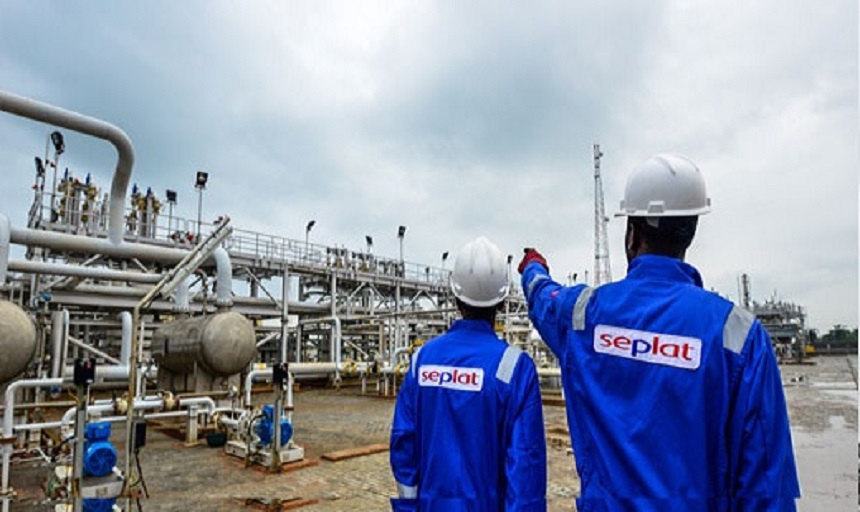
One of the leading Nigerian indigenous oil and gas companies, Seplat Petroleum Development Company Plc, has released its financial statements for the year ended December 31, 2018.
The firm, listed on both the Nigerian Stock Exchange (NSE) and the London Stock Exchange (LSE), improved its revenue by 65 percent to N228 billion from N138 billion.
This was as the finance income rose by 128.66 percent to N3 billion from N1.3 billion achieved in the 2017 financial year.
Seplat disclosed in the statements that its gross profit for the year was N120 billion against N65 billion a year earlier, while the operating profit increased to N95 billion from N34 billion.
It was disclosed in the results on Wednesday that the profit before tax jumped by 480 percent to N73 billion from N13 billion, while the profit after tax depreciated by 45 percent to N45 billion from N81 billion.
Seplat said its full year working interest production of 49,867boepd (comprising 25,669bopd liquids and 145MMscfd gas) within guidance range of 48,000 –55,000 boepd; Uptime on the Trans Forcados System during 2018 was 85 percent (in line with budget), while average reconciliation losses stood at 8 percent
In the period under review, the firm had its license renewed for OMLs 4, 38 and 41 blocks. With this, the company can now operate the facilities till October 21, 2038, adding that the $25.9 million renewal bonus paid ensured that all conditions have been met (renewal bonus included in 2018 capex).
In the first quarter of 2018, Seplat successfully concluded its debt refinancing, including debut $350 million bond which diversifies the long-term capital base and new four year $300 million RCF.
Commenting on the results, Austin Avuru, Seplat’s Chief Executive Officer, said, “Seplat has delivered an excellent operational and financial performance resulting in robust profitability and cash flow generation providing us with an extremely solid foundation for growth in the coming years.
“At our core assets in the West, OMLs 4, 38 and 41, the extension of the license to 2038 means that we can confidently plan and invest long into the future to realise the full potential of those blocks.
“As we continue to enhance production and revenue diversification with new wells scheduled at OML 53 in the East, the board took the Final Investment Decision to invest in the large scale ANOH gas and condensate development which will form the next phase of transformational growth for our gas business.
“Disciplined capital allocation continues to remain at the core of our activities evidenced by our continual deleveraging of our debt levels to the current balance of $350 million.
“In 2018, we reinstated the dividend, increased capital investments and with the resources and headroom in our capital structure, we are equipped to capitalise on organic and inorganic growth opportunities as they may arise.”
Meanwhile, the board of Seplat has recommended for approval the payment of a final dividend of $0.05 per share for the financial year, which would be paid on May 23, 2019.




By Adedapo Adesanya
Central Securities Clearing System (CSCS) Plc bested three price decliners to lift the NASD Over-the-Counter (OTC) Securities Exchange by 0.05 per cent on Thursday, July 16.
The securities depository company gained N2.29 during the trading day to close at N92.64 per share compared with the previous day’s price of N90.35 per share.
As a result, the market capitalisation of the bourse grew by N1.42 billion to N2.592 trillion from N2.590 trillion, while the NASD Security Index (NSI) improved by 2.36 points to 4,318.87 points from 4,316.51 points.
The three price losers yesterday were led by 11 Plc, which shed N10.00 to end at N240.00 per unit versus Wednesday’s closing value of N250.00 per unit, FrieslandCampina Wamco Nigeria Plc lost N2.34 to finish at N147.66 per share compared with the N150.00 per share it closed at midweek, and Food Concepts Plc depleted by 7 Kobo to settle at N2.42 per unit, in contrast to the preceding day’s N2.49 per unit.
A look at the activity chart showed that during the session, the value of transactions soared by 43.3 per cent to N104.1 million from the preceding session’s N65.2 million, and the number of deals jumped by 39.3 per cent to 39 deals from the 28 deals completed a day earlier, while the volume of trades contracted by 75.7 per cent to 1.2 million units from 4.8 million units.
When trading activities ended for the day, Great Nigeria Insurance (GNI) Plc led the activity chart as the most active stock by value on a year-to-date basis, with 3.4 billion units sold for N8.4 billion, followed by Infrastructure Credit Guarantee (Infracredit) Plc with 2.3 billion units valued at N6.5 billion, and CSCS Plc with 74.9 million units exchanged for N5.3 billion.
GNI Plc also closed the session as the most traded stock by volume on a year-to-date basis, with 3.4 billion units worth N8.4 billion, followed by Infracredit Plc with 2.3 billion units traded for N6.5 billion, and Resourcery Plc with 1.1 billion units transacted for N415.7 million.
By Adedapo Adesanya
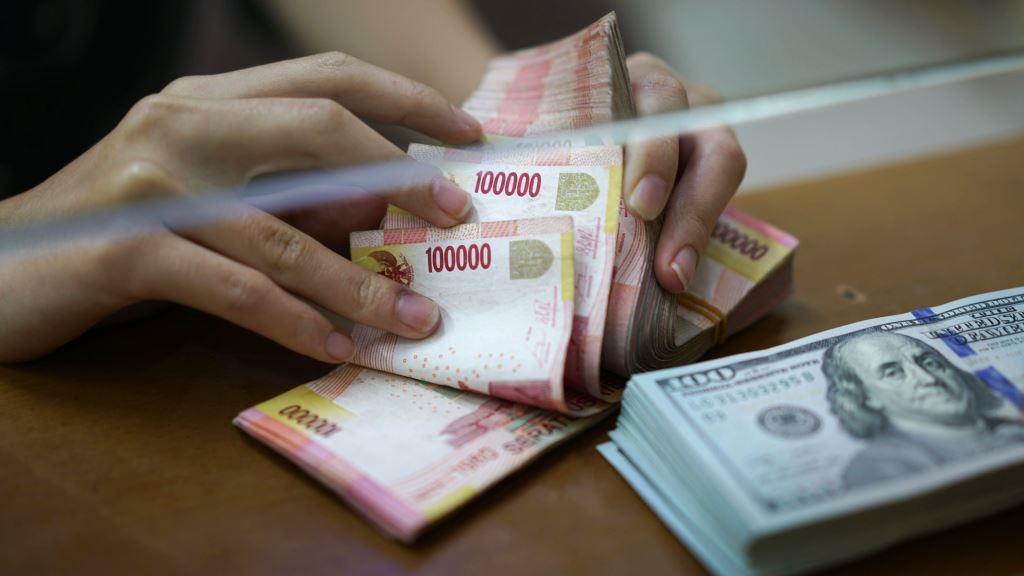
The Naira further appreciated against the US Dollar in the Nigerian Autonomous Foreign Exchange Market (NAFEX) on Thursday, July 16, by 65 Kobo or 0.04 per cent to sell for N1,381.53/$1, in contrast to Wednesday’s closing value of N1,382.18/$1.
This was buoyed by improved FX liquidity to absorb the high demand for Dollars during the trading session.
However, the local currency depreciated against the Pound Sterling in the official market yesterday by N9.48 to close at N1,866.17/£1 versus the preceding day’s N1,856.69/£1, and lost N2.99 against the Euro to quote at N1,582.68/€1 compared with the midweek rate of N1,576.69/€1.
At the parallel market, the Nigerian currency maintained stability against its United States counterpart at N1,405/$1, and at the GTBank FX desk, it remained unchanged at N1,389/$1.
On Thursday, data from the Central Bank of Nigeria (CBN) showed a surge in interbank FX turnover and deal count. Interbank FX activities at the NFEM window increased sharply by 69 per cent to $205.366 million from $121.727 million reported the previous day.
Nigeria’s gross external reserves continue to rise, supported by steady foreign exchange inflows from hydrocarbon receipts, remittances and foreign portfolio investments, boosting market confidence. It settled at $51.893 billion from $51.867 billion the previous day.
The apex bank has also launched a new digital platform that will track every foreign exchange transaction involving Bureau De Change (BDC) operators, marking a major step in its efforts to improve transparency and strengthen oversight of Nigeria’s retail forex market.
In an operational guidance issued on July 15 to authorised dealer banks and licensed BDCs, the CBN introduced the FX BDC Purchase Tracker (FXBT), a centralised electronic portal that will monitor foreign exchange purchases by BDCs from the point of request through approval, settlement and eventual sale.
As for the crypto market, prices were down as the markets weighed fresh US airstrikes on Iran that boosted risk sentiment, with Ethereum (ETH) down by 4.7 per cent to $1,829.37.
Solana (SOL) decreased by 3.6 per cent to $77.49, Dogecoin (DOGE) depreciated by 3.1 per cent to $0.0718, Cardano (ADA) also crashed by 3.1 per cent to $0.1588, Bitcoin (BTC) slumped by 2.9 per cent to $62,820.21, Ripple (XRP) dipped by 2.6 per cent to $1.08, Binance Coin (BNB) fell by 2.3 per cent to $569.02, and TRON (TRX) shrank by 0.8 per cent to $0.3219, while the US Dollar Tether (USDT) and the US Dollar Coin (USDC) traded flat at $1.00 each.

By Aduragbemi Omiyale
In a bid to help investors recover about N270 billion in unclaimed dividends in the capital market, a nationwide enlightenment campaign has been launched by the Securities and Exchange Commission (SEC).
This initiative involves town hall meetings that would go around the country to sensitise Nigerians on the need to claim these fallow funds.
The Director General of SEC, Mr Emomotimi Agama, speaking at a town hall meeting in Lagos, said the regulator is not happy that investors, who worked hard to purchase shares in the stock market, have not claimed their profits for many years, making unclaimed dividends pile up.
“The commission considers this situation unacceptable. Funds belonging to investors should ultimately find their way back to their rightful owners,” the SEC chief, represented at the event by the Director of Registration and Exchanges, Market Infrastructure Department, Ms Hafsat Rufai, stated.
He said during this campaign Nigerians would be informed of the unclaimed monies, the role of the National Investor Protection Fund (NIPF), and the procedures for verifying and recovering legitimate claims, stressing that SEC is committed to ensuring that investors’ funds are returned to their rightful owners.
The DG stated that unclaimed monies administered by the NIPF include return funds from public offers, scheme consideration arising from mergers, acquisitions and corporate restructuring transactions, as well as other capital market-related funds that have remained dormant.
He disclosed that the town hall meetings would be held in the six geopolitical zones and the Federal Capital Territory.
In addition, electronic and social media platforms would be used to broaden public awareness on this issue, with efforts to be made to address the transmission of securities following the death of an investor, noting that many families were either unaware that their deceased relatives owned shares or lacked knowledge of the legal and administrative procedures required to transfer such investments to rightful beneficiaries.
“As a result, valuable investments and returns on investments sometimes remain inaccessible for many years, thereby denying beneficiaries the financial benefits intended for them,” he said, urging investors to maintain proper records of their investments and encouraging families to take proactive steps to preserve inherited wealth.
