

Economy
NSE to Unveil Sustainability Disclosure Guidelines Tuesday


By Dipo Olowookere
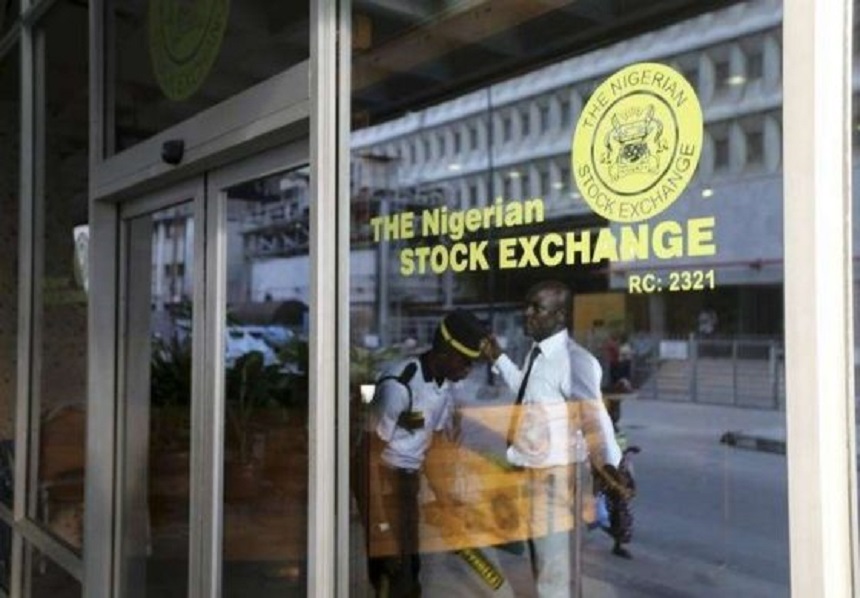
On Tuesday, March 19, 2019, the Nigerian Stock Exchange (NSE) will launch its Sustainability Disclosure Guidelines.
This would be done during a half-day workshop on sustainability reporting organised by the NSE and the Global Reporting Initiative (GRI) at the Exchange House in Lagos.
Business Post reports that recently, NSE secured approval of its Sustainability Disclosure Guidelines from the Securities Exchange Commission (SEC).
The Guidelines set out recommendations for good practice in 13 thematic areas under four core principles in ESG reporting. With the implementation of Guidelines, investors can look forward to a consistent approach to ESG reporting from Issuers listed on The NSE.
At Tuesday’s workshop, C-level executives, Corporate Social Responsibility and Sustainability experts, non-governmental organizations and other stakeholders would be under a roof for an interactive session to share insights on the imperative of good sustainable practices and reporting.
The conversation at this workshop will seek to address the implementation of sustainability reporting, key metrics in the new GRI reporting standards, reporting process and enhancement of corporate transparency and ultimately performance on environmental, social and governance (ESG) issues.
Speakers at the event include – Bola Adeeko, Head, Shared Services Division, NSE; Bekeme Masade-Olowola, GRI Board Member and Executive Director, CSR in Action; Olumide Orojimi, Head, Corporate Communication, NSE; Godstime Iwenekhai, Head, Listing Regulation Department, NSE. The panel discussion will feature Temitope Oguntokun, Country Lead, Sustainability and Stakeholder Management, International Breweries Plc; Ken Egbas, Founder/CEO at TruContact CSR Nigeria; Omobolanle Victor-Laniyan, Head, Sustainability, Access Bank Plc on sustainability and Emilia Asim-Ita, Practice Director, AML.
Commenting on the planned workshop, the NSE image maker stated that, “A wide range of investors and other stakeholders are increasingly demanding more disclosure of information and data from issuers on how they are addressing sustainability issues, including ESG factors and other non-financial risks and opportunities.
“As a sustainable Exchange, we are committed to helping organizations within our ecosystem implement reporting structure in line with global practices and their business peculiarities. This event will spotlight corporate social responsibilities beyond just practices and reveal how companies can create value through sustainability and reporting”.
GRI Head of Capital Markets Engagement, Eszter Vitorino, added, “Ensuring the sustainability of development in Nigeria can only be achieved through the proactive contribution of all members of the investment chain. We, therefore, give a warm congratulations to the NSE for walking the talk and driving corporate sustainability disclosure, which is the pivotal building block of responsible investment decisions”.



By Adedapo Adesanya
The Nigerian Export Promotion Council (NEPC) has assured beneficiaries of the $50 million Women Exporters in the Digital Economy (WEIDE) Fund to expect the first tranche of grants in the first quarter of 2026, following the completion of ongoing capacity-building and compliance processes.
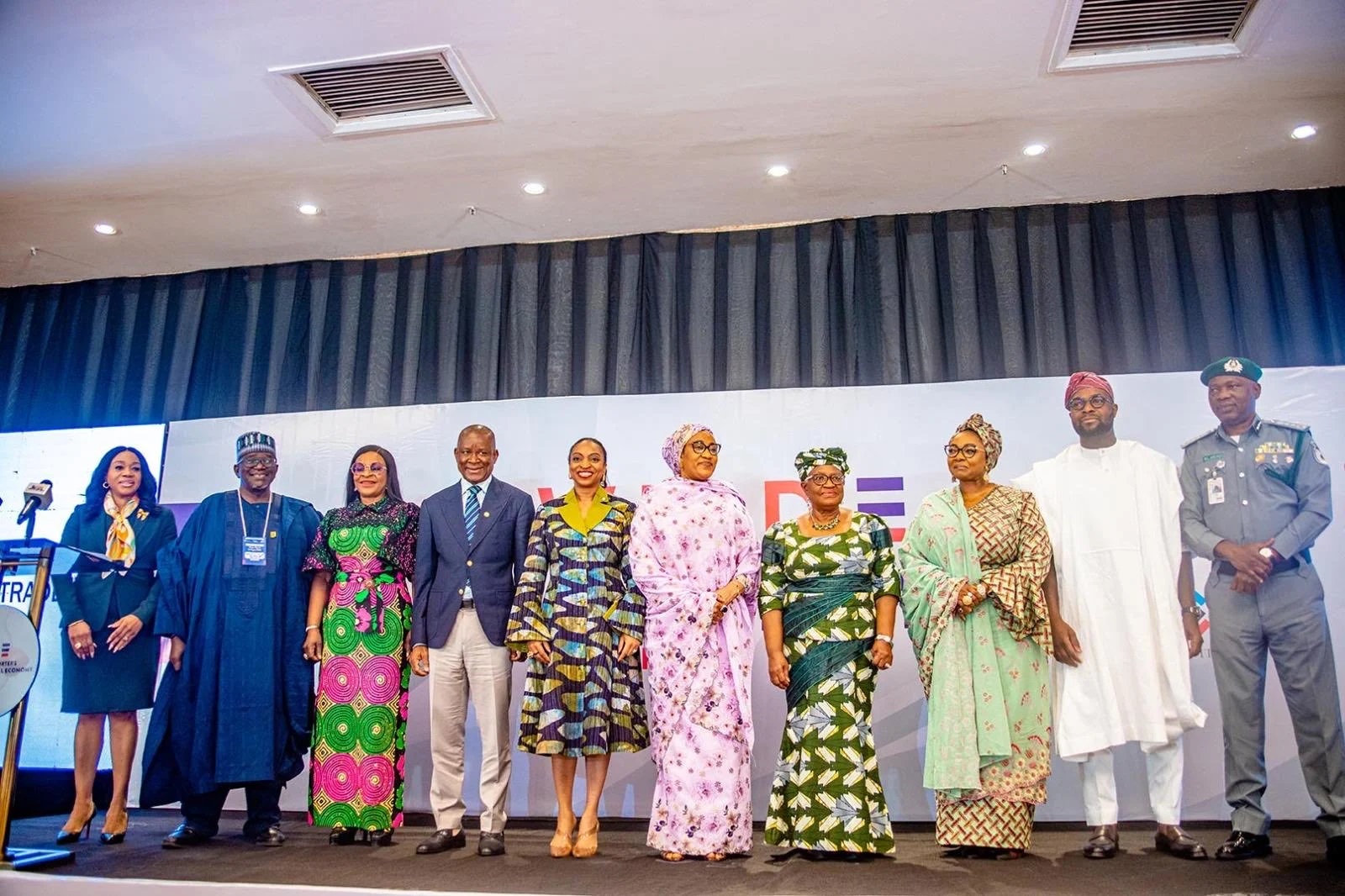
The assurance was given during a Town Hall Meeting for WEIDE Fund beneficiaries held in Abuja over the weekend. The gathering provided an opportunity to review progress made since the launch of the initiative in August 2025.
The $50 million WEIDE Fund is a global initiative by the WTO and ITC to empower women-led businesses in developing countries, especially Nigeria, by providing training, finance, and market access for digital trade, helping them grow from small enterprises to global players through support like grants and mentorship, as seen in its launch phase benefiting 146 Nigerian women entrepreneurs.
Speaking at the event, the chief executive of NEPC, Mrs Nonye Ayeni, called on beneficiaries to maximize the opportunities provided by the programme, emphasizing the progress made and the milestones achieved since its launch.
Mrs Ayeni said the engagement was meant to review the programme’s achievements, identify areas for improvement, and strengthen support for the beneficiaries.
“So, it’s time for us to get together at the end of the year to see how far we’ve gone, how well we’ve done, and what we need to do to make it better and support them more effectively through the WEIDE Fund,” she said.
Mrs Ayeni highlighted the significant capacity-building activities conducted for the 146 selected women entrepreneurs, noting that top-tier coaches and trainers had been deployed immediately after the official launch by the Director General of the World Trade Organisation (WTO), Mrs Ngozi Okonjo-Iweala.
“These coaches are exceptional. They’ve trained our beneficiaries in financial literacy, bookkeeping, soft skills, leadership, succession planning, and digital tools so they can compete globally,” she said.
By Adedapo Adesanya
The World Bank has approved a $500 million facility for Nigeria to expand longer-term lending to small and medium sized businesses.
Approved under the Fostering Inclusive Finance for MSMEs in Nigeria (FINCLUDE) project, the package comprises a $400 million International Bank for Reconstruction and Development (IBRD) loan and a $100 million International Development Association (IDA) credit. Both IBRD and IDA are members of the World Bank Group.
The scheme will be implemented by the Development Bank of Nigeria (DBN), with credit guarantees provided through DBN’s subsidiary, Impact Credit Guarantee Limited (ICGL).
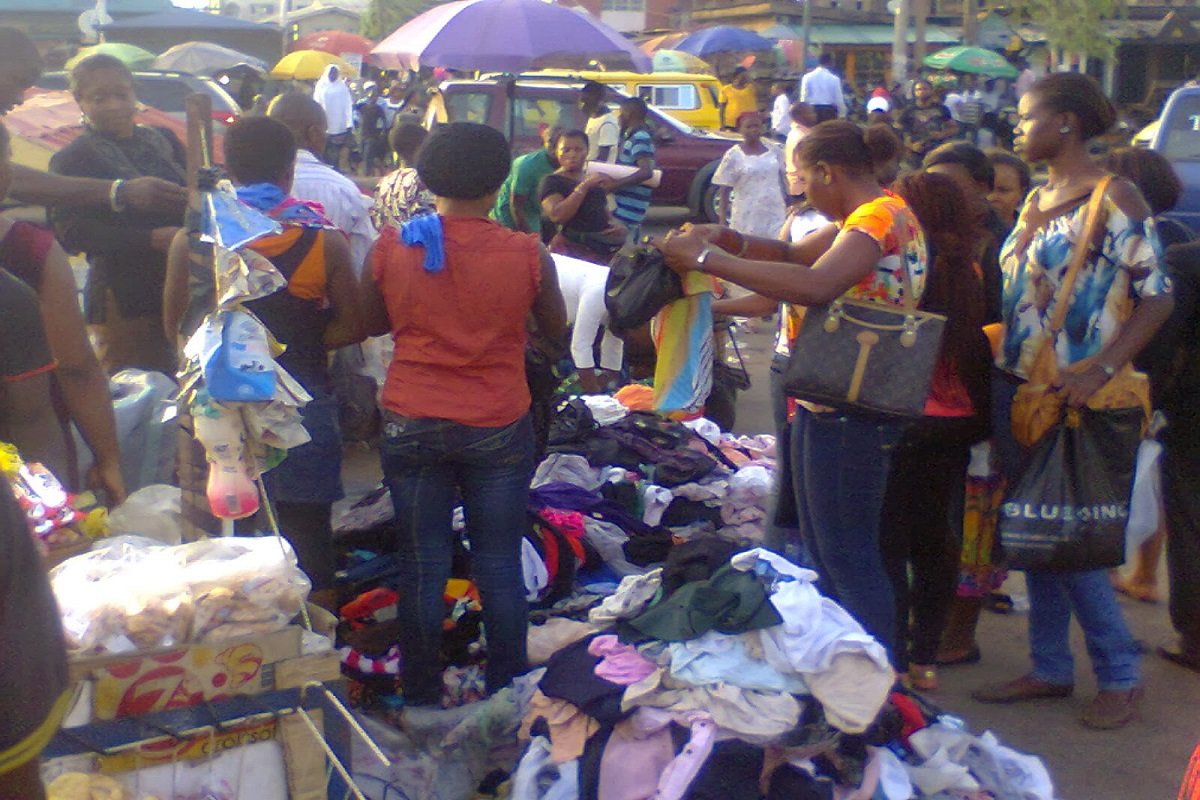
FINCLUDE is designed to address constraints faced by micro, small, and medium enterprises (MSMEs) in Nigeria which despite accounting for most businesses and nearly half of gross domestic product (GDP) face long-standing barriers to formal finance.
Fewer than one in 20 MSMEs have access to bank credit; loans are often short-term and costly; and collateral requirements exclude many viable firms. Women-led enterprises, which make up a substantial portion of MSMEs, are disproportionately affected, facing higher rejection rates and limited tailored products. Agribusinesses, central to food security and rural livelihoods, similarly struggle to obtain more extended‑tenor financing for equipment, processing, storage, and logistics.
However, FINCLUDE seeks to address these constraints by expanding access to affordable, longer-term finance and tailored solutions for segments with the most significant development impact.
Speaking on this, the World Bank Country Director for Nigeria, Mr Mathew Verghis, said, “FINCLUDE is about jobs, opportunity, and inclusion. By expanding access to finance for viable MSMEs—particularly women-led firms and agribusinesses—Nigeria can accelerate growth and deliver tangible benefits across communities nationwide.
“The project will make it easier for deserving small businesses to get the finance they need to grow and hire workers. With better support for lenders that practice inclusive finance and fairer, longer-term loans for entrepreneurs, we are backing the people who power Nigeria’s economy—especially women and those in agriculture.”
The FINCLUDE project will help to mobilise private investment and expand access to and usage of inclusive, innovative financial products for MSMEs nationwide.
Through DBN, the operation will strengthen the capacity of banks, including microfinance banks and non-bank financial institutions such as financial technologies (fintechs), to provide larger loans with more reasonable repayment periods, and—through ICGL—will scale partial credit guarantees so that lenders can extend credit to businesses they might otherwise consider too risky.
Targeted technical assistance will modernise loan appraisal by leveraging AI-enabled digital platforms to accelerate decision-making, improve data quality, strengthen impact measurement, and build capacity for both MSMEs and participating financial institutions.
According to the World Bank, a strong emphasis on inclusion will ensure that women-led businesses and agribusinesses benefit from these improvements.
Also commenting, Task Team Leader for FINCLUDE, Mrs Hadija Kamayo, said, “FINCLUDE will help to mobilize approximately $1.89 billion in private capital, expand debt financing to 250,000 MSMEs—including at least 150,000 women-led businesses and 100,000 agribusinesses—and issue up to $800 million in guarantees to catalyse lending.
“By extending the average maturity of MSME loans to about three years, it will help firms invest in equipment, factories, staff, and productivity, translating finance into jobs and growth.”
By Dipo Olowookere
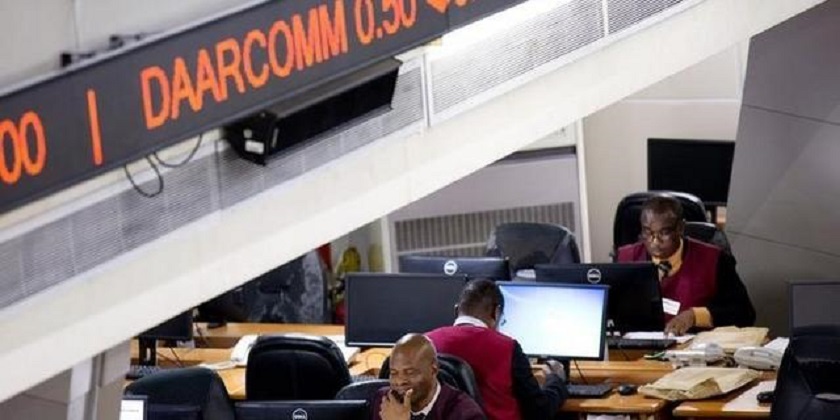
The local stock market firmed up by 1.13 per cent on Friday as appetite for Nigerian stocks remained strong.
Investors reacted well to the 2026 budget presentation of President Bola Tinubu to the National Assembly yesterday, especially because of the more realistic crude oil benchmark of $64 per barrel compared with the ambitious $75 per barrel for 2025. This year, prices have been between $60 and $65 per barrel.
Business Post observed profit-taking in the commodity and energy sectors as they respectively shed 0.14 per cent and 0.03 per cent.
But, bargain-hunting in the others sustained the positive run, with the consumer goods index up by 3.82 per cent.
Further, the industrial goods space appreciated by 1.46 per cent, the banking counter improved by 0.08 per cent, and the insurance industry gained 0.04 per cent.
As a result, the All-Share Index (ASI) increased by 1,694.33 points to 152,057.38 points from 150,363.05 points and the market capitalisation chalked up N1.080 trillion to finish at N96.937 trillion compared with Thursday’s closing value of N95.857 trillion.
A total of 34 shares ended on the advancers’ chart, while 24 were on the laggards’ log, representing a positive market breadth index and bullish investor sentiment.
Austin Laz gained 10.00 per cent to close at N2.42, Union Dicon also jumped 10.00 per cent to N6.60, Tantalizers increased by 9.80 per cent to N2.69, Aluminium Extrusion improved by 9.78 per cent to N12.35, and Champion Breweries grew by 9.71 per cent to N16.95.
Conversely, Sovereign Trust Insurance dipped by 7.42 per cent to N3.87, Royal Exchange lost 6.84 per cent to trade at N1.77, Omatek slipped by 6.84 per cent to N1.09, Eunisell depreciated by 5.88 per cent to N80.00, and Eterna dropped 5.63 per cent to close at N28.50.
Yesterday, traders transacted 1.5 billion units worth N21.8 billion in 25,667 deals compared with the 839.8 million units sold for N32.8 billion in 23,211 deals in the preceding session, showing a surge in the trading volume by 76.61 per cent, an uptick in the number of deals by 10.58 per cent, and a shrink in the trading value by 33.54 per cent.









-
 Feature/OPED6 years ago
Davos was Different this year
-
Travel/Tourism9 years ago
Lagos Seals Western Lodge Hotel In Ikorodu
-

 Showbiz3 years ago
Estranged Lover Releases Videos of Empress Njamah Bathing
-
 Banking7 years ago
Sort Codes of GTBank Branches in Nigeria
-

 Economy3 years ago
Subsidy Removal: CNG at N130 Per Litre Cheaper Than Petrol—IPMAN
-

 Banking3 years ago
First Bank Announces Planned Downtime
-

 Banking3 years ago
Sort Codes of UBA Branches in Nigeria
-

 Sports3 years ago
Highest Paid Nigerian Footballer – How Much Do Nigerian Footballers Earn