
Technology
Canon, Yaba Tech to Train Students on Digital Printing


Leader in imaging solutions, Canon Central and North Africa (CCNA), has signed a 3 year partnership agreement with Yaba College of Technology (Yabatech) to support students in their professional development by conducting print workshop training with Canon specialists.
The partnership with Yabatech is an extension of Canon’s Miraisha Sustainability Programme. The initiative, launched in late 2014, aims to build the capacity and talent of people in the African countries in which Canon operates by leveraging the company’s imaging heritage, advanced technological strengths and innovations.
The programme aims to improve the knowledge of digital printing and related technical skills of 80 Nigerian students specializing in this sector. The first activity to be run under this partnership is speciality training that will last one week and will be conducted by a professional print manager from Canon.
The theme of this training will be colour management and will alternate between practical and theoretical courses.
It will enable students to acquire the knowledge and skills necessary to understand and manage colour parameters in digital documents and printing, which will allow them to further improve the quality of printing and offer an ever more qualitative service to their future customers.
The main goal of this partnership is to support students in their training and facilitate their professional integration in the industry by offering access to professional machines and a space for meetings and experience with experts.
With the third-largest youth population in the world and a median age standing at about 18 years, Nigeria’s development is dependent on its youth. Indeed, over 70 percent of the country’s population is under the age of 30 according United Nations (2015). It is important that students receive the necessary training to be able to succeed and support the economic development of the country.
Roman Troedthandl, Managing Director CCNA, said, “During our collaboration with the prestigious College, Yabatech, we will provide a platform to develop the printing skills and give new opportunities to students. This will be achieved by providing them with innovative tools, practices and modern – skills necessary for proactive participation in the economy. Indeed, the training workshop will offer unparalleled prospects for graduates to broaden their horizons and take advantage of employment opportunities that support this remarkable population growth. “
Dr. Adeyemi Kunle, the Dean of School of Arts, Design& Printing YABATECH added “I am very delighted that my students from the school of Arts, Design & Printing, Yaba College of Technology can benefit from training provided by Canon’s experts in the professional printing industry. It is an opportunity for the students to access enhanced training to develop their skills and interact with professionals who, in addition to a solid knowledge of the sector, have a clear idea of the industry needs in Nigeria. Canon is a trusted partner in the transformational growth of Africa. By investing in youth, creating tangible opportunities for career development and promoting the printing industry through innovative solutions, Canon creates a vibrant growth ecosystem in Nigeria and the Continent”
Through Canon’s corporate philosophy of `Kyosei,’ meaning ‘living and working together for the common good,’ the company continues to maintain its strong growth and prosperity in the region with new business initiatives while also promoting its CSR activities.
To date, through the Miraisha Sustainability Programme, Canon has trained more than 4,000 students on photography skills and upskilled over 20 printing businesses. We are also the proud recipient of a certificate of appreciation from the Kano State Professional Photographers Association in Nigeria (KASPPAN).


By Modupe Gbadeyanka
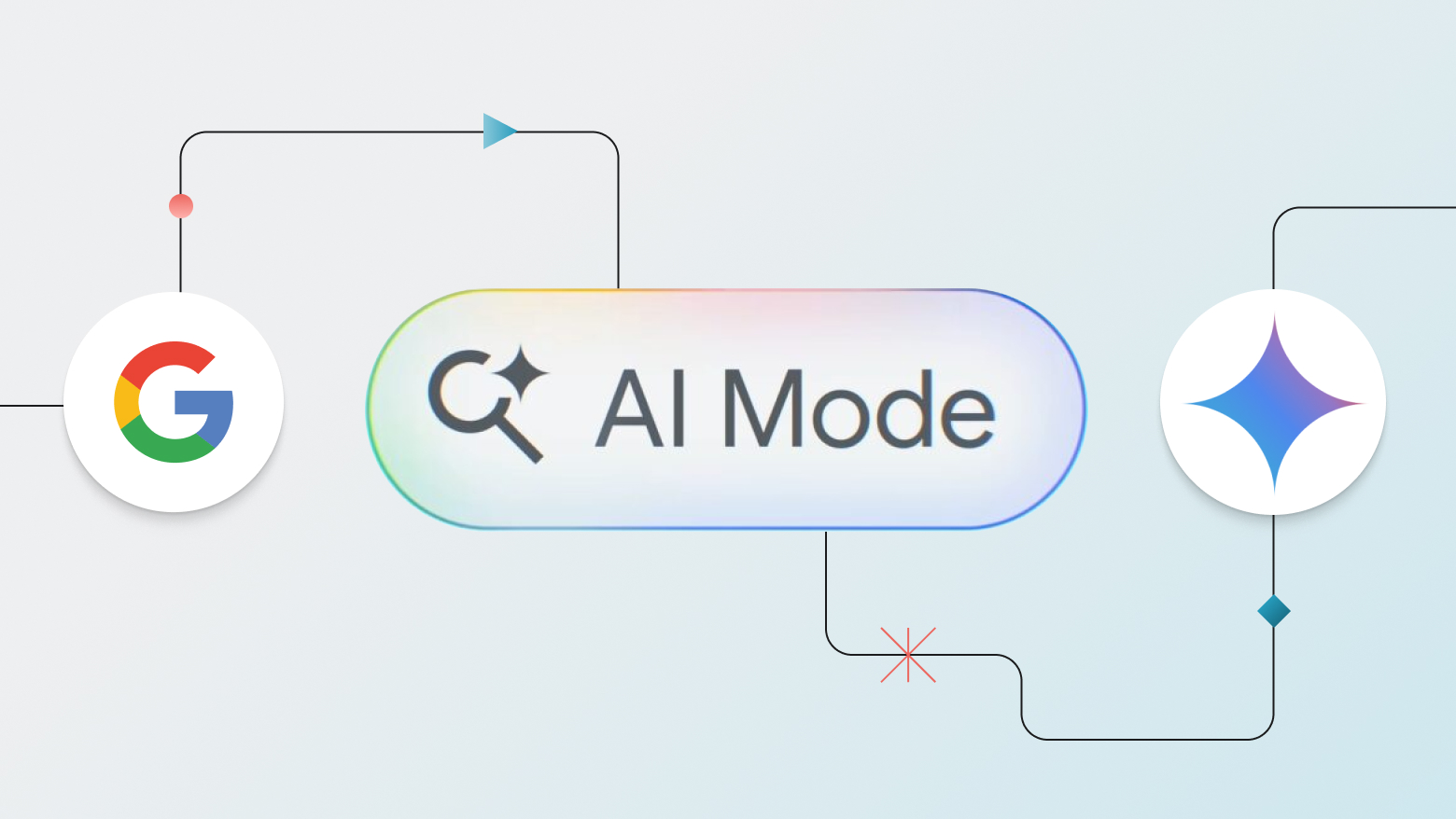
The language support for its AI Search features has been expanded by Google, with the inclusion of Yoruba and Hausa in Nigeria.
This is part of a broader effort to make AI more inclusive across the continent, with support now extending to a total of 13 African languages.
Under the AI Overviews and AI Mode, speakers of both Nigerian languages can utilise AI-powered Search experiences in their mother tongue for quick summaries and conversational exploration.
This means existing AI features in Google Search are now accessible to people like the student in Kano asking a question in Hausa, and the trader in Ibadan seeking advice in Yorùbá.
By addressing language barriers, this update ensures that technology reflects the identity and culture of the people it serves. With this expansion, more people can now use AI Mode to ask complex questions in their preferred language, while exploring the web more deeply and naturally through text or voice.
The 13 languages now supported across Africa include Afrikaans, Akan, Amharic, Hausa, Kinyarwanda, Afaan Oromoo, Somali, Sesotho, Kiswahili, Setswana, Wolof, Yorùbá, and isiZulu.
These languages were chosen based on the vibrant search activity across the continent, ensuring that our AI experiences reach the communities that need them most.
Commenting on the development, the Communications and Public Affairs Manager for Google in West Africa, Taiwo Kola-Ogunlade, said, “Building a truly global Search goes far beyond translation — it requires a nuanced understanding of local information.
“With the advanced multimodal and reasoning capabilities of our custom version of Gemini in Search, we’ve made huge strides in language understanding, so our most advanced AI search capabilities are locally relevant and useful in each new language we support.
“This is about ensuring Nigerians can converse with Search in their mother tongues, making information more helpful for everyone.”
To use AI Overviews and AI Mode in the local language, users must open the Google app on an Android or iOS device, or via the Web. They are required to tap on AI Mode within the Search experience. Thereafter, they can type or speak the question in their preferred language, such as Hausa or Yorùbá, and let the AI guide the journey.


By Adedapo Adesanya
Telecommunications operators in Nigeria will now be required to give subscribers a minimum of 14 days’ notice before deactivating their SIM cards over inactivity or post-paid churn, following a fresh proposal by the Nigerian Communications Commission (NCC).
The proposal is contained in a consultation paper, signed by the Executive Vice Chairman and Chief Executive Officer of the NCC, Mr Aminu Maida, and titled Stakeholders Consultation Process for the Telecoms Identity Risks Management Platform, dated February 26, 2026, and published on the Commission’s website.
Under the proposed amendments to the Quality-of-Service (QoS) Business Rules, the Commission said operators must notify affected subscribers ahead of any planned churn.
“Prior to churning of a post-paid line, the Operator shall send a notification to the affected subscriber through an alternative line or an email on the pending churning of his line,” the document stated.
It added that “this notification shall be sent at least 14 days before the final date for the churn of the number.”
A similar provision was proposed for prepaid subscribers. According to the Commission, operators must equally notify prepaid customers via an alternative line or email at least 14 days before the final churn date.
Currently, under Section 2.3.1 of the QoS Business Rules, a subscriber’s line may be deactivated if it has not been used for six months for a revenue-generating event. If the inactivity persists for another six months, the subscriber risks losing the number entirely, except in cases of proven network-related faults.
The new proposal is part of a broader regulatory review tied to the rollout of the Telecoms Identity Risk Management System (TIRMS), a cross-sector platform designed to curb fraud linked to recycled, swapped and barred mobile numbers.
The NCC explained in the background section of the paper that TIRMS is a secure, regulatory-backed platform that helps prevent fraud stemming from churned, swapped, barred Mobile Station International Subscriber Directory Numbers in Nigeria.
It said this platform will provide a uniform approach for all sectors in relation to the integrity and utilisation of registered MSISDNs on the Nigerian Communications network.
In addition to the 14-day notice requirement, the Commission also proposed that operators must submit details of all churned numbers to TIRMS within seven days of completing the churn process, strengthening oversight and accountability in the system.
The consultation process, which the Commission said is in line with Section 58 of the Nigerian Communications Act 2003, will remain open for 21 days from the date of publication. Stakeholders are expected to submit their comments on or before March 20, 2026.

By Modupe Gbadeyanka
The founder of Interswitch, Mr Mitchell Elegbe, has been honoured for pioneering Nigeria’s digital payments revolution.
At a ceremony in Lagos on Sunday, March 1, 2026, he was bestowed with the 2025 Silverbird Special Achievement Award for shaping Africa’s financial ecosystem.
The Silverbird Special Achievement Award recognises individuals whose innovation, vision, and sustained impact have left an indelible mark on society.
Mr Elegbe described the award as both humbling and symbolic of a broader journey, saying, “This honour represents far more than a personal milestone. It reflects the courage of a team that believed, long before it was fashionable, that Nigeria and Africa could build world-class financial infrastructure.”
“When we started Interswitch, we were driven by a simple but powerful idea that technology could democratise access, unlock opportunity, and enable commerce at scale.
“This recognition by Silverbird strengthens our resolve to continue building systems that empower businesses, support governments, and expand inclusion across the continent,” he said when he received the accolade at the Silverbird Man of the Year Awards ceremony attended by several other dignitaries, whose leadership and contributions continue to shape national development and industry transformation.
In 2002, Mr Elegbe established Interswitch after he was inspired by a bold conviction that technology could fundamentally redefine how value moves within and across economies.
Under his leadership, the company has evolved into one of Africa’s foremost integrated payments and digital commerce companies, powering financial transactions for governments, banks, businesses, and millions of consumers.
Today, much of Nigeria’s electronic payments ecosystem traces its foundational architecture to the systems and rails established under his leadership.
“Mitchell’s journey is inseparable from Nigeria’s digital payments evolution. His foresight and resilience helped establish foundational infrastructure at a time when the ecosystem was still nascent.
“This recognition affirms not only his personal legacy, but the broader impact of Interswitch in enabling commerce and strengthening financial systems across Africa,” the Executive Vice President and Group Marketing and Communications for Interswitch, Ms Cherry Eromosele, commented.











-
 Feature/OPED6 years ago
Davos was Different this year
-
Travel/Tourism10 years ago
Lagos Seals Western Lodge Hotel In Ikorodu
-

 Showbiz3 years ago
Estranged Lover Releases Videos of Empress Njamah Bathing
-
 Banking8 years ago
Sort Codes of GTBank Branches in Nigeria
-

 Economy3 years ago
Subsidy Removal: CNG at N130 Per Litre Cheaper Than Petrol—IPMAN
-

 Banking3 years ago
Sort Codes of UBA Branches in Nigeria
-

 Banking3 years ago
First Bank Announces Planned Downtime
-

 Sports3 years ago
Highest Paid Nigerian Footballer – How Much Do Nigerian Footballers Earn