

Banking
How We Plan to Improve Profitability, Deliver Value to Shareholders—Union Bank


By Modupe Gbadeyanka
Chairman of Union Bank of Nigeria Plc, Mr Cyril Odu, has assured shareholders that the company will make efforts to improve its performance in the 2019 business year.
Mr Odu gave this assurance at the Annual General Meeting (AGM) of the financial institution held in Lagos on Tuesday.
According to him, in order to improve profitability and value to shareholders, the lender will execute its 2019-2021 strategic objectives, which focus on “Sweating our Assets, Digitising our Bank, and Positioning for the Future.”
The Chairman said the decline in the Non-Performing Loan (NPL) ratio of the bank to 8.1 percent in December 2018 from 20.8 percent in December 2017 was a clear indication of efforts to make things better at the company.
He said in addition, the improvement in the bank’s Return on Tangible Equity (ROTE) to 9.6 percent from 6.2 percent in 2017 was another indication that Union Bank can deliver long-term value to shareholders.
“We have positioned Union Bank to take advantage of the emerging opportunities in the economy and remain optimistic about the future of the Bank.
“We will execute our 2019-2021 strategic objectives – Sweating our Assets, Digitising our Bank, and Positioning for the Future; towards being Nigeria’s most reliable and trusted banking partner.
“We will focus on embedding disciplined cost management as well as mining synergies across business segments and functions to improve the profitability of our business and deliver value to all our stakeholders; shareholders, customers, business partners’ and employees,” Mr Odu said.
The Chairman highlighted some major achievements in 2018 to include: strengthening retail and transaction banking offerings, and the launch of the first Local Letter of Credit to support local trade. There was also the launch of the inaugural N13.5 billion Bond issue, and the adoption of the Robotic Process Automation (RPA) technology – the first bank to do so in Nigeria.
According to him, highlights of the group’s financial performance in 2018 showed that profit before tax grew by 33 percent to N18.5 billion from N13.9 billion in 2017.
Customer deposits also went up by 7 percent to N857.6 billion from N802.4 billion in 2017, continuing its upward trajectory since 2016; an indication of consumers’ growing confidence in the brand.
Also addressing shareholders at the AGM, Managing Director of Union Bank, Mr Emeka Emuwa, stated that, “Our priorities in 2018 were three pronged; enhancing our productivity across board; tightening up our loan portfolio (especially resolving key large exposures, which drove NPLs up significantly at the end of 2017); and optimising the Bank’s capital and funding base.”
He said the bank made significant strides in each focus area notwithstanding a depressed economic environment and a challenging operating landscape, adding that its efforts to optimise productivity delivered results.
“In 2019, we will double-down on our productivity efforts to deliver our financial targets. We are harnessing synergies across our business segments to ensure we maximise opportunities across entire value chains, while centralising key business and operational functions for better efficiency, and prioritising customer experience across all our touch points.
“Following the successful execution of the Bank’s debut local currency bond issue to raise N13.5b and the tightening up of its loan portfolio, Union Bank is well positioned to continue executing key business priorities in 2019 and beyond,” he added.


By Modupe Gbadeyanka
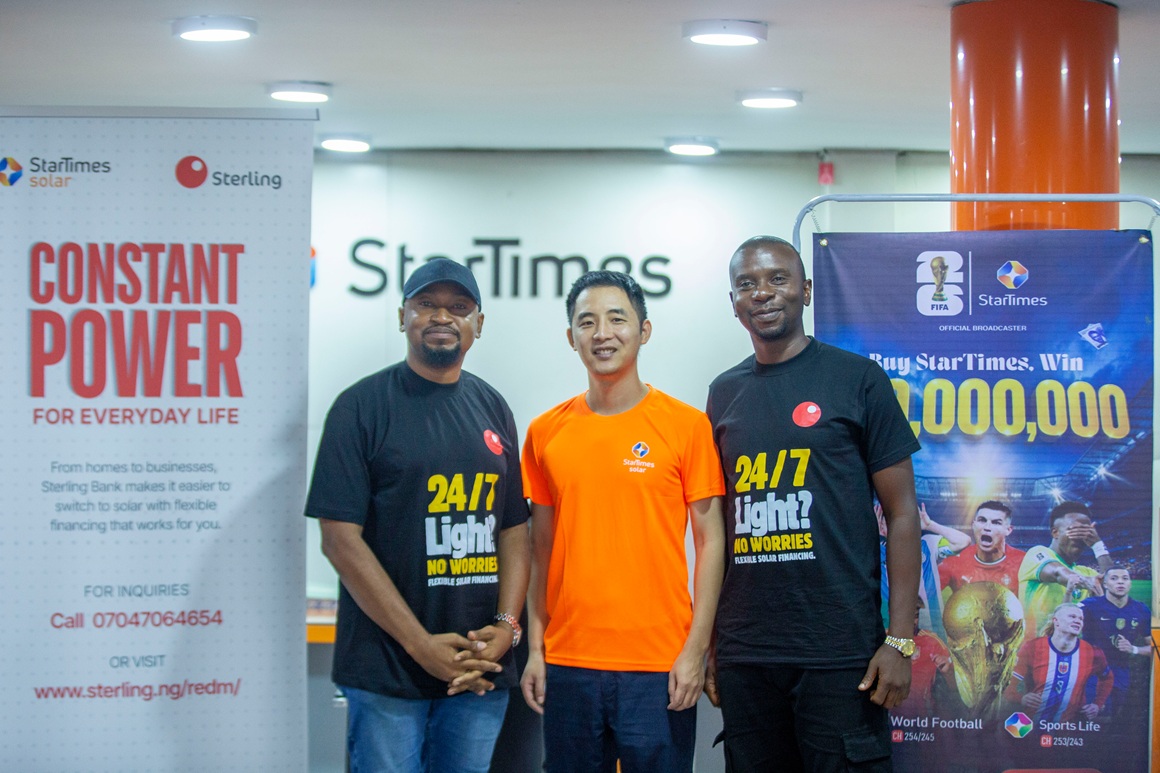
About N2 billion is expected to be used to finance renewable energy products for customers by the end of 2026 in an effort to accelerate Nigeria’s clean energy transition.
To meet this goal, Sterling Bank is launching Sterling Solar Financing Hubs inside StarTimes retail outlets to embed on-the-spot solar financing at the point of purchase.
From the N2 billion earmarked for this initiative, N600 million has already been used up.
Under this programme, customers can now walk into participating outlets, select their preferred solar solution, receive financial guidance from dedicated Sterling Solar Financing Advisors, and begin the financing process immediately, subject to the bank’s credit assessment.
The first phase of the rollout commenced this July with five Solar Financing Hubs across Lagos, located in Lekki, Ikeja, Festac, Surulere, and Victoria Island.
The network will expand rapidly to 46 StarTimes outlets nationwide before the end of the third quarter of 2026, with a view to extending the model to more than 200 StarTimes locations nationwide.
Both parties have promised to continue working together to democratise access to clean energy financing, empowering more Nigerians to solarise their homes and businesses while contributing to a greener future.
“Sterling exists to enrich lives, and we believe that access to clean, reliable energy should be within everyone’s reach. Through this partnership with StarTimes, we are democratising access to solar by bringing financing directly to the point of need, enabling more families and businesses to transition to sustainable energy without the burden of prohibitive upfront costs. This is about unlocking opportunity, improving livelihoods, and powering Nigeria’s future,” the Divisional Head of Renewable Energy and Mobility at Sterling Bank, Mr Darlington Nwankwo, said.
Also commenting, the Vice President of StarTimes Nigeria, Mr Eric Xiao, said, “With the rollout of the Sterling Solar Financing Hubs, we are doing more than just selling solar products; we are building a sustainable energy ecosystem. By integrating StarTimes’ extensive service network with Sterling Bank’s professional financial services, we are significantly lowering the barrier for Nigerian households and small businesses to access clean energy.
“Moving forward, we will continue to deepen this partnership, ensuring that more Nigerians can enjoy reliable, affordable, and smart energy solutions, ultimately turning our vision of energy accessibility into a reality for all.”

By Modupe Gbadeyanka
The Nigeria Business Summit Regional Tour of Stanbic IBTC Bank made a detour to Jogor Centre, Ibadan, Oyo State, on Wednesday, July 15, 2026, to empower Micro, Small, and Medium Enterprises (MSMEs).
The event brought together business leaders, development partners and government representatives to discuss pathways for sustainable enterprise development across the South-West.
Participants engaged in practical masterclasses on export opportunities; access to finance and business growth strategies; gaining actionable insights into market expansion; trade documentation; credit readiness; financial record-keeping; and structured financing solutions designed to support long-term business success.
The Head of Enterprise Banking at Stanbic IBTC Bank, Ms Olajumoke Bello, informed participants that the programme is part of the lender’s commitments to supporting MSMEs through practical business education, strategic partnerships and improved access to growth opportunities.
The Executive Director of Business and Commercial Banking at Stanbic IBTC Bank, Mr Remy Osuagwu, on his part, said, “Our ambition is to be more than a financial institution to Nigerian businesses. We want to be a trusted growth partner, providing the financing, business insights and advisory support entrepreneurs need to build sustainable enterprises and unlock new opportunities.”
Similarly, the chief executive of Stanbic IBTC Bank, Mr Wole Adeniyi, who reinforced the company’s commitment to enterprise development, highlighted the importance of providing businesses with the right support structures to enable sustainable growth and long-term competitiveness.
“At Stanbic IBTC, we believe that sustainable economic growth depends on the success of small and growing businesses. That is why we are focused on providing access to finance, practical advisory support and the connections businesses need to move from ambition to scale,” he stated.
The Oyo State Commissioner for Investment, Trade, Cooperatives, and Industry, Professor Soliu Adelabu, said the initiative was designed to support businesses and strengthen the state’s entrepreneurship ecosystem, praising the bank for its support for traders, entrepreneurs, and artisans in the state.
The Permanent Secretary in the Oyo State Ministry of Women Affairs and Social Inclusion, Mrs O.M. Shotonwa-Roagess, highlighted the importance of strategic partnerships in expanding economic opportunities for women and vulnerable groups across Oyo State. She noted that the ministry remains open to collaborating with organisations such as Stanbic IBTC, development partners and the private sector to drive financial inclusion, entrepreneurship and sustainable economic empowerment.
The Nigeria Business Summit Regional Tour forms part of Stanbic IBTC’s broader commitment to empowering entrepreneurs through capacity building, financial inclusion and strategic business support, helping enterprises unlock new opportunities for growth and long-term success.
The Ibadan leg built on the momentum of previous tour stops in Katsina and Aba.


By Adedapo Adesanya
The Governor of the Central Bank of Nigeria (CBN), Mr Yemi Cardoso, says Nigeria anticipates remittances from citizens living abroad to increase by two-thirds in 2026 as it seeks to bolster its foreign-exchange reserves to $1 billion monthly.
“We are expecting that by the end of the year, we will hit about a billion Dollars a month from diaspora remittances,” he said at the 14th Annual BusinessDay CEO Forum in Lagos on Thursday, themed From Stability to Shared Prosperity.
Mr Cardoso said remittances are expected to be boosted from more than $600 million currently, banking on the CBN’s deliberate target at remittances to diversify reserve sources beyond oil earnings.
According to him, the apex bank engaged Nigerians abroad, banks and international partners to identify barriers to official remittance flows.
He said the lender subsequently reviewed policies to ensure easier movement of funds into and out of the country.
Mr Cardoso described the approach as providing free entry and free exit for foreign exchange.
He said the reforms helped double diaspora inflows within one year and exceeded initial expectations, also projecting annual remittances could reach about $8 billion if the current momentum was sustained, adding that the development reflected growing confidence in Nigeria’s financial system and foreign exchange market.
Mr Cardoso said reforms introduced by the apex bank had restored stability in the foreign exchange market and improved investors’ confidence.
He identified exchange rate unification as one of the central bank’s major achievements under the reforms programme.
According to him, replacing multiple exchange rate windows with a market-driven system eliminated distortions and improved transparency.
Mr Cardoso said improved foreign exchange liquidity and stronger reserves were among the gains from the reforms.
He said Nigeria’s net external reserves had risen from about $3 billion at the start of the reforms to above $40 billion currently, noting that gross external reserves had grown to about $52 billion, representing about 10 months of import cover.
According to him, the reserves are designed to shield the economy from external shocks and excessive market volatility.
He said the reserves were not meant for routine interventions or day-to-day exchange rate management.
