

Banking
Examining Stanbic IBTC vis-à-vis Banking Industry Compliance and Corporate Governance Practices

At a recent function in Abuja, the Managing Director/CEO of the Nigeria Deposit Insurance Corporation (NDIC), Alhaji Umaru Ibrahim, delivered a lecture where he revealed that there has been a consistent decline, over the past three years, in the recorded rate of successful fraud incidences, thefts and forgeries in the banking industry. Specifically, Ibrahim said such cases had declined by almost half, 48.12%, of the rate it was in 2015.
In response to how the industry was able to achieve such impressive reductions, Ibrahim, while putting in perspective the key reason for frauds to help buttress his response, explained that poor corporate governance practices in terms of regulatory and supervisory oversight and compliance allow frauds and forgeries to thrive. So all that needed to be done was to ensure a stronger corporate governance practice. He said the reduction is indicative of the strict adherence to sound corporate governance practices by banks, which include compliance with regulations.
Indeed, experts at a recent workshop organized by the National Institute of Compliance (NIC) agreed that compliance is at the heart of sound banking practices and sustainable banking and that the risk of banking industry failure is remoter now than it was some years back due to a higher level of compliance. The nature of the banking industry, with its intermediation functions, is such that failure can have very dire consequences for businesses and the economy. Thus, banks have a responsibility to ensure a stable industry and this can only be achieved by sound corporate governance practices.
In the 90s and early 2000s, regulatory and supervisory oversight was weak and compliance by banks to regulations was mainly in the breach. Then, the industry was an all comers’ affair, mostly populated by charlatans who see the industry as mainly a meal ticket. Banks were being opened at a dizzying pace then, with sometimes three or four opened in a month. Before the recapitalization exercise of 2005, there were close to 200 banks in the country. There was widespread corruption in the industry at the time, which led to billions of naira of depositors’ money and investors’ funds lost or misappropriated. But following the recapitalization exercise and especially after the global financial crisis of 2008, corporate governance became a major issue leading to the introduction of a raft of corporate governance codes.
For a bank like Stanbic IBTC, regulatory compliance comes like second nature. The brand’s penchant for regulatory compliance was validated in 2015 at the maiden edition of the Corporate Affairs Commission’s Corporate Citizens Awards. Stanbic IBTC Bank came first for compliance among Nigerian banks and was awarded the Most Extensive Compliance award. According to CAC, “over 800 companies were nominated for the awards, only 26 companies made the final list, out of which the nine winning companies emerged,” including Stanbic IBTC and three other banks.
Certainly, there is no better validation than a regulator attesting to a company’s good corporate citizenship. And it is no surprise that a bank like Stanbic IBTC was adjudged the first among equals in terms of compliance.
Many sometimes view the bank’s processes and policies as cumbersome because of the different layers of regulatory requirements it insists must be met before a transaction can be consummated. But then on the flip side is that Stanbic IBTC Bank is one of the most secure, transparent and trusted financial institutions in the country today.
These qualities continue to translate into very strong financial performances in its operations and a bullish outlook for the stock at the Nigerian Stock Exchange.
In its 2018 financial report, Stanbic IBTC Bank posted an impressive 54% growth in PAT. Balance sheet grew by 20% to N1.6 trillion, driven mainly by deposit growth of 7%. And most importantly, was able to improve its asset quality as ratio of non-performing loans to total loans improved to 3.9%.
Financial institutions, particularly Stanbic IBTC, fully appreciate and understand that their survival depend on how well they are able to manage the relationships amongst their stakeholders, which require them to establish and maintain harmony between parties whose interests sometimes conflict. It is the management of such relationships that corporate governance code embodies. It is this realisation that led banks to self-regulate when in 2003 the Code of Corporate Governance for Banks and Other Financial Institutions in Nigeria was established by the Bankers’ Committee and CIBN.
Stanbic IBTC’s strong corporate governance practices are critical to the financial institution’s continued growth trajectory. The seamlessness of its change of leadership last year was quite impressive and such practices will no doubt give it the desired stability to further increase its market share and to post impressive financial results, going forward.
With the 2003 code, the 2014 CBN code and a spate of regulations by the apex bank as situation demands, which makes for a stronger regulatory oversight, one can almost argue that the possibility of a banking industry failure is remoter than constant uninterrupted power supply in the country. Despite the cost of compliance, which can sometimes be huge and burdensome in terms of time and direct cost, and the risk of managements of banks becoming particularly focused on compliance at the expense of doing business, financial institutions remain resolute in ensuring a strong and viable industry. And this is beginning to produce dividends as shown by the recent NDIC figures and the industry’s financial scorecards.
Today, banks sometimes face the wrath of stakeholders as they strive to comply with regulatory directives. A case in point was the directive by the CBN that banks publish the names of delinquent debtors on its books, which did not go down well with some customers.
Another was the foreign exchange utilization position, mandated to be published weekly, and the various restrictions to dollar disbursements to bank customers. Treasury Single Account (TSA), which required all agencies of government to each maintain a single account with the CBN, leading to the withdrawal of trillions of naira from commercial banks, was another policy that banks would have gladly avoided but nonetheless diligently complied with. And most recently is the ‘appointment’ of banks by the Federal Inland Revenue Service as tax collecting agents, which pitched the banks directly against some of their customers and trade partners.
There is no doubt that there is a new compliance orientation in the banking industry. And as banks like Stanbic IBTC, Zenith Bank, Access Bank and UBA continue to lead the financial services industry towards improved compliance levels, it will not only check corruption in the banking industry and risk of possible collapse, it will, due to banks’ pivotal role in the economy, help sanitize business practices and thereby attract investors and boost the economy.



By Aduragbemi Omiyale
An initiative known as Nigeria Lightning Rounds, designed to expand funding opportunities for Nigerian startups and small businesses by connecting founders with local and international investors, has been launched by ProvidusUnity Bank, in partnership with US-based global venture firm and accelerator, gener8tor.
Scheduled to be held on July 15, 2026, Nigeria Lightning Rounds will feature carefully selected startups engaging with targeted investors who have expressed interest in supporting Nigerian innovation.
Participating founders will have the opportunity to pitch their businesses through focused 15-minute virtual sessions facilitated by gener8tor and ProvidusUnity Bank’s networks.
The program will focus on high-growth sectors including fintech, healthtech, manufacturing, sustainability, and AI, but welcomes SMEs from all industries, with intending participants urged to apply via https://www.gener8tor.com/lightning-rounds/nigeria.
“We recognise that access to capital remains one of the biggest challenges facing entrepreneurs in Nigeria. Through our partnership with gener8tor, we are creating a platform that connects promising Nigerian founders with investors who can provide the support required to scale their businesses,” the Head of Business Development at ProvidusUnity Bank, Mr Ernest Elue, stated.
“The partnership reinforces ProvidusUnity Bank’s commitment to strengthening Nigeria’s entrepreneurial ecosystem by supporting innovation, enabling access to opportunities, and creating pathways for businesses with high-growth potential,” he added.
Also commenting, the Director of Lightning Rounds at gener8tor, Ms Elizabeth Larios, said, “gener8tor is thrilled to partner with ProvidusUnity Bank to extend the Lightning Rounds model into Nigeria.
“This collaboration reflects our commitment to building equitable ecosystems and driving capital to the most promising and underrepresented entrepreneurs.”
Lightning Rounds are a signature initiative of gener8tor’s investment platform, which has facilitated thousands of investor-startup meetings globally. The format is optimised to eliminate friction, reduce bias in early-stage fundraising, and help founders secure capital from investors aligned with their mission and stage. gener8tor’s previous Lightning Rounds for Nigerian Founders in 2025 featured 18 participating Investors and led to 50 investment meetings facilitated.
By Modupe Gbadeyanka
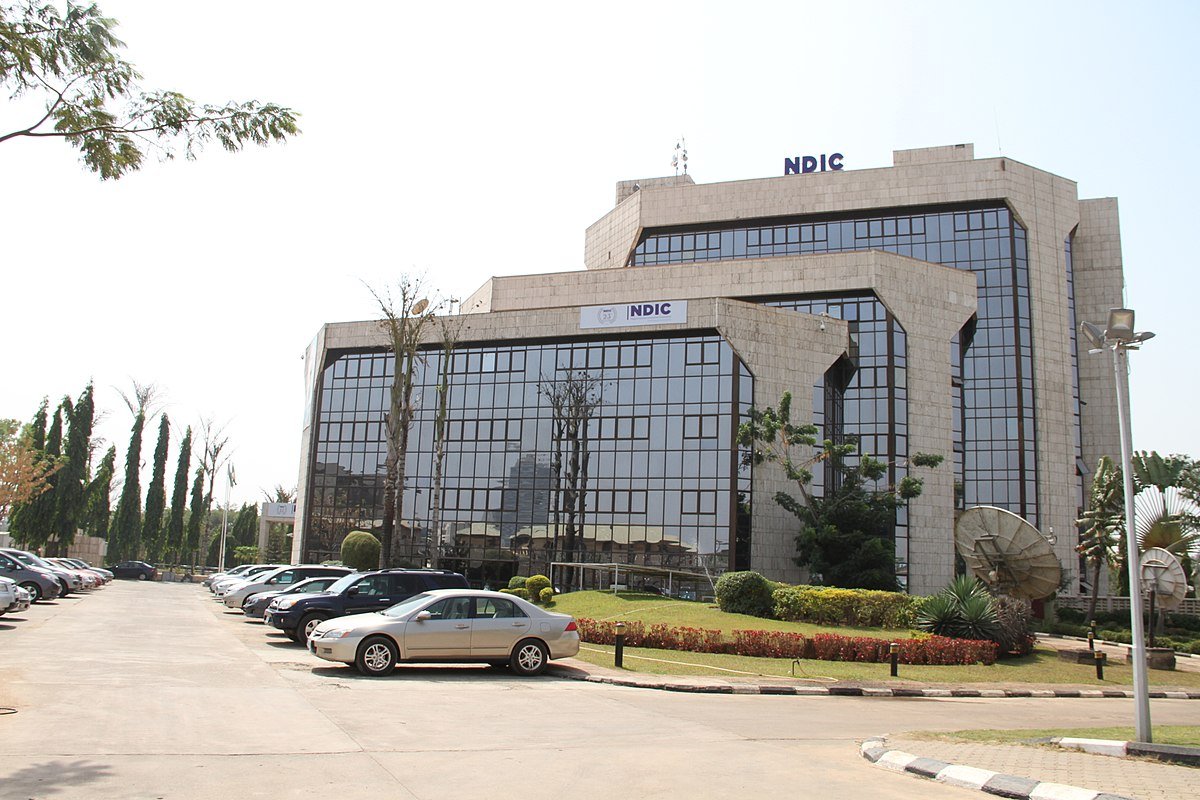
The verification of the depositors of the 46 microfinance banks, whose operating licenses were revoked by the Central Bank of Nigeria (CBN) over a week ago, has commenced.
The exercise, aimed at refunding those whose funds were trapped in the small lenders, is being conducted by the Nigeria Deposit Insurance Corporation (NDIC).
In a statement on Thursday, the agency said its staff members have been positioned at the offices of the affected banks across the country to attend to depositors.
It was disclosed that depositors of the defunct banks, who had their Bank Verification Numbers (BVNs) linked to their accounts in the failed banks, will be paid through their alternative accounts in existing banks.
However, depositors whose BVNs were not linked to their accounts in the failed banks have been encouraged to visit the affected banks’ offices with proof of account ownership, a passport photograph, verifiable means of identification (Driver’s Licence, Permanent Voter’s Card, International Passport or National ID Card) and BVN.
NDIC also stated that depositors can alternatively file their claims online through its website: www.ndic.gov.ng, to complete the Pre-Verification Claims Form by clicking on the Search Bar, and typing Pre-Verification Claims Form; opening the Form and filling in their details. They can also do so by clicking the link: https://ndic.gov.ng/ndic-pre-verification-claims-form/ or by visiting any of the NDIC offices closest to them to file their claims.
For further enquiries, the corporation can be reached on any of the following lines: 09037273810, 09038197064, 08104220807, 09064657140.


By Adedapo Adesanya
Nigeria’s Bank Verification Number (BVN) enrolment has slowed significantly in 2026 following the introduction of a stricter regulatory framework by the Central Bank of Nigeria (CBN), with the latest data from the Nigeria Inter-Bank Settlement System (NIBSS) showing that registrations are on course to fall well below last year’s record.
The BVN database stood at 69.55 million as of July 5, 2026, up from 69.32 million in June, indicating that only 228,947 new registrations were recorded over the period. Since the end of 2025, when the database stood at 67.8 million, total enrolments have increased by 1.75 million.
At the current pace, however, BVN registrations are unlikely to match the 4.3 million new enrolments recorded in 2025, suggesting a sharp deceleration in growth this year.
The slowdown comes after the CBN introduced a revised BVN regulatory framework in March, with the new rules taking effect on May 1, 2026. The framework tightened controls around enrolment, identity verification and fraud monitoring as part of efforts to strengthen the integrity of the banking system.
Among the key changes was the introduction of a minimum enrolment age of 18 years, effectively preventing minors from registering for a BVN.
The new framework also limits customers to a one-time change of the phone number linked to their BVN and requires financial institutions to place BVNs linked to suspected fraudulent transactions on a temporary watch-list for up to 24 hours while investigations are carried out.
The stricter rules contrast with last year’s surge in registrations, which was largely driven by the introduction of the Non-Resident Bank Verification Number (NRBVN) initiative that enabled Nigerians in the diaspora to complete BVN enrolment remotely, removing physical barriers and expanding access to the financial system.
Launched on February 14, 2014, the BVN scheme was introduced by the CBN in collaboration with the Bankers’ Committee, NIBSS and German technology firm Dermalog to assign every bank customer a unique biometric identity that can be verified across Nigeria’s banking industry.
