

Economy
Stocks Shed N15bn Thursday as Year-to-Date Loss hits 13.93%


By Dipo Olowookere
Transactions on the floor of the Nigerian Stock Exchange (NSE) remained bearish on Thursday as investors continue to selloff their holdings due to some uncertainties.
This led to the reduction in the market value yesterday by N15 billion to settle at N13.183 trillion, while the All-Share Index (ASI) went down by 30.18 points to finish at 27,052.93 points.
Business Post reports that the market closed on Thursday with a total of 23 price losers as against the only nine price gainers, which left the market breadth negative.
Topping the risers chart was MTN Nigeria, which added N5.75k to its share price to close at N135 per share, with CCNN occupying the second position with N1.25k gain to end at N14.50k per unit.
Dangote Flour appreciated by 30 kobo to finish at N20.80k per share, Union Bank rose by 20 kobo to settle at N7 per unit, while Zenith Bank grew by 5 kobo to end at N16.25k per share.
At the other side, Stanbic IBTC dominated the price decliners’ table with a price depreciation of N3.80k to finish at N34.30k per share, while Unilever Nigeria shed N3.20k to close at N28.80k per unit.
Dangote Cement depreciated yesterday by N3 to end at N162 per share, Ecobank went down by 70 kobo to settle at N6.30k per share, while Custodian Investment declined by 60 kobo to close at N5.60k per unit.
During yesterday’s trading session, Business Post observed that the activity level was mixed with the volume of trades going down by 0.82 percent, while the value of the transactions went up by 10.48 percent.
The volume of shares exchanged by investors dropped to 233.2 million on Thursday from 235.1 million on Wednesday, while the value of the equities rose to N3.6 billion yesterday N3.3 billion.
Dominating the activity chart at the stock market yesterday was GTBank as investors traded 42.5 million units of the company’s shares worth N1.1 billion.
It was trailed by Transcorp, which sold 37.9 million valued at N33.1 million, Access Bank, which exchanged 22.1 million equities worth N130.1 million, Fidelity Bank, which transacted 19.4 million shares for N28.2 million, and Zenith Bank, which exchanged 18.3 million equities worth N298.6 million.


By Dipo Olowookere
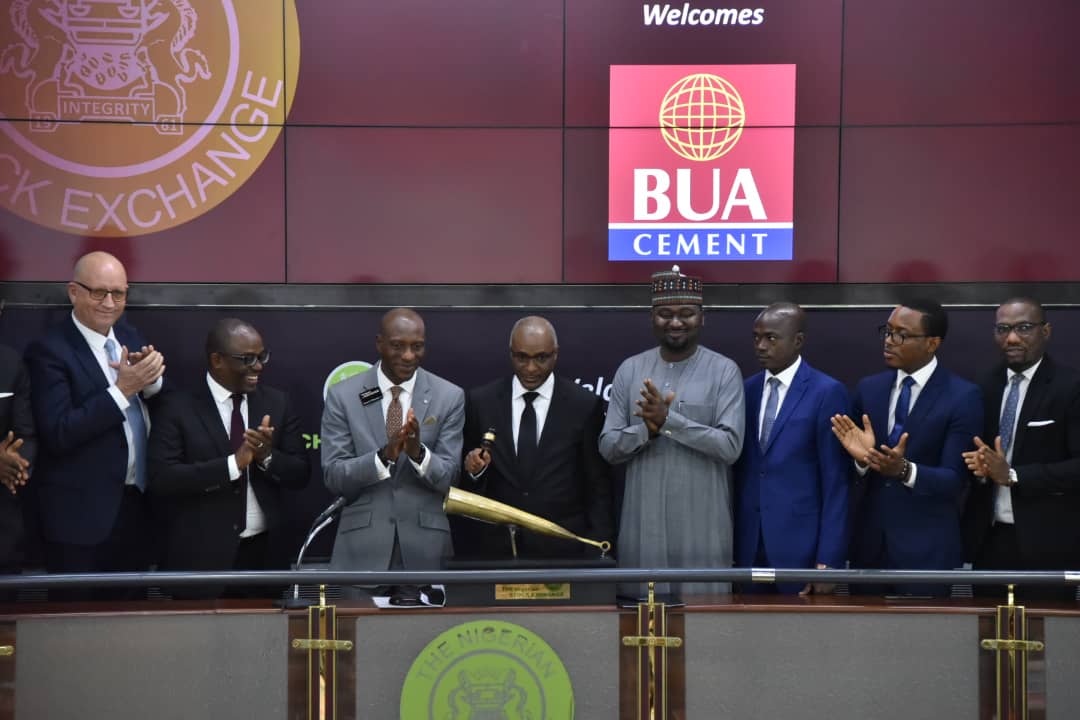
The Nigerian Exchange (NGX) Limited further depreciated by 0.84 per cent on Monday as a result of sell-offs in PZ Cussons, BUA Cement and others.
During the session, apart from the consumer goods index, which closed higher by 0.59 per cent, every other index closed lower, with the industrial goods sector the heaviest loser after shedding 3.28 per cent. The insurance space declined by 2.18 per cent, the banking sector depleted by 1.44 per cent, and the energy segment shrank by 0.09 per cent.
Consequently, the All-Share Index (ASI) retreated by 2,049.65 points to 241,749.11 points from 243,798.76 points, and the market capitalisation contracted by 1.315 trillion to N155.130 trillion from N156.445 trillion.
The market was under selling pressure yesterday, as reflected in the market breadth index, which was negative after closing with 48 price losers and 22 price gainers, indicating weak investor sentiment.
PZ Cussons was the worst-performing stock after shedding 10.00 per cent to finish at N81.00, BUA Cement lost 9.99 per cent to settle at N306.20, Red Star Express declined by 9.98 per cent to N22.10, RT Briscoe depreciated by 9.70 per cent to N12.10, and C&I Leasing dropped 9.38 per cent to trade at N28.12.
The best-performing equity for the day was International Breweries, which chalked up 9.77 per cent to quote at N14.60, NAHCO improved by 8.36 per cent to N177.00, UAC Nigeria expanded by 8.11 per cent to N199.95, DAAR Communication grew by 6.67 per cent to N1.76, and Vitafoam Nigeria gained 5.87 per cent to close at N194.80.
During the session, investors bought and sold 523.5 million shares worth N22.3 billion in 59,945 deals compared with the 441.3 million shares valued at N19.4 billion traded in 44,938 deals last Friday, indicating an increase in the trading volume, value, and number of deals by 18.63 per cent, 14.95 per cent, and 33.40 per cent, respectively.
FCMB closed the day as the most traded stock, with 102.2 million units valued at N1.0 billion. International Breweries sold 26.8 million units worth N387.2 million, Access Holdings exchanged 24.8 million units for N618.2 million, McNichols traded 20.3 million units worth N95.0 million, and Stanbic IBTC transacted 18.4 million units valued at N2.9 billion.

By Adedapo Adesanya
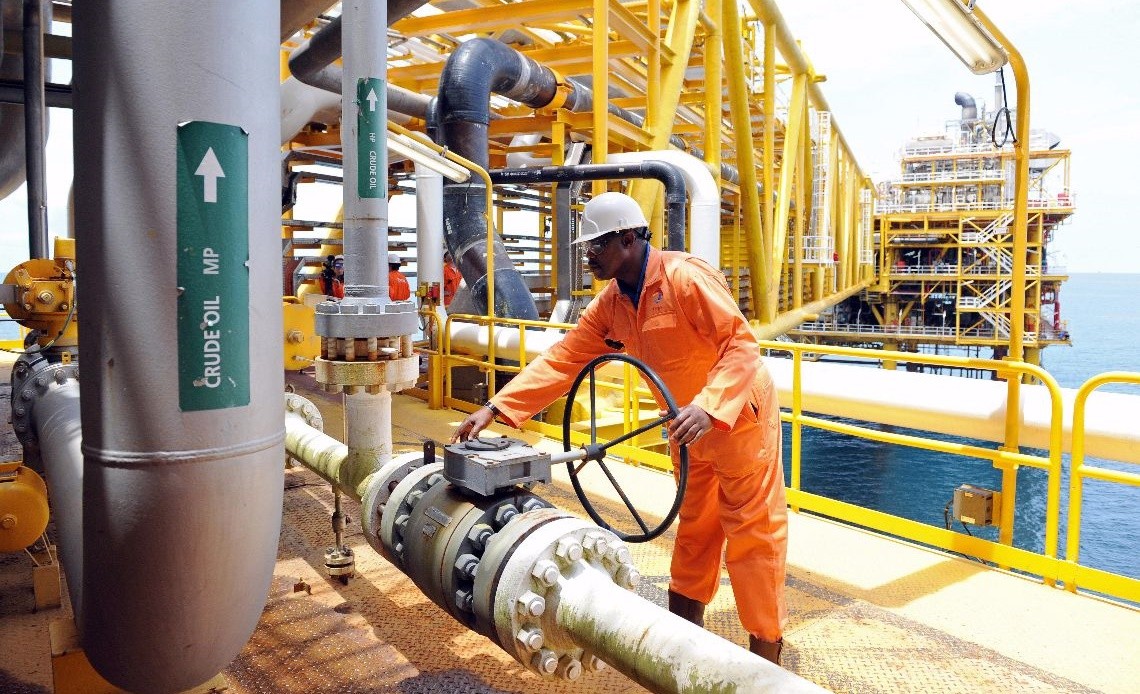
Nigeria met its production quota set by the Organisation of Petroleum Exporting Countries (OPEC) as crude oil and condensate production soared to an average of 1,735,398 barrels per day in June 2026, representing positive growth for a fourth consecutive month.
This is according to a statement released by the Nigerian Upstream Petroleum Regulatory Commission (NUPRC) and signed by its Head of Media and Corporate Communications, Mr Eniola Akinkuotu, on Sunday.
The regulator noted that in June, crude oil production hit 1.56 million barrels per day while 0.18 million barrels per day of condensates were produced. The commission revealed that Nigeria met 104 per cent of the 1.5 million barrels per day crude oil production quota set by OPEC.
Business Post reports that OPEC quota doesn’t account for condensates in its count.
In strict crude oil terms (excluding condensates), the 1.56 million daily average production Nigeria witnessed in June is the highest that Africa’s biggest oil producer has recorded since April 2020, thus representing a 74-month high.
In June, NUPRC noted that the peak combined crude oil and condensate production was 1.89 million barrels per day, reflecting Nigeria’s potential to reach 2 million barrels per day in the near term. However, the lowest production was 1.57 million barrels per day for the period in review.
According to the upstream regulator, the improved performance was primarily driven by stable production operations across most producing assets and the absence of any major pipeline outages during the period under review.
This enhanced operational stability supported improved production uptime and crude evacuation efficiency.
Nigeria, which is Africa’s biggest oil producer, has not been able to top its record-high production of 2.5 million barrels per day recorded in 2025 due to challenges ranging from underinvestment to oil theft.

By Dipo Olowookere
On the Nigerian Exchange (NGX) Limited last week, investors transacted 3.648 billion shares worth N220.568 billion in 251,861 deals compared with the 3.821 billion shares valued at N154.393 billion traded in 258,567 deals a week earlier.
Analysis showed that financial stocks led the activity chart with 2.899 billion units sold for N147.360 billion in 106,603 deals, accounting for 79.48 per cent and 66.81 per cent of the total trading volume and value, respectively.
Services equities recorded a turnover of 164.914 million units valued at N3.615 billion in 16,375 deals, and the consumer goods shares exchanged 157.451 million units worth N7.777 billion in 27,950 deals.
First Holdco, Zenith Bank, and Fidelity Bank were the busiest stocks for the five-day trading week, trading 1.745 billion units valued at N121.828 billion in 31,053 deals, contributing 47.85 per cent and 55.23 per cent to the total trading volume and value, respectively.
Business Post reports that 60 equities appreciated during the week versus 22 equities in the previous week, 28 shares depreciated versus 57 shares of the preceding week, and 58 stocks closed flat versus 67 stocks of the previous week.
International Breweries gained 40.00 per cent to trade at N13.30, RT Briscoe expanded by 32.02 per cent to N13.40, Livestock Feeds improved by 28.47 per cent to N9.25, First Holdco chalked up 25.82 per cent to close at N69.20, and Abbey Bank rose by 23.65 per cent to N9.15.
On the flip side, McNichols lost 28.57 per cent to finish at N5.00, Thomas Wyatt gave up 11.64 per cent to quote at N2.43, Geregu Power declined by 10.00 per cent to N825.70, CAP shed 9.99 per cent to settle at N157.60, and Guinness Nigeria also slipped by 9.99 per cent to N329.00.
Customs Street was under buying pressure last week, making the All-Share Index (ASI) and the market capitalisation close higher by 6.35 per cent to 243,798.76 points and N156.445 trillion, respectively.
In the same vein, all other indices finished higher apart from the growth and sovereign bond indices, which depreciated by 7.43 per cent and 0.02 per cent, respectively.
