

Economy
We’re Steadily Improving Economy–Buhari

By Dipo Olowookere
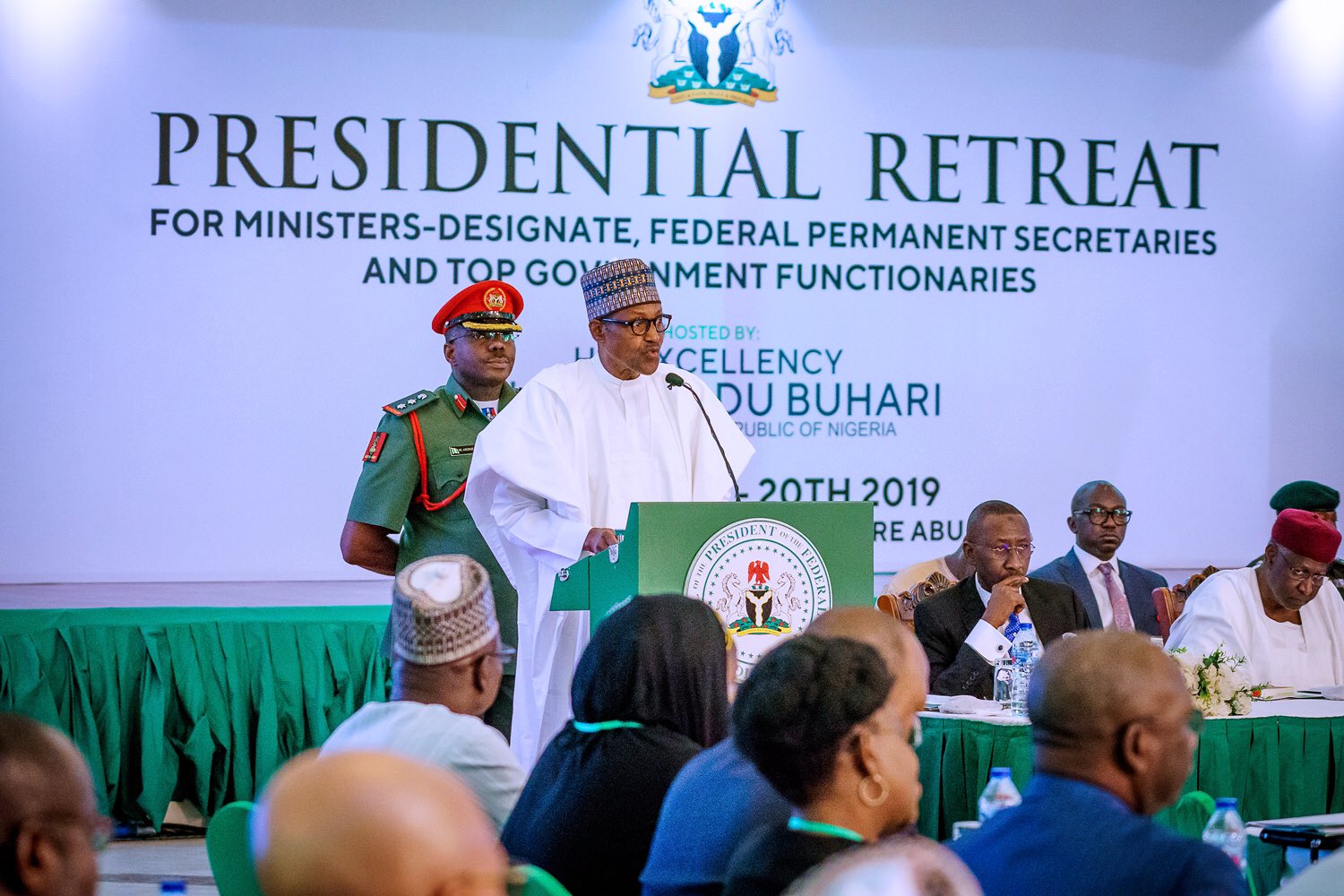
President Muhammadu Buhari on Monday said in Abuja that his administration has recorded success in the economy despite many complaints from citizens that things are not going smoothly for them like it used to be before he came to power in 2015.
The President, while addressing Ministers-designate at a retreat organised to keep them abreast with programmes of the government, said he has made headway in the three main challenges he set out to tackle over four years ago. These are security, economy and corruption.
“First, we have rolled back the frontiers of terrorism; we are actively addressing other challenges such as kidnappings, farmer-herder violence, improving the safety of our roads, railways, air traffic and fire control capacities.
“Second, we are steadily turning the economy round through investment in agriculture and manufacturing, shoring up our foreign reserves, curbing inflation and improving the country’s infrastructure.
“Third, on corruption, we have recovered hundreds of billions of stolen assets and are actively pursuing control measures to tackle leakages in public resources. We will not let up in fighting corruption,” he said in his opening speech.
According to Mr Buhari, “None but the most partisan will dispute that we have made headway in all three areas.”
He tasked the Ministers-designate to see their appointment as a call to serve the people, telling them to “grasp the chance with two hands and put in your best efforts as Nigeria today needs top managers to handle our numerous challenges,” stressing that, “There will be long hours and you must be prepared to live laborious days if we are to serve our people optimally.”
He reminded them that they were “appointed to assist and advise the President in running the affairs of our country,” adding that, “As Ministers, I am counting on you together with Advisers and Nigerians willing and able to contribute to build upon our road map of policies, programmes and projects that will lift the bulk of our people out of poverty and set them on the road to prosperity.”
President Buhari reaffirmed that his administration hopes to lift 100 million Nigerians out of poverty in 10 years, a move he said would “fundamentally shift Nigeria’s trajectory and place us among the World’s Great Nations.”
Mr Buhari told the Ministers-designate that they would be “responsible for the development and implementation of policies, programmes and projects in your various Ministries, Departments and Agencies in line with government priorities. You must also ensure that agencies under your Ministries are effective, efficient and accountable in the discharge of their responsibilities.”
Continuing, he said, “We must work as a team. Although you have been chosen to represent your states as a constitutional imperative, it is vital for all of you to work as Nigerians.
“Furthermore, working as a team demands that we know what the next person is doing. You must open communications with your colleagues. Lack of communication leads to lack of cooperation and sub-optimal performance.”



By Adedapo Adesanya
The International Monetary Fund (IMF) has retained Nigeria’s economic growth projections at 4.1 per cent for 2026 and 4.3 per cent for 2027, expressing confidence that ongoing macroeconomic reforms will continue to support the country’s recovery.
The projections, contained in the IMF’s July 2026 World Economic Outlook (WEO) Update titled “Global Economy in Crosscurrents of War and Technology”, remain unchanged from the forecasts released in April, despite mounting global uncertainties stemming from the conflict in the Middle East.
According to the report released yesterday, Nigeria’s growth outlook is being supported by improved macroeconomic stability and favourable terms of trade arising from its status as an oil-exporting nation.
However, the Bretton Woods institution warned that rising prices of essential goods could offset part of these gains by worsening poverty and food insecurity across the country.
The report stated that, “Nigeria is supported by improved macroeconomic stability and favourable terms of trade effects, though higher prices for essentials are expected to further aggravate poverty and food insecurity.”
Speaking during the IMF’s virtual briefing on the July 2026 World Economic Outlook Update for Sub-Saharan Africa and Nigeria, Division Chief in the IMF’s Research Department, Ms Deniz Igan, described Nigeria as one of the region’s stronger-performing large economies, noting that policy reforms have strengthened macroeconomic stability.
“Just to give you a sense, the two largest economies in the region, Nigeria is expected to grow at 4.1 per cent, quite stable, and this is supported by improved macroeconomic stability and favourable terms of trade, with Nigeria being an oil exporter,” Ms Igan said.
She, however, cautioned that inflationary pressures on essential commodities remain a major concern.
“At the same time, tighter prices, so there is some offset to that positive terms of trade effect because higher prices for essentials are expected to aggravate poverty and food insecurity,” she added.
The lender also retained Nigeria’s 2027 growth forecast at 4.3 per cent, as it noted that recent economic reforms are laying the foundation for sustained expansion despite persistent global headwinds.
For the global economy, the IMF projected growth to moderate to 3.0 per cent in 2026 from 3.5 per cent recorded in 2025, attributing the slowdown largely to the economic impact of the Middle East conflict, which is expected to offset part of the gains from the accelerating artificial intelligence-driven technology cycle.
For Sub-Saharan Africa, the IMF projected economic growth of 4.3 per cent in 2026 before improving to 4.5 per cent in 2027. The latest forecast represents a 0.1 percentage point upward revision from the Fund’s April outlook.
Ms Igan noted that the region had experienced broad-based economic recovery in 2025 before the outbreak of the Middle East conflict altered the growth trajectory.
“Let me start by noting that we actually had seen a broad-based pickup in growth in 2025 in the region. We had an acceleration of growth to 4.5 per cent.
“Now, the war obviously has clouded the outlook for 2026, and we are now projecting a softening of growth to 4.3 per cent in the region as a whole,” she said.

By Aduragbemi Omiyale
Presco Plc has concluded plans to establish operations in Ogun State as part of efforts to expand its footprint, boost earnings, and deliver more value to shareholders.
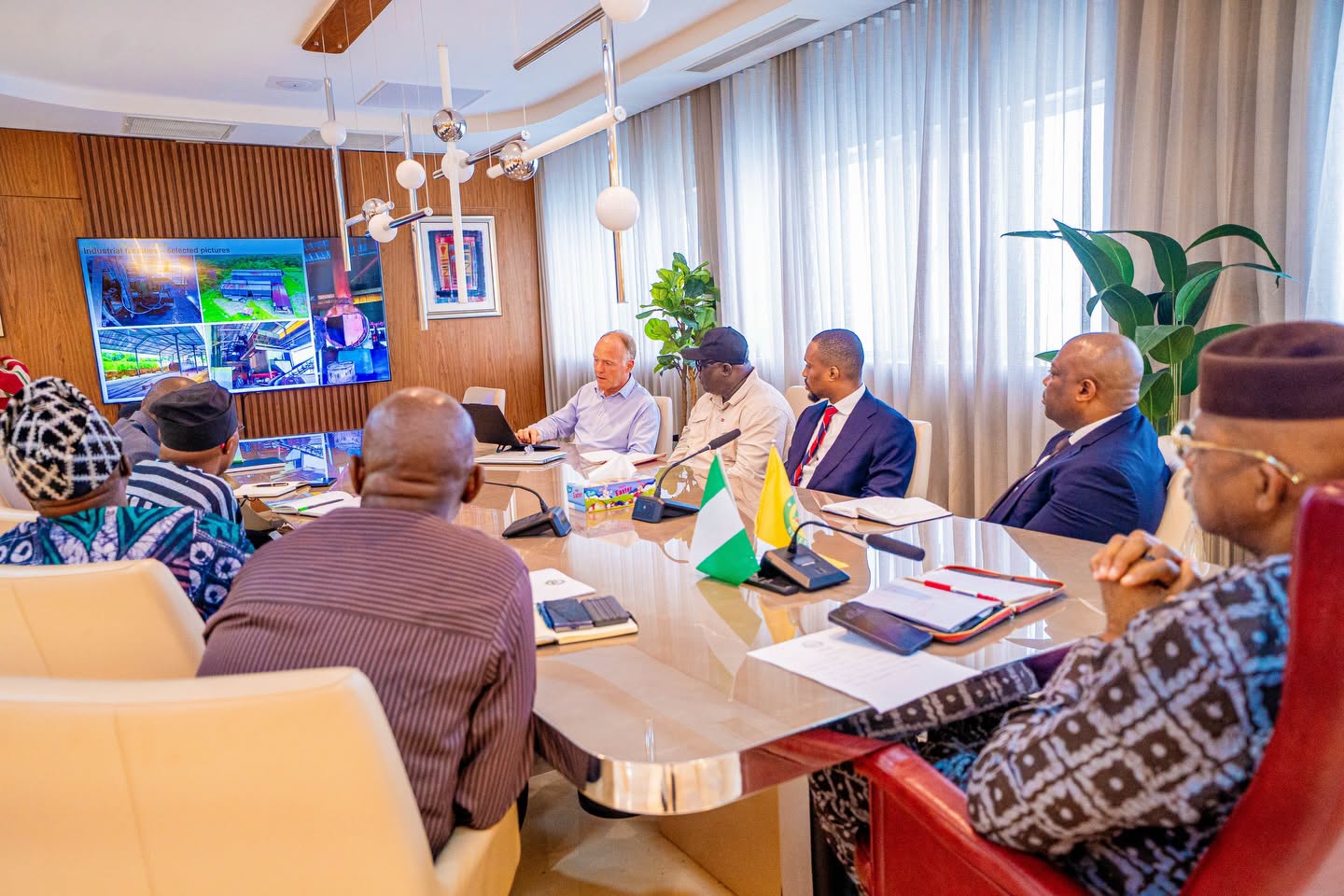
The news of the operations was announced by the Governor of Ogun State, Mr Dapo Abiodun, after he received a delegation from the company.
Presco is one of the leading integrated oil palm firms in Nigeria. It is listed on the Nigerian Exchange (NGX) Limited.
The Governor expressed his joy over the decision of Presco to situate its factory in the Gateway State.
He disclosed that the organisation has promised to have an initial investment of about $100 million in Ogun State, noting that this “validates the confidence investors continue to place in our administration’s deliberate policies aimed at creating an enabling business environment.”
According to him, beyond strengthening the state government’s agricultural transformation agenda, the project is expected to generate thousands of direct and indirect jobs, enhance food security, stimulate economic growth, and increase the state’s revenue.
“As we continue to implement our Building Our Future Together agenda, we remain committed to attracting strategic investments that will diversify our economy, create sustainable opportunities for our people, and reinforce Ogun State’s position as Nigeria’s preferred investment destination,” Mr Abiodun stated.
By Adedapo Adesanya
FrieslandCampina Wamco Nigeria Plc led two others to evict the bears from the NASD Over-the-Counter (OTC) Securities Exchange on Wednesday, July 8.
According to data, the unlisted securities exchange rebounded by 6.84 per cent during the session, thanks to the gains recorded by FrieslandCampina, Food Concepts Plc, and Geo-Fluids Plc.
During the trading day, FrieslandCampina recouped N12.57 to trade at N151.98 per unit versus Tuesday’s closing price of N139.41 per unit, Food Concepts Plc improved by 25 Kobo to N2.76 per share from N2.51 per share, and Geo-Fluids Plc expanded by 18 Kobo to N2.55 per unit from N2.37 per unit.
As a result of these accumulations, the market capitalisation added N163.34 billion to close at N2.551 trillion compared with the preceding session’s N2.387 trillion, and the NASD Security Index (NSI) increased by 272.13 points to 4,250.20 points from 3,978.07 points.
The midweek trading data showed that the volume of securities dipped by 50.9 per cent to 158,933 units from 323,780 units, and the value of securities slipped by 31.9 per cent to N10.9 million from the preceding session’s N15.9 million, while the number of deals increased by 6.9 per cent to 31 deals from the previous session’s 29 deals.
When trading activities on the platform ended for the day, Great Nigeria Insurance (GNI) Plc was the most active stock by value on a year-to-date basis, with 3.4 billion units traded for N8.4 billion, followed by Infrastructure Credit Guarantee (Infracredit) Plc with 2.3 billion units sold for N6.5 billion, and Central Securities Clearing System (CSCS) Plc with 70.7 million units transacted for N4.9 billion.
GNI Plc also closed the day as the most traded stock by volume on a year-to-date basis, with 3.4 billion units worth N8.4 billion, followed by Infracredit Plc with 2.3 billion units valued at N6.5 billion, and Resourcery Plc with 1.1 billion units exchanged for N415.7 million.
