
Banking
Banks to Recover Loans from Defaulters’ Deposit Accounts

By Adedapo Adesanya
The Central Bank of Nigeria (CBN) in conjunction with Nigeria Inter-Bank Settlement System (NIBSS) and the Bankers’ Committee have agreed to launch an initiative that will allow lenders to recover loans from deposit accounts of loan defaulters from any bank or financial institution in the country.
This was disclosed by Ms Aishah Ahmad, the Deputy Governor of the Central Bank of Nigeria at the end of the meeting of the Bankers’ Committee held in Abuja on Monday, August 26, 2019.
According to Ms Ahmad, the directive was to encourage banks to increase lending in the country with more comfort.
“We are not unaware of the challenges/reasons why credit has not been growing. Part of that was the appetite of banks to lend especially when you have customers that willingly refuse to pay their loans.
“In this respect, we have come up with a new clause that will be included in the offer letters that will be granted going forward,” the banker formerly with the defunct Diamond Bank said.
Ms Ahmad also said, “This is going to be a credit risk protection clause. Basically, it will contain the BVN details and TIN of the customers and more or less it will be a commitment on the part of the customers that you agree that should you default on the loan, the total amount of deposits you have across the banking industry would be applied towards repaying the loan.
“This is not uncommon because banks already have rights of set-off within a bank. Which means you take money from a bank; the bank usually has a clause in the letter that allows your bank to repay your loan from the assets you have with the bank.”
“This is just extending it across the industry,” she added.
The CBN deputy governor further noted that the directive will enable banks to lend with more confidence especially to those within the SME sector confident that moves like this will help reduce default rates among banks.
Speaking further, Ms Ahmad said the apex bank is also guarding against increasing the rate of non-performing loans in the system despite the recent directive that banks should increase the loan to deposit ratio (LDR) to 60 percent.
Non-Performing Loans (NPL) was 9.36 percent as of June 2019, the lowest in about 40 months. Initiatives like these as well as the collateral registry is expected to help reduce credit risk.



By Modupe Gbadeyanka
The need for increased investment in the green economy and the adoption of frontier technologies as critical pathways to driving economic resilience and reducing the impact of climate change on vulnerable populations across Africa has again been stressed.
At a thought-provoking webinar hosted by Unity Bank Plc to commemorate this year’s Earth Day, themed The True Cost of Climate Change and Who Pays? leading climate innovation experts highlighted the disproportionate burden which climate change places on underserved communities and the need for inclusive solutions.
For example, the chief executive of Instollar, Ms Chinwe Udo-Davis, submitted that, “The true cost of climate change is not evenly distributed.”
“Communities with the least resources are often the most affected, whether through energy poverty, environmental degradation, or limited access to sustainable alternatives. Addressing this imbalance requires intentional investment in clean energy solutions that are both accessible and scalable,” she noted.
Also, the Programme Manager at the Nigeria Climate Innovation Centre, Oluwatosin Ajide, underscored the importance of coordinated, system-wide approaches in tackling climate challenges, particularly through innovation and policy alignment.
“Climate change is fundamentally a structural problem, and its solution requires a paradigm shift: from innovation and policy to financing and implementation. Stakeholders must work collaboratively to drive solutions that are sustainable and inclusive,” Ajide stated.
In his opening remarks, Unity Bank’s Head of Strategy and Innovation, Mr Ibukun Coker, emphasised the urgency of addressing climate risks from both a societal and business perspective.
“Climate change is no longer a distant or abstract challenge. It is an existential threat with direct consequences for individuals, businesses, and economies.
“At Unity Bank, we recognise the role institutions must play in incorporating sustainability in project financing, supporting businesses and promoting solutions that build resilience in communities where we operate,” he stated.
The programme provided an avenue for stakeholders to examine the human, economic, and institutional costs of climate change, while spotlighting practical solutions to address its growing impact.
It also explored emerging opportunities in climate technology, renewable energy, and ecosystem financing, reinforcing the role of innovation and cross-sector collaboration in building long-term resilience.
By hosting the webinar, Unity Bank continues to demonstrate its commitment to advancing sustainability-focused dialogue and supporting initiatives that promote responsible growth and environmental stewardship.
By Adedapo Adesanya
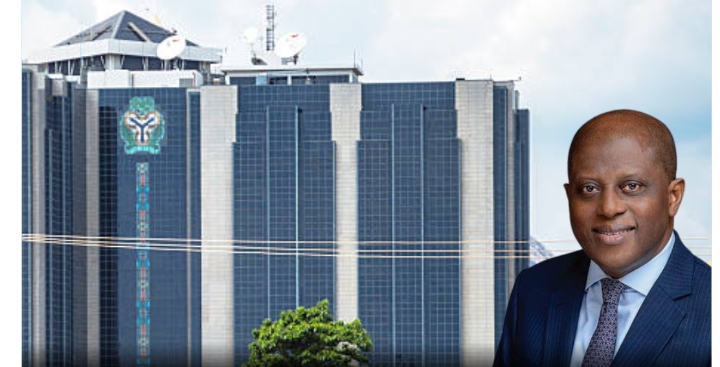
The Central Bank of Nigeria (CBN) has issued an alert about the spread of fraudulent messages, emails, and online communications falsely bearing the identity of the bank, to scam unsuspecting members of the public.
The apex bank warned that the fake materials are designed to hack personal accounts and mislead Nigerians on matters of bank leadership, licensing, and policy.
In a notice signed by Mrs Hakama Sidi-Ali, the Acting Director of Corporate Communications, the lender said the fraudulent communications are already in circulation and are prompting recipients to click embedded links, which is the primary mechanism through which the attackers seek to gain unauthorised access to private accounts and personal data.
The bank laid out three clear directives for members of the public. First, Nigerians are advised to refrain from clicking links or providing personal information on any website they cannot confirm as legitimate.
Second, it stated that all communications purporting to come from the CBN must be verified through the bank’s sole official website — www.cbn.gov.ng — or through recognised media organisations.
Thirdly, it warned that anyone who encounters a suspected fraudulent site, email, or message is urged to report it to law enforcement authorities without delay.
“The CBN remains fully committed to safeguarding the Nigerian financial system and continues to strengthen its cybersecurity frameworks in collaboration with relevant agencies to protect the public against digital fraud.”
By Modupe Gbadeyanka
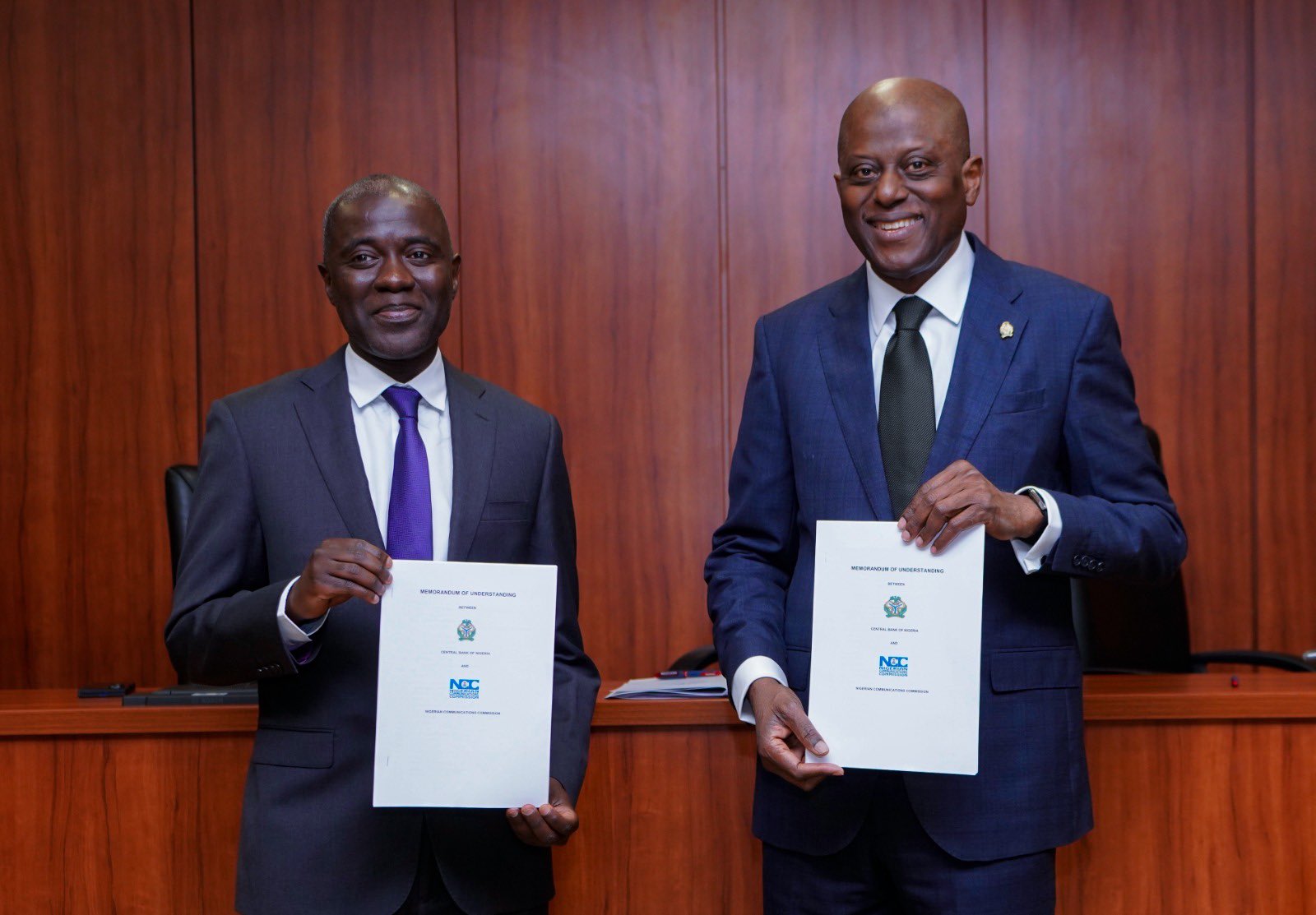
In a bid to ensure consumer safety across the telecommunications and financial services sectors, the Central Bank of Nigeria (CBN) and the Nigerian Communications Commission (NCC) have decided to work together.
On Monday, both organisations sealed a Memorandum of Understanding (MoU) for the establishment of joint committees for the protection of consumers against fraud in the sectors.
The two teams set up by the CBN and the NCC include the Joint Committee on Payment Systems and Consumer Protection, and the Joint Committee on Telecoms Identity Risk Management System (TIRMS) Portal.
Through the TIRMS portal, which aggregates data on churned (recycled) phone numbers, as well as numbers flagged within the financial services sector, it will now have enhanced visibility into the status of phone numbers, one of the most widely utilised resources in the sector, although regulated by the NCC.
With this, according to the chief executive of NCC, Mr Aminu Maida, financial institutions will be able to determine when a line is active, when it has been swapped, when it has been disconnected due to inactivity and reassigned to a new subscriber, and when it has been flagged for suspicious or fraudulent activity. “This ensures that our financial services industry is better equipped with timely and relevant information to effectively combat e-fraud, particularly those perpetuated using phone numbers, in the country,” he stated.
It was stated that the partnership between the two parties will reduce electronic fraud, which has become increasingly pervasive, with significant implications for the integrity of the digital economy.
In his remarks, the Governor of the CBN, Mr Yemi Cardoso, said the MoU will strengthen coordination on approvals, technical standards, and innovation trials, including sandbox testing that supports market-led solutions, while safeguarding stability.
“Going forward, the CBN remains fully committed to working with the NCC to deliver a safer, more resilient, and more inclusive digital financial system that supports national productivity, protects consumers, and strengthens trust in Nigeria’s digital economy,” the central bank chief said.
-
 Feature/OPED6 years ago
Davos was Different this year
-
Travel/Tourism10 years ago
Lagos Seals Western Lodge Hotel In Ikorodu
-

 Showbiz3 years ago
Estranged Lover Releases Videos of Empress Njamah Bathing
-
 Banking8 years ago
Sort Codes of GTBank Branches in Nigeria
-

 Economy3 years ago
Subsidy Removal: CNG at N130 Per Litre Cheaper Than Petrol—IPMAN
-

 Banking3 years ago
Sort Codes of UBA Branches in Nigeria
-

 Banking3 years ago
First Bank Announces Planned Downtime
-

 Sports3 years ago
Highest Paid Nigerian Footballer – How Much Do Nigerian Footballers Earn