

Banking
Wema Bank Tutors Women How to Run Profitable Business


By Dipo Olowookere
As part of its efforts to equip women in the Micro, Small and Medium Enterprises (MSME) sub-sector of the economy, Wema Bank Plc, the pioneer of Nigeria’s first fully digital bank ALAT, held a seminar last week in Lagos for over 100 female business owners.
The women entrepreneurs were drawn from the bank’s Lagos Region for the business advisory seminar tagged Running A Profitable Business and feelers from the event indicated that the participants were glad to be part of it.
During the programme, they were told how to nurture their business ventures as well as simple ways of sourcing for capital to grow the business.
One of the speakers at the event, Mrs Sade Odunaiya, a Certified Business Coach with ActionCoach, who spoke on Growing Your Own Business, said in her presentation that 80 percent of new enterprises fail within their first 5 years of operation, while another 80 percent of those who survived that period also fail within the next 5 years.
On the way forward, she advised participants to ensure they master their production systems, guide against misplaced priority, collate feedback from customers and also put in place procedural manuals for all team members.
Similarly, Mrs Jimoh Amdala, Deputy Manager, Gender Business at the Bank of Industry (BOI), said her management partnered with Wema Bank with a view to enlightening women about the best way to package their applications for credit facilities from Wema Bank.
During her speech on How to Fund Your Business, Mrs Amdala disclosed that the BOI has identified the basic impediments working against entrepreneurs in applications for loans.
She also stated that BOI does not give loans to businesses that would not be able to repay. Her words: “We give loans at a very minimal rate but must be convinced of your viability to pay back.
However, Mrs Amdala disclosed that when women approach the BOI for loans, their documentation, most of the time, is not complete.
According to her, the management of BOI is always ready to give a helping hand to any application by women because the financial institution believes that any support given to a woman connotes support to a nation.
Explaining why the seminar was organized, the Regional Manager in charge of Lagos Mainland at Wema Bank, Mrs Aramide Awosanya, said the initiative was taken to complement the policy of the Central Bank of Nigeria (CBN), which aims at MSME development in the country.
It would be recalled that the CBN launched the MSME Development Fund in 2013 with a share capital of N220 billion. The fund was established in recognition of the significant contributions of the MSME sub-sector to the economy and the existing huge financing gap.
Mrs Awosanya said Wema Bank was working with the BOI to assist women entrepreneur to maximize the enormous financial benefits available within the Sara by Wema community.
According to her, Sara by Wema is a community that gives women the capacity to participate in, wholly contribute to and fully benefit from the growth opportunities available in Wema Bank.
“It is fuelled by our conviction that women across all socio-economic backgrounds deserve as many opportunities as they can get to achieve financial independence and economic growth,” the respected banker said.
She stated that the community is open to all Nigerian women who own startup enterprises as well as those that are low-income earners and stay-at-home entrepreneurs.
Mrs Awosanya also revealed that Wema Bank will take the Sara by Wema women empowerment initiative to other parts of Nigeria for the benefit of women entrepreneurs across the country.
“We shall take the initiative to Abuja before theend of the year and later to other parts of the country,” she assured.



By Margaret Banasko
Urbanization is reshaping Nigeria’s economic landscape, creating new possibilities for millions of young people who relocate each year in search of opportunity. Cities like Lagos, Kano, and Abuja continue to expand as ambitious Nigerians leave their hometowns with the hope of building stable, sustainable livelihoods.
Recent figures highlight the pace of this shift. As of 2024, more than half of Nigeria’s population – around 128 million people – live in urban areas. Many of these individuals are young entrepreneurs and self-employed workers determined to turn their skills, ideas, and hustle into meaningful income. However, navigating the financial requirements needed to sustain and grow a small business is often challenging for those operating in informal or early-stage sectors.
This is where digital financial platforms have become transformational. With only a mobile phone, an internet connection, and a Bank Verification Number (BVN), Nigerians are increasingly able to access a wider range of financial tools designed to support their daily needs and long-term goals. FairMoney is among the institutions driving this progress by offering services that meet people where they are and support their ambition to grow.
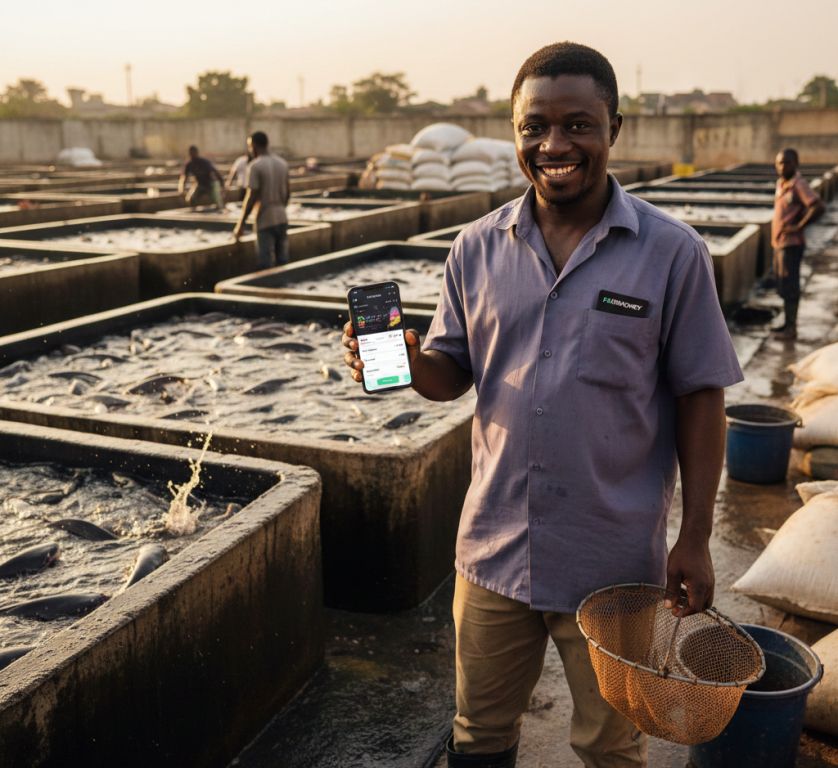
Aigbe Osasere’s experience reflects this evolution. He moved from Benin City to Lagos with the goal of establishing a fish farming business in Ijegun, Alimosho. His vision was clear: create a small, efficient operation that could supply fresh fish to local buyers. Like many small business owners, he needed reliable access to funds to purchase fingerlings, buy feed, replace equipment, and maintain steady production. Managing these cycles required financial tools that matched the fast pace of his operations.
Through the FairMoney app, Aigbe gained access to digital banking services immediately after completing BVN verification. The availability of instant loans provided the flexibility he needed to restock quickly and maintain continuous production. For a business model where timing is central to profitability, this support allowed him to keep his operations consistent and responsive to customer demand.
Opening a FairMoney bank account and receiving a physical debit card further strengthened his business structure. Bulk buyers began paying him directly into his account, giving him clearer financial records and better visibility into his daily revenue. With his debit card, he could purchase supplies, withdraw cash conveniently, and manage his finances in a more organized way.
Aigbe also adopted FairMoney’s savings features to help him preserve and grow his earnings. By setting aside a portion of his daily sales, he is gradually building the capital needed to increase his fish tanks, expand his capacity, and move toward a more scalable operation.
Beyond supporting his business, FairMoney has become part of his everyday life. From the app, he sends money to family members, pays bills, buys airtime and data, and settles electricity tokens quickly and efficiently. This convenience allows him to focus more fully on running and growing his business.
Aigbe’s story is one example of how digital banking is broadening access to financial services across Nigeria. Entrepreneurs, freelancers, traders, and young workers are increasingly leveraging digital platforms to manage money, plan for growth, and participate more actively in the financial system.
As more Nigerians pursue self-employment and urban entrepreneurship, tools that offer accessibility, speed, and flexibility are playing an important role in supporting their progress. With FairMoney, many are finding a dependable partner that aligns with their goals, their pace, and their vision for the future.
Margaret Banasko is the Head of Marketing at FairMoney MFB

By Adedapo Adesanya
The operating licences of Aso Savings and Loans Plc and Union Homes Savings and Loans Plc have been revoked by the Central Bank of Nigeria (CBN) as part of efforts to strengthen the mortgage sub-sector and enforce compliance with banking regulations.
Mortgage banks are financial institutions that provide home loans and other housing finance products, and so, they are strictly regulated by the CBN to protect customers and ensure the stability of Nigeria’s financial system.
According to a post by the Acting Director of Corporate Communications of CBN, Mrs Hakama Ali, on the apex bank’s X handle on Tuesday, the affected institutions were accused of violating several provisions of the Banks and Other Financial Institutions Act (BOFIA) 2020 and the Revised Guidelines for Mortgage Banks in Nigeria.
The revocation is part of the central bank’s ongoing efforts to maintain a safe and reliable banking sector, protect customers’ deposits, and ensure that only financially sound institutions operate in the mortgage market.
“The breaches included failure to meet the minimum paid-up share capital requirement, insufficient assets to meet liabilities, being critically undercapitalised with a capital adequacy ratio below the prudential minimum, and non-compliance with directives issued by the CBN,” the post noted.
The CBN emphasised that the revocation aligns with its mandate to ensure financial system stability and maintain public confidence in the banking sector, assuring it is committed to promoting a sound and resilient financial system in Nigeria.

By Adedapo Adesanya
A five-member panel of the Supreme Court, led by Justice Lawal Garba, last Friday ruled in favour of Fidelity Bank in its appeal against Sagecom Concepts Limited.
The judgment brings definitive closure to a legacy case that has attracted attention across the financial sector for more than two decades. It also marks a significant victory for Fidelity Bank in a long-running legal dispute.
In a motion dated October 8, 2025, Fidelity Bank sought clarification from the Supreme Court, requesting a consequential order that the judgment debt be paid in Naira. The bank also asked that the interest rate be set at 19.5 per cent per annum rather than 19.5 per cent compounded daily.
It also requested the exchange rate used for conversion be the rate applicable as of the date of the High Court judgment, in line with the Supreme Court’s decision in Anibaba v. Dana Airlines.
Fidelity Bank further requested the judgment debt be fixed at N30,197,286,603.13 and that interest on this amount be payable at 19.5 per cent per annum until full settlement.
In the judgment delivered by Justice Adamu Jauro, the apex court granted the bank’s first three prayers but declined the fourth and fifth. As a result, the judgment sum will be paid in Naira at an annual interest rate of 19.5 per cent, rather than the daily compounded rate previously awarded by the High Court.
The Supreme Court equally affirmed that the applicable exchange rate should be the rate as of the date of the High Court judgment, consistent with its earlier decision in Anibaba v. Dana Airlines.
The dispute originated from a legacy transaction involving the former FSB International Bank, which merged with Fidelity Bank in 2005. It stemmed from a 2002 credit facility extended to G. Cappa Plc and subsequent legal proceedings tied to the collateral.
This ruling provides finality for years of litigation and confirms a significantly lower liability than the N225 billion previously speculated in the review of decisions leading up to the decision.










-
 Feature/OPED6 years ago
Davos was Different this year
-
Travel/Tourism9 years ago
Lagos Seals Western Lodge Hotel In Ikorodu
-

 Showbiz3 years ago
Estranged Lover Releases Videos of Empress Njamah Bathing
-
 Banking7 years ago
Sort Codes of GTBank Branches in Nigeria
-

 Economy3 years ago
Subsidy Removal: CNG at N130 Per Litre Cheaper Than Petrol—IPMAN
-

 Banking3 years ago
First Bank Announces Planned Downtime
-

 Banking3 years ago
Sort Codes of UBA Branches in Nigeria
-

 Sports3 years ago
Highest Paid Nigerian Footballer – How Much Do Nigerian Footballers Earn