

Economy
Nigeria Raises VAT to 7.2%, Takes Effect 2020

By Dipo Olowookere
A new Value Added Tax (VAT) of 7.2 percent has been approved for Nigeria by the Federal Executive Council (FEC), Minister of Finance, Budget and Planning, Mrs Zainab Ahmed, has announced.
This announcement comes after the Presidential Election Petition Tribunal upheld the victory of President Muhammadu Buhari at the February 2019 poll, dismissing the petition of the main opposition, Peoples Democratic Party (PDP), and its candidate, Mr Atiku Abubakar.
Addressing newsmen after the weekly FEC meeting on Wednesday, the Minister said this increment was subject to an amendment of the VAT act of 1994 by the National Assembly and if approved by the parliament, the new rate will become effective from 2020.
Before now, there have been talks about an imminent hike in VAT paid on goods and services in the country so as to increase revenue generated by government to meet the needs of the nation, which depends mainly on sale of its crude oil.
During her interaction with journalists at the State House yesterday, Mrs Ahmed said, “We also reported to council and council has agreed that we start the process towards the increase of the VAT rate.
“We are proposing and council has agreed increase the VAT rate from five percent to 7.2 percent.”
She noted that, “This is important because the federal government only retains 15 percent of the VAT — 85 percent is actually for the states and local governments and the states need additional revenue to be able to meet the obligations of the minimum wage.
“This process involves extensive consultations that need to be made across the country at various levels and also it will involve the review of the VAT act. So, it is not going to be implemented immediately until the act is reviewed.”
She further said if approved by the lawmakers, “The total revenue estimate is the sum of N7.5 trillion for the year 2020 and N2.09 trillion that will be accruing to the federation account and VAT respectively.”
According to her, “There will, of course, be the distribution to the three tiers of government based on the statutorily revenue sharing formula as defined in the constitution and to this effect, it means the federal government will be receiving proposed aggregate of N4.26 trillion from the federal account and the VAT pool, while the states and the local governments are expected to receive N3.04 trillion and N2.27 trillion respectively.”
Business Post recalled that in 1994, under the regime of the late Military Head of State, General Sani Abacha, VAT, which replaced what was then known as sales tax, was fixed at 5 percent.
On May 28, 2007, former President Olusegun Obasanjo raised VAT to 10 percent, but his successor, late Umaru Yar’Adua, reversed it.



By Adedapo Adesanya
FrieslandCampina Wamco Nigeria Plc led two others to evict the bears from the NASD Over-the-Counter (OTC) Securities Exchange on Wednesday, July 8.
According to data, the unlisted securities exchange rebounded by 6.84 per cent during the session, thanks to the gains recorded by FrieslandCampina, Food Concepts Plc, and Geo-Fluids Plc.
During the trading day, FrieslandCampina recouped N12.57 to trade at N151.98 per unit versus Tuesday’s closing price of N139.41 per unit, Food Concepts Plc improved by 25 Kobo to N2.76 per share from N2.51 per share, and Geo-Fluids Plc expanded by 18 Kobo to N2.55 per unit from N2.37 per unit.
As a result of these accumulations, the market capitalisation added N163.34 billion to close at N2.551 trillion compared with the preceding session’s N2.387 trillion, and the NASD Security Index (NSI) increased by 272.13 points to 4,250.20 points from 3,978.07 points.
The midweek trading data showed that the volume of securities dipped by 50.9 per cent to 158,933 units from 323,780 units, and the value of securities slipped by 31.9 per cent to N10.9 million from the preceding session’s N15.9 million, while the number of deals increased by 6.9 per cent to 31 deals from the previous session’s 29 deals.
When trading activities on the platform ended for the day, Great Nigeria Insurance (GNI) Plc was the most active stock by value on a year-to-date basis, with 3.4 billion units traded for N8.4 billion, followed by Infrastructure Credit Guarantee (Infracredit) Plc with 2.3 billion units sold for N6.5 billion, and Central Securities Clearing System (CSCS) Plc with 70.7 million units transacted for N4.9 billion.
GNI Plc also closed the day as the most traded stock by volume on a year-to-date basis, with 3.4 billion units worth N8.4 billion, followed by Infracredit Plc with 2.3 billion units valued at N6.5 billion, and Resourcery Plc with 1.1 billion units exchanged for N415.7 million.
By Adedapo Adesanya
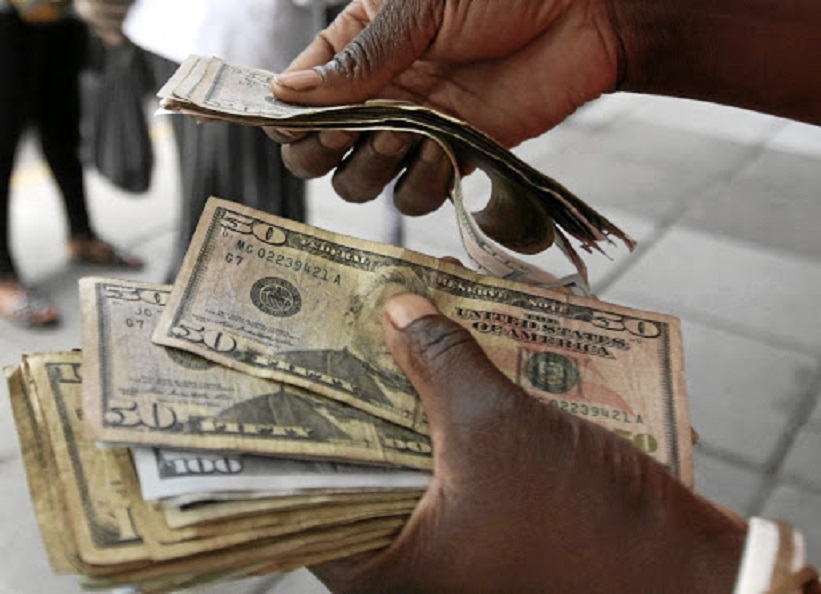
It was a bad day for the Nigerian Naira in the different segments of the foreign exchange (FX) market on Wednesday, July 8, as its value further slipped against the United States Dollar.
In the black market window, it lost N5 against the US Dollar during the session to trade at N1,400/$1 compared with Tuesday’s closing rate of N1,395/$1, but closed flat at the GTBank forex counter at N1,381/$1.
In the Nigerian Autonomous Foreign Exchange Market (NAFEX), the domestic currency depreciated against the greenback yesterday by N3.32 or 0.24 per cent to N1,379.07/$1, in contrast to the previous day’s N1,375.75/$1.
But the Naira appreciated against the Pound Sterling in the official market at midweek by 93 Kobo to 1,840.64/£1 from N1,841.57/£1, and gained N1.31 on the Euro to sell at N1,561.38/€1 compared with Tuesday’s N1,562.69/€1.
The market was liquidity-heavy, but increased demand for foreign payments dragged the exchange rate at the official window,
Traders reported that interbank FX turnover spiked by about 399 per cent on the day to $208.094 million, from $41.736 million the previous day. Also, the number of deals in the interbank market increased sharply to 150 from 47 deals.
FX analysts maintained positive expectations on the Naira outlook in the second half of 2026 despite the absence of interventions from the Central Bank of Nigeria (CBN) to support liquidity.
As for the cryptocurrency market, prices rose as Bitcoin (BTC) held above $62,000, chalking up 0.3 per cent to sell at $$62,754.96, after the US military completed another round of strikes against Iran and both sides raised the prospect of closing the Strait of Hormuz.
The escalation reignited inflation concerns and pulled forward rate expectations. Markets are increasingly treating war-related shocks as interest-rate events, with BTC now tracking front-end Treasury yields more closely than traditional hedges like crude or gold.
Dogecoin (DOGE) improved its value by 1.2 per cent to $0.0728, Binance Coin (BNB) soared by 1.1 per cent to $573.56, Ripple (XRP) appreciated by 0.9 per cent to $1.09, TRON (TRX) expanded by 0.6 per cent to $0.3309, Solana (SOL) grew by 0.2 per cent to $78.34 and Ethereum (ETH) jumped by 0.1 per cent to $1,751.22.
However, Cardano (ADA) decreased by 0.1 per cent to $0.1690, while the US Dollar Tether (USDT) and the US Dollar Coin (USDC) traded flat at $1.00 apiece.
By Dipo Olowookere
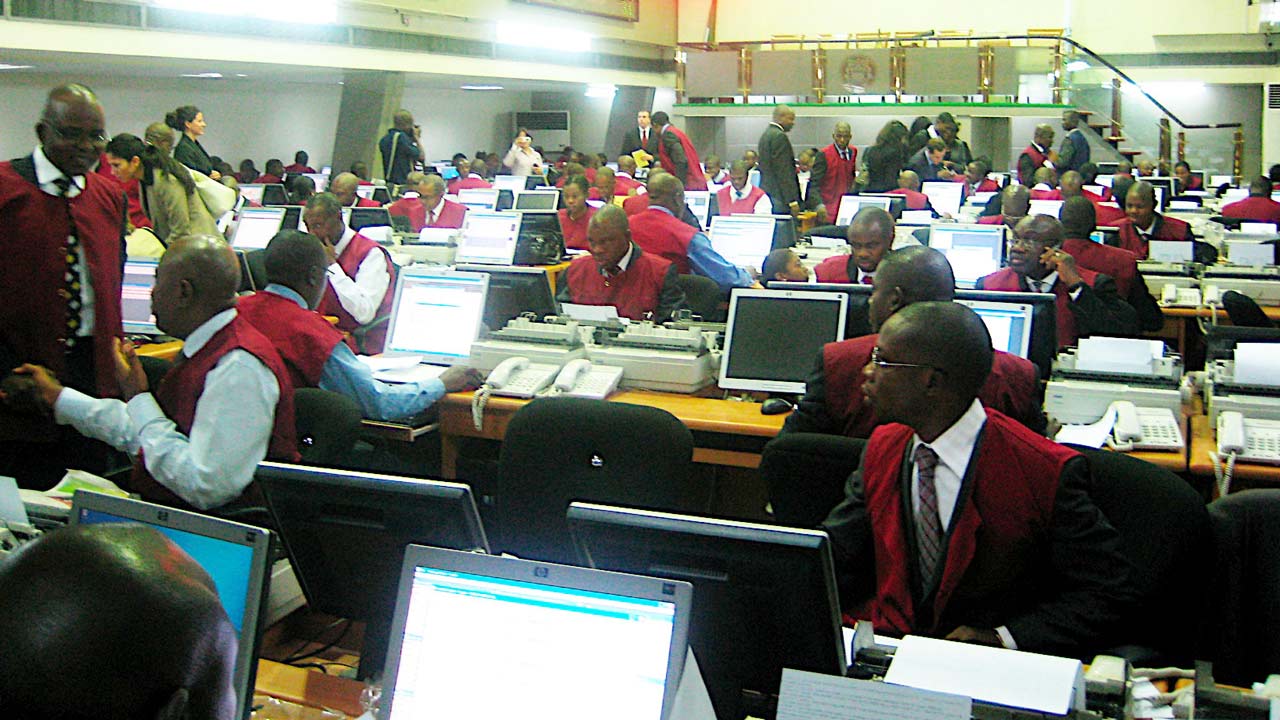
The bullish run seen lately in the Nigerian equities market continued on Wednesday after it closed the session with a 2.27 per cent growth.
This was influenced by renewed interest in domestic stocks by investors, who are locking funds in some shares with sound fundamentals like Airtel Africa, Aradel Holdings, Dangote Cement, and others.
Data showed that Airtel Africa and Trans-Nationwide Express gained 10.00 per cent to sell for N5,801.40 and N2.97, respectively. Fidelity Bank appreciated by 9.97 per cent to N19.85, Thomas Wyatt advanced by 9.89 per cent to N3.00, and UPDC REIT improved by 9.47 per cent to N10.40.
Conversely, Haldane McCall lost 9.95 per cent to trade at N3.53, McNichols declined by 8.89 per cent to N6.15, Transcorp slid by 5.65 per cent to N40.05, CWG went down by 5.24 per cent to N19.00, and VFD Group crashed by 5.19 per cent to N28.12.
The market breadth index remained positive after the Nigerian Exchange (NGX) Limited ended the day with 32 appreciating stocks and 24 depreciating stocks, indicating strong investor sentiment.
Business Post reports that the insurance sector was under pressure yesterday, resulting in a 0.20 per cent loss, which did not affect the outcome of the market.
The energy space gained 3.85 per cent, the industrial goods segment chalked up 1.89 per cent, the banking index rose by 1.07 per cent, and the consumer goods counter soared by 0.31 per cent.
As a result, the All-Share Index (ASI) added 5,378.70 points to finish at 242,459.98 points compared with the previous day’s 237,083.28 points, and the market capitalisation went up by N3.450 trillion to N155.586 trillion from N152.136 trillion.
The busiest equity during the trading session was Lasaco Assurance, with a turnover of 56.6 million units valued at N104.8 million. Fidelity Bank traded 47.5 million units worth N911.9 million, Linkage Assurance transacted 33.9 million units for N51.2 million, Zenith Bank sold 32.0 million units valued at N3.4 billion, and Sterling Holdings exchanged 30.5 million units worth N233.3 million.
At the close of transactions, 518.4 million shares worth N22.8 billion exchanged hands in 48,495 deals versus the 493.7 million shares valued at N28.0 billion traded in 49,969 deals a day earlier. This implied that the trading volume was up by 5.00 per cent, the trading value was down by 18.57 per cent, and the number of deals decreased by 2.95 per cent.
