

Economy
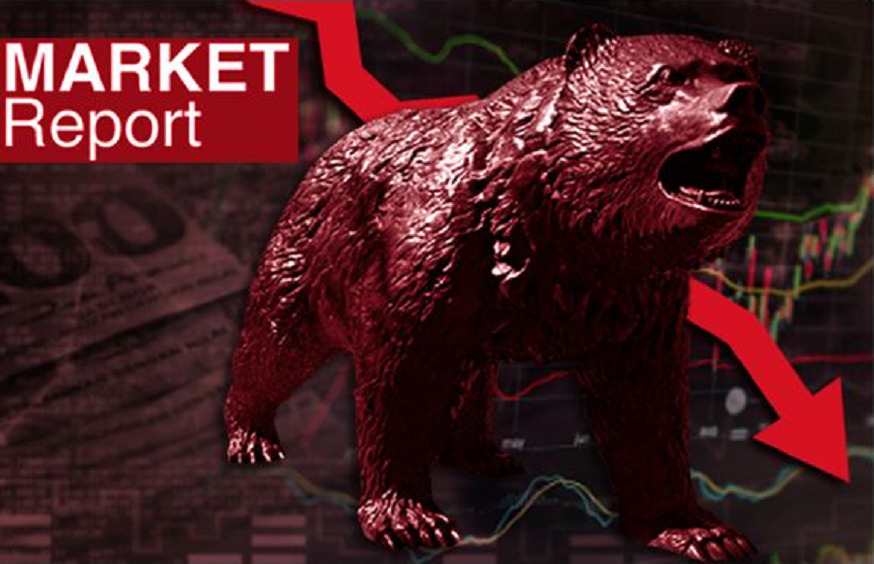
Stocks Gain N134bn as Bargain Hunters Butcher Bears

By Dipo Olowookere
Transactions on the trading floor of the Nigerian Stock Exchange (NSE) ended bullish on Wednesday after bargain hunters dealt a huge blow on bears terrorizing the market in the past two previous sessions despite the positive news of the appointment of an economic squad by President Muhammadu Buhari and the easing of inflation to 11.02 percent in August 2019 as announced by the National Bureau of Statistics (NBS) on Tuesday.
The actions of investors in mopping up some value stocks trading at cheap prices led to the 1.00 percent appreciation printed by the market at the midweek session. This led to the market breadth closing positive with 24 price gainers led by Stanbic IBTC and 13 price losers led by Forte Oil.
In addition, the renewed buying pressure pushed the All-Share Index (ASI) up by 274.57 points to 27,681.61 points from 27,407.04 points, while the market capitalization was boosted by N133.7 billion to N13.475 trillion from N13.342 trillion.
Business Post reports that Stanbic IBTC, which topped the price risers’ chart on Wednesday a day after the company assured its stakeholders of its commitment to long-term value, appreciated by N2.45k to settle at N39.95k per share.
GTBank improved its share price by N1.30k to close at N29.80k per unit, MTN Nigeria gained N1 to finish at N140 per unit, Ecobank garnered 80 kobo to trade at N8.80k per share, while Lafarge Africa rose by 60 kobo to end at N15.30k per unit.
At the other side, Forte Oil led the decliners’ table with a loss of 35 kobo to close at N16 per share, while Champion Breweries fell by 11 kobo to settle at N1.14k per share, with Custodian Investment, FBN Holdings and UBA losing 5 kobo each to close at N5.95k, N5.40k and N6.35k respectively.
In terms of the level of transactions at the market yesterday, there was an improvement from what was recorded in the previous session.
A total of 379.5 million shares worth N5.4 billion exchanged hands in 3,923 deals compared with the 198.0 million equities valued at N2.9 billion traded in 3,830 deals in the previous session.
This indicated that the number of deals executed on Wednesday improved by 2.43 percent, while the volume of trades rose by 91.64 percent and the value of the transactions increased by 84.45 percent.
It was observed that banking stocks dominated the activity chart yesterday with GTBank emerging as the most traded equity with a turnover of 98.4 million units sold for N2.8 billion.
Access Bank transacted 40.7 million shares worth N314.5 million, FBN Holdings exchanged 40.1 million equities valued at N216.6 million, FCMB traded 20.1 million shares for N33.9 million, while Sterling Bank traded 17.6 million shares valued at N38.8 million.
The sectoral performance chart showed that the banking index rose by 2.99 percent, the industrial goods sector improved by 0.94 percent, the insurance space grew by 0.45 percent, while the consumer goods index appreciated by 0.27 percent.
However, the oil and gas index suffered a 0.19 percent decline at the trading session.



By Adedapo Adesanya
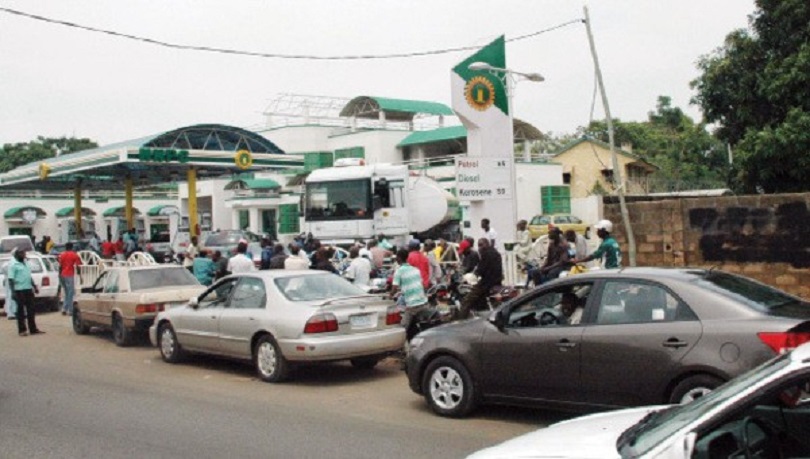
The supply of Premium Motor Spirit (PMS), also known as petrol, increased by 55.4 per cent on a month-on-month basis to 71.5 million litres per day in November 2025 from 46 million litres per day in October.
This was contained in the November 2025 fact sheet of the Nigerian Midstream and Downstream Petroleum Regulatory Authority (NMDPRA) on Monday.
The data showed that the nation’s consumption also increased by 44.5 per cent or 37.4 million litres to 52.1 million litres per day in November 2025, against 28.9 million litres in October.
The significant increase in petrol supply last month was on account of the imports by the Nigerian National Petroleum Company (NNPC) Limited into the Nigerian market from both the domestic and the international market.
Domestic refineries supplied in the period stood at 17.1 million litres per day, while the average daily consumption of PMS for the month was 52.9 million litres per day.
The NMDPRA noted that no production activities were recorded in all the state-owned refineries, which included Port Harcourt, Warri, and Kaduna refineries, in the period, as the refineries remained shut down.
According to the report, the imports were aimed at building inventory and further guaranteeing supply during the peak demand period.
Other reasons for the increase, according to the NMDPRA, were due to “low supply recorded in September and October 2025, below the national demand threshold; the need for boosting national stock level to meet the peak demand period of end of year festivities, and twelve vessels programmed to discharge into October, which spilled into November.”
On gas, the average daily gas supply climbed to 4.684 billion standard cubic feet per day in November 2025, from the 3.94 bscf/d average processing level recorded in October.
The Nigeria LNG Trains 1-6 also maintained a stable processing output of 3.5 bscf/d in November 2025, but utilisation improved slightly to 73.7 per cent compared with 71.68 per cent in October.
The increase, according to the report, was driven by higher plant utilisation across processing hubs and steady export volumes from the Nigeria LNG plant in Bonny.
“As of November 2025, Nigeria’s major gas processing facilities recorded improved output and utilisation levels, with the Nigeria LNG Trains 1-6 processing 3.50 billion standard cubic feet per day at a utilisation rate of 73.70 per cent.
“Gbaran Ubie Gas Plant processed 1.250 bscf per day, operating at 71.21 per cent utilisation, while the MPNU Bonny River Terminal recorded a throughput of 0.690 bscf per day during the period. Processing activities at the Escravos Gas Plant stood at 0.680 bscf per day, representing a 62 per cent utilisation rate, whereas the Soku Gas Plant emerged as the top performer, processing 0.600 bscf per day at 96.84 per cent utilisation,” it stated.


By Aduragbemi Omiyale
The proposed share reconstruction of a local gaming firm, Secure Electronic Technology (SET), has been suspended.
The Lagos-based company decided to shelve the exercise after negotiations with potential investors crumbled like a house of cards.
Secure Electronic Technology was earlier in talks with some foreign investors interested in the organisation.
Plans were underway to restructure the shares of the company, which are listed on the Nigerian Exchange (NGX) Limited.
However, things did not go as planned as the potential investors pulled out, leaving the board to consider others ways to move the firm forward.
Confirming this development, the company secretary, Ms Irene Attoe, in a statement, said the board would explore other means to keep the company running to deliver value to shareholders.
“This is to notify the NGX and the investing public that a meeting of the board of SET held on Tuesday, December 16, 2025, as scheduled, to consider the status of the proposed share reconstruction and recapitalisation as approved by the members at the Extraordinary General Meeting (EGM) held on April 16, 2025.
“After due deliberations, the board wishes to announce that the proposed share reconstruction will not take place as anticipated due to the inability of the parties to reach a convergence on the best and mutually viable terms.
“Thus, following an impasse in the negotiations, and the investors’ withdrawal from the transaction, the board has, in the interest of all members, decided to accept these outcomes and move ahead in the overall interest of the business.
“The board is committed to driving the strategic objectives of SEC and to seeking viable opportunities for sustainable growth of the company,” the disclosure stated.
Business Post reports that the share price of SET crashed by 3.85 per cent on Tuesday on Customs Street on Tuesday to 75 Kobo. Its 52-week high remains N1.33 and its one-year low is 45 Kobo. Today, investors transacted 39,331,958 units.

By Adedapo Adesanya
Clea, a blockchain-powered platform that allows African importers to pay international suppliers in USD while settling locally, has officially launched.
During its pilot phase, Clea processed more than $4 million in cross-border transactions, demonstrating strong early demand from businesses navigating the complexities of global trade.
Clea addresses persistent challenges that African importers have long struggled with, including limited FX access, unpredictable exchange rates, high bank charges, fraudulent intermediaries, and payment delays that slow or halt shipments. The continent also faces a trade-finance gap estimated at over $120 billion annually, limiting importers’ ability to access the FX and financial infrastructure needed for timely international payments by offering fast, transparent, and direct USD settlements, completed without intermediaries or banking bottlenecks.
Founded by Mr Sheriff Adedokun, Mr Iyiola Osuagwu, and Mr Sidney Egwuatu, Clea was created from the team’s own experiences dealing with unreliable international payments. The platform currently serves Nigerian importers trading with suppliers in the United States, China, and the UAE, with plans to expand into additional trade corridors.
The platform will allow local payments in Naira with instant access to Dollars as well as instant, same-day, or next-day settlement options and transparent, traceable transactions that reduce fraud risk.
Speaking on the launch, Mr Adedokun said, “Importers face unnecessary stress when payments are delayed or rejected. Clea eliminates that uncertainty by offering reliable, secure, and traceable payments completed in the importer’s own name, strengthening supplier confidence from day one.”
Mr Osuagwu, co-founder & CTO, added, “Our goal is to make global trade feel as seamless as a local transfer. By connecting local currencies to global transactions through blockchain technology, we are removing long-standing barriers that have limited African importers for years.”
According to a statement shared with Business Post, Clea is already working with shipping operators who refer merchants to the platform and is also engaging trade associations and logistics networks in key import hubs. The company remains fully bootstrapped but is open to strategic investors aligned with its mission to build a trusted global payment network for African businesses.










-
 Feature/OPED6 years ago
Davos was Different this year
-
Travel/Tourism9 years ago
Lagos Seals Western Lodge Hotel In Ikorodu
-

 Showbiz3 years ago
Estranged Lover Releases Videos of Empress Njamah Bathing
-
 Banking7 years ago
Sort Codes of GTBank Branches in Nigeria
-

 Economy3 years ago
Subsidy Removal: CNG at N130 Per Litre Cheaper Than Petrol—IPMAN
-

 Banking3 years ago
First Bank Announces Planned Downtime
-

 Banking3 years ago
Sort Codes of UBA Branches in Nigeria
-

 Sports3 years ago
Highest Paid Nigerian Footballer – How Much Do Nigerian Footballers Earn