

Economy
Stocks Gain N134bn as Bargain Hunters Butcher Bears


By Dipo Olowookere
Transactions on the trading floor of the Nigerian Stock Exchange (NSE) ended bullish on Wednesday after bargain hunters dealt a huge blow on bears terrorizing the market in the past two previous sessions despite the positive news of the appointment of an economic squad by President Muhammadu Buhari and the easing of inflation to 11.02 percent in August 2019 as announced by the National Bureau of Statistics (NBS) on Tuesday.
The actions of investors in mopping up some value stocks trading at cheap prices led to the 1.00 percent appreciation printed by the market at the midweek session. This led to the market breadth closing positive with 24 price gainers led by Stanbic IBTC and 13 price losers led by Forte Oil.
In addition, the renewed buying pressure pushed the All-Share Index (ASI) up by 274.57 points to 27,681.61 points from 27,407.04 points, while the market capitalization was boosted by N133.7 billion to N13.475 trillion from N13.342 trillion.
Business Post reports that Stanbic IBTC, which topped the price risers’ chart on Wednesday a day after the company assured its stakeholders of its commitment to long-term value, appreciated by N2.45k to settle at N39.95k per share.
GTBank improved its share price by N1.30k to close at N29.80k per unit, MTN Nigeria gained N1 to finish at N140 per unit, Ecobank garnered 80 kobo to trade at N8.80k per share, while Lafarge Africa rose by 60 kobo to end at N15.30k per unit.
At the other side, Forte Oil led the decliners’ table with a loss of 35 kobo to close at N16 per share, while Champion Breweries fell by 11 kobo to settle at N1.14k per share, with Custodian Investment, FBN Holdings and UBA losing 5 kobo each to close at N5.95k, N5.40k and N6.35k respectively.
In terms of the level of transactions at the market yesterday, there was an improvement from what was recorded in the previous session.
A total of 379.5 million shares worth N5.4 billion exchanged hands in 3,923 deals compared with the 198.0 million equities valued at N2.9 billion traded in 3,830 deals in the previous session.
This indicated that the number of deals executed on Wednesday improved by 2.43 percent, while the volume of trades rose by 91.64 percent and the value of the transactions increased by 84.45 percent.
It was observed that banking stocks dominated the activity chart yesterday with GTBank emerging as the most traded equity with a turnover of 98.4 million units sold for N2.8 billion.
Access Bank transacted 40.7 million shares worth N314.5 million, FBN Holdings exchanged 40.1 million equities valued at N216.6 million, FCMB traded 20.1 million shares for N33.9 million, while Sterling Bank traded 17.6 million shares valued at N38.8 million.
The sectoral performance chart showed that the banking index rose by 2.99 percent, the industrial goods sector improved by 0.94 percent, the insurance space grew by 0.45 percent, while the consumer goods index appreciated by 0.27 percent.
However, the oil and gas index suffered a 0.19 percent decline at the trading session.



By Adedapo Adesanya
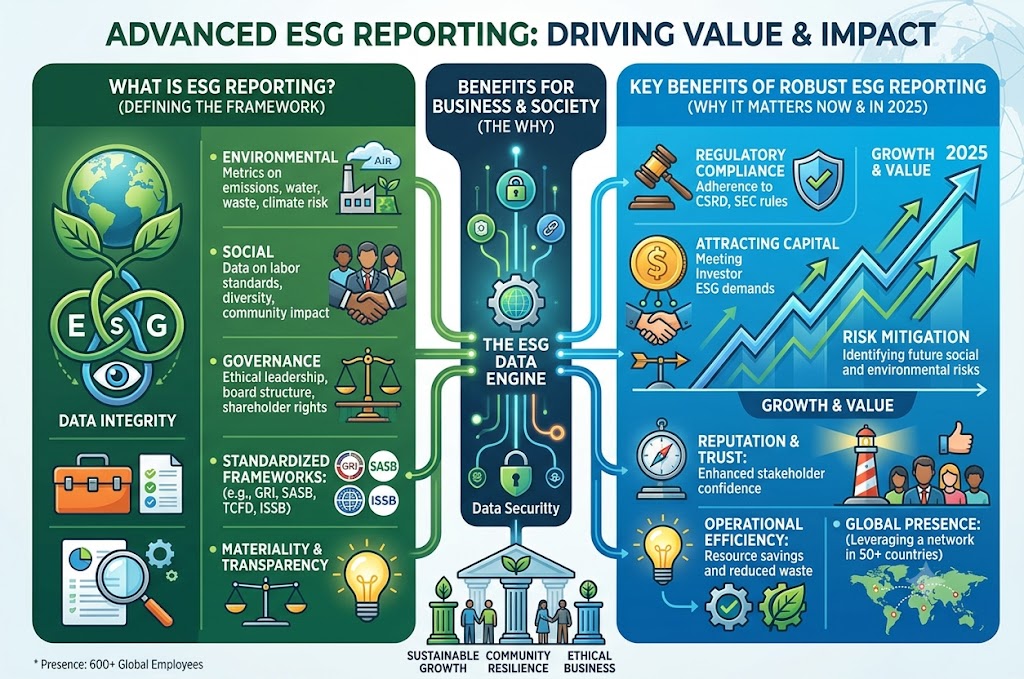
The Securities and Exchange Commission (SEC) has unveiled plans to make sustainability reporting mandatory for large public interest entities from 2027.
This comes as Nigeria moves to align its corporate disclosure framework with global environmental, social and governance (ESG) reporting standards.
The phased implementation will begin with voluntary adoption by early adopters and large public interest entities before becoming mandatory in 2027. The requirement will extend to other public interest entities in 2028 and small and medium-scale enterprises (SMEs) by 2030.
The Director-General of the SEC, Mr Emomotimi Agama, disclosed this at the 2026 Financial Institutions Training Centre (FITC) Sustainability and ESG Conference 3.0, themed ‘Building a Sustainable Africa: Integrating Environmental Stewardship, Social Investment, and Strong Governance for a Prosperous Future’ in Lagos.
Mr Agama said Nigeria’s sustainability disclosure regime is being aligned with the International Sustainability Standards Board (ISSB) framework, including IFRS S1 and IFRS S2, which have emerged as the global benchmark for sustainability reporting.
He said that institutional investors increasingly consider ESG performance a key determinant of capital allocation rather than a peripheral corporate responsibility issue, noting that the price of entry is disclosure.
He said the reforms would strengthen investor confidence and position Nigerian businesses to access global capital markets, where sustainability disclosures are becoming an essential investment requirement.
According to him, Nigeria’s capital market has recorded significant expansion, with market capitalisation growing from about N130 trillion to nearly N160 trillion following recent market reforms, while assets under management have surpassed N9 trillion.
To deepen sustainable finance, Agama said the commission was promoting infrastructure, green and municipal bonds, alongside infrastructure-focused investment funds, to mobilise long-term capital for critical national projects.
He added that the commission would also encourage investments in the blue economy and support financing for the power sector through green energy bonds, project bonds and public-private investment structures.
The SEC chief cited the recent launch of the Nigerian Exchange (NGX) Impact Board as another milestone in advancing sustainable finance and urged companies, regulators and investors to move beyond commitments by embedding sustainability into governance, operations and investment decisions.
Economy
International Breweries Plans Share Capital Reduction to Remove N191bn Losses, Enable Dividend Payout

By Aduragbemi Omiyale
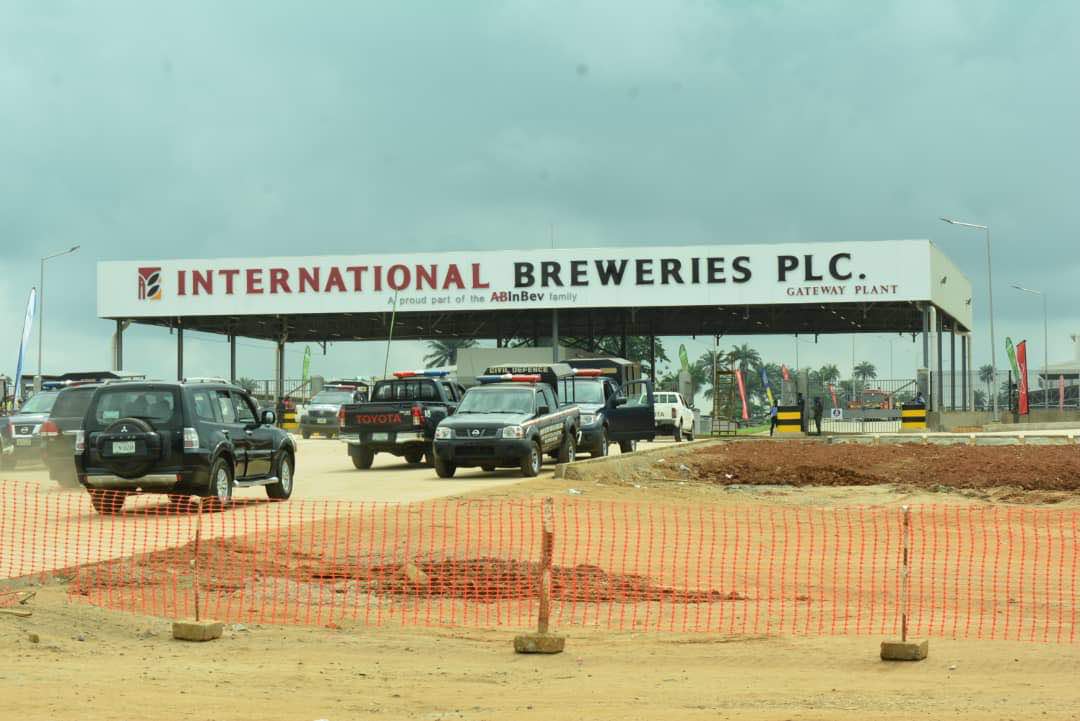
The board of International Breweries Plc is proposing a share capital reduction exercise to enable it to pay dividends from future profits.
The brewery firm has been unable to give shareholders a cash reward despite bouncing back into profitability because of accumulated losses of up to N191 billion.
To resolve this issue, which is becoming worrisome to the company’s investors, the board is planning to apply a portion of the balance in the Share Premium Account to eliminate the accumulated losses.
In a notice signed by its scribe, Temitope Oluwatosin, International Breweries informed the Nigerian Exchange (NGX) Limited and the investing public that the share capital reduction should restore distributable reserves and re-establish its capacity to pay dividends to shareholders.
It was disclosed that the transaction would be “executed pursuant to the provisions of Section 131 of the Companies and Allied Matters Act, 2020 (as amended), subject to the appropriate regulatory approval and confirmation by the Federal High Court.”
“Following the elimination of accumulated losses, the company proposes a further reduction of the Share Premium Account to enable the return of capital to shareholders.
“The amount payable per ordinary share will be distributed on a pro rata basis, determined with reference to the total amount approved by the board for distribution from the Share Premium Account,” a part of the disclosure stated.
International Breweries noted that shareholders would be required to vote on the proposed share capital reduction at the forthcoming Annual General Meeting (AGM) scheduled for the Grand Ballroom of the Federal Palace Hotel, Lagos, on Thursday, July 30, 2026, at 11.00 am.

By Aduragbemi Omiyale
The submission of the second quarter of 2026 Ownership Structure and Capital Flows Returns by capital market operators in Nigeria closes today, Friday, July 10, 2026.
The Securities and Exchange Commission (SEC) gave all registrars, brokers/dealers, fund managers and other relevant capital market operators this deadline via a statement on Wednesday, July 8, 2026.
The documents are needed in support of the compilation of Nigeria’s Balance of Payments (BOP) and International Investment Position (IIP) statistics.
According to the SEC, the exercise forms part of ongoing efforts to improve the quality, coverage, and reliability of Nigeria’s external sector statistics.
Operators are required to provide quarterly data on new equity and debt investments by residents and non-residents; equity and debt holdings of non-residents in Nigerian entities and those of Nigerian residents in foreign entities; investments arising from mergers, acquisitions, and other business combinations involving resident and non-resident entities; and other cross-border capital market transactions.
Specifically, reporting entities are required to submit information on investments in newly issued equities and debt securities; foreign portfolio investment holdings in Nigerian companies; ownership interests arising from business combinations involving non-residents; investments by multinational corporations in the Nigerian capital market; equity investments held abroad by resident companies; and bond investments held abroad by resident companies.
The regulator reminded operators that accurate and timely reporting is critical to the compilation of reliable BOP and IIP statistics, directing all fund managers, brokers/dealers, registrars, and other relevant capital market operators to ensure full and timely compliance with this reporting requirement.
It thanked those who have consistently complied with this requirement and acknowledged their contribution to this important national assignment.
It noted that the submission of ownership structure and capital flows data is a continuous quarterly reporting obligation, advising them to carefully review the guidance accompanying each reporting template and ensure that all submissions are complete, accurate, and submitted within the stipulated timeline.
