Connect with us

Economy

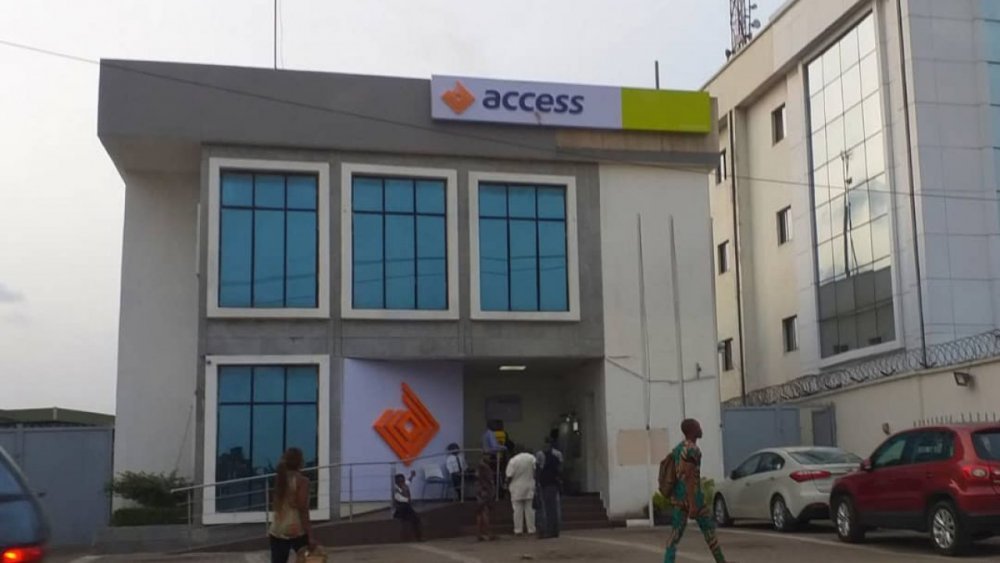
Access Bank, GTCO, Fidelity Bank Account for 29.23% of Total Weekly Trades on NGX

Published

on

Access Bank stocks

By Dipo Olowookere

The trio of Access Bank, GTCO and Fidelity Bank contributed 29.23 per cent and 24.23 per cent respectively to the total trading volume and value at the Nigerian Exchange (NGX) Limited last week.

According to data obtained by Business Post, investors bought and sold a total of 500.8 million shares of the banking stocks worth N7.5 billion in 3,603 deals in the week.

The shares, especially for Access Bank and GTCO, attracted dividend investors, who are positioning themselves for the annual cash rewards of the duo.

In the week, the market recorded a turnover of 1.7 billion shares worth N30.8 billion in 24,767 deals compared with the 1.3 billion shares valued at N22.7 billion transacted in 27,822 deals in the earlier week.

Further breakdown showed that financial stocks accounted for 1.1 billion units worth N12.2 billion traded in 11,708 deals, contributing 62.14 per cent and 39.66 per cent to the total trading volume and value respectively.

Consumer goods equities trailed with 156.1 million units valued at N5.0 billion in 4,877 deals, while conglomerates shares recorded a turnover of 113.6 million units worth N309.8 million in 1,062 deals.

The best-performing stock for the five-day trading week was RT Briscoe as a result of the 53.85 per cent price appreciation it printed, closing at 60 kobo.

Learn Africa gained 46.67 per cent to settle at N2.20, SCOA Nigeria rose by 32.02 per cent to N2.35, Academy Press expanded by 31.62 per cent to N1.79, while NCR Nigeria increased by 20.91 per cent to N3.99.

On the other hand, CWG ended the week as the worst-performing stock with a price decline of 9.76 per cent to settle at N1.11, Berger Paints lost 9.58 per cent to trade at N7.55, NGX Group fell by 8.49 per cent to N24.25, Lasaco Assurance depreciated by 6.25 per cent to N1.05, while Consolidated Hallmark Insurance dropped 6.15 per cent to 61 kobo.

At the close of business for the week, the exchange recorded 43 price gainers, lower than 44 of the preceding week; 38 price losers, higher than 31 of the earlier week, while 75 equities closed flat, higher than 81 equities recorded in the previous week.

In terms of the general performance of the market last week, the All-Share Index (ASI) and the market capitalisation depreciated by 0.13 per cent and 0.12 per cent to 47,140.48 points and N25.406 trillion respectively.

However, all other indices finished higher with the exception of NGX premium, banking, NGX AFR bank value, energy and industrial goods indices, which depreciated by 0.29 per cent, 0.74 per cent, 0.86 per cent, 3.45 per cent, and 0.32 per cent respectively while the Main Board, Asem, Growth and sovereign bond indices closed flat.


Dipo Olowookere is a journalist based in Nigeria that has passion for reporting business news stories. At his leisure time, he watches football and supports 3SC of Ibadan. Mr Olowookere can be reached via [email protected]

Economy

Naira Weakens to N1,353/$ at Official Market

Published

on

Naira appreciates

By Adedapo Adesanya

Fresh foreign exchange (forex) demand pressure saw the Naira depreciate against the United States Dollar in the Nigerian Autonomous Foreign Exchange Market (NAFEX) on Thursday, April 22, by N5.46 or 0.4 per cent to trade at N1,353.91/$1 compared with the preceding day’s value of N1,348.45/$1.

It was the same outcome for the local currency in the official market after it depreciated against the Pound Sterling by N4.13 to close at N1,825.88/£1, in contrast to the preceding session’s N1,821.75/£1, and against the Euro, it dropped 72 Kobo to finish at N1,582.72/€1 versus N1,582.00/€1.

But the Nigerian Naira appreciated against the US Dollar at the GTBank FX desk by N2 during the session to quote at N1,361/$1 compared with Wednesday’s closing price of N1,361/$1, and at the parallel market, it closed flat at N1,375/$1.

FX Pressure came as data showed that NFEM interbank turnover was N28.117 million, lower than the N66.084 million recorded the previous day.

Concerns over liquidity pressures, policy transparency, and confidence in Nigeria’s FX market continue to grip the market while the country’s foreign reserve declines further, even as the Central Bank of Nigeria (CBN) recently said that the recent decline in Nigeria’s external reserves should not be a cause for concern.

Global developments also played a significant role, as rising geopolitical tensions boosted demand for the US Dollar, further weakening emerging market currencies, including the Naira.

As for the cryptocurrency market, there was a mixed outcome as traders reacted to rising geopolitical tensions from the Iran war and fresh inflation data from Japan.

Japanese inflation ticked higher in March, stoking expectations that the Bank of Japan may soon signal rate hikes, which could strengthen the yen and unsettle global risk assets.

The Iran conflict has disrupted oil flows through the Strait of Hormuz, raising energy costs and inflation risks worldwide and potentially complicating efforts by the Federal Reserve to cut interest rates.

Ethereum (ETH) declined by 1.8 per cent to $2,316.53, Bitcoin (BTC) lost 0.6 per cent to sell at $77,935.53, Solana (SOL) fell by 0.5 per cent to $85.67, and Binance Coin (BNB) dropped 0.4 per cent to sell for $634.85.

However, Dogecoin (DOGE) appreciated by 1.4 per cent to $0.0976, Ripple (XRP) grew by 0.7 per cent to $1.43, Cardano (ADA) expanded by 0.6 per cent to $0.2493, and TRON (TRX) improved by 0.2 per cent to $0.3279, while the US Dollar Tether (USDT) and the US Dollar Coin (USDC) traded flat at $1.00 each.

Continue Reading

Economy

NB Plc’s Strong Recovery, Improved Profitability Excite Shareholders

Published

on

Nigerian Breweries NB Plc shareholders

By Aduragbemi Omiyale

The resilience shown by Nigerian Breweries Plc in the 2025 fiscal year, despite a volatile macroeconomic environment, which consumed several businesses, has not got without notice.

Shareholders of the brewery giant applauded the board and management for the strong recovery and improved profitability recorded in the year.

At the company’s 80th Annual General Meeting (AGM) on Wednesday, April 22, 2026, in Lagos, they attributed these achievements to disciplined cost management and a significant reduction in finance expenses.

“We are proud of how the company has withstood the ups and downs of a challenging environment. The return to profitability and the reversal of the negative cash position recorded in the previous two financial years are commendable,” a member of the Noble Shareholders Association, Mr Owolabi Opeyemi, said at the gathering.

Also, the immediate past Secretary of the Independent Shareholders Association of Nigeria (ISAN), Mr Eke Emmanuel, noted that the company’s resilience reflects strong leadership and a sound strategic direction.

“It is good news that we have been here for 80 years. There is no reason why we will not be here for the next 80 years with what we have achieved. To return to this level of profitability and cash position shows the Board has done an enormous amount of work,” he said.

Addressing investors at the AGM, the board chairman, Mrs Juliet Anammah, expressed confidence that the company is firmly on a recovery path following the net losses recorded in the past two years due to macroeconomic pressures and fiscal reforms.

She thanked shareholders for their continued support and reaffirmed that the company will build on its 2025 performance as it accelerates growth ambitions.

 “We have a solid foundation built over eight decades, anchored on a strong portfolio of brands, an extensive nationwide sales and supply chain network, ongoing digital transformation, and most importantly, our people. These strengths remain critical to sustaining our leadership position,” the former chief executive of Jumia Nigeria said.

Ms Anammah also addressed the company’s dividend position, noting that the decision not to declare a dividend reflects the need to rebuild retained earnings impacted by prior macroeconomic shocks, particularly foreign exchange-related losses.

“We recognise the importance of dividend payments to our shareholders and sincerely appreciate your continued understanding. While we are not declaring a dividend at this time due to negative retained earnings, we are working diligently to restore the company’s financial position and return to dividend payments as soon as it is sustainable to do so,” she added.

She further noted that the board remains vigilant to external risks, including the Middle East crisis and broader macroeconomic challenges, which may impact the pace of improvement in the 2026 financial year.

Continue Reading

Economy

Crude Oil Prices Jump Over $3 on Escalating Hormuz Tensions

Published

on

crude oil prices

By Adedapo Adesanya

Crude oil prices spiked by about $3 a barrel on Thursday as Iran tightened its grip on the Strait of Hormuz, with peace talks with the United States remaining distant.

Brent crude futures ‌settled at $105.07 a barrel after gaining $3.16 or 3.1 per cent, while the West Texas Intermediate futures finished at $95.85 a barrel, up $2.89 or 3.11 per cent.

Progress toward reopening the passage remains stalled as Iran’s parliament speaker said the US blockade was “bullying” and a “flagrant breach of the ceasefire,” adding that negotiations would not resume with it in place.

US President Donald Trump said the blockade would continue. An American can wage war without Congressional approval for 60 days, a deadline which expires May 1.

Ahead of that, Reuters reported that air defences were engaging targets ​over Tehran. That followed reports of drone attacks ​on Iranian Kurdish opponents of the Iranian government at a base in Iraq.

President Trump also said in a social media post that he had ordered the US Navy “to ​shoot and kill any boat” mining the strait.

While he extended a ceasefire between the countries after a request by Pakistani mediators, Iran and the US are still restricting transit of ‌ships ⁠through the strait, which carried about 20 per cent of daily global oil supplies until the start of the war on February 28.

This week, one ship passed through the waterway on Tuesday. However, by Wednesday, more ships tried, but Iran attacked two and reportedly seized two more.

The US also blockaded traffic to and from Iranian ports in the Persian Gulf, but it appears that the blockade has not stopped traffic completely. It was reported that as many as 34 sanctioned and Iranian-linked tankers moved in and out of the waterway between April 13 and 21.

The US military has intercepted at least three Iranian-flagged tankers in Asian waters and is redirecting them away from positions near India, Malaysia and Sri Lanka.

Meanwhile, the executive director of the International Energy Agency (IEA), Mr Fatih Birol, said the war in the Middle East and the closure of the Strait of Hormuz have created the largest energy security threat the world has ever faced.

“As of today, we’ve lost 13 million barrels per day of oil … and there are major disruptions in vital commodities,” Mr Birol said in an interview, adding that the IEA-coordinated record emergency release of 400 million barrels of oil stocks last month cannot offset the massive supply loss.

Continue Reading

Trending