Connect with us

Economy

Brent Surges to $118 as EU Mulls Fresh Russian Sanctions

Published

on

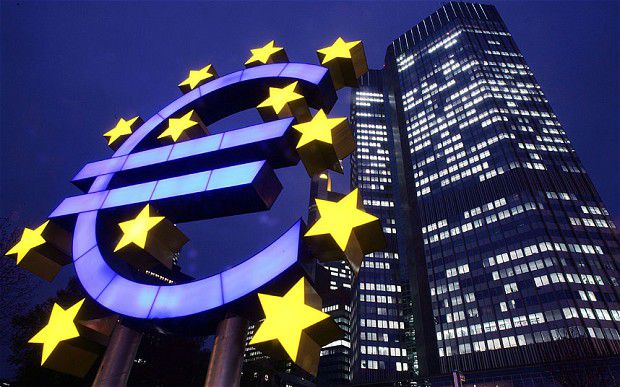
European Stocks1

By Adedapo Adesanya

The price of the Brent crude rose by 3.59 per cent or $3.44 to $118 per barrel on Monday night as the European Union (EU) considers fresh sanctions that will hit Russia’s energy sector and further tighten the market.

This development also lifted the price of the United States West Texas Intermediate (WTI) crude higher yesterday by 4.36 per cent or $4.39 to $113.6 per barrel.

The new sanctions are being triggered by allegations of the killing of unarmed civilians by Russian forces while retreating from Ukrainian towns. The bloc vowed a new wave of severe sanctions would follow against Russia in a matter of days, including potential sanctions against Russia’s oil, gas, or coal exports.

It admitted that “Haunting images of large numbers of civilian deaths and casualties, as well as the destruction of civilian infrastructures, show the true face of the brutal war of aggression Russia is waging against Ukraine and its people.”

“The massacres in the town of Bucha and other Ukrainian towns will be inscribed in the list of atrocities committed on European soil,” the EU said in a statement on Monday.

“The EU will continue to firmly support Ukraine and will advance, as a matter of urgency, work on further sanctions against Russia. President Putin must stop this war immediately and unconditionally,” the EU added.

Europe to date has ceased to target directly Russian energy exports fearing that sanctions or an embargo could lead to a deep recession in the major European economies, including the biggest one, Germany.

Germany has so far been one of the staunchest opponents of an energy embargo on Russia, but after photos of Russian atrocities in Bucha and other Ukrainian towns emerged, the mood appears to be shifting even in the country.

Now, the EU looks likely to discuss a ban on the import of Russian natural gas this week.

This provides a major shift after crude dropped more than 10 per cent last week after US President Joe Biden announced a record oil reserves release and as International Energy Agency members committed to further tapping reserves.

Mr Biden announced the biggest ever release of oil from the US Strategic Petroleum Reserve (SPR)—180 million barrels over six months which is one million additional barrels on the market per day on average – every day – for the next six months.

Support also came as a pause in talks in Vienna to revive the Iran nuclear deal, which would allow the lifting of sanctions on Iranian oil.

Meanwhile, geopolitical pressure may begin to ease following a truce in Yemen, which could lessen threats to supply in the Middle East.

The United Nations brokered a two-month truce between a Saudi-led coalition and the Houthi group aligned with Iran for the first time in the seven-year conflict.

Saudi oil facilities have come under Houthi attack during the fighting with the recent attack coming last month after they attacked a petroleum products distribution terminal, a natural gas plant, a refinery as well as a water desalination plant, a power station and a gas facility in the kingdom.


Adedapo Adesanya is a journalist, polymath, and connoisseur of everything art. When he is not writing, he has his nose buried in one of the many books or articles he has bookmarked or simply listening to good music with a bottle of beer or wine. He supports the greatest club in the world, Manchester United F.C.

Advertisement
1 Comment

Leave a Reply

Your email address will not be published. Required fields are marked *

Economy

Shettima Blames CBN’s FX Intervention for Naira Depreciation

Published

on

Kashim Shettima

By Adedapo Adesanya

Vice President Kashim Shettima has attributed the Naira’s recent depreciation to the intervention of the Central Bank of Nigeria (CBN) in the foreign exchange (FX) market, stating that the currency could have strengthened to around N1,000 per Dollar within weeks if the apex bank had allowed market forces to prevail.

The local currency has dropped over N8.37 on the Dollar in the last week, as it closed at N1,355.37/$1 on Tuesday at the Nigerian Autonomous Foreign Exchange Market (NAFEM), after it went on a spree late last month and into the early weeks of February.

However, speaking on Tuesday at the Progressive Governors’ Forum (PGF), Renewed Hope Ambassadors Strategic Summit in Abuja, the Nigerian VP said the intervention was to ensure stability.

“In fact, if not for the interventions by the Central Bank of Nigeria yesterday, the 1,000 Naira to a Dollar we are going to attain in weeks, not in months. But for the purpose of market stability, the CBN generously intervened yesterday.

“So, for some of my friends, especially one of our party leaders who takes delight in stockpiling dollars, it is a wake-up call,” the vice president said.

He was alluding to CBN buying US Dollars from the market to slow down the rapid rise of the Naira.

Latest information showed that last week, the apex bank bought about $189.80 million to reduce excess Dollar supply and control how fast the Naira was gaining value.

The move was aimed at preventing foreign portfolio investors from exiting Nigeria’s fixed-income market, as large-scale sell-offs could heighten demand for US Dollars, intensify capital flight, and exert further pressure on the exchange rate.

Amid this, speaking after the 304th meeting of the monetary policy committee (MPC) of the CBN on Tuesday, Governor of the central bank, Mr Yemi Cardoso, said Nigeria’s gross external reserves have risen to $50.45 billion, the highest level in 13 years.

This strengthens the country’s foreign exchange buffers, enhances the apex bank’s capacity to defend the Naira when needed, and boosts investor confidence in the stability of the Nigerian FX market.

Continue Reading

Economy

Dangote Refinery Exports 20 million Litres Surplus of PMS

Published

on

dangote pms delivery

By Aduragbemi Omiyale

Up to 20 million litres in surplus of Premium Motor Spirit (PMS), otherwise known as petrol, is being exported daily by the Dangote Petroleum Refinery and Petrochemicals after supplying about 65 million litres to the domestic market.

Nigeria’s average daily petrol consumption stands at between 50 and 60 million litres, indicating that the refinery’s output exceeds current domestic requirements, marking a decisive break from decades of fuel import dependence and recurrent scarcity.

The president of Dangote Group, Mr Aliko Dangote, speaking in Lagos, while confirming a structured offtake agreement with selected marketers to ensure nationwide distribution and eliminate supply instability, said the structured model was designed to eliminate supply bottlenecks and curb speculative practices that have historically triggered disruptions.

“We have agreed an offtake framework to supply up to 65 million litres daily for the domestic market. Any surplus, estimated at between 15 and 20 million litres, will be exported,” he said.

Under a revised distribution framework endorsed by the Nigerian Midstream and Downstream Petroleum Regulatory Authority, the refinery will channel nationwide supply through major marketing companies, including MRS Oil Nigeria Plc, Nigerian National Petroleum Company Limited Retail (NNPC), 11 plc (Mobil Producing Nigeria), TotalEnergies Marketing Nigeria Plc, Rainoil Limited, Northwest Petroleum & Gas Company Limited, Ardova Plc, Bovas & Company Limited, AA Rano Nigeria Limited, AYM Shafa Limited, Conoil and Masters Energy.

With local refining now exceeding national demand, the country stands to conserve billions of dollars annually in foreign exchange previously spent on petrol imports. Analysts say this would ease pressure on the naira, strengthen external reserves, and improve trade balance stability.

Continue Reading

Economy

NECA, CPPE Laud CBN’s 0.50% Interest Rate Cut

Published

on

CBN - Yemi Cardoso

By Adedapo Adesanya

The Nigeria Employers’ Consultative Association (NECA) and the Centre for the Promotion of Private Enterprise (CPPE) have separately commended the Central Bank of Nigeria (CBN) for reducing the Monetary Policy Rate (MPR) from 27.0 per cent to 26.5 per cent at its 304th Monetary Policy Committee (MPC) meeting.

In reaction, NECA Director-General, Mr Adewale-Smatt Oyerinde, praised the decision in a statement, noting that the 50 basis-point cut is “a cautious but noteworthy signal” that authorities were responding to sustained pressures on businesses.

He said the marginal reduction might not immediately lower lending rates, but reflected “a gradual shift toward supporting growth without undermining price stability”.

According to him, the overall stance remained tight, with the Cash Reserve Ratio retained at 45 per cent and the liquidity ratio at 30 per cent.

He added that the asymmetric corridor around the MPR was also maintained, reinforcing a cautious monetary approach.

“With a substantial portion of deposits still sterilised, banks’ capacity to expand credit to the real sector may remain constrained in the near term,” he said.

Mr Oyerinde described the move as “a careful balancing act” aimed at moderating inflation without worsening pressures on businesses.

He noted that firms continued to grapple with high operating costs, exchange rate volatility and weakened consumer demand.

“Inflation, particularly in food, energy and transportation, remains a significant challenge to employers and households,” he said.

He stressed that the modest easing must be supported by coordinated fiscal and structural reforms to address supply-side constraints.

Such reforms, he said, should improve infrastructure and enhance productivity across key sectors of the economy.

Mr Oyerinde urged financial institutions to ensure the MPR reduction was gradually reflected in lending conditions for manufacturers and SMEs.

He affirmed that although the MPC had not fully relaxed its tightening stance, the rate cut signalled cautious optimism.

“Sustained improvements in inflation, exchange rate stability and investor confidence will determine scope for further easing that supports growth and employment,” he said.

On its part, the CPPE said the decision reflected improving macroeconomic fundamentals and a cautious shift from aggressive tightening.

The organisation noted that sustained disinflation, stronger external reserves, an improved trade balance and relative exchange-rate stability had created room for monetary easing.

It said the rate cut could boost investor confidence and support private-sector growth, but cautioned that weak monetary transmission might limit its impact on lending rates.

The CPPE identified high cash reserve requirements, elevated lending rates, government borrowing and structural banking costs as major constraints to effective transmission.

The group also stressed the need for fiscal consolidation, citing high public debt, persistent deficits and rising debt-service obligations as risks to macroeconomic stability.

According to the chief executive of CPPE, Mr Muda Yusuf, effective policy coordination and stronger transmission mechanisms were critical to unlocking investment and sustaining growth, lauding the CBN for what he described as a measured and data-driven policy adjustment.

The CPPE boss noted that the easing reflected strengthening macroeconomic performance, declining inflation, growing reserves, improved trade balance and enhanced foreign exchange stability.

Mr Yusuf added that for the benefits of monetary easing to be fully realised, authorities must strengthen transmission to ensure lower lending rates for the real sector and advance credible fiscal consolidation to safeguard stability.

He said that if supported by structural reforms and disciplined fiscal management, the current policy direction could unlock a stronger investment cycle and more durable economic growth.

Continue Reading

Trending