Connect with us

Sports

Most Expensive Nigerian Players

Published

on

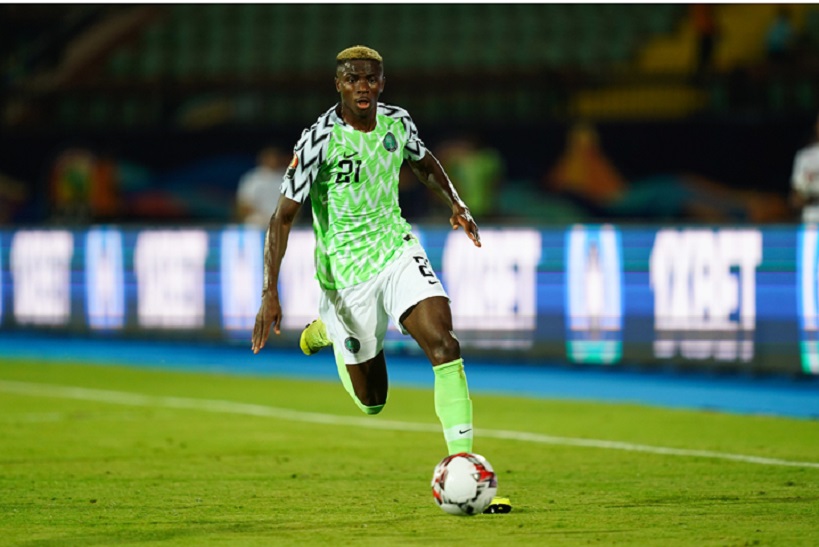
Victor Osimhen new

Despite the widespread disappointment amongst all football fans in Nigeria following the national team’s failure to qualify for the 2022 World Cup, Nigerian players will continue to be successful in European competitions.

Some of them are struggling to win the national championship, while others are continuing to play in the Champions League. For these reasons, Nigerian fans will find the matches involving their favourite athletes to be very interesting in the future. Check out the latest news from the world of sports on this website.

Victor Osimhen, Napoli, €60m

Osimhen is currently the crown jewel of Nigerian football. The Italian Napoli striker is just 23, and he is already one of the most promising strikers in world football. With his club, Victor is fighting for the Serie A title this year. Boasting a total of 19 goals in all competitions in the 2021/2022 season for Osimhen, his market value has risen to €60m.

Wilfred Ndidi, Leicester, €60m

The Nigerian supporting midfielder moved to Leicester from Belgian side Genk in the summer of 2016. The English club paid €17 million for the then 19-year-old. The first season was spent adapting to the intense English Premier League style, but in the second year, Ndidi became an ironclad starter. Wilfred has shown tremendous progress over the years and has won the FA Cup and the Super Cup with the club, leaving the 25-year-old with a breathtaking current transfer value of €60 million.

Onuachu Paul, Genk €20m

This footballer revealed himself quite late in life. Until the age of 25, Paul played in the Danish league, moving to the Belgian side, Genk, only in 2019. For this club, Onuachu managed to spend three years with 84 matches, in which he scored 57 goals. The striker has also made 16 appearances for the Nigerian national team. Thanks to his scoring skills, the 27-year-old striker has been able to grow in value to €20 million.

Kelechi Iheanacho, Leicester, €20m

This player’s career started very quickly. At the age of 17, Kelechi had already made his debut for Manchester City’s main squad. However, time passed and Iheanacho did not become a key player in the starting line-up of the Citizens. Therefore, the Nigerian moved to Leicester in the summer of 2017. But even here, the striker is still not an iron-fisted starter. However, that doesn’t stop Transfermarkt from valuing him at around €20 million.

Samuel Chukwueze, Villarreal, €20m

Another very promising player in the attacking group, Chukwueze won the Youth World Cup with Nigeria in 2015. Since 2018, he has featured for Villarreal and won the Europa League. Samuel’s transfer value has increased every year and currently stands at €20 million.

Alex Iwobi, Everton, €18m

Alex is an Arsenal pupil, having passed all the stages of the club’s academy. Already at the age of 17, Iwobi was invited to the main team, as the midfielder at the time showed great promise. But the Nigerian never found his place in the club, so he moved to Everton in 2019. His market value is slowly dropping and currently stands at €18m.

Umar Sadiq, Almeria, €18m

Sadiq has the most thorny footballing path to follow. In his still short career, Umar has played in Italy, the Netherlands, Scotland, Serbia, and Spain. For the last two years, the striker has been playing for Almeria in the Spanish Segunda. This season, the Nigerian has netted 15 goals and 7 assists, pushing his transfer fee up to €18m.


Click to comment

Leave a Reply

Your email address will not be published. Required fields are marked *

Sports

Why Reward Programs Keep Users Coming Back to Digital Platforms

Published

on

Reward Programs

Reward systems have become a standard feature across nearly every digital platform people use daily, from streaming apps to shopping services to online entertainment. What used to be a simple points card at a physical store has evolved into complex digital systems that shape how people interact with technology every single day.

Understanding why these systems work helps explain a lot about modern app design and user behavior.

The Psychology Behind Rewards

Reward programs tap into a basic psychological principle: people respond strongly to positive reinforcement, especially when it feels earned rather than random. A small bonus after completing an action creates a sense of accomplishment that encourages repeat behavior.

This is not a new discovery. Behavioral psychologists identified this pattern decades ago, but digital platforms have refined it into something far more precise. Apps can now track exactly which actions lead to engagement and design rewards around those specific behaviors.

The unpredictability factor matters too. When rewards are not entirely predictable, whether it is a surprise bonus or a random discount, users check back more often just to see what they might receive. This mechanism explains why so many apps in Nigeria and Kenya use daily login bonuses and surprise offers rather than fixed, predictable rewards.

Why Loyalty Programs Work

User retention is one of the most expensive challenges digital platforms face. Acquiring a new user costs significantly more than keeping an existing one engaged, which is why loyalty systems have become central to long-term business strategy rather than an occasional marketing tactic.

Loyalty programs work because they change how users perceive their relationship with a platform. Instead of a single transaction, the relationship becomes ongoing, with each interaction building toward a larger benefit. This shift from transactional to relational thinking keeps users returning even when competitors offer similar core services.

The most effective loyalty programs share a few common characteristics. They tend to include the following elements:

  • Tiered structures: users move through levels, with each tier unlocking better rewards than the last.
  • Clear progress tracking: users can see exactly how close they are to the next reward, which encourages continued activity.
  • Achievable early wins: new users receive a small reward quickly to establish the habit before bigger incentives kick in.

These elements work together to create a sense of ongoing progress rather than a single isolated reward.

Personalization and User Engagement

User engagement

Generic rewards sent to every user rarely perform as well as personalized ones. Customer engagement improves significantly when platforms use behavioral data to offer rewards that match individual habits rather than broadcasting the same offer to everyone.

A user who plays mobile games every evening responds differently to a reward than someone who logs in once a week. Platforms that segment their user base and adjust reward timing, size, and type based on actual behavior see stronger engagement results than those using one-size-fits-all approaches.

This level of personalization requires solid data infrastructure, but the payoff is measurable. Users who receive rewards that feel relevant to their specific habits are more likely to view the platform as understanding their preferences, which builds trust over time.

How Digital Platforms Build Long-Term Relationships

Bonus systems work best when they feel like an ongoing relationship rather than a one-time transaction. Digital entertainment platforms across Africa increasingly design bonus structures around consistent engagement rather than single large payouts.

A Pin Up bonus, for example, illustrates how modern platforms structure rewards around regular activity rather than one-off promotions, encouraging users to return through small, consistent incentives instead of relying solely on a single large welcome offer.

Digital incentives that reward consistency, like weekly bonuses or milestone-based rewards, tend to build stronger long-term habits than large one-time offers that lose relevance after the first use.

Future Trends

AI-driven personalization will likely make reward timing even more precise, predicting the exact moment a user is most likely to respond positively to an incentive. Platforms are also expected to move toward more transparent reward structures, showing users exactly what they need to do to unlock the next benefit.

Gamified elements, like progress bars and achievement badges, are also expanding beyond gaming apps into shopping, fitness, and finance platforms, borrowing techniques that have proven effective at keeping users engaged over time.

In conclusion, reward programs succeed because they align with basic human psychology while adapting to individual behavior patterns. Platforms that build genuine, personalized reward systems will continue to see stronger user retention than those relying on generic, one-size-fits-all incentives.

Continue Reading

Sports

CANAL+ Brings Biggest-Ever WAFCON Morocco 2026 to SuperSport

Published

on

WAFCON Morocco 2026

CANAL+ has confirmed that the TotalEnergies CAF Women’s Africa Cup of Nations Morocco 2026 (WAFCON) will be broadcast live on SuperSport across Sub-Saharan Africa.

The tournament, which runs from 26 July to 16 August across five venues in Rabat and Casablanca, will see all 34 matches broadcast live on DStv, DStv Stream, GOtv and GOtv Stream. In Nigeria, coverage will be available on DStv and GOtv through MultiChoice.

The 2026 edition is the largest in the tournament’s history, following its expansion by the Confédération Africaine de Football (CAF) from 12 to 16 teams. It will also serve as a qualifying tournament for the 2027 FIFA Women’s World Cup in Brazil, with the four semi-finalists qualifying automatically and two additional teams advancing to an intercontinental qualifying playoff.

CANAL+ Africa and MultiChoice Group CEO, David Mignot, said: *”CANAL+ is delighted to confirm that the TotalEnergies CAF Women’s Africa Cup of Nations Morocco 2026 will be broadcast on our SuperSport channels on DStv and GOtv throughout Sub-Saharan Africa.

“This event marks our third major football tournament since our merger with the MultiChoice Group. We look forward to bringing another major football event to our subscribers and football fans across Africa, following the FIFA World Cup 2026 and the Men’s TotalEnergies CAF Africa Cup of Nations earlier this year.”

DStv and GOtv subscribers will be able to watch the tournament live on SS Football Plus (DStv Ch. 202). Match updates and highlights will also be available on SuperSport Blitz and SuperSport.com.

Continue Reading

Sports

WAFCON 2026: Super Falcons Lead Hunt for 11th Title, World Cup Qualification

Published

on

Super Falcons WAFCON 2026

By Adedapo Adesanya

The Super Falcons of Nigeria will begin their quest for a record-extending 11th Women’s Africa Cup of Nations (WAFCON) title when the 2026 tournament kicks off in Morocco on Sunday, with qualification for the 2027 FIFA Women’s World Cup and a record $2 million winners’ prize also at stake.

Nigeria has been drawn in Group C with Egypt, Zambia and Malawi for the defence of their WAFCON title in March, which will be hosted again in Morocco.

Last year, the Nigerian team won the record 10th tournament after defeating the host nation, Morocco, 3-2 in a spectacular final after going down 2-0.

The 2026 edition will once again be played in Morocco from July 26 to August after the earlier March 17-April 3 date was shifted.

The Confederations of African Football (CAF) cited “unforeseen circumstances” for the delay, but the late change has afforded more time for the newly expanded 16-team tournament, which will feature 34 matches and culminate in the final on Sunday, August 16.

Nigeria’s preparations

As part of preparations, the Super Falcons defeated Tanzania’s Twiga Stars  2-1 on Thursday in Casablanca.

The team debuted an iconic Nike jersey featuring 10 stars, which symbolises the number of victories at the continental tournament.

Nigeria will begin the defence of their title against tournament debutants Malawi at the Al Madina Stadium in Rabat on Tuesday, July 28, then face Zambia and Egypt.

Nigeria coach Justine Madugu told reporters the priority for the Falcons is reaching the semi-finals and clinching one of four World Cup places automatically reserved for Africa.

“Our second goal is to defend the trophy and bring it back to Nigeria. We know it will not be easy because every other nation wants to depose us,” he said.

“We have in our possession something precious that everybody else wants. However, we will remain resolute and focused and try to achieve both objectives.”

Squad

Goalkeepers: Chiamaka Nnadozie (Brighton & Hove Albion, England), Comfort Erhabor (Portsmouth Ladies, England), Fatima Oloko (Abia Angels)

Defenders: Osinachi Ohale (Pachuca Tuzas, Mexico), Michelle Alozie (Chicago Stars FC, USA), Shukurat Oladipo (AS Roma, Italy), Rofiat Imuran (London City Lionesses, England), Glory Ogbonna (FC Kiryat Gat, Israel), Oluwatosin Demehin (Galatasaray, Turkey), Sikiratu Isah (Bnot Netanya, Israel), Christy Ucheibe (SL Benfica, Portugal)

Midfielders: Rasheedat Ajibade (Paris Saint-Germain, France), Halimatu Ayinde (BK Hacken, Sweden), Deborah Abiodun (Washington Spirit, USA), Toni Payne (Everton Women, England), Jennifer Echegini (Paris Saint-Germain, France)

Forwards: Asisat Oshoala (Al Hilal, Saudi Arabia), Gift Monday (Washington Spirit, USA), Esther Okoronkwo (AFC Toronto, Canada), Joy Omewa (BK Hacken, Sweden), Francisca Ordega (Ittihad Ladies, Saudi Arabia), Folashade Ijamilusi (Liaoning Shenyang Shenbei Hefeng, China), Omorinsola Babajide (AS Roma, Italy), Chinwendu Ihezuo (Pachuca Tuzas, Mexico), Uchenna Kanu (Cruz Azul Femenil, Mexico).

Teams

Of the 16 qualified teams, nine had taken part in the 2024 edition, while Botswana, DR Congo and Tunisia missed out, having qualified in 2024. Cape Verde and Malawi both will make their first appearance in the final tournament.

Group A: Algeria, Kenya, Morocco, Senegal

Group B: Burkina Faso, Ivory Coast, South Africa, Tanzania

Group C: Egypt, Malawi, Nigeria, Zambia

Group D: Cameroon, Cape Verde, Ghana, Mali.

Schedule and Final 

The kick-off times will be at 6 p.m. and 9 p.m. throughout the tournament except the final.

Quarter-finals will take place on August 8 and 9, with both semi-finals following on August 12.

The final will be on Sunday, August 16, at 8 pm at either the Moulay Hassan Stadium or the Prince Moulay Abdellah Stadium in Rabat, which hosted the scandalous AFCON 2025 final.

Continue Reading