Connect with us

Travel/Tourism

Wakanow, Dana Air Partner to Provide Real-time Flight Schedules

Published

on

Wakanow Dana Air Real-time Flight Schedules

By Aduragbemi Omiyale

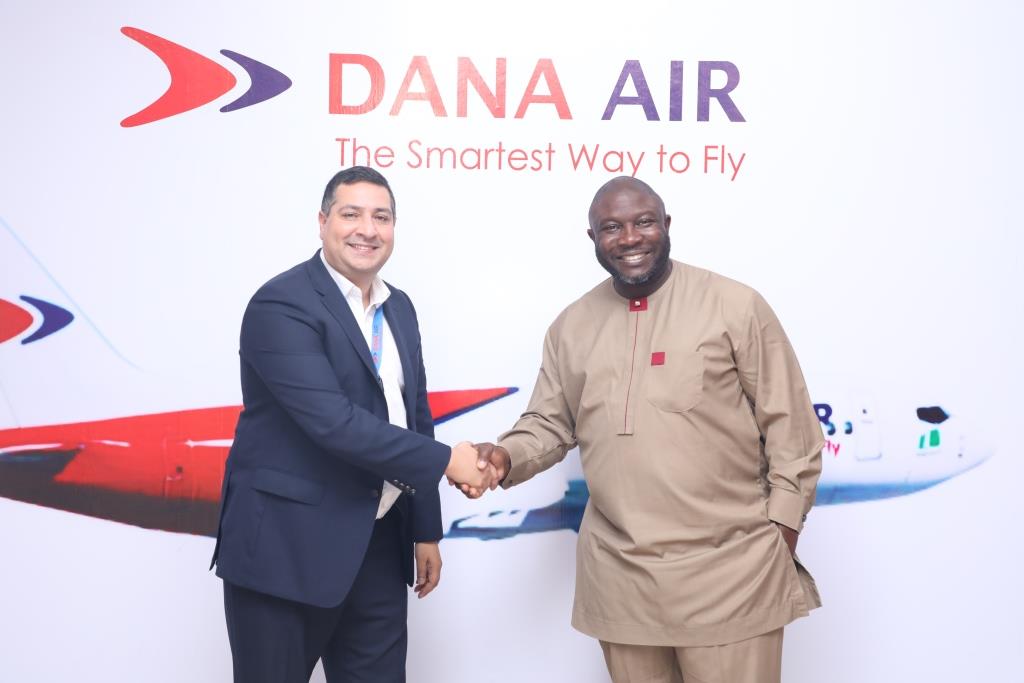
A partnership aimed to make available to air passengers real-time flight schedules and inventory has been entered into between Wakanow and Dana Airlines, also known as Dana Air.

“Wakanow is expected to bring in another differentiator to the Nigerian travel industry as we begin this collaboration with Dana Airlines,” the chief executive of Wakanow, Mr Adebayo Adedeji, stated.

“With this partnership, we are poised to change the face of domestic travel for Nigerian travellers and other tourists from across the world. We would bring our topnotch expertise to bear so that this collaboration will be a case study across the aviation industry,” he added.

It was gathered that this collaboration between both organisations makes the leading travel tech company the only official online travel agency with Dana Airlines Nigeria’s Live Inventory bookable in real-time.

This will enable the firm to deliver a seamless booking experience for its customers and passengers of the fully private sector-owned carrier in Nigeria.

“The aviation industry is undergoing changes that will delight travellers and will bring a boost to the quality of service provided to the travellers. With Wakanow, Nigerians will continue to have bespoke services and superior customer experience across all our touchpoints for Dana Airlines,” Mr Adedeji assured.

In her words, the Chief Commercial Officer of Wakanow, Mrs Adenike Macaulay, said, “This integration with Dana Airlines will unlock an expanded domestic inventory selection for our customers making Wakanow the one-stop shop for domestic travel bookings in Nigeria.

“Our expertise in the travel industry will be brought to the fore in exceeding customers’ experience with Dana Airlines bookings. She noted, “Our workforce is ready to support Dana Airlines in surpassing customers’ expectations.”

In his remarks, the deputy CEO of Dana Air, Mr Sukhjinder Mann, said, “Our collaboration with Wakanow is to create seamless, real-time booking options for our guests across the world and there are a lot of these partnerships in the works as part of efforts to continue to exceed the flying aspirations of our guests with improved customer experience.”

Wakanow has become renowned for her support of local and international airlines and for enhancing the Nigerian aviation industry with distinct products and services. The travel tech company is built to cater to all the travel needs of travel enthusiasts from flights, hotels, holiday experiences, visa processing, and COVID-19 tests, among other offerings for Nigerian travellers.

As an indigenous African travel industry leader, Wakanow was a part of the 10th Aviation Stakeholders Convention that took place in Nairobi, Kenya recently.


Advertisement
Click to comment

Leave a Reply

Your email address will not be published. Required fields are marked *

Travel/Tourism

FAAN Traces Source of Lagos Airport Fire to Server Room

Published

on

lagos airport fire outbreak

By Modupe Gbadeyanka

The Federal Airports Authority of Nigeria (FAAN) has disclosed that the fire incident at Terminal 1 of the Murtala Muhammed International Airport (MMIA), Lagos, on Monday originated from the server room on the first floor of Terminal 1.

In a statement in the wee hours of Tuesday, the agency confirmed that six casualties were recorded, involving three males and three females.

“A total of six casualties, comprising three males and three females, were recorded, all of whom are in stable condition. One affected individual has been transferred to the FAAN Headquarters Hospital for further medical evaluation and remains stable,” a part of the statement said.

FAAN noted that emergency response operations remain active, with coordinated firefighting, rescue, and safety teams continuing containment and recovery efforts.

A crane was successfully deployed to support rescue operations at the Control Tower, and all 14 persons initially trapped have been safely rescued and fully evacuated from the facility, it added.

The organisation disclosed that as an additional safety precaution, the sixth floor of the affected facility has been completely evacuated to support ongoing emergency operations and risk mitigation, adding that the fire within the departure hall is now largely under control, while responders continue close monitoring to prevent any spread to adjoining sections of the terminal.

“In line with established safety protocols, the airspace remains temporarily closed,” it stated, confirming that all emergency procedures were promptly activated and continue to collaborate with relevant emergency and support agencies to safeguard lives, infrastructure, and operational integrity.

Also, the statement revealed that the Nigerian Airspace Management Agency (NAMA) is actively working to establish a temporary Control Tower to enable the safe and timely restoration of airport operations as soon as practicable.

Continue Reading

Travel/Tourism

UK to Issue Digital Visas to Nigerian Travellers from February 25

Published

on

UK Visa

By Adedapo Adesanya

The United Kingdom says all Nigerian visitors to the country, who need a visa, will only get a digital visa from February 25, 2026.

In a statement, the UK Visas & Immigration said that from the scheduled date, all Nigerian nationals applying for a UK Visit visa will receive an eVisa, rather than a vignette (sticker) in their passport.

The shift also indicates that travellers will access their visa electronically through their UK Visas and Immigration (UKVI) account, marking a significant step in modernising the UK’s visa process.

For Nigerian applicants, the visa application requirements remain unchanged. Travellers will still apply as usual, attend a Visa Application Centre to provide biometric information, and meet all existing eligibility criteria. The only difference is how the visa is issued: instead of a physical sticker, applicants will receive a secure digital record of their immigration status.

According to a statement, the British government clarified that Nigerians currently holding a valid vignette sticker do not need to take any action. Their physical visa remains valid until it expires or requires replacement.

It added that the move to eVisas brings a number of benefits for Nigerian travellers, including passports being returned more quickly and travellers being able to manage their immigration status online at any time, from any location. The digital format offers stronger security as eVisas cannot be lost, stolen, or tampered with.

Welcoming the transition, British Deputy High Commissioner in Abuja, Mrs Gill Lever, said, “We are committed to making it easier for Nigerians to travel to the UK. This move to digital visas will streamline a key part of the visa process, making it more secure while reducing dependence on paper documents. We look forward to continuing to welcome Nigerian visitors, students, and workers to the UK.”

Once a visa is approved, applicants will need to create a free UKVI account to access the eVisa.

Continue Reading

Travel/Tourism

Russia Facilitates Travel, Tourism for Africans

Published

on

Africa tourism russia

By Kestér Kenn Klomegâh

Russian Foreign Minister, Sergey Lavrov, has reiterated the official statement on expanding visa-free travel between Russia and Africa, signaling Kremlin’s earlier position on facilitating people-to-people movement and raising cultural interaction. The question of ‘visa-free’ travel and tourism dominated discussions during the first and second Russia-Africa summits, as a step to embrace new bilateral relations and soft-power diplomacy with Africa.

While ‘visa-free’ travel could be interpreted as a potential driver for boosting tourism business, Sergey Lavrov’s definition limited this policy only to ‘Africans holding diplomatic passports’ and largely excludes political elites and business executives looking to develop entrepreneurial connectivity to Russia. The broader ambition is to focus on Africa’s middle class, estimated at 380 million envision as the constituting a huge tourism market, which is twice Russia’s population.

The Russian Ministry of Foreign Affairs has further underlined the fact that the implementation of a ‘visa-free regime’ with all African countries aims at strengthening cultural relations with the continent. That announcement filled the local Russian media from Moscow to Vladivostok. Later, the Ministry clarified that the ‘visa-free regime’ for African countries was still under serious review. Diplomatic talks with various countries on the drafts of visa-free travel agreements were underway at different stages, as each had its specific requirements. There was a need to categorise African countries into groups.

This initiative is within the framework of the Joint Action Plan (2023-2026) adopted at the second summit in St. Petersburg. From investigations, Russia has ‘visa-free agreements’ with only six African countries. The visa-free regime only applied to African countries that signed agreements with the Foreign Ministry. Within the agreements, only holders of diplomatic passports are permitted under this consular agreement. According to sources monitored, agreements would be signed after successful negotiations with Russian authorities.

The Head of the Russian Foreign Ministry’s Consular Department, Alexey Klimov, explained in an interview with local Russian media: “Russia is currently working out travel agreements on abolishing visa requirements and providing visa-free entry for short-term trips, usually up to 90 days, with several friendly states, nine of them being the countries of Africa and the Middle East.”

“As always, we will immediately inform the public about the concrete results achieved and embodied in documented bilateral agreements,” Klimov concluded, the full transcript posted on the official ministry’s website.

With the changing times, Russia has been pursuing an integrative, multipolar approach in its relations with friendly countries around the world, including those in Africa. During these past few years, Asian countries, such as China and India, have been granted such short-term visa-free privileges. In practical terms, this policy boosts tourism. It is noticeable that Russia remains a holiday destination for Africa’s political elite, corporate business leaders, and the middle class. But undoubtedly, African politicians and corporate business leaders highly prefer to spend their vacation in the United States and Europe. Some Asian destinations are becoming increasingly popular as a preferred choice for recreation. That trend is unlikely to change; it will remain as such for the next few decades.

Tourism topic at Russia-Africa summits

Following the Russia-Africa summits, both Russia and Africa adopted joint declarations—in fact, comprehensive documents that outline various parameters for elevating cooperation to a new qualitative stage.

Tourism is one of the most highly praised spheres during discussions. Brilliant speeches called for the frequent exchange of cultural groups and the taking of comprehensive measures to promote a broad scope of cultural and tourism collaboration between Russia and Africa.

Ultimately, to boost compelling economic interests and foster cooperation, frequent interactions are necessary. The frequency of interaction should not be limited to summits and conferences alone. Some basic strategic steps and measures are also required to encourage simple holiday travels to both regions.

These are significantly missing in the current relations between Russia and Africa. Critics often argue that Russia is contributing considerably to its so-called isolation by closing its doors, especially when there are considerable opportunities to develop high-quality tourism. The African elite could visit Moscow, St. Petersburg, and coastal cities, including Sochi, as well as along the Volga River.

Indeed, playing with flexible visa regimes will not only promote tourism and strengthen cultural ties, but also, in practical terms, will build positive perceptions and further help to neutralise a high level of Western media disinformation across the continent. There is a need to adopt a pragmatic approach to these crucial questions and carefully examine social aspects to enhance people-to-people interactions.

Notably, Russian officials consider visits by heads of African states and ministers to be an essential pillar of their version of building relations in the anticipated multipolar world.

With the current geopolitical situation, Africa’s middle class, estimated at 380 million (twice the population of Russia), has suitable alternative holiday destinations. For now, Moscow and St. Petersburg are not their desired priority for spending vacations. Russian tour operators acknowledge, in a media query with this article’s author, that there is no bilateral entrepreneurial activity between Russia and the African tourism sector. However, on the other hand, African destinations such as Egypt, Morocco, the Maldives, Seychelles, South Africa, and Zanzibar are popular among Russian vacationers.

Most often, Russian and African experts have been discussing how best to promote exchanges of delegations, explore untapped resources, and explore the possibilities of boosting cooperation in the field of tourism, as well as the dissemination of information on tourism opportunities in the Russian Federation and African States.

Over the past few years, the summit declarations have remained tacitly as declarations. In practical terms, the visa-free regime for African countries has mainly remained as official declarations. The fundamental question often asked is for what purposes the summit declarations are made.

Current Tourism Challenges

Russian experts say Chinese, Indians and many Asians are the real potentials, taking advantage of the emerging opportunity to travel to Russia, more than Africa’s middle class and entrepreneurs. In addition, Africa is currently assessed as “reawakening to geopolitical changes” and less capable of taking their own development initiatives based on the huge resources on the continent.

The continent’s challenges still existed. Notwithstanding that, Africa is seemingly moving from the periphery toward the negotiating table. With tourism, engagement remains weak and fragmented. In comparison, in African and Asian tourism, that distinction matters. Africa has a demographic advantage, but the dynamics of tourism perceptions are low.

In the sense of uplifting bilateral partnerships, especially during this time at the heightening of geopolitics, Africa is not simply a reliable partner but has to be treated as such for operating at the tourism development scale. The future of the relationship can be an extremely positive lever, and to take important steps for mapping out diverse ways for its sustainability and expansion. Less arguably, Africa’s political leadership and business executives have explicitly understood the criticality of Russia’s ‘visa-free’ regime, as one of the most geopolitical rhetoric in the contemporary era.

Multifaceted relations with Russia

Russia is ready to build multifaceted relations with Africa. “If Russia Wins, Africa Wins!” remarked Azali Assoumani, President of Comoros, during the late July St. Petersburg summit plenary session in 2023.

With hopes for an enduring collaboration on long-term programs, the Secretariat of the Russia-Africa Partnership Forum was created. And it has since been networking, intending to promote Russia’s economic interests in Africa and to foster mutually beneficial cooperation with African countries.

The Director of the Department of Partnership with Africa of the Russian Foreign Ministry, Tatiana Dovgalenko, in an interview with the TV BRICS channel on July 9, 2025, emphasised that the importance of her new department is its functionality—focus on the comprehensive, integrated development of relations between Russia and the entire African continent, which are experiencing a genuine revival today. It implies that the main task is to implement the decisions which cover a wide range of cooperation areas, including culture and tourism.

While Russian officials focus on their work aimed at increasing Russian presence in Africa, the role of Africa in the Russian Federation is vastly underestimated. At these changing times, officials have to necessarily note with mutual interest the economic presence of Africa, beyond just training students, in the Russian Federation. And, of course, promoting African tourism is not only a promising niche but also a unique pathway for sustaining bilateral cooperation.

Still on the topic of bilateral tourism, Tatiana Dovgalenko rightly pointed out that more active participation by representatives of the African tourism industry in various events in Russia, along with the introduction of visa-free travel to African countries, would help increase the tourist appeal of Africa. Within the Action Plan of the Russia-Africa Partnership Forum for the period 2023-2026, it is anticipated that both Russia and Africa will hold constructive positions on mutual bilateral ties in this emerging multipolar world.

Continue Reading

Trending