Education
Commission on Child Destitution, ASUU Strike and Education Sector
By Jerome-Mario Chijioke Utomi
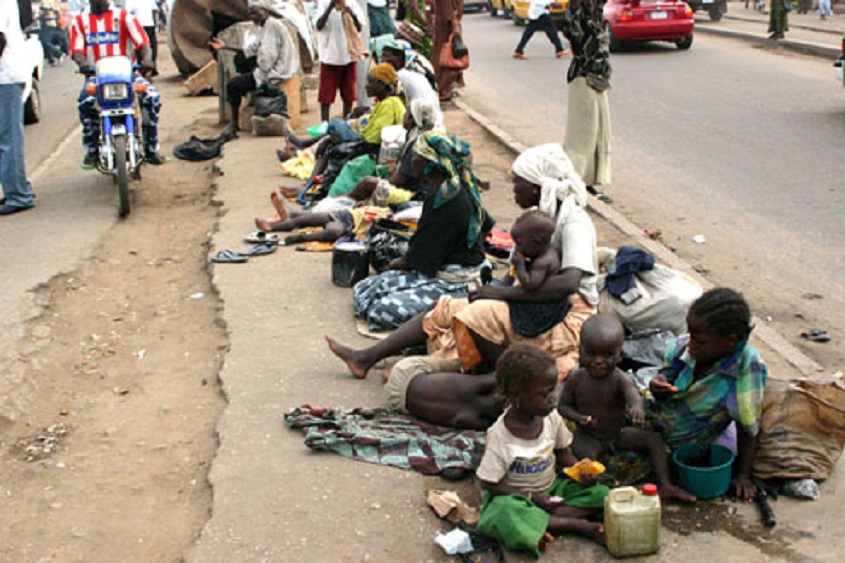
With the recent passage for the second reading of the Bill for an Act to establish the National Commission on Child Destitution in Nigeria, it is now evident that the nation handlers’ have finally come to the sudden realization that history has over these years thrust upon our generation an indescribably important destiny – to complete the process of learning and modernizations which our nation has too long developed too slowly, but which is our most powerful for world respect and emulation.
The bill, if passed, would provide the legal and constitutional frameworks for the eradication of child destitution in Nigeria. The bill would also result in taking formidable steps to mitigate the effects of the recurring cases of child destitution in the country. When established, the commission would serve as an intervention programme that would eradicate, rehabilitate and prohibit the menace of child destitution in Nigeria.
Without a doubt, there are many reasons that qualify the development as a right step taken in the right direction.
First, separate from the painful realization that 17 states in the country with the highest number of out-of-school children, 14 of them are in the North, and if the rate of out-of-school children is not curtailed, it would further worsen the insecurity that is currently bedevilling parts of the country. There is an accompanying belief that the latest bill, when passed, will strengthen the already existing Universal Basic Education Act 2003, which among other purposes is aimed at enforcing quality, compulsory, mandatory and free education up to secondary school three or equivalent and other purposes.
The second is that successive administrations in the country have done very little in arresting the situation. A particular report in 2013 described as mind-numbing the awareness that about 10.5 million Nigerian children of school age are not enrolled in schools. Out of this number, the report explained that about 9 million are children of beggars, fishermen and other less privileged people in the society.
The survey further showed that the population of out-of-school children in Nigeria had risen from 10.5 million to 13.2 million, the highest in the world, noting that; there is still a huge number of those who are in school, but are learning nothing, as schooling does not always lead to learning. In Nigeria, there are more non-learners in school than out of school.
Regardless of what you hear or read on the pages of the newspaper, this piece believes that despite the proposed National Commission on Child Destitution in Nigeria, it is still not an easy road for the Nigerian education sector but a tough and tumble ride. Even the practice of democracy in the country, contrary to earlier beliefs, has not helped to stop the pangs of challenges experienced by Nigerians in the sector.
Among many other comments in the recent past, I heard some say that across the globe, funding education now comes with a crushing weight that the government alone can no longer bear. To this group, it calls for public-private partnership and support from good-spirited individuals to the rescue.
Within this span, I have equally read an argument that our educational system is faulty just like every educational system is faulty. The United States educational system, they added, is faulty. If there is no fault in any system, then, there is no improvement. They concluded that what we call fault is a challenge and that is the basics of development. To the rest, our educational system is not faulty as it remains one of the systems that are still very sound and applauded across the world.
To illustrate this belief, the ongoing strike embarked upon by the Academic Staff Union of Universities (ASUU) to ensure the government stops reneging on agreements with the union has more than anything else made it clear that the nation’s public universities, principally the federal government-owned universities, are in trouble.
Aside from the fact that this is the second industrial action in less than two years, coupled with the fact that the system continues to frustrate the ambitions and aspirations of our youths; those that will provide the future leadership needs of the country, there are indeed reasons that characterize the current happenings as a troubling reality.
The most fundamental of the reasons is that the strike came a few days after President Muhammadu Buhari, in Abuja, while receiving members of the Nigeria Inter-Religious Council (NIREC) led by the co-chairs, the Sultan of Sokoto, Muhammad Sa’ad Abubakar, and the president of the Christian Association of Nigeria, Samson Olasupo Ayokunle, promised that the federal government remains committed to honouring promises made to ASUU to prevent disruptive strikes, engender uninterrupted academic programmes and improve funding of educational institutions.
The second stems from the words of Professor Emmanuel Osodeke, president of ASUU, who during a reported interview with the Channels Television, not only contradicted but proved as untrue the above pledge by Mr President. He ‘religiously’ explained how the FG has seamlessly become reputed for not keeping promises.
Let’s listen to him; “For the past nine years or so, they have been giving us promises but once the strike is over, they relapse. While noting that his colleagues are tired of these promises which they don’t fulfil, he added that what they want is action, maintaining that the union has sacrificed for the country’s educational system, concluding that ASUU will not back down on the current industrial action, since the federal government has become reputed for not keeping to its promises.
Looking above, it is evident that if the time-honoured aphorism which considers education as the bedrock of development is anything to go by and if the age-long belief that; with sound educational institutions, a country is as good as made, the institutions will turn out all rounded manpower to continue with the development of the society driven by well thought out ideas, policies, programmes, and projects remains a valid argument, then, we all have reasons not only to feel worried but collectively work hard to deliver the nation’s education sector.
Specifically, these challenges come in two forms; the first lays out the dilemma posed by the government’s underfunding of the public universities which as a consequence; impedes lecturers from carrying out scholarly research, truncates the academic calendar with strike actions, laces Nigerian universities with dilapidated and overstretched learning facilities with the universities producing graduates devoid of linkage with the manpower demand by the nation’s industrial sector.
The second challenge stems from the first but centres more particularly on thoughtless demand for fees of varying amounts/proposed by the school authorities-a development that is financially squeezing the life out of the innocent students and their parents.
The dilemma and menace posed by this practice indicate considerably higher risk and unless the government commits its resources to get to the root of the challenge, the potential consequence could be higher than that of other challenges currently ravaging the education sector.
By not taking the education sector seriously, one fact that the federal government failed to remember is that when human beings, through sound education, develop a higher order of thinking, the society gains an advantage in being able to anticipate emerging threats, they gain the ability to conceptualize instead of just perceiving.
But when they fail to acquire or deny the need, they will also gain the ability to conceptualize an imaginary threat and when a group of people are persuaded to conceptualize this imaginary threat, they can activate the fear response as powerfully as the real threat.
This fact partially explains the current fears and insecurity that have recently enveloped the country.
To further avert all these, governments at all levels must unlearn this attitude of the progressives’ non-recognition of the right to education as a human right despite their membership in a number of international conventions, including the International Covenant on Economic, Social and Cultural Rights where the right is respected.
Above all, the Buhari-led federal government must urgently commit to mind that globally; ‘the relationship between employers/employees is always strained, always headed toward conflict. It is a natural conflict built into the system.
Unions do not strike on a whim or use the strike to show off their strength. They look at strikes as costly and disturbing, especially for workers and their families. Strikes are called as last resort’. And any government that fails to manage this delicate relationship profitably or fails to develop a cordial relationship with the workers becomes an enemy of not just the workers but that of the open society and, such society will sooner than later find itself degenerate into chaos.
Utomi Jerome-Mario is the Programme Coordinator (Media and Public Policy), Social and Economic Justice Advocacy (SEJA), a Lagos-based non-governmental organisation (NGO). He can be reached via [email protected]/08032725374
Education
Saint Riman of Adedokun International Schools Ota Wins InterswitchSPAK 7.0
By Modupe Gbadeyanka
A student of Adedokun International Schools, Ota, Ogun State, Saint Riman, has emerged as the overall winner of the InterswitchSPAK National Science Competition.
The 16-year-old student was crowned Nigeria’s Best STEM Student, receiving a N15 million scholarship in the InterswitchSPAK 7.0 grand finale.
InterswitchSPAK is the flagship Corporate Social Responsibility initiative of Interswitch, one of Africa’s leading integrated payments and digital commerce companies.
The programme is Nigeria’s largest STEM competition for senior secondary school students. It concluded on a high note after months of nationwide assessments, problem-solving challenges, and competitive stages involving over 18,000 registered participants.
Business Post reports that David Okorie of Caleb International College, Magodo, Lagos State, was the first runner-up, getting N10 million in scholarship, while David Solomonezemma of Deeper Life High School, Enugu State, was the second runner-up, bagging a N5 million scholarship. All winners also received brand-new laptops in addition to other exciting prizes.
While presenting the awards, the Group Marketing and Communications for Interswitch, Ms Cherry Eromosele, commended the students for their discipline, resilience, and exceptional intellectual performance.
“InterswitchSPAK was created to inspire and reward excellence in STEM education while equipping young Africans with the skills to tackle real-world challenges.
“These winners have demonstrated remarkable promise, and by supporting their education, we are reaffirming our belief in the power of young people to shape Africa’s future through innovation and science,” Ms Eromosele said.
Beyond the top three winners, other finalists received brand new laptops and exciting cash rewards for outstanding performance, alongside their teachers who were also celebrated and rewarded for their critical role in nurturing talent. This holistic approach reinforces Interswitch’s commitment to sustainable educational development through collaboration between students, educators, and institutions.
Now in its seventh year, InterswitchSPAK has become a highly respected platform, serving as a pipeline for discovering, developing, and empowering the next generation of scientists, engineers, technologists, and innovators. Through this initiative, Interswitch continues to highlight how strategic private sector investment in education can drive innovation, reward merit, and contribute meaningfully to national development.
The successful conclusion of InterswitchSPAK 7.0 underscores Interswitch’s leadership in advancing STEM education as a catalyst for socio-economic growth, preparing Nigerian students to compete confidently on the global stage while shaping Africa’s innovation-driven future.
Education
Zurich-based Sparkli Raises $5m for Generative Learning Platform
By Dipo Olowookere
A Zurich-based anti-chatbot edtech firm, Sparkli, has secured about $5 million pre-seed round for its generative learning engine designed to turn screen time into active learning expeditions that foster agency, curiosity, and future-ready skills.
The pre-seed round will allow Sparkli to scale its generative learning engine and prepare for a private beta launch in January 2026. The company is currently validating its platform through a strategic pilot with one of the world’s largest private school groups.
This partnership provides Sparkli with a powerful testing ground across a network of more than 100 schools and over 100,000 students.
Sparkli transforms the curiosities of children into multi-disciplinary, real-life journeys that foster future-ready skills, including technology, design thinking, sustainability, financial literacy, entrepreneurship, emotional intelligence, and global awareness.
The company is already positioning itself to disrupt the $7 trillion global education market, a sector widely predicted to be one of the most significant use cases for artificial intelligence.
Its approach is shaped by three shifts essential for modern childhood education, a strategy designed to solve the ‘Agency and Curiosity Gap’. First, it forces a Velocity Shift by moving away from static curriculums to real-time relevance where children explore new topics the moment they emerge.
Second, it drives an Engagement Shift by replacing the dry ‘AI chatbot wall of text’ and passive screen time (watching videos, playing video games) with a multimodal playground of visuals, voice, and playable simulations. This turns consumption into active, gamified inquiry rooted in educational value.
Finally, Sparkli prioritizes a Skills Shift that focuses on capabilities such as creativity and complex problem solving rather than memorization.
“Our goal is to build agency in the next generation. Children learn by exploring, making choices, asking questions, and discovering what inspires them. Sparkli turns screen time into a place where curiosity grows rather than fades,” the chief executive of Sparkli, Mr Lax Poojary, said.
One of the funders, Lukas Weder of Founderful, said, “Sparkli represents a step change in how children can interact with knowledge.
“The team is applying high caliber engineering and thoughtful pedagogy to a space that desperately needs innovation. Their traction with schools shows a real appetite for tools that foster curiosity and agency rather than passive consumption.”
Education
NELFUND Disburses N161.97bn to 864,798 Students in 500 Days
By Adedapo Adesanya
The Nigerian Education Loan Fund (NELFUND) has disbursed N161.97 billion to 864,798 students nationwide since the inauguration of its student loan portal on July 17, 2024, as part of efforts to expand access to tertiary education.
The Managing Director of NELFUND, Mr Akintunde Sawyerr, while briefing journalists on the progress, impact and challenges of the scheme under the President Bola Tinubu’s Renewed Hope Agenda, said it was established to ensure that no Nigerian student was denied education because of financial constraints.
According to him, the fund has so far received 1,361,011 loan applications from students across the country.
He explained that out of the N161.97 billion disbursed, N89.94 billion was paid directly to 263 tertiary institutions to cover tuition and institutional charges, while N72.03 billion was paid to students as upkeep allowances.
“As at today, 1,361,011 applications have been received, 864,798 students have so far benefited from the loan scheme, and total disbursement stands at N161.97 billion.
“These includes N89.94 billion paid directly to 263 tertiary institutions for tuition and institutional fees, and N72.03 billion paid directly to students as upkeep allowances,” he said.
He noted that the figures represented tangible impact on students and families, describing them as evidence of barriers being removed and opportunities being created.
The NELFUND boss said the agency, had over the last year, embarked on extensive sensitisation across tertiary institutions to improve awareness and access to the scheme.
He added that the focus would now expand to parents, guardians, traditional rulers and faith-based institutions.
He said this new approach was to deepen public understanding and trust in the scheme.
“Over the last year, NELFUND has undertaken extensive sensitisation and engagement across tertiary institutions nationwide.
“We have worked directly with students, school authorities, and stakeholders to drive awareness, understanding, and access to the scheme.
“However, as we move into this new phase, we recognise that deepening impact requires broader engagement.
“So this year, our focus will expand to another very important group within the NELFUND ecosystem,” he said.
On upkeep payments, the managing director disclosed that a reconciliation exercise carried out after the 2024/2025 academic session revealed that 11,685 students had outstanding upkeep payments amounting to N927.98 million.
He clarified that the outstanding payments were not due to withheld funds or policy failure, but resulted from technical and operational issues.
He said such issues include network downtime, failed transactions and unvalidated bank account details.
He also said that the NELFUND management had approved a one-time reconciliation process to resolve the cases, including direct engagement with affected students.
He further said that a grace period for updating bank details, multi-layer validation and prompt payment upon verification had also been approved.
Responding to questions on sustainability, Mr Sawyerr said that the amended student loan law removal of guarantor requirements, inclusion of upkeep allowances and the ability to raise and invest funds were key elements supporting long-term sustainability.
He added that NELFUND was also exploring partnerships with philanthropists, corporate organisations and government agencies, citing a N20 billion collaboration with the Ministry of Education on Technical and Vocational Education and Training (TVET) as an example.
Also speaking, the Executive Director of Operations, NELFUND, Mr Mustapha Iyal, said that outstanding upkeep represented about 11,000 out of more than 400,000 beneficiaries in the 2024/2025 session.
Mr Iyal said NELFUND had contacted institutions to validate student data, noting that many of the issues arose from incorrect information supplied by applicants.
According to him, feedback has been received from over 100 institutions, and payment of the outstanding upkeep allowances is expected to commence shortly.
He also disclosed that applications for the 2025/2026 academic session began in November, 2025, with over 200 institutions submitting updated data.
He said about 280,000 applications had been received from those institutions, out of which loans had already been disbursed to more than 150,000 students.
He added that upkeep payments for the new session would begin in January, explaining that upkeep allowances were tied to active academic sessions and required fresh applications each session.
On loan repayment, Mr Iyal said repayment had already commenced, with some beneficiaries who had graduated and secured employment beginning to repay their loans.
-
Feature/OPED6 years agoDavos was Different this year
-
Travel/Tourism9 years ago
Lagos Seals Western Lodge Hotel In Ikorodu
-
Showbiz3 years agoEstranged Lover Releases Videos of Empress Njamah Bathing
-
Banking8 years agoSort Codes of GTBank Branches in Nigeria
-
Economy3 years agoSubsidy Removal: CNG at N130 Per Litre Cheaper Than Petrol—IPMAN
-
Banking3 years agoSort Codes of UBA Branches in Nigeria
-
Banking3 years agoFirst Bank Announces Planned Downtime
-
Sports3 years agoHighest Paid Nigerian Footballer – How Much Do Nigerian Footballers Earn