Connect with us

Economy

FG to Accelerate Nigeria’s Emergence as Top 20 Global Economy by 2025

Published

on

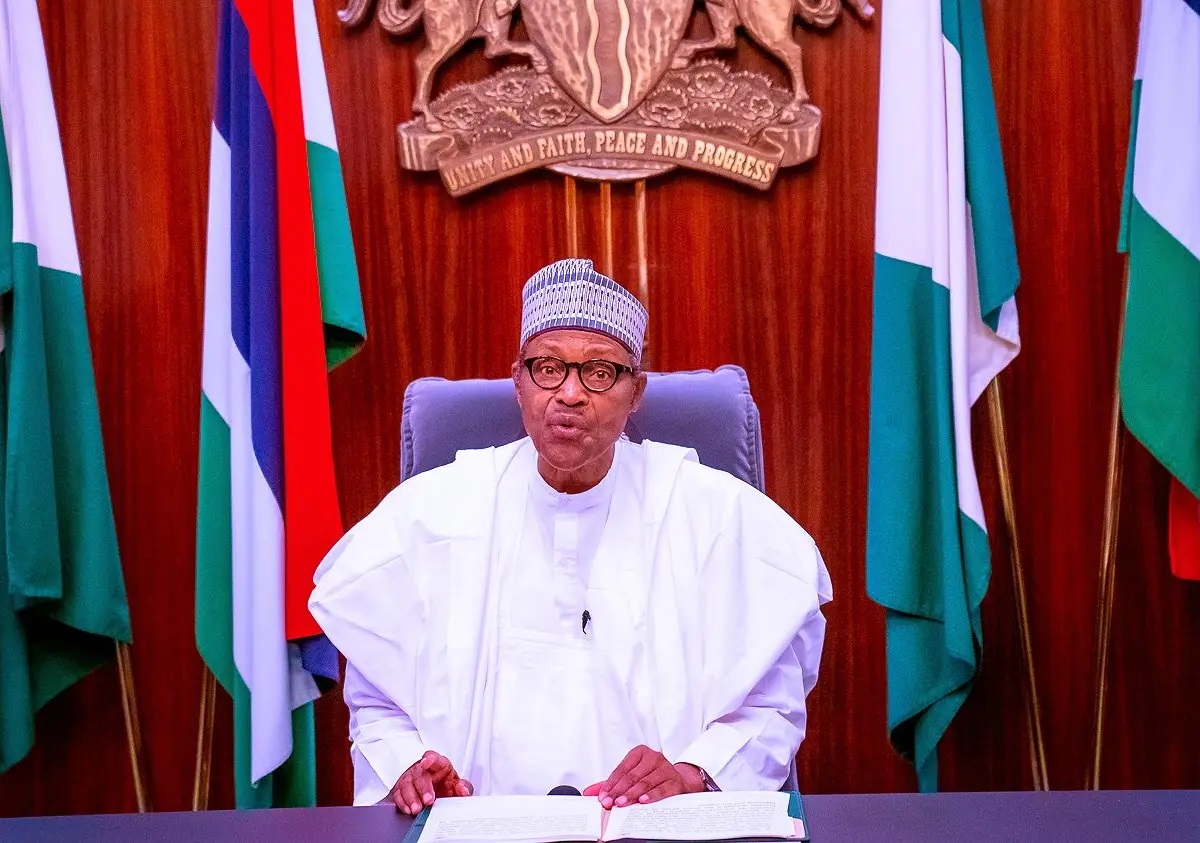
Buhari address Nigerians

By Aduragbemi Omiyale

The federal government has promised to continue to support and implement policies aimed at accelerating the emergence of Nigeria as a top 20 global economy by 2025.

The Minister of Finance, Budget and National Planning, Mrs Zainab Ahmed, made this known in Abuja on Monday when she received the Revised Nigerian Capital Market Master Plan (2021-2025) from the Securities and Exchange Commission (SEC).

She explained that the review of the plan underscores the fact that capital market growth resonates with the current administration’s unwavering commitment to deepening and re-positioning the country’s financial markets as a key anchor to achieving a private sector-led development of the economy as encapsulated in the National Development Plan objectives.

According to her, under her watch, the Ministry has supported the Capital Market Master Plan implementation efforts since inception, adding that the scheme represents the collective aspirations of the capital market community which is focused on driving initiatives geared towards growing and deepening the market, noting that that the initiatives are being implemented with the ultimate goal of accelerating the emergence of Nigeria as a top 20 global economy by the year 2025.

Mrs Ahmed commended the agency and other stakeholders for the laudable accomplishments so far recorded in the implementation journey, especially in the areas of dematerialization of share certificates, e- dividend mandate, facilitation of access to alternative investments like Sukuk and specialized funds, review of CAMA and ongoing review of the ISA, demutualization of the Nigerian Stock Exchange, enhancing the commodities eco-system, design of a National Savings Strategy among others.

“Our capital market is growing and evolving. To sustain this growth and eventually transform it into a world-class capital market, transparency and investor confidence are key.

“Investor confidence will accelerate the growth of our market and increase both domestic and foreign investor participation. To this end, we will continue to support and strengthen the regulator to effectively do its job of regulating and developing the capital market.

“I see the capital market as an important driver of our economic growth objectives and we will continue to support efforts to position our market where it deserves to be – a capital market that will broaden access to economic prosperity by enabling the emergence of financially responsible citizens, accelerate wealth creation and wealth distribution, provide capital to small and medium scale enterprises, and catalyse housing finance.

“As you chart the course for the next phase of the Capital Market Master Plan’s implementation, I assure you of this Administration’s support and look forward to working with you and other stakeholders in the financial market to realize the plan’s outcomes,” she said.

The Director-General of SEC, Mr Lamido Yuguda, said through the implementation of the 10-year Nigeria Capital Market Master Plan (2015 – 2025), the commission and other stakeholders have recorded significant milestones over the years.

He listed some of them to include full dematerialization of certificates, direct cash settlement, recapitalization of CMOs, E-Dividend Mandate Management System, National Savings Strategy to grow domestic risk capital formation, the Roadmap on Enhancing Commodities Trading Ecosystem, Establishment of the West African Securities Regulators Association (WASRA) to encourage the integration of capital markets in West Africa, among others.

The DG stated that the Master Plan document recommends a periodic review of the assumptions, goals and objectives of the Plan to better align it with current realities and innovations in the global financial system.

As part of the review, he said the agency embarked on a comprehensive review of the Plan, driven by PriceWaterHouseCoopers with funding support from Financial Sector Deepening Africa (FSDA).

The main objective of reviewing the Master Plan, he noted, is to produce an updated version of the document primarily to engage stakeholders on the current level of market development and opportunities for further capital growth; review and update the assumptions and vision of the CMMP and develop targets for the various thematic areas of the CMMP.

Other objectives of the review are to introduce a Strategy Map and Key Performance Indicators for the CMMP and use the Balanced Scorecard Approach for performance measurement; align existing and derive new initiatives based on targets and strategic objectives; develop an implementation plan for initiatives with clear milestones, deliverables, timelines, resource requirements, dependencies, and identify challenges, opportunities and risks associated with the CMMP implementation and recommend ways of effective and more efficient implementation.

He said, “The comprehensive review of the Master Plan is now complete and a Revised Capital Market Master Plan has been produced.

“The revised Plan has incorporated the views and aspirations of stakeholders in our market as well as best practices globally to produce a well-articulated strategic plan for the next four years.

“The revised Capital Market Master Plan is designed to chart the strategic position and future direction of the capital markets while providing both the SEC and market participants clarity on the vision of the capital market and the road map required to facilitate a conducive business environment to encourage innovation, investment, growth and expansion of economic and employment opportunities in our country.

“Our vision is to be Africa’s most modern, efficient, and internationally competitive market that catalyses Nigeria’s economic growth and development. We believe the Plan provides a solid roadmap for achieving this vision as we collaborate with all our stakeholders under your continued support and proven leadership.”


Aduragbemi Omiyale is a journalist with Business Post Nigeria, who has passion for news writing. In her leisure time, she loves to read.

Advertisement
Click to comment

Leave a Reply

Your email address will not be published. Required fields are marked *

Economy

Customs Street Chalks up 1.08% on Renewed Buying Pressure

Published

on

Customs Street NGX

By Dipo Olowookere

A 1.08 per cent growth was further printed by the Nigerian Exchange (NGX) Limited on Friday on improved appetite for Nigerian stocks.

Data showed that the insurance sector lost 0.61 per cent yesterday due to profit-taking as the energy space gave up 0.08 per cent, while the commodity counter closed flat.

However, the industrial goods landscape appreciated by 2.06 per cent, the banking index improved by 1.31 per cent, and the consumer goods sector expanded by 0.83 per cent.

At the close of business on Customs Street, the All-Share Index (ASI) increased by 1,563.92 points to 147,040.07 points from 145,476.15 points and the market capitalisation went up by N996 billion to N93.722 trillion from N92.726 trillion.

UAC Nigeria led the advancers’ log yesterday after it grew by 10.00 per cent to N96.80, Transcorp Hotels jumped by 9.71 per cent to N172.80, Royal Exchange appreciated by 8.89 per cent to N1.96, Ikeja Hotel soared by 8.74 per cent to N31.10, and Veritas Kapital leapt by 8.07 per cent to N1.74.

On the flip side, Union Dicon declined by 10.00 per cent to N6.30, ABC Transport slipped by 9.88 per cent to N3.10, AXA Mansard depreciated by 7.19 per cent to N12.90, FTN Cocoa lost 4.62 per cent to trade at N4.75, and Guinea Insurance dropped 3.36 per cent to finish at N1.15.

A total of 38 stocks ended on the gainers’ table and 17 stocks finished on the losers’ table, representing a positive market breadth index and strong investor sentiment.

Traders transacted 361.6 million equities for N14.8 billion in 21,051 deals yesterday versus the 1.9 billion equities worth N19.2 billion traded in 23,369 deals a day earlier, showing a decline in the trading volume, value, and number of deals by 80.97 per cent, 22.92 per cent, and 14.20 per cent, respectively.

The busiest stock for the session was Zenith Bank with 59.5 million units worth N3.6 billion, Access Holdings traded 46.1 million units valued at N973.0 million, Fidelity Bank exchanged 29.4 million units for N560.4 million, FCMB transacted 27.9 million units worth N293.9 million, and Tantalizers sold 13.0 million units valued at N29.8 million.

Continue Reading

Economy

Nipco, 11 Plc Crash OTC Securities Exchange by 4.76%

Published

on

NIPCO LPG Depot

By Adedapo Adesanya

Energy stocks influenced the 4.76 per cent loss recorded by the NASD Over-the-Counter (OTC) Securities Exchange on Friday, December 5.

The culprits were the duo of 11 Plc and Nipco Plc,with the former shedding N32.17 to end at N291.83 per share compared with the previous day’s N324.00 per share, and the latter down by N21.00 to sell at N195.00 per unit versus the previous session’s N216.00 per unit.

Consequently, the NASD Unlisted Security Index (NSI) slumped by 170.16 points to 3,401.37 points from 3,571.53 points and the market capitalisation lost N101.81 billion to close at N2.035 billion from the N2.136 trillion quoted in the preceding session.

The OTC securities exchange suffered the decline yesterday despite the share prices of three companies closing green.

Central Securities Clearing System (CSCS) Plc was up by N1.80 to close at N39.80 per share compared with Thursday’s price of N38.00 per share, Air Liquide Plc appreciated by N1.09 to N11.99 per unit from N10.90 per unit, and FrieslandCampina Wamco Nigeria Plc grew by 78 Kobo to N56.57 per share from N55.79 per share.

During the session, the volume of transactions rose by 6,885.3 per cent to 18.2 million units from 4.3 million units, the value of transactions ballooned by 10,301.7 per cent to N389.7 million from N347.2 million, but the number of deals declined by 29.7 per cent to 26 deals from 37 deals.

Infrastructure Credit Guarantee Company (InfraCredit) Plc ended the day as the most traded stock by value on a year-to-date basis with 5.8 billion units worth N16.4 billion, followed by Okitipupa Plc with 170.4 million units valued at N8.0 billion, and Air Liquide Plc with 507.5 million units worth N4.2 billion.

InfraCredit Plc also finished the day as the most traded stock by volume on a year-to-date basis with 5.8 billion units transacted for N16.4 billion, followed by Industrial and General Insurance (IGI) Plc with 1.2 billion units sold for N420.2 million, and Impresit Bakolori Plc with 536.9 million units worth N524.9 million.

Continue Reading

Economy

Naira Depreciates to N1,450/$1 at Official Forex Market

Published

on

Naira-Dollar exchange rate gap

By Adedapo Adesanya

The Naira depreciated further against the US Dollar in the Nigerian Autonomous Foreign Exchange Market (NAFEX) on Friday, December 5, as FX demand pressure mounts.

The Nigerian currency lost N2.60 or 0.18 per cent against the greenback to close at N1,450.43/$1 compared with the previous day’s N1,447.83/$1.

Equally, the domestic currency declined against the Pound Sterling in the official forex market during the session by N4.48 to trade at N1,935.45/£1, in contrast to Thursday’s closing price of N1,930.97/£1 and shrank against the Euro by 43 Kobo to end at N1,689.17/€1 versus the preceding session’s rate of N1,688.74/€1.

Similarly, the local currency performed badly against the US Dollar at the GTBank FX counter by N2 to close at N1,455/$1 versus Thursday’s N1,453/$1 but traded flat at the parallel market at N14.65/$1.

As the country gets into the festive period, pressure mounted on the local currency reflecting higher foreign payments and lower FX inflows.

However, there are expectations that the Nigerian currency will be stable, supported by interventions by to the Central Bank of Nigeria (CBN) in the face of steady dollar Demand and inflows from Detty December festivities that will give the Naira a boost after it depreciated mildly last month.

Traders cited by Reuters expect that the Naira will trade within a band of N1,443-N1,450/$1 next week, buoyed by improved FX interventions by the apex bank.

As for the crypto market, it was down yesterday due to profit-taking associated with year-end trading. However, the December 1-Year Consumer Inflation Expectation by the University of Michigan fell to 4.1 per cent from 4.5 per cent previously and 4.5 per cent expected. The 5-Year Consumer Inflation Expectation fell to 3.2 per cent from 3.4 per cent previously and 3.4 per cent expected.

With the dearth of official economic data of late, these private surveys have taken on a new level of significance and the market banks of them to make decisions.

Cardano (ADA) depreciated by 5.7 per cent to $0.4142, Dogecoin (DOGE) slid by 5.1 per cent to $0.1394, Ethereum (ETH) dropped by 3.9 per cent to $3,039.75, Solana (SOL) declined by 3.8 per cent to $133.24, and Litecoin (LTC) fell by 3.7 per cent to $80.59.

Further, Bitcoin (BTC) went down by 2.6 per cent to sell at $89,683.72, Binance Coin (BNB) slumped by 2.2 per cent to $883.59, and Ripple (XRP) shrank by 2.1 per cent to $2.04, while the US Dollar Tether (USDT) and the US Dollar Coin (USDC) remained unchanged at $1.00 each.

Continue Reading

Trending