Economy
FG Flings 41 Items Exempted From Forex Policy By CBN

By Dipo Olowookere
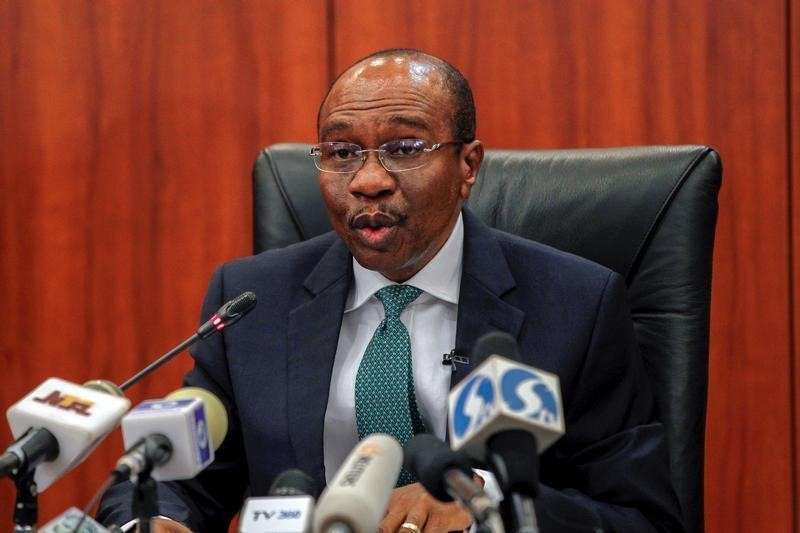
There are strong indications that the Federal Government may set aside the policy of the Central Bank of Nigeria (CBN) regarding the 41 items exempted from foreign exchange market in its newly released 2017 Fiscal Policy Roadmap.
The policy document prepared by the Minister of Finance, Mrs Kemi Adeosun, will, instead, come up with fiscal measures to reduce pressure in the parallel market.
According to the document, the FG “will replace administrative measures on list of 41-items with fiscal measures to reduce demand pressure in parallel market.”
Presenting the document at a programme held in Lagos, Mrs Adeosun said, “The Federal Government’s Fiscal Roadmap is addressing barriers to growth that will drive productivity, generate jobs and broaden wealth-creating opportunities to achieve inclusive growth.”
She stated that the President Muhammadu Buhari administration was determined to return Nigeria to a productive economy rather than one steeped in consumption. To do so, government would tackle the infrastructure deficit to unlock productivity, improve business competitiveness and create employment.
She further said that government would actively partner with the private sector to achieve this by use of a number of new funding platforms, including the Road Trust Fund, which would develop potentially tollable roads, and the Family Homes Fund, which is an ongoing PPP initiative for funding of affordable housing.
According to the minister, the tax provision that allows companies to receive tax relief for investment in roads on a collective basis would be reviewed.
She explained that the existing provision that enabled companies to claim relief for road projects had only been taken advantage of by two companies, Lafarge and Dangote Cement. This was because few companies were large enough to fund roads alone.
The revision would now allow collective tax relief, such that companies will be able to jointly fund roads, subject to approval by FIRS and the Ministry of Works, and share the tax credit. It added that the government would revitalise refineries and increase Diaspora remittances through participation in the buyer support scheme for the Family Homes Fund with a view to increasing the supply of US Dollars to the Nigerian market.
The Roadmap also provides for a fresh audit of the federal government debt profile after which it would introduce a promissory note program to finance verified liabilities and issue debt certificates to contractors of Ministries, Departments and Agencies (MDAs).
These, according to the document, would positively impact on the economy by improving government’s cash flow of businesses, improve banks’ Non-Performing Loans, (NPLs); free up banks’ balance sheet for lending to private sector; and improve business interaction. These liabilities were estimated to be N2.2 trillion and would be addressed with a 10 year Promissory Note Issuance programme in conjunction with the CBN.
“Some contractors had not been paid in the past 4 years and in some cases the banks they were owing refused them access to the funds released, causing delays,” she explained, adding that those receiving the Promissory Notes would be expected to provide a material discount to government. The issuance was a solution to a long term problem that was ‘a drag on economic activity’.
It would also mobilise private capital to complement government spending on infrastructure, through the Roads Trust Fund, Family Homes Fund, while extending infrastructure tax relief to a collective model to attract clusters of corporate entities and expand the provision of infrastructure, in other to drive growth of non-oil sector, especially and the economy in general. There would be incentives for exports which would include restructuring the Export Expansion Grant (EEG) to a tax credit system, as well as rationalised tariffs and waivers in key export sectors. These have been designed to drive import substitution. The document indicated that the federal government would encourage investment in specific sectors through fiscal incentives especially in food processing, mining and power, and would rationalise tariffs and waivers in such priority sectors. In order to expand fiscal space through revenue enhancement and cost consolidation, it would enhance the Customs Single Window (being implemented through a Private Public Partnership (PPP) scheme), introduce template for non-allowable expenses for government agencies, control overhead costs by the Efficiency Unit and implement a continuous risk based audit by the Presidential Initiative on Continuous Audit.
In order to improve fiscal discipline at Sub-National level, the federal government would, from next year, extend the Efficiency Unit to Sub-National level; fast track municipal bond issues to deepen the bond market, as well as conversion to International Public Sector Accounting Standards by all state governments. The government plans to pursue its anti-corruption crusade in the new year with greater vigour and accelerate recoveries process, introduce a whistle-blower scheme, centralised database on recovered assets, asset tracking and a professional management of recovered assets. It also plans to rebalance debt portfolio to extend maturity and optimise debt service cost through rebalancing public debt portfolio with increased external borrowing with a target of 60:40 ratio and extend maturity profile of public debt portfolio, while deploying long-term debt instruments and depending more on concessionary loans.
http://www.vanguardngr.com/2016/12/41-exempted-items-fg-dumps-cbns-forex-policy/
Economy
Customs Street Chalks up 1.08% on Renewed Buying Pressure
By Dipo Olowookere
A 1.08 per cent growth was further printed by the Nigerian Exchange (NGX) Limited on Friday on improved appetite for Nigerian stocks.
Data showed that the insurance sector lost 0.61 per cent yesterday due to profit-taking as the energy space gave up 0.08 per cent, while the commodity counter closed flat.
However, the industrial goods landscape appreciated by 2.06 per cent, the banking index improved by 1.31 per cent, and the consumer goods sector expanded by 0.83 per cent.
At the close of business on Customs Street, the All-Share Index (ASI) increased by 1,563.92 points to 147,040.07 points from 145,476.15 points and the market capitalisation went up by N996 billion to N93.722 trillion from N92.726 trillion.
UAC Nigeria led the advancers’ log yesterday after it grew by 10.00 per cent to N96.80, Transcorp Hotels jumped by 9.71 per cent to N172.80, Royal Exchange appreciated by 8.89 per cent to N1.96, Ikeja Hotel soared by 8.74 per cent to N31.10, and Veritas Kapital leapt by 8.07 per cent to N1.74.
On the flip side, Union Dicon declined by 10.00 per cent to N6.30, ABC Transport slipped by 9.88 per cent to N3.10, AXA Mansard depreciated by 7.19 per cent to N12.90, FTN Cocoa lost 4.62 per cent to trade at N4.75, and Guinea Insurance dropped 3.36 per cent to finish at N1.15.
A total of 38 stocks ended on the gainers’ table and 17 stocks finished on the losers’ table, representing a positive market breadth index and strong investor sentiment.
Traders transacted 361.6 million equities for N14.8 billion in 21,051 deals yesterday versus the 1.9 billion equities worth N19.2 billion traded in 23,369 deals a day earlier, showing a decline in the trading volume, value, and number of deals by 80.97 per cent, 22.92 per cent, and 14.20 per cent, respectively.
The busiest stock for the session was Zenith Bank with 59.5 million units worth N3.6 billion, Access Holdings traded 46.1 million units valued at N973.0 million, Fidelity Bank exchanged 29.4 million units for N560.4 million, FCMB transacted 27.9 million units worth N293.9 million, and Tantalizers sold 13.0 million units valued at N29.8 million.
Economy
Nipco, 11 Plc Crash OTC Securities Exchange by 4.76%
By Adedapo Adesanya
Energy stocks influenced the 4.76 per cent loss recorded by the NASD Over-the-Counter (OTC) Securities Exchange on Friday, December 5.
The culprits were the duo of 11 Plc and Nipco Plc,with the former shedding N32.17 to end at N291.83 per share compared with the previous day’s N324.00 per share, and the latter down by N21.00 to sell at N195.00 per unit versus the previous session’s N216.00 per unit.
Consequently, the NASD Unlisted Security Index (NSI) slumped by 170.16 points to 3,401.37 points from 3,571.53 points and the market capitalisation lost N101.81 billion to close at N2.035 billion from the N2.136 trillion quoted in the preceding session.
The OTC securities exchange suffered the decline yesterday despite the share prices of three companies closing green.
Central Securities Clearing System (CSCS) Plc was up by N1.80 to close at N39.80 per share compared with Thursday’s price of N38.00 per share, Air Liquide Plc appreciated by N1.09 to N11.99 per unit from N10.90 per unit, and FrieslandCampina Wamco Nigeria Plc grew by 78 Kobo to N56.57 per share from N55.79 per share.
During the session, the volume of transactions rose by 6,885.3 per cent to 18.2 million units from 4.3 million units, the value of transactions ballooned by 10,301.7 per cent to N389.7 million from N347.2 million, but the number of deals declined by 29.7 per cent to 26 deals from 37 deals.
Infrastructure Credit Guarantee Company (InfraCredit) Plc ended the day as the most traded stock by value on a year-to-date basis with 5.8 billion units worth N16.4 billion, followed by Okitipupa Plc with 170.4 million units valued at N8.0 billion, and Air Liquide Plc with 507.5 million units worth N4.2 billion.
InfraCredit Plc also finished the day as the most traded stock by volume on a year-to-date basis with 5.8 billion units transacted for N16.4 billion, followed by Industrial and General Insurance (IGI) Plc with 1.2 billion units sold for N420.2 million, and Impresit Bakolori Plc with 536.9 million units worth N524.9 million.
Economy
Naira Depreciates to N1,450/$1 at Official Forex Market
By Adedapo Adesanya
The Naira depreciated further against the US Dollar in the Nigerian Autonomous Foreign Exchange Market (NAFEX) on Friday, December 5, as FX demand pressure mounts.
The Nigerian currency lost N2.60 or 0.18 per cent against the greenback to close at N1,450.43/$1 compared with the previous day’s N1,447.83/$1.
Equally, the domestic currency declined against the Pound Sterling in the official forex market during the session by N4.48 to trade at N1,935.45/£1, in contrast to Thursday’s closing price of N1,930.97/£1 and shrank against the Euro by 43 Kobo to end at N1,689.17/€1 versus the preceding session’s rate of N1,688.74/€1.
Similarly, the local currency performed badly against the US Dollar at the GTBank FX counter by N2 to close at N1,455/$1 versus Thursday’s N1,453/$1 but traded flat at the parallel market at N14.65/$1.
As the country gets into the festive period, pressure mounted on the local currency reflecting higher foreign payments and lower FX inflows.
However, there are expectations that the Nigerian currency will be stable, supported by interventions by to the Central Bank of Nigeria (CBN) in the face of steady dollar Demand and inflows from Detty December festivities that will give the Naira a boost after it depreciated mildly last month.
Traders cited by Reuters expect that the Naira will trade within a band of N1,443-N1,450/$1 next week, buoyed by improved FX interventions by the apex bank.
As for the crypto market, it was down yesterday due to profit-taking associated with year-end trading. However, the December 1-Year Consumer Inflation Expectation by the University of Michigan fell to 4.1 per cent from 4.5 per cent previously and 4.5 per cent expected. The 5-Year Consumer Inflation Expectation fell to 3.2 per cent from 3.4 per cent previously and 3.4 per cent expected.
With the dearth of official economic data of late, these private surveys have taken on a new level of significance and the market banks of them to make decisions.
Cardano (ADA) depreciated by 5.7 per cent to $0.4142, Dogecoin (DOGE) slid by 5.1 per cent to $0.1394, Ethereum (ETH) dropped by 3.9 per cent to $3,039.75, Solana (SOL) declined by 3.8 per cent to $133.24, and Litecoin (LTC) fell by 3.7 per cent to $80.59.
Further, Bitcoin (BTC) went down by 2.6 per cent to sell at $89,683.72, Binance Coin (BNB) slumped by 2.2 per cent to $883.59, and Ripple (XRP) shrank by 2.1 per cent to $2.04, while the US Dollar Tether (USDT) and the US Dollar Coin (USDC) remained unchanged at $1.00 each.
-
Feature/OPED6 years agoDavos was Different this year
-
Travel/Tourism9 years ago
Lagos Seals Western Lodge Hotel In Ikorodu
-
Showbiz3 years agoEstranged Lover Releases Videos of Empress Njamah Bathing
-
Banking7 years agoSort Codes of GTBank Branches in Nigeria
-
Economy3 years agoSubsidy Removal: CNG at N130 Per Litre Cheaper Than Petrol—IPMAN
-
Banking3 years agoFirst Bank Announces Planned Downtime
-
Banking3 years agoSort Codes of UBA Branches in Nigeria
-
Sports3 years agoHighest Paid Nigerian Footballer – How Much Do Nigerian Footballers Earn