Connect with us

General

Reps to Investigate Duplication of Functions Across MDAs

Published

on

House of Reps

By Adedapo Adesanya

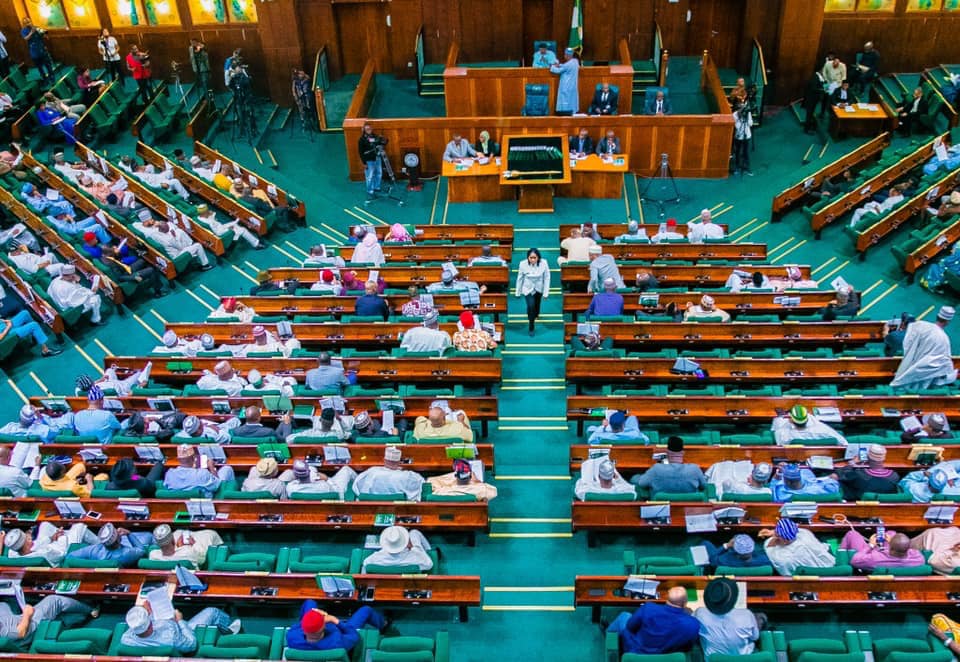
The House of Representatives has inaugurated an ad-hoc committee to investigate the duplication of functions rife across ministries, departments, and agencies (MDAs) of the government.

The Speaker of the House of Representatives, Mr Femi Gbajabiamila, who inaugurated the committee, said that the panel aims to reduce the cost of governance and prevent redundancy.

He said that the government has noticed that there was duplication of functions by the different agencies which has led to reduced productivity.

“An organization’s vision and mission must of necessity be derived from the mandate and functions enunciated by its establishment act or any instrument that establishes it.

“Uncertainty sets in when we have multiple agencies carrying out the same functions, leading to bickering, suspicion, and eventually duplication of efforts and waste of hard-earned government resources and time.

“Governments in the past have put in place measures to ensure effective and efficient service delivery by agencies of government, e.g., SERVICOM, but this could not achieve much without a clearly defined mandate,” Mr Gbajabiamila said.

He stressed that “The House of Representatives is not out to witch-hunt any individual or organization, but we are propelled by our desire to ensure good governance and in the exercise of our legislative oversight powers as enshrined in Sections 88 and 89 of the 1999 Constitution of the Federal Republic of Nigeria (as amended).

“This Committee is expected to come up with solutions to the apparent continuous conflict of functions and avoidable bickering among established Ministries, Departments and Agencies (MDA’s), resulting in ineffectiveness, inefficiency and redundancy in the government workforce.

“The committee is therefore expected to engage relevant stakeholders and members of the public with a view to resolving the areas of conflict among the MDA’s, which may require amending some laws and/or outright repeal, as the case may be.”

Mr Gbajabiamila urged the MDAs and other critical stakeholders to work with the committee to complete its mandate in accordance with its Terms of Reference.

The Chairman of the team, Mr Victor Mela Danzaria, said that most of the laws establishing government agencies were made during the military regime and are not in tandem with democracy.

He said that subject matter has been a thorn in the flesh of previous governments which led to the setting up of various committees in the past.

“It is important to note however that our task is different from that of the Oransanya Committee. Whereas their major concern was to reduce the cost of governance, ours is to streamline, merge and if need be, scrap some in order to bring about efficiency in the governance,” Mr Danzaria said.

He assured Nigerians that the committee would conduct a detailed investigation into the activities of some of the agencies and come up with a report that would have a far-reaching decision that would strengthen the agencies.

Meanwhile, the Chief Whip who moved the motion that led to the constitution of the ad-hoc committee, Mr Muhammed Mongunu, said that during a series of oversight functions, it was observed that there were various agencies duplicating functions.

“It is out of the totality of our oversight functions over three sessions that generated the motion on the floor of the House and the parliament saw that there was the need to come up with something that would address these challenges,” Mr Monguno said.

He added that the committee needs to establish areas of mergers and synergies so that existing laws can be justified.


Adedapo Adesanya is a journalist, polymath, and connoisseur of everything art. When he is not writing, he has his nose buried in one of the many books or articles he has bookmarked or simply listening to good music with a bottle of beer or wine. He supports the greatest club in the world, Manchester United F.C.

General

$1.126bn Financing for Lagos-Calabar Coastal Highway Excites Tinubu

Published

on

Lagos-Calabar Coastal Highway

By Modupe Gbadeyanka

The successful closing of about $1.126 billion in financing for the execution of Phase 1, Section 2 of the Lagos–Calabar Coastal Highway has been welcomed by President Bola Tinubu.

A statement issued on Friday by the Special Adviser to the President on Information and Strategy, Mr Bayo Onanuga, disclosed that the funding package was secured by the Federal Ministry of Finance.

Mr Tinubu described this as a landmark because it marks a significant milestone in the delivery of Africa’s most ambitious and transformative infrastructure projects.

He praised the Ministries of Finance and Works and the Debt Management Office (DMO) for working together on the transaction, adding that the federal government will continue to explore creative financing to fund critical projects across the country.

“This is a major achievement, and closing this transaction means the Lagos-Calabar Coastal Highway will continue unimpeded. Our administration will continue to explore available funding opportunities to execute critical economic and priority infrastructural projects across the country,” the President was quoted as saying in the statement.

Phase 1, Section 2 covers approximately 55.7 kilometres, connecting Eleko in Lekki to Ode-Omi, key economic corridors and significantly enhancing national trade efficiency and logistics connectivity.

The successful financing follows the earlier closing of the $747 million financing for Phase 1, Section 1, and demonstrates the scalability and bankability of the Lagos–Calabar Coastal Highway project.

The financing was fully underwritten by First Abu Dhabi Bank (FAB) and Afreximbank, with partial risk mitigation support provided by the Islamic Corporation for the Insurance of Investment and Export Credit (ICIEC), marking ICIEC’s largest transaction since the country’s institutional and regulatory reforms. The structure reflects growing confidence in Nigeria’s reformed investment climate and its capacity to deliver infrastructure.

SkyKapital acted as Lead Financial Advisor, coordinating structuring, lender engagement, and execution. Environmental and Social advisory services were provided by Earth Active (UK), ensuring complete alignment with the IFC Performance Standards, the Equator Principles, and international ESG best practices. Hogan Lovells, as International Counsel, and Templars, as Nigerian Legal Counsel, led the legal advisory services.

Describing the transaction as a “defining moment in Nigeria’s infrastructure journey,” the Minister of Finance and Coordinating Minister of the Economy, Mr Wale Edun, said the fund will be deployed responsibly and judiciously to deliver on the project within timelines.

“The signing on December 19, 2025, of $1.126 billion financing for Phase one — section two of the Lagos-Calabar Coastal road marks a defining moment in Nigeria’s infrastructure journey, following the successful closing of the $747 million financing for Phase one section one on July 9, 2025.

“Collectively, these landmark transactions firmly establish the Lagos-Calabar Coastal Highway as one of the defining flagship projects of President Bola Tinubu’s Renewed Hope agenda, embodying the administration’s commitment to bold, transformational infrastructure.

“This financing is particularly notable as it represents, for the first time, a truly underwritten transaction of this magnitude for a Nigerian road infrastructure project. The facility was fully underwritten by First Abu Dhabi Bank ($626 million) and Afreximbank ($500 million), with partial coverage provided by ICIEC, making it the largest ICIEC-supported transaction since the institution’s creation,” Mr Edun said.

Construction is being executed by Hitech Construction Company Limited, whose rapid on-site progress and early opening of key road sections have earned commendation from lenders for engineering excellence, operational discipline, and execution speed.

In line with the federal government’s commitment to transparency and fiscal discipline, a comprehensive Value-for-Money (VfM) assessment was conducted by the Federal Ministry of Works in coordination with SkyKapital, and the assessment was independently reviewed and confirmed by GIBB.

The successful close of Phase 1, Section 2, represents a clear step-change in market confidence. It demonstrates Nigeria’s ability to move decisively from vision to execution and from reform to delivery.

Continue Reading

General

Ekpo Lauds NNPC Over Completion of AKK Mainline Works

Published

on

AKK gas pipeline

By Adedapo Adesanya

The Minister of State for Petroleum Resources (Gas), Mr Ekperikpe Ekpo, has commended the Nigerian National Petroleum Company (NNPC) Limited and its partners for the rapid pace and completion of the mainline welding and associated works of the Ajaokuta–Kaduna–Kano (AKK) gas pipeline ahead of schedule.

The Minister made the remark during a recent inspection of Kilometre Zero of the landmark pipeline project, accompanied by the chief executive officer of the Nigerian state oil company, Mr Bashir Bayo Ojulari, Executive Vice President (Gas, Power, and New Energy) Mr Olalekan Ogunleye, and the managing director of Ajaokuta Steel Company Limited, Mr Nasir Abdulsalam.

“Completing the AKK Mainline ahead of schedule demonstrates the resilience, professionalism, and commitment of the project team,” Mr Ekpo said, describing the milestone as a clear reflection of the Federal Government’s renewed focus on energy infrastructure under President Bola Tinubu’s Renewed Hope Agenda.

The Minister noted that the AKK Gas Pipeline is a strategic national infrastructure poised to drive economic growth across Northern States by supplying natural gas for power generation, supporting gas-based industries, and advancing Compressed Natural Gas (CNG) initiatives.

“This project will enhance industrialisation, create jobs, and strengthen energy security, ushering in a new era of economic opportunities for Nigerians,” he added.

Mr Ekpo concluded by urging all stakeholders to maintain momentum, noting that the AKK Pipeline’s operationalisation will catalyze industrialisation, employment, and inclusive economic growth, aligning with the Federal Government’s broader strategic vision.

Speaking at the site, Mr Ojulari linked the project to tangible national development, highlighting Nigeria’s industrial heritage while projecting a resurgence driven by gas as a transition fuel.

“The AKK Pipeline reflects our commitment to timely project delivery and its strategic importance to national industrialisation and economic security,” he stated.

The inspection tour, according to him, further reinforced the Federal Government and NNPCL’s pledge to ensure the AKK Pipeline’s timely completion, which remains critical to expanding energy access, boosting industrial growth, and supporting shared prosperity across the country.

The Minister and the NNPC management team commended the project workforce for their dedication, emphasizing the role of discipline, collaboration, and technical excellence in achieving the early completion of this landmark project.

The AKK Gas Pipeline, spanning over 614 kilometers, is designed to deliver natural gas to power plants, industries, and CNG facilities, providing a major boost to Nigeria’s energy infrastructure and positioning the country as a regional energy hub.

Continue Reading

General

Nigeria Confirms US Airstrikes On ISWAP Targets in Sokoto

Published

on

Adamawa health worker map Nigeria

By Adedapo Adesanya

Nigeria’s Ministry of Foreign Affairs has confirmed that the latest United States airstrikes on Islamic State West African Province (ISWAP) targets in northwest Nigeria were conducted at the request of the Nigerian government.

According to reports, the US struck at ISWAP targets in Jabo, Sokoto State, on Christmas night.

The ministry described the operation as a product of established counterterrorism cooperation between both countries.

In a press statement issued on Friday, the Ministry said the strikes were “undertaken following formal engagement and with the full knowledge and coordination of the Government of the Federal Republic of Nigeria.”

“The Government of Nigeria wishes to clarify that the airstrikes conducted by the United States against Islamic State elements in parts of northwest Nigeria were carried out at the request of Nigerian authorities and in line with existing bilateral security cooperation frameworks,” the statement said.

The Ministry stressed that Nigeria “remains firmly in control of all counterterrorism operations within its sovereign territory,” adding that international partners only provide support “where such assistance aligns with Nigeria’s national security objectives.”

According to the statement, the strikes form part of Nigeria’s broader strategy to “degrade terrorist capabilities, disrupt logistics networks, and protect civilian populations from violent extremist threats.”

The Foreign Ministry further emphasised that the federal government “will continue to work with trusted international partners to confront terrorism, banditry, and transnational criminal networks that threaten national and regional stability.”

Reacting to concerns around sovereignty, the Ministry said:

“At no time was Nigeria’s sovereignty compromised. All actions were conducted with due respect for Nigeria’s laws, institutions, and command structures.”

The statement also cautioned against mischaracterising Nigeria’s security challenges, noting that extremist violence “has affected communities across religious and ethnic lines and should not be framed in sectarian terms.”

Nigeria reaffirmed its commitment to a multi-layered response combining military operations, intelligence sharing, community engagement, and socio-economic interventions, adding that counterterrorism efforts remain focused on protecting lives and restoring stability.

The US Africa Command (AFRICOM) said the strikes were carried out in Sokoto State and that multiple militants were killed.

US President Donald Trump described the strikes as “powerful and deadly,” saying they were directed at Islamic State militants responsible for violent attacks on Christians in Nigeria.

The Nigerian government has clearly denied that only Christians are affected by the killings, saying the terror spread across all faiths.

Meanwhile, US Defence Secretary Pete Hegseth has warned that “more to come” as part of sustained efforts against extremist groups.

Continue Reading

Trending