Connect with us

General

Oyo Government Slashes Mandatory Tax Clearance Fee

Published

on

mandatory tax clearance fee Emmanuel Olayiwola

By Modupe Gbadeyanka

The Oyo State government has announced the downward review of the mandatory tax clearance fee for the convenience of residents.

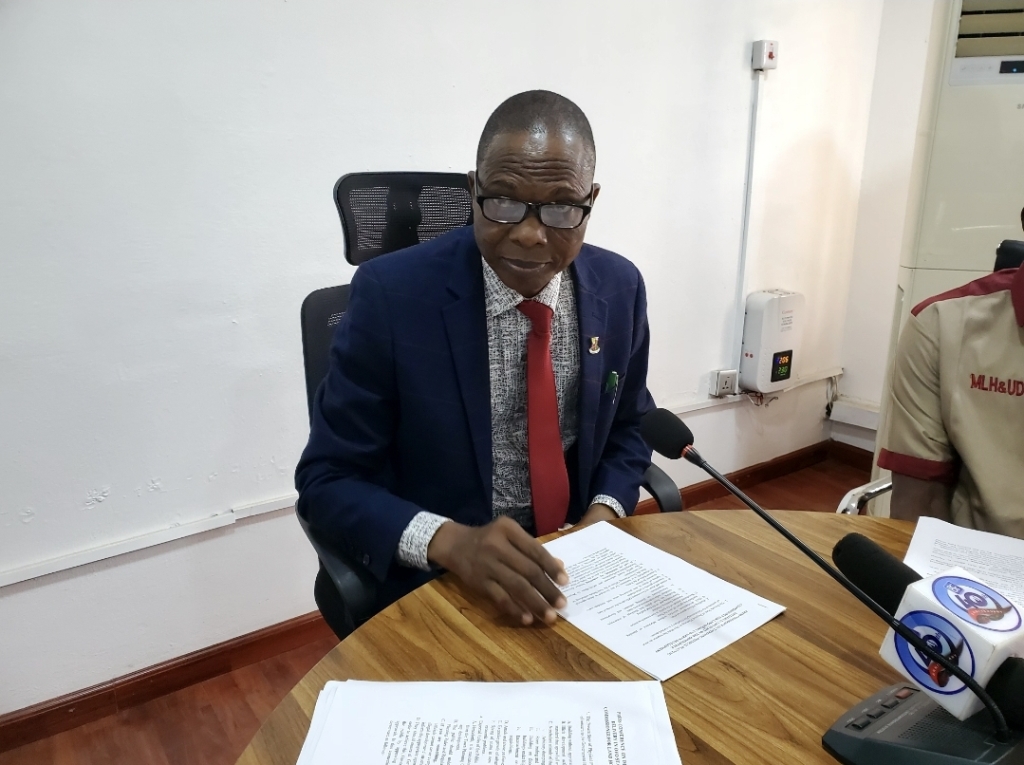
The Commissioner for Lands, Housing and Urban Development, Mr Emmanuel Olusegun Olayiwola, disclosed this while speaking with reporters in Ibadan on Thursday.

He stated that 11 Local Government Areas in Ibadan under the first category would be required to pay N50,600 as tax and development fees instead of the initial payment of N120,000.

The Commissioner further disclosed that residents of Oyo East Local Government, Oyo West Local Government, Atiba Local Government, Ogbomoso South Local Government, Ogbomoso North Local Government Saki West Local Government, Iseyin Local Government, Surulere Local Government, Afijio Local Government, Ibarapa Central Local Government and Ibarapa East Local Government, who are in the second cadre, would now pay N30,600.

As for those in Orire Local Government, Ogooluwa Local Government, Itesiwaju Local Government Iwajowa Local Government, Ibarapa North Local Government, Orelope Local Government, Kajola Local Government, Atisbo Local Government, Olorunsogo Local Government, Irepo Local Government and Saki East Local Government in the third category, they will pay N20,600.

Mr Olayiwola used the opportunity to appeal to residents of the state to support the state government by paying “all government fees” for better development.

He charged them to serve as watchdogs by reporting any illegal activity around them, saying, “If you see something, say something because Government officials cannot cover every area of the State, so when you see any illegal development/structures in any place within the state, please inform the appropriate agency of government.”

The Commissioner also announced that the government will commence serving traders and residents of Ibadan and its environs contravention notices for structures illegally erected on flood plains, blockage of waterways, and buildings under high tension power lines.

He decried the illegal development under power lines in the state, saying that some developments on pipelines, and under high-tension cables were in deviance with the state’s physical planning law.

Mr Olayiwola said that ultimately, illicit development activities without adherence to planning standards in the state gave birth to the sprawl of illegal structures all over the state.

According to him, illegal developments, if not checked on time, would pose a huge threat to residents of the state, noting that the Ministry, following reports from concerned citizens of the state over the erection of structures under power lines and its attendant health hazard to the good people of the state, will swing into action very soon.

He explained further that the state government would soon embark on property auditing, enforcement of planning standards and Technological innovations.


Modupe Gbadeyanka is a fast-rising journalist with Business Post Nigeria. Her passion for journalism is amazing. She is willing to learn more with a view to becoming one of the best pen-pushers in Nigeria. Her role models are the duo of CNN's Richard Quest and Christiane Amanpour.

Click to comment

Leave a Reply

Your email address will not be published. Required fields are marked *

General

NERC Orders DisCos to Pay 20% Compensation to Affected Band A Customers

Published

on

Prepaid Meters DisCos

By Adedapo Adesanya

The Nigerian Electricity Regulatory Commission (NERC) has ordered electricity distribution companies (DisCos) to pay 20 per cent compensation to eligible Band A customers who were affected by power shortfalls between February and March 2026.

In Directive No. NERC/2026/002, the commission said, generation constraints, which were largely caused by inadequate gas supply and vandalism of gas and transmission infrastructure, prevented DisCos from meeting committed service levels for some Band A feeders.

NERC Mandated that for feeders that supplied less than 18 hours per day, affected Band A feeders will not be downgraded during the covered period, and eligible customers will receive special compensation equal to 20 per cent of approved energy figures for February 2026.

However, for Band A feeders that recorded an average daily supply of between 18 and 20 hours, the existing compensation framework under Addendum No. NERC/2024/003 applies to both Maximum Demand (MD) and Non-Maximum Demand (Non-MD) customers.

MD customers are high-consumption users who typically have their own dedicated transformer and operate with a load of 45 kVA and above; they include large residential estates, banks, hotels, supermarkets, industrial facilities and oil and gas complexes.

Non-MD customers do not have a dedicated transformer and instead share public transformers, and they generally consume less, often below 45–50 kVA.

For Non-MD customers, compensation is set at 20 per cent of the approved February 2026 energy cap applicable to the affected feeder.

For MD customers, compensation is 20 per cent of the average energy billed per MD customer in February 2026.

According to NERC, prepaid customers will receive their compensation as token credits, while postpaid customers will receive bill adjustments.

The commission said that compensation for February must be completed by 31 May 2026, while compensation for March must be completed by 30 June 2026.

The commission prohibited Distribution companies from using compensation credits to offset any existing customer debt, adding that customers must be clearly informed of the value and period of the compensation they receive.

NERC said it will monitor implementation and verify compliance to ensure all eligible customers receive what they are due.

The commission reaffirmed its commitment to protecting electricity consumers while ensuring the stability and sustainability of the electricity market.

Continue Reading

General

TCN Confirms Destruction of Six Transmission Towers in Nasarawa

Published

on

Transmission Towers

By Adedapo Adesanya

The Transmission Company of Nigeria (TCN) has confirmed the destruction of six transmission towers along the Apir–Lafia 330kV line in Nasarawa State, causing significant disruption to electricity supply in parts of the country.

In a statement issued on Wednesday, TCN spokesperson, Mrs Ndidi Mbah, said the incident occurred on May 30 at about 1:15 a.m. during a heavy downpour.

She explained that the transmission line initially tripped, prompting operators to attempt a trial reclosure of Line II at about 2:08 a.m., but the effort failed.

A subsequent inspection of the transmission corridor, however, revealed extensive damage to key components of towers T125 to T130, confirming that the infrastructure had been vandalised.

“The tripping of the lines prompted a physical line trace to determine the fault, which revealed damage to critical components of towers T125 to T130, confirming vandalism on the affected sections of the transmission corridor,” Mbah said.

The incident has forced both Apir–Lafia 330kV Transmission Lines I and II out of service pending the reconstruction of the damaged towers.

TCN said its engineers have been deployed to the site to assess the extent of the damage and determine the materials required to restore normal transmission along the corridor.

As an interim measure, the Lafia 330kV Transmission Station is being supplied through an alternative line to minimise the impact on electricity consumers within the franchise areas of Abuja Electricity Distribution Company (AEDC) and Jos Electricity Distribution Company (JEDC).

The company condemned the persistent vandalism of power infrastructure, warning that such acts undermine investments in the electricity sector and threaten the stability of the national grid.

It also urged residents and host communities to remain vigilant and report suspicious activities around transmission installations to security agencies or the nearest TCN office.

TCN stressed that safeguarding critical national infrastructure requires collective responsibility to ensure a reliable and uninterrupted electricity supply nationwide.

Continue Reading

General

IFC, NGX Group, LCCI Unveil Nigeria Gender Country Programme

Published

on

Gender and Equal Opportunities Commission

By Aduragbemi Omiyale

A Nigeria Gender Country Programme (NGCP) to advance private sector action on gender equality and inclusive economic growth has been unveiled at a high-level virtual CEO Roundtable convened by the International Finance Corporation (IFC), Nigerian Exchange (NGX) Group Plc, and the Lagos Chamber of Commerce and Industry (LCCI).

The NGCP builds on the momentum of Nigeria2Equal and other initiatives that have advanced workplace inclusion, women’s leadership, entrepreneurship, and sustainable finance across Nigeria’s private sector.

Designed as a more integrated and collaborative platform, the programme seeks to scale impact through coordinated action among development institutions, business leaders, regulators, and the organised private sector.

Anchored on three strategic priorities, the programme aims to increase women’s representation in leadership, improve access to quality employment, and expand access to productive assets—including finance, technology, and markets—for women and women-led businesses.

The partners are expected to formally launch the Nigeria Gender Country Program at a physical event scheduled for July 9, 2026, where stakeholders will further advance implementation of the programme’s strategic priorities.

At the virtual event, the Director General of the Securities and Exchange Commission (SEC), Mr Emomotimi Agama, said, “Gender inclusion is fundamentally an economic growth imperative. Closing gender gaps can unlock billions of dollars in value for Nigeria while strengthening business performance and national competitiveness. We must therefore move beyond viewing inclusion as a corporate social responsibility initiative or compliance exercise, and instead recognise it as a strategic driver of productivity, innovation, and sustainable economic growth.”

Commenting on the initiative, the chief executive of NGX Group, Mr Temi Popoola, said the initiative “presents a significant opportunity to deepen impact and accelerate progress across corporate Nigeria. By expanding women’s access to leadership opportunities, quality employment, finance, technology, and markets, we can unlock substantial economic value while building a more competitive, inclusive, and resilient private sector. At NGX Group, we believe the capital market has a critical role to play in advancing these outcomes through stronger governance, transparency, and stakeholder engagement.”

On his part, the IFC Head of Office in Lagos, Mr Christian Mulamula, said, “Closing the gender gap is one of the most significant opportunities to strengthen competitiveness and productivity. Across Africa, gender inequality is estimated to cost up to $2.5 trillion. Through the Nigeria Gender Country Program, IFC is working with the private sector to expand women’s leadership, improve access to better jobs, and increase opportunities for women-led businesses. Building on Nigeria2Equal, this initiative focuses on practical, measurable solutions that help businesses grow while advancing inclusive growth.”

In her remarks, the DG of LCCI, Ms Chinyere Almona, noted that the programme’s success would depend on leadership accountability and sustained commitment from business leaders, particularly in embedding gender inclusion into organisational strategy and execution.

Continue Reading

Trending