Connect with us

General

SERAP Urges FG to Publish Names of Oil Thieves

Published

on

names of oil thieves

By Adedapo Adesanya

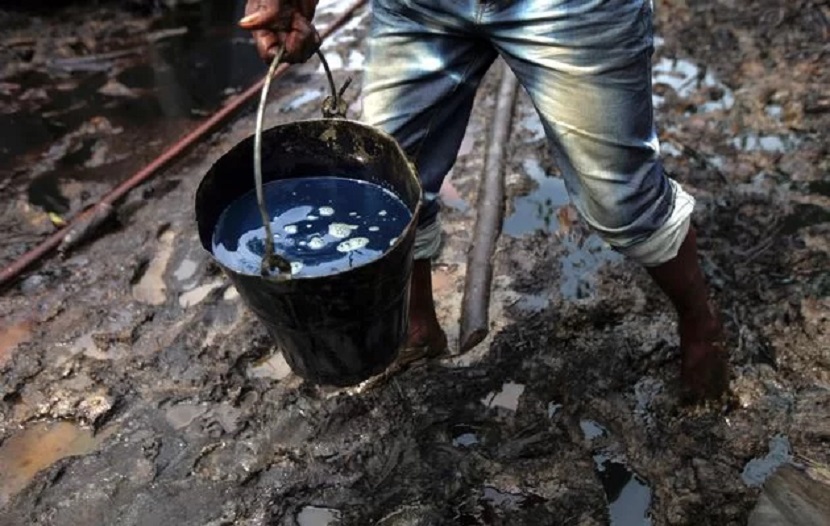
The federal government has been urged to publish the names of oil thieves “within 14 days” or be dragged before a court to compel it to carry out this action.

This is the demand of the Socio-Economic Rights and Accountability Project (SERAP), which expressed worry over the activities of persons suspected to be stealing crude oil belonging to Nigeria.

The Nigerian National Petroleum Company (NNPC) Limited recently said it discovered a 4-kilometre pipeline illegally installed for the purpose of siphoning crude oil for exports.

According to the NNPC, two illegal pipelines were used to steal the country’s oil wealth from Forcados Terminal and connected to the 48-inch Trans Forcados Export Trunk line.

In a letter dated October 15, 2022, SERAP called on Mr Buhari to “promptly set up a presidential panel of inquiry to thoroughly, impartially, and transparently investigate the operations of illegal oil pipelines from 2001 to date, and to widely publish the names of anyone suspected to be involved.”

The organisation further said the government must “ensure the prosecution by appropriate anti-corruption agencies of anyone suspected to be responsible for plundering the country’s oil wealth and the full recovery of any proceeds of crime.”

SERAP also urged him to “promptly authorise the investigation of reports of the destruction of an oil bunkering vessel by security agencies and to ensure that suspected owners of the vessel are identified, named, and brought to justice.”

In the letter signed by SERAP deputy director, Mr Kolawole Oluwadare, the group said: “Poor and socio-economically vulnerable Nigerians have continued to pay the price for stealing of the country’s oil wealth apparently by both state and non-state actors.”

“Your government has a legal obligation to ensure that the country’s oil wealth is used solely for the benefit of the Nigerian people, and that the wealth does not end up in private pockets, for the sake of the present and future generations,” SERAP said.

“SERAP is concerned that the illegal pipelines have been operated for many years without notice, implying a flagrant violation of constitutional and international obligations to ensure the proper, effective and efficient management of the country’s wealth and natural resources.

“It is in the public interest to promptly investigate the discovery of the illegal pipelines, publish the names of those suspected to be involved, and ensure that they are brought to justice, and that any proceeds of crime are fully recovered,” it stated.

“As the President and Minister of Petroleum Resources, you and your government have a legal responsibility to ensure accountability for these human rights crimes, and end the culture of impunity, which is fuelling the stealing of the country’s oil wealth.

“The proposed presidential panel of enquiry should be headed by a retired justice of the Supreme Court or Court of Appeal, and its members should include people with proven professional records and of the highest integrity that can act impartially, independently, and transparently,” the organisation said.

“The plundering of the country’s oil wealth has resulted in the downward trend in revenue and increasing level of borrowing, with reports of a projected N11.30 trillion deficit budget for 2023.”

“The discovery of the second illegal pipeline followed the recent destruction by security agents of a vessel allegedly used for crude oil theft off the Niger Delta creeks. About 58 illegal oil points have reportedly so far been discovered,” SERAP stated.

“According to a Nigeria Extractive Industries Transparency Initiative (NEITI) audit report, 160 million barrels of crude oil valued at $13.7 billion was stolen in four years (2009-2012). There is also a report of $17 billion debt of under-declared crude oil lifted by some international oil companies (IOCs) between 2011 and 2014.”

“According to reports, Nigeria has seen increased oil theft in recent years. The country loses 470,000 barrels of crude oil monthly, amounting to $700 million to oil theft.”

“The country has reportedly lost $10 billion to crude oil theft in seven months, which is stated to be more than 50 per cent of Nigeria’s external reserves. The Chatham House, a think-tank based in the United Kingdom, has noted that oil theft in Nigeria is on an industrial scale,” it added.


Adedapo Adesanya is a journalist, polymath, and connoisseur of everything art. When he is not writing, he has his nose buried in one of the many books or articles he has bookmarked or simply listening to good music with a bottle of beer or wine. He supports the greatest club in the world, Manchester United F.C.

General

FG to Deploy 7,000 Forest Guards to Kwara, Sokoto, Others

Published

on

forest guards 7000

By Modupe Gbadeyanka

The federal government has concluded plans to immediately deploy the 7,000 forest guards, who completed an intensive three-month training programme.

This information was revealed in a statement issued on Saturday by the Special Assistant on Media to the Minister of Information and National Orientation, Mr Rabiu Ibrahim.

It was disclosed that the forest guards were drawn from seven frontline states comprising Borno, Sokoto, Yobe, Adamawa, Niger, Kwara, and Kebbi States.

The National Security Adviser (NSA), Mr Nuhu Ribadu, was quoted as saying that, “There will be no delay between graduation and deployment. Salaries and allowances will commence immediately, and every certified guard will proceed directly to assigned duty posts.”

The personnel are indigenous to their respective local government areas, enabling them to leverage terrain familiarity and community trust in countering banditry, kidnapping, and the illegal exploitation of forest resources.

The programme is under the Presidential Forest Guards Initiative launched by President Bola Tinubu in May 2025. It represents a coordinated Federal–State security intervention aimed at reclaiming Nigeria’s forests from criminal exploitation.

The scheme is designed to strengthen Nigeria’s internal security architecture by denying terrorists, bandits, kidnappers, and other criminal groups sanctuary within forested and hard-to-reach terrains.

The training was deliberately intensive, structured, and demanding, designed to transform loyal and committed Nigerians into agile, disciplined, and capable field operatives. The curriculum integrated environmental conservation principles with advanced security competencies, ensuring a balanced, professional, and mission-ready force.

Trainees underwent extensive physical and mental conditioning, including endurance exercises, obstacle-crossing drills, and long-range patrol simulations to prepare them for sustained forest operations.

They were also trained in tactical fieldcraft, including movement techniques, enemy-contact drills, ambush response, rescue operations, and coordinated offensive actions—equipping them to deny criminal elements any form of sanctuary within Nigeria’s forest spaces.

Equally central to the programme was a strong emphasis on ethics, legality, and professionalism. The curriculum placed significant focus on human rights, International Humanitarian Law (IHL), gender rights, and the protection of civilians.

Arms handling and use-of-force protocols were strictly regulated in line with an Arms Management Manual jointly agreed upon by all participating agencies.

“These Forest Guards are not just uniformed personnel. They are first responders, community protectors, and a critical layer of Nigeria’s security architecture. They will hold ground, gather intelligence, and support security agencies in reclaiming territories previously overtaken by criminal elements,” Mr Ribadu added.

The training recorded a 98.2 per cent completion rate. A total of 81 trainees were disqualified on disciplinary grounds, while two trainees passed away due to pre-existing medical conditions. All successful participants have been fully certified and cleared for operational service.

Continue Reading

General

$1.126bn Financing for Lagos-Calabar Coastal Highway Excites Tinubu

Published

on

Lagos-Calabar Coastal Highway

By Modupe Gbadeyanka

The successful closing of about $1.126 billion in financing for the execution of Phase 1, Section 2 of the Lagos–Calabar Coastal Highway has been welcomed by President Bola Tinubu.

A statement issued on Friday by the Special Adviser to the President on Information and Strategy, Mr Bayo Onanuga, disclosed that the funding package was secured by the Federal Ministry of Finance.

Mr Tinubu described this as a landmark because it marks a significant milestone in the delivery of Africa’s most ambitious and transformative infrastructure projects.

He praised the Ministries of Finance and Works and the Debt Management Office (DMO) for working together on the transaction, adding that the federal government will continue to explore creative financing to fund critical projects across the country.

“This is a major achievement, and closing this transaction means the Lagos-Calabar Coastal Highway will continue unimpeded. Our administration will continue to explore available funding opportunities to execute critical economic and priority infrastructural projects across the country,” the President was quoted as saying in the statement.

Phase 1, Section 2 covers approximately 55.7 kilometres, connecting Eleko in Lekki to Ode-Omi, key economic corridors and significantly enhancing national trade efficiency and logistics connectivity.

The successful financing follows the earlier closing of the $747 million financing for Phase 1, Section 1, and demonstrates the scalability and bankability of the Lagos–Calabar Coastal Highway project.

The financing was fully underwritten by First Abu Dhabi Bank (FAB) and Afreximbank, with partial risk mitigation support provided by the Islamic Corporation for the Insurance of Investment and Export Credit (ICIEC), marking ICIEC’s largest transaction since the country’s institutional and regulatory reforms. The structure reflects growing confidence in Nigeria’s reformed investment climate and its capacity to deliver infrastructure.

SkyKapital acted as Lead Financial Advisor, coordinating structuring, lender engagement, and execution. Environmental and Social advisory services were provided by Earth Active (UK), ensuring complete alignment with the IFC Performance Standards, the Equator Principles, and international ESG best practices. Hogan Lovells, as International Counsel, and Templars, as Nigerian Legal Counsel, led the legal advisory services.

Describing the transaction as a “defining moment in Nigeria’s infrastructure journey,” the Minister of Finance and Coordinating Minister of the Economy, Mr Wale Edun, said the fund will be deployed responsibly and judiciously to deliver on the project within timelines.

“The signing on December 19, 2025, of $1.126 billion financing for Phase one — section two of the Lagos-Calabar Coastal road marks a defining moment in Nigeria’s infrastructure journey, following the successful closing of the $747 million financing for Phase one section one on July 9, 2025.

“Collectively, these landmark transactions firmly establish the Lagos-Calabar Coastal Highway as one of the defining flagship projects of President Bola Tinubu’s Renewed Hope agenda, embodying the administration’s commitment to bold, transformational infrastructure.

“This financing is particularly notable as it represents, for the first time, a truly underwritten transaction of this magnitude for a Nigerian road infrastructure project. The facility was fully underwritten by First Abu Dhabi Bank ($626 million) and Afreximbank ($500 million), with partial coverage provided by ICIEC, making it the largest ICIEC-supported transaction since the institution’s creation,” Mr Edun said.

Construction is being executed by Hitech Construction Company Limited, whose rapid on-site progress and early opening of key road sections have earned commendation from lenders for engineering excellence, operational discipline, and execution speed.

In line with the federal government’s commitment to transparency and fiscal discipline, a comprehensive Value-for-Money (VfM) assessment was conducted by the Federal Ministry of Works in coordination with SkyKapital, and the assessment was independently reviewed and confirmed by GIBB.

The successful close of Phase 1, Section 2, represents a clear step-change in market confidence. It demonstrates Nigeria’s ability to move decisively from vision to execution and from reform to delivery.

Continue Reading

General

Ekpo Lauds NNPC Over Completion of AKK Mainline Works

Published

on

AKK gas pipeline

By Adedapo Adesanya

The Minister of State for Petroleum Resources (Gas), Mr Ekperikpe Ekpo, has commended the Nigerian National Petroleum Company (NNPC) Limited and its partners for the rapid pace and completion of the mainline welding and associated works of the Ajaokuta–Kaduna–Kano (AKK) gas pipeline ahead of schedule.

The Minister made the remark during a recent inspection of Kilometre Zero of the landmark pipeline project, accompanied by the chief executive officer of the Nigerian state oil company, Mr Bashir Bayo Ojulari, Executive Vice President (Gas, Power, and New Energy) Mr Olalekan Ogunleye, and the managing director of Ajaokuta Steel Company Limited, Mr Nasir Abdulsalam.

“Completing the AKK Mainline ahead of schedule demonstrates the resilience, professionalism, and commitment of the project team,” Mr Ekpo said, describing the milestone as a clear reflection of the Federal Government’s renewed focus on energy infrastructure under President Bola Tinubu’s Renewed Hope Agenda.

The Minister noted that the AKK Gas Pipeline is a strategic national infrastructure poised to drive economic growth across Northern States by supplying natural gas for power generation, supporting gas-based industries, and advancing Compressed Natural Gas (CNG) initiatives.

“This project will enhance industrialisation, create jobs, and strengthen energy security, ushering in a new era of economic opportunities for Nigerians,” he added.

Mr Ekpo concluded by urging all stakeholders to maintain momentum, noting that the AKK Pipeline’s operationalisation will catalyze industrialisation, employment, and inclusive economic growth, aligning with the Federal Government’s broader strategic vision.

Speaking at the site, Mr Ojulari linked the project to tangible national development, highlighting Nigeria’s industrial heritage while projecting a resurgence driven by gas as a transition fuel.

“The AKK Pipeline reflects our commitment to timely project delivery and its strategic importance to national industrialisation and economic security,” he stated.

The inspection tour, according to him, further reinforced the Federal Government and NNPCL’s pledge to ensure the AKK Pipeline’s timely completion, which remains critical to expanding energy access, boosting industrial growth, and supporting shared prosperity across the country.

The Minister and the NNPC management team commended the project workforce for their dedication, emphasizing the role of discipline, collaboration, and technical excellence in achieving the early completion of this landmark project.

The AKK Gas Pipeline, spanning over 614 kilometers, is designed to deliver natural gas to power plants, industries, and CNG facilities, providing a major boost to Nigeria’s energy infrastructure and positioning the country as a regional energy hub.

Continue Reading

Trending