Connect with us

General

Nigeria’s TJ Benson, Others Win LOATAD’s AU20 Writing Project

Published

on

TJ Benson LOATAD's AU20 Writing Project

By Kestér Kenn Klomegâh

The African Union (AU), in partnership with the United Nations Development Programme (UNDP) and the Library Of Africa and The African Diaspora (LOATAD), hosted a residency programme under the AU20 project for established writers from across Africa to produce a piece of work that celebrates the unity and potential of the African continent.

This year, the African Union celebrates its 20th anniversary since its establishment at the Durban Summit in July 2002. Dubbed AU20, the celebrations have taken place under the theme Our Africa, Our Future and focus on the AU’s initiatives, successes, impact, challenges and the way forward.

The writers’ residency took the form of a hybrid programme, with two online meetings in October/November and a two-week physical residency at LOATAD in Accra, Ghana, from November 14 – 28.

Catering to the theme, Our Africa, Our Future, five writers from the continent were tasked to interpret the theme in an expansive way across a selected genre, including fiction, narrative non-fiction and poetry. The piece is pegged between 5,000 and 7,000 words (or five poems for poets) on the theme for the e-book. The final work will be published in an e-book anthology to be released in early 2023.

The AU20 project aims to elevate the profile of the AU in the minds of Africans, particularly the creative community, and better connect the AU to African citizens. Powered by Africa No Filter, the writers’ residency is a unique contribution towards bringing the African Union closer to the African people by selecting creative professionals who think outside the box, dare to challenge conventions and offer new and original work through their chosen materials, techniques and subject matters.

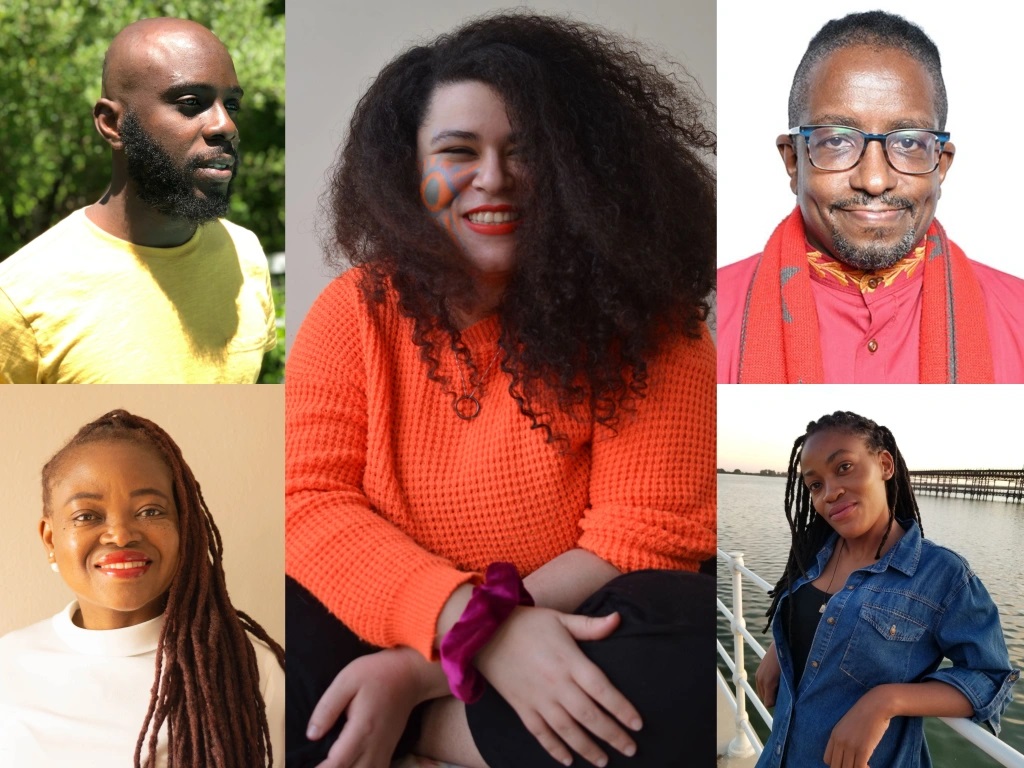
LOATAD, together with the AU, the UNDP and Africa No Filter, has now announced the final winners of the AU20 writing project. Here are the five winners and a bit about their professional backgrounds.

i) Nour Kamel from the Arab Republic of Egypt. Nour writes about identity, language, sexuality, queerness, gender, oppression, femininity, trauma, family, lineage, globalization, loss and food. She is the author of the chapbook “Noon” in New-Generation African Poets: A Chapbook Box Set (Sita).

ii) TJ Benson from the Federal Republic of Nigeria. His writing explores the body in the context of memory, migration, utopia, and the unconscious self and his works have been exhibited, published in several journals, and shortlisted for awards. The author of three novels, his latest, People Live Here, is out now.

iii) Musih Tedji Xaviere from the Republic of Cameroon. She is a writer, activist, and Moth Storyteller. Her debut novel, These Letters End in Tears, won the 2021 Pontas and JJ Bola Emerging Writer’s Prize. It will be published in the US and UK in 2024 by Catapult and Jacaranda Books.

iv) Tony Mochama from the Republic of Kenya. He is a poet, author and senior journalist at The Nation Media Group. He is a three-time winner of the Burt Awards for African Young Adult Literature and is a recipient of the Miles Morland Writing Scholarship. His futuristic novel, 2063 – Last Mil Bet, was published by Oxford University Press.

v) Sue Nyathi from the Republic of South Africa. She is the author of four novels, her latest, An Angel’s Demise, published in October by Pan Macmillan. A Zimbabwean based in South Africa, she was shortlisted for the 2020 Dublin Literary Award and is a JIAS Fellow ’22.

According to reports, LOATAD received an overwhelming number of applications from across the continent, and the selected writers represent the best of African literary talent as well as the literary future.

Started in a one-room office, the library attracted significant national and international attention and quickly outgrew itself. In 2020, it re-branded to LOATAD and moved to a bigger space that includes a special collections/archive room, a screening room and extensive outdoor event space.

As a complete African library, it also has an archive, a museum, a writing residency and a research facility. It is dedicated to the collection and visualization of authors from Africa and the African diaspora from the late 19th century to the present.

The library has over 4,000 volumes of literary fiction and narrative nonfiction dating from the early 20th century to the present day. From Algeria to Kenya and from Liberia to Zimbabwe, the collections represent the rich diversity of the African continent and its vast Diaspora.

LOATAD’s focus is on books by writers of African descent, including African, African American, Caribbean, Black European, Afro-Latin, and Indigenous writers. LOATAD is located in Accra, Ghana.


Click to comment

Leave a Reply

Your email address will not be published. Required fields are marked *

General

4th South Africa Focus Week Begins in Lagos to Strengthen Bilateral Ties

Published

on

South Africa Focus Week

By Adedapo Adesanya

The South African Consulate General in Lagos, in partnership with Brand South Africa and the Development Bank of Southern Africa (DBSA), is hosting the 4th edition of the South Africa Focus Week in Lagos, Nigeria, from April 22 – 26, 2026.

The annual platform continues to grow as a strategic initiative aimed at fostering social cohesion between South Africans and Nigerians while positioning South Africa as a preferred destination for business, tourism, and education. Since its inception in 2023, South Africa Focus Week has attracted over 1,500 participants, bringing together stakeholders from across sectors, including trade and investment, arts and culture, tourism, aviation, and the culinary industry.

The 2026 edition holds particular significance as it coincides with the 30th anniversary of South Africa’s democratic Constitution, enacted in 1996, as well as 32 years of unbroken diplomatic relations between South Africa and Nigeria, established in February 1994. These milestones underscore the enduring partnership between the two nations, rooted in shared history and strengthened through formal agreements and ongoing collaboration.

The 2025 economic relationship between South Africa and Nigeria reflects a strategically significant, multi-dimensional partnership anchored in trade, energy security, investment flows, and strong institutional cooperation. While bilateral trade remains structurally imbalanced – with South Africa exporting US$468.48 million and importing $1.69 billion, resulting in a $1.22 billion deficit – this dynamic is largely driven by South Africa’s reliance on Nigerian crude oil, positioning the relationship as one of strategic interdependence rather than imbalance alone.

This partnership is further elevated by the relative economic weight of both countries. According to IMF projections, South Africa’s economy is valued at approximately $443.6 billion, while Nigeria’s stands at around $334.3 billion in nominal terms for 2026. As two of the largest economies on the continent, their bilateral engagement constitutes a central axis of African economic activity, with disproportionate influence on the success of continental integration efforts.

Beyond trade, the relationship is reinforced by deep two-way investment linkages. South African firms -including MTN Group, Shoprite, and Standard Bank – maintain a strong presence in Nigeria, while Nigerian companies such as Access Bank and Paystack have established a growing footprint in South Africa. Although investment flows are asymmetrical and some Nigerian firms have faced operational challenges, these exchanges reflect an emerging bi-directional economic corridor that extends beyond goods trade into services, finance, and digital innovation.

Aligned with Brand South Africa’s mandate to build the country’s global reputation and competitiveness, the week-long programme will convene leaders from government, business, civil society, academia, and the media. Discussions will focus on leveraging the African Continental Free Trade Area (AfCFTA) as a tool for market access and global positioning, with Nigeria serving as a key focal point.

The South Africa Focus Week has features a series of high-level engagements and cultural activities designed to deepen economic ties and promote collaboration: South Africa–Nigeria Infrastructure Investment Conference (April 22, 2026) which was held under the theme South Africa–Nigeria Partnership: Unlocking Infrastructure Opportunities,” the conference will bring together key stakeholders in infrastructure development to explore collaborative projects in road, rail, and transportation systems.

The forum also examined the role of Public–Private Partnerships (PPPs) and facilitated discussions on project financing and implementation with institutions such as the DBSA and Nigeria’s Infrastructure Concession Regulatory Commission (ICRC).

This was followed by the 2nd Economic Diplomacy Roundtable (Thursday, April 23, 2026), which was hosted in partnership with MTN Nigeria under the theme Role of Technology in Infrastructure Development, the roundtable will convene senior government officials, private sector leaders, and industry experts to identify investment opportunities and strengthen strategic partnerships.

Friday, April 24, was for Arts and Culture Experience, which is a dedicated cultural day will showcase Lagos’ creative spaces and features a panel discussion on South Africa’s arts, film, music, and culture. The programme includes a South African film screening, engagements with filmmakers, and a networking reception aimed at fostering collaboration between the creative industries of both countries.

The event continues on Thursday, April 25, with Freedom Day Celebration and Closing Ceremony. This commemorative event will celebrate 30 years of South Africa’s Constitution, 32 years of freedom and democracy, and the enduring diplomatic relations between South Africa and Nigeria. The ceremony will also provide an opportunity to reflect on outcomes from the week and outline future areas of cooperation.

The celebration forms part of Brand South Africa’s Global South Africans Programme, which recognises and connects South Africans in the diaspora as ambassadors of the nation’s values and identity.

The week climaxes with the 4th edition of the South Africa Golf Tournament at Ikoyi Golf Club on Saturday, April 26, 2026, which will be done in partnership with Crossflex International.

According to a statement, the event aims to strengthen people-to-people relations through sports diplomacy, bringing together South African and Nigerian golfers in a spirit of camaraderie and collaboration.

Continue Reading

General

EFCC Arrests Ex-Skye Bank Chair Tunde Ayeni Over Alleged Diverted Loans

Published

on

tunde ayeni

By Modupe Gbadeyanka

The former chairman of the defunct Skye Bank Plc, Mr Tunde Ayeni, has been apprehended by the Economic and Financial Crimes Commission (EFCC).

Spokesperson of the anti-money laundering agency, Mr Dele Oyewale, confirmed the arrest of the businessman on Friday but declined to provide further details, according to TheCable.

Mr Ayeni was accused of diverting the N36.5 billion and $30 million loans from Polaris Bank Limited to companies with which he has links.

He was alleged to have obtained the credit facilities for marine security, electricity distribution, and real estate projects, but moved them to telecom investments tied to NITEL/MTEL assets via a NATCOM account.

After the Central Bank of Nigeria (CBN) revoked the operating licence of Skye Bank in 2018, it nationalised it to Polaris Bank.

The EFCC has been looking into the alleged diversion of funds by Mr Ayeni, resulting in his arrest in Abuja on Thursday, April 23, 2026.

He is being grilled over the matter and would be arraigned in court once the investigation is concluded.

This is not the first time Mr Ayeni has been nabbed and probed by the EFCC, as this happened a few months after his bank lost its licence.

The then acting spokesman for the EFCC, Mr Tony Orilade, said Mr Ayeni was quizzed by detectives over issues related to fraud and embezzlement allegedly committed by him when he was Chairman of the bank a few years ago.

Continue Reading

General

Customs, Police Commence Tighter Security at Ports to Protect Oil Trade

Published

on

nigeria customs police

By Adedapo Adesanya

The Nigeria Customs Service (NCS) and the Nigeria Police have begun securing the country’s maritime corridor as part of critical moves to safeguard oil and gas trade flows through the nation’s ports.
This follows a recent strategic engagement between the Ibeto Seaport and Terminals Command of Customs and the Eastern Port Police Command in Port Harcourt, where both agencies reaffirmed their commitment to joint operations.
Customs Area Controller, Mr Usman Yahaya, described inter-agency cooperation as essential to protecting critical economic infrastructure.
“This visit is timely and highly appreciated. It reflects the importance of sustained cooperation among agencies entrusted with the security of our nation and the protection of critical economic assets,” he said.
Mr Yahaya stressed that collaboration between Customs and Police remains central to maintaining order and preventing criminal activities within port environments.
“Customs and the Police share common responsibilities in safeguarding the port environment. Synergy remains the cornerstone for achieving our collective mandate,” he added.
He further assured continued support for the Police Command to enhance operational effectiveness.
“Customs Area Controller Usman Yahaya (sitting, right) and Commissioner of Police Shuaibu Audu (sitting, left) with other Customs and Police personnel

“We are fully committed to working with the new Commissioner of Police and giving all necessary support towards the successful discharge of his responsibilities.”

On his part, the Commissioner of Police, Eastern Port Command, Mr Shuaibu Audu, said the visit was aimed at strengthening existing ties between both agencies.
“My presence here today is to reinforce the cordial relationship between the Nigeria Police Force and the Nigeria Customs Service. No organisation can function effectively in isolation,” he said.
Mr Audu emphasised the strategic importance of ports to Nigeria’s economy, particularly in the energy sector.
“Our ports are strategic national assets, and we must work together to keep them secure,” he stated. “Synergy among security agencies is essential to addressing emerging threats.”
Continue Reading

Trending