Connect with us

General

Southern Kaduna: FG Cautions Against Religious Conflicts

Published

on

By Dipo Olowookere

Minister of Interior, Mr Abdulrahman Bello Dambazau, has called on all well-meaning Nigerians not to allow themselves to be dragged into religious conflicts.

He made this passionate appeal following insinuations that the criminal violence in Southern has some religious interpretations.

He said there were people always looking for ways to further create division along religious or ethnic fault lines for their selfish interest, with the aim of creating instability in our internal security.

Accordingly, the Minister posited that true religious leaders do not fan the embers of hate, but ensure that communities live in peace and harmony.

In this connection, he maintained that economic growth and development will remain a mirage for Nigeria; with over 500 ethnic groups and multiple religions, unless we resolve to live amicably as a people with common destiny.

Speaking further, Mr Dambazau said criminals who perpetrate violence against innocent, law-abiding citizens do not discriminate along religious and ethnic lines, citing examples of how communities in Zamfara, Katsina, Taraba, Enugu, Lagos and Niger were victimized by those violent criminals.

He noted that a criminal should be treated as such, whether he is involved in armed robbery, drug trafficking, homicides or cattle rustling, and that people should avoid honouring criminals with religious or ethnic attachment.

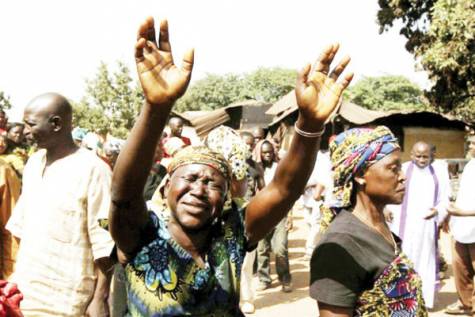
He advised opinion and religious leaders to refrain from giving the crisis between herdsmen and sedentary farmers in Southern Kaduna a religious connotation, rather attention should be focused on the real enemies of our Society, who illegally acquire weapons to terrorize Christians and Muslims Communities alike.

Consequently, the Police have been tasked to ensure the sustenance of law and order, and to arrest and prosecute anyone involved in criminal activities.

He therefore urged citizens to cooperate with the Police by providing actionable intelligence/information in its quest to restore normalcy to the troubled Communities.

He reassured citizens of government commitment to tackling the root causes of similar crisis in all parts of the country, while paying special attention to measures aimed at eradicating poverty, climate change, population explosion and the issues of youth bulge which have been identified as some of the causative factors of these conflicts.


Dipo Olowookere is a journalist based in Nigeria that has passion for reporting business news stories. At his leisure time, he watches football and supports 3SC of Ibadan. Mr Olowookere can be reached via [email protected]

Advertisement
Click to comment

Leave a Reply

Your email address will not be published. Required fields are marked *

General

NISO Attributes Electricity Woes to Inadequate Gas Supply

Published

on

Electricity Tariff Hike

By Adedapo Adesanya

The Nigerian Independent System Operator (NISO) has attributed the poor power supply facing a considerable number of Nigerians to inadequate gas supply to thermal power plants.

Business Post reports that epileptic power supply has plagued consumers in Lagos, Oyo, Abuja, and Osun, among others, this month, leading to worries. Also, some businesses have recorded losses due to the epileptic power supply in their areas.

In a statement posted on its X handle, NISO disclosed that average available generation on the national grid currently stands at about 4,300 megawatts (MW), with the low output primarily attributed to gas supply constraints.

The system operator noted that thermal power plants, which account for the dominant share of Nigeria’s electricity generation mix, require an estimated 1,629.75 million standard cubic feet (MMSCF) of gas per day to operate at optimal capacity. However, as of February 23, 2026, actual gas supply to the plants was approximately 692.00 MMSCF per day.

The available supply represents less than 43 per cent of the daily gas requirement, resulting in constrained generation output and reduced electricity allocation to Distribution Companies (DisCos).

NISO, which independently manages the nation’s electricity grid, explained that any disruption or limitation in gas supply directly affects available generation capacity and overall grid output, given the heavy reliance on thermal plants.

It added that when total system generation drops significantly, the operator is compelled to implement load shedding across the network while dispatching available energy in line with allocation percentages approved under the Multi-Year Tariff Order (MYTO) framework of the Nigerian Electricity Regulatory Commission (NERC), to maintain grid stability and prevent system disturbances.

While expressing regret over the inconvenience to electricity consumers and market participants, NISO said it is working closely with relevant stakeholders to restore full energy allocation once gas supply improves and generation capacity returns to normal levels.

Continue Reading

General

EFCC Re-Arraigns ex-AGF Malami, Wife, Son Over Alleged Money Laundering

Published

on

re-arraign ex agf malami.jpg

By Adedapo Adesanya

The Economic and Financial Crimes Commission (EFCC) has re-arraigned former Attorney-General of the Federation (AGF), Mr Abubakar Malami (SAN), his wife, Mrs Asabe Bashir, and son, Mr Abdulaziz Malami, on money laundering charges.

They were brought before Justice Joyce Abdulmalik of the Federal High Court in Abuja, following the re-assignment of the case to the new trial judge.

Upon resumed hearing, EFCC’s lawyer, Mr Jibrin Okutepa (SAN), informed the court that the matter was scheduled for defendants’ re-arraignment.

“The matter is coming before your lordship this morning for the very first time. I will be applying for the plea of the defendants to be taken,” he said.

Mr Okutepa equally applied that the sums listed in Counts 11 and 12 be corrected to read N325 million instead of N325 billion for Count 11, and N120 million instead of N120 billion for Count 12.

When it was not opposed by the defence lawyer, Mr Joseph Daudu (SAN), Justice Abdulmalik granted the oral application by Mr Okutepa.

The defendants, however, pleaded not guilty to the 16 counts preferred against them by the anti-graft agency bordering on money laundering.

Justice Obiora Egwuatu had, on February 12, withdrawn from the case shortly after the civil case filed by the EFCC was brought to him.

The case was formerly before Justice Emeka Nwite, who sat as a vacation judge during the Christmas/New Year break.

After the vacation period, the CJ reassigned the cases to Justice Egwuatu, who had now recused himself, before it was reassigned to Justice Abdulmalik.

The former AGF, his wife, and son were earlier arraigned before Justice Nwite on December 30, 2025.

While Malami and his son were remanded at Kuje Correctional Centre, Asabe was remanded at Suleja Correctional Centre before they were admitted to N500 million bail each, on January 7, with two sureties each in the like sum.

Continue Reading

General

INEC Shifts 2027 Presidential, N’Assembly Elections to January 16

Published

on

INEC

By Adedapo Adesanya

Nigeria will hold next year’s presidential and National Assembly elections a month earlier than planned, after the Independent National Electoral Commission (INEC) revised the polling schedule.

The elections will be held on January 16, instead of the previously announced date of February 20, INEC said in an X post, signed by Mr Mohammed Kudu Haruna, National Commissioner and Chairman, Information and Voter Education Committee.

There were also changes to the Governorship and State Houses of Assembly elections initially fixed for Saturday, March 6 2027, in line with the Electoral Act, 2022, have now been moved to Saturday, February 6, 2027.

The electoral commission said the changes were caused by the enactment of the Electoral Act, 2026 and the repeal of the Electoral Act, 2022, which introduced adjustments to statutory timelines governing pre-election and electoral activities.

“The Commission reviewed and realigned the schedule to ensure compliance with the new legal framework,” it said.

INEC said party primaries (including resolution of disputes) will commence on April 23, 2026 and end on May 30, 2026, after which Presidential and National Assembly campaigns will begin on August 19, 2026, while Governorship and State Houses of Assembly campaigns will begin on September 9, 2026.

It noted that campaigns will end 24 hours before Election Day, and political parties have been advised to strictly adhere to the timelines.

INEC also stated it will enforce compliance with the law.

The electoral body also rescheduled the Osun Governorship election which was earlier scheduled for Saturday, August 8 2026, by a week to Saturday, August 15, 2026.

INEC noted that some activities regarding the Ekiti and Osun governorship elections have already been conducted, and the remaining activities will be implemented in accordance with the Electoral Act, 2026.

Speaking at a news briefing in Abuja two weeks ago, the chairman of INEC, Mr Joash Amupitan, expressed the readiness of the commission to conduct the polls next year.

The timetable issued by the organisation for the polls at the time came when the federal parliament had yet to transmit the amended electoral bill to President Bola Tinubu for assent.

Later that week, the Senate passed the electoral bill, reducing the notice of elections from 360 days to 180 days, while the transmission of results was mandated with a proviso.

Continue Reading

Trending