Banking
CBN Denies Rejecting Fairview’s N1.04trn Bid for Polaris Bank
By Aduragbemi Omiyale
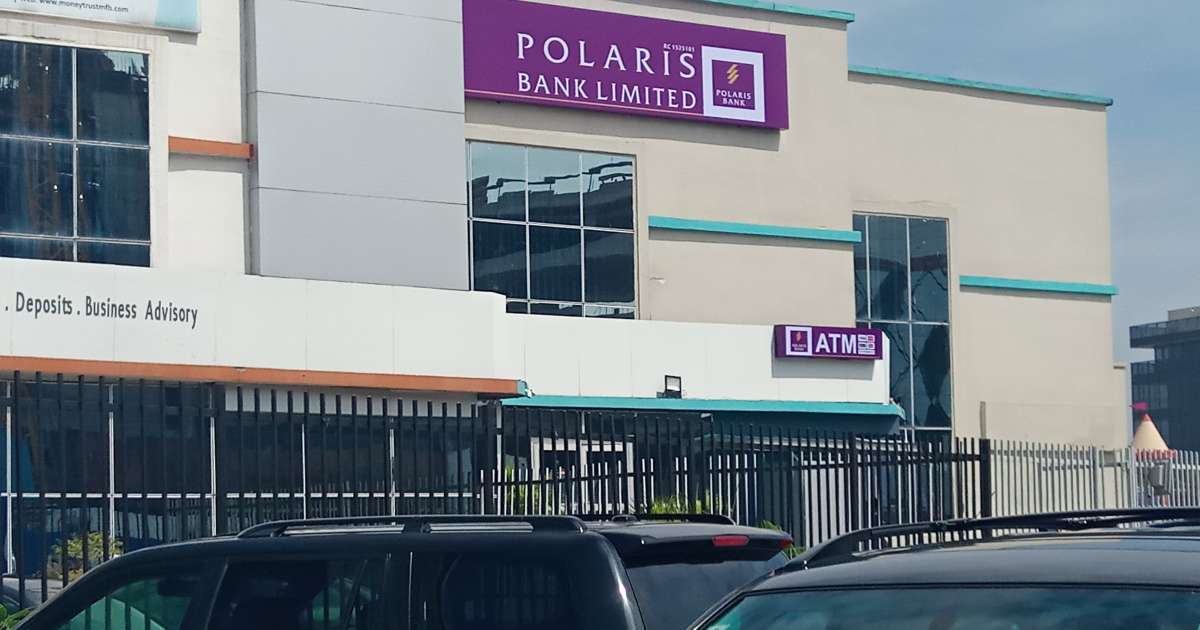
The Central Bank of Nigeria (CBN) has refuted a viral report that it rejected the N1.04 trillion offered by a London-based investor, Fairview Acquisition Partners, for the acquisition of a 100 per cent equity stake in Polaris Bank Limited.
On October 20, 2022, the central bank announced that it had sold the financial institution for N50 billion to a new core investor, Strategic Capital Investment Limited (SCIL).
This raised eyebrows as some observers questioned the rationale behind selling a bank the CBN had pumped about N1.3 trillion into for a paltry sum of N50 billion.
A few days ago, an online platform, Peoples Gazette, published a report alleging that the apex bank rejected an offer of N1.04 trillion made by Fairview for the lender. It claimed the company was sold to SCIL, a company only registered six months before the deal, with links with associates of President Muhammadu Buhari.
But on Wednesday, the CBN, through its spokesman, Mr Osita Nwanisobi, said Polaris Bank was sold to the preferred bidder, stating that Fairview offered N1.02 trillion for the purchase of two banks, including Polaris Bank.
Mr Nwanisobi, who described the report as “spurious, malicious, and misleading,” stressed that the sale of Polaris Bank underwent due process and was based on the relevant laws, global best practices for bank resolutions, and requisite regulatory approvals.
According to him, senior representatives of the Asset Management Corporation of Nigeria (AMCON), CBN, and reputable legal and financial advisers were actively involved in the divestment of the federal government’s interest in Polaris Bank.
He stated that the divestment committee set up for the process received bids from 25 parties, including Fairview, through the execution of a Non-Disclosure Agreement (NDA), the first stage of the process.
It was stated that Fairview did not execute or return the NDA despite verbally confirming receipt of the agreement and after follow-up from the financial advisors.
“Therefore, Fairview Acquisition Partners did not take the opportunity to update their offer by participating in the divestment process and thus did not make a binding purchase offer for Polaris Bank,” the CBN emphasised.
“The committee, along with its legal and financial advisers, conducted a rigorous technical and financial evaluation of the purchase proposals, assessing promoters’ fitness and propriety, offer price received versus reserve price, funding structure and financial capacity, strategy and growth plans, amongst others.
“Following evaluation, the promoters of the strategic purpose vehicle, SCIL, emerged as the preferred purchaser, having presented the most comprehensive technical/financial purchase proposal and the highest-rated growth plans for Polaris Bank.
“In addition to passing all fitness and propriety tests, the promoters also made the highest financial offer for the bank, which was significantly above its core valuation and reserve price,” the statement said.
It explained that the binding offer of SCIL comprises “an immediate upfront consideration of N50 billion and full responsibility for the debt of N1.305 trillion owed to AMCON, essentially a total purchase consideration of N1.355 trillion.”
“This offer was the most competitive and provided taxpayers and the federal government with more than full recovery of its intervention cost. By the sale, the CBN and federal government achieved a successful, value-driven resolution of a strategic financial institution,” it stressed.
Banking
The Alternative Bank Opens Effurun Branch in Delta
By Modupe Gbadeyanka
One of the non-interest banks in Nigeria, The Alternative Bank (AltBank), has opened a new branch in Effurun, Delta State.
The new office will serve the Edo-Delta region and provide purposeful banking and real financial empowerment for individuals, entrepreneurs, and businesses, a statement from the firm stated.
The lender disclosed that the Effurun branch is a bold move in its mission to reshape banking in Nigeria.
The launch was graced by key dignitaries, including the Ovie of Uvwie Kingdom, Emmanuel Ekemejewa Sideso Abe I; the Chairman of Uvwie Local Government, Anthony O. Ofoni, represented his vice, Andrew Agagbo; and the Special Adviser to the Governor of Delta State on Community Development, Mr Ernest Airoboyi; amongst others.
The Divisional Head for South at The Alternative Bank, Mr Chukwuemeka Agada, emphasised the institution’s commitment to Warri and its surrounding communities.
“By establishing a presence here, we are initiating a transformation in the way banking serves the people of Delta. Our purpose-driven approach ensures that customers’ financial goals are not just met but exceeded,” he stated.
“This branch represents our pledge to empower Warri’s dynamic businesses and families, providing them with the tools to grow without compromise,” Mr Agada added.
“We understand the heartbeat of this community, and we are excited to integrate our bank into the fabric of this dynamic region,” he stated further.
On his part, the representative of the Ovie, Mr Samuel Eshenake, challenged the bank to facilitate development and employment within the Effurun community.
The Regional Head for Edo/Delta at The Alternative Bank, Mr Akanni Owolabi, embraced this challenge, pledging that the bank will work sustainably to drive local commerce.
“At The Alternative Bank, we are committed to being an active partner in the development of Effurun. We see this branch as a catalyst for creating opportunities, driving employment, and supporting the growth of local businesses.
“Our mission is to empower this community, ensuring that every step forward is one of progress, prosperity, and shared success.”
Banking
Payattitude, PAPSSCARD to Co-brand Payment Card
By Aduragbemi Omiyale
A partnership aimed to enable seamless, real-time and secure transactions for cardholders across Africa and the rest of the world has been entered into by Payattitude and PAPSSCARD, the card scheme initiative of the Pan-African Payment & Settlement System (PAPSS).
The collaboration will allow Payattitude cards issued by banks and other deposit-taking institutions to be co-branded with PAPSSCARD, Discover, Diners and Pulse for acceptance across their networks in Nigeria, Africa and worldwide.
As an initiative of the African Export-Import Bank (Afreximbank) and a key financial infrastructure supporting the African Continental Free Trade Area (AfCFTA), the PAPSSCARD scheme will facilitate instant cross-border payments in local currencies.
“This partnership reflects our commitment to cross-enterprise alliances and enabling inclusive, efficient, and borderless payments across Africa and the world
“With Payattitude, Nigerian cardholders and financial institutions can now enjoy the benefits of a Nigerian card that can be used worldwide,” a director at Payattitude, Dr Agada Apochi, said.
The acting chief executive of PAPSSCARD, Mr John Bosco Sebabi, said the aim is “to connect African payment ecosystems, reduce the cost and inefficiencies of cross-border payments, and strengthen African sovereignty over payments infrastructure.
“Collaborating with Payattitude, a key innovator in Nigeria’s payment space, represents a significant step towards a more unified African payment landscape.”
The chief executive of PAPSS, Mr Mike Ogbalu, said, “By bringing together PAPSSCARD’s robust cross-border payment capabilities with Payattitude’s leadership in the Nigerian digital payments, we are taking tangible steps toward building a single African market where individuals and businesses can transact easily and securely, both within and beyond Africa.”
Payattitude is the first-in-kind Nigerian Payment Scheme to pioneer multibank App and USSD Code *569#.
Banking
CBN Stops Special Authorisation to Withdraw Above N5m
By Adedapo Adesanya
The Central Bank of Nigeria (CBN) has revised its cash withdrawal rules, discontinuing the special authorisation previously permitting individuals to withdraw N5 million and corporates N10 million once monthly, effective January 2026.
The new set of cash-related policies are designed to reduce the cost of cash management, strengthen security, and curb money laundering risks associated with the economy’s heavy reliance on physical currency.
This was contained in a circular released on Tuesday, December 2, 2025, and signed by the Director of the Financial Policy and Regulation Department of the central bank, Ms Rita I. Sike.
The apex bank explained that previous cash policies had been introduced over the years in response to evolving circumstances. However, with time, the need has arisen to streamline these provisions to reflect present-day realities.
“These policies, issued over the years in response to evolving circumstances in cash management, sought to reduce cash usage and encourage accelerated adoption of other payment options, particularly electronic payment channels. With the effluxion of time, the need has arisen to streamline the provisions of these policies to reflect present-day realities,” the CBN stated.
So, effective January 1, 2026, individuals will be allowed to withdraw up to N500,000 weekly across all channels, while corporate entities will be limited to N5 million.
Withdrawals above these thresholds will attract excess withdrawal fees of 3 per cent for individuals and 5 per cent for corporates, with the charges shared between the CBN and the financial institutions.
Daily withdrawals from Automated Teller Machines (ATMs) will be capped at N100,000 per customer, subject to a maximum of N500,000 weekly. These transactions will count toward the cumulative weekly withdrawal limit.
The special authorisation previously permitting individuals to withdraw N5 million and corporates N10 million once monthly has been discontinued.
The CBN also confirmed that all currency denominations may now be loaded in ATMs, while the over-the-counter encashment limit for third-party cheques remains at N100,000. Such withdrawals will also form part of the weekly withdrawal limit.
Deposit Money Banks (DMBs) are required to submit monthly reports on cash withdrawals above the specified limits, as well as on cash deposits, to the relevant supervisory departments.
They must also create separate accounts to warehouse processing charges collected on excess withdrawals.
Revenue-generating accounts of federal, state, and local governments, along with accounts of microfinance banks and primary mortgage banks with commercial and non-interest banks, are exempted from the new withdrawal limits and excess withdrawal fees.
However, exemptions previously granted to embassies, diplomatic missions, and aid-donor agencies have been withdrawn.
The apex bank clarified that the circular is without prejudice to the provisions of certain earlier directives but supersedes others, as detailed in its appendices.
This is the latest move by the apex bank to strengthen the Nigerian financial ecosystem. In October, the CBN issued a directive requiring all financial institutions to submit detailed monthly reports on the activities of their Point-of-Sale (POS) agents.
In the circular signed by the Director of the CBN’s Payments System Policy Department, Mr Musa Jimoh, it was stated that the reports must include comprehensive data on the nature, value, and volume of transactions conducted by agents.
The circular also stated that POS agents are restricted to a maximum of N1.2 million per day, while individual customers are limited to N100,000 in daily transactions.
CBN said these limits are intended to curb misuse, enhance financial integrity, and protect consumers within the agent banking framework.
-
Feature/OPED6 years agoDavos was Different this year
-
Travel/Tourism9 years ago
Lagos Seals Western Lodge Hotel In Ikorodu
-
Showbiz3 years agoEstranged Lover Releases Videos of Empress Njamah Bathing
-
Banking7 years agoSort Codes of GTBank Branches in Nigeria
-
Economy2 years agoSubsidy Removal: CNG at N130 Per Litre Cheaper Than Petrol—IPMAN
-
Banking3 years agoFirst Bank Announces Planned Downtime
-
Banking3 years agoSort Codes of UBA Branches in Nigeria
-
Sports3 years agoHighest Paid Nigerian Footballer – How Much Do Nigerian Footballers Earn