Connect with us

Banking

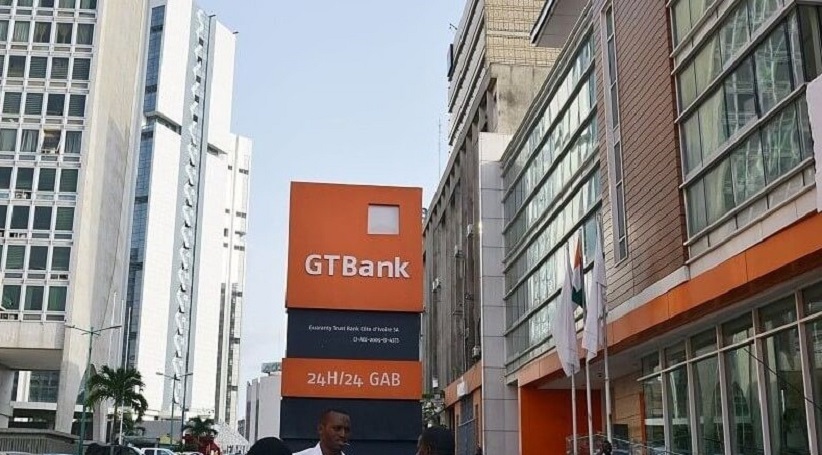
GTBank UK Settles With FCA, Pledges to Mend AML Control Gaps

Published

on

GTBank UK

By Adedapo Adesanya

Guaranty Trust Bank UK (GTBank UK) Limited said it had reached a settlement with the country’s banking watchdog, Financial Conduct Authority (FCA), over the £7,671,800 sanction for serious weaknesses in its anti-money laundering (AML) systems and controls between October 2014 and July 2019.

On Tuesday, in a statement seen by Business Post, FCA said that during the relevant period, the lender failed to undertake adequate customer risk assessments, often not assessing or documenting the money laundering risks posed by its customers.

It also accused the bank of failing to monitor customer transactions and business relationships to the required standard, noting that these weaknesses were repeatedly highlighted to GTBank UK by internal and external sources, including the FCA, but despite this, the company did not take appropriate action to fix them.

“GTBank should have acted quickly to put in place adequate AML controls following its fine in 2013, but it failed to do so.

“GTBank did not develop a plan that was capable of addressing its AML weaknesses, exposing it and the broader market to financial crime risks for a prolonged period,” the Executive Director of Enforcement and Market Oversight at the FCA, Mr Mark Steward, said.

On Thursday, GTBank, in a statement made available to Business Post, admitted that it erred, accepting findings in relation to historical AML controls in its operations in the period under review, noting that necessary steps have been taken to address and resolve the identified gaps.

The bank said it has agreed to pay the fine, which has been calculated by reference to a proportion of the revenues of GTBank UK over the relevant period and includes a 30 per cent discount for early settlement.

“As a responsible financial services institution that is committed to best practices, GTBank UK takes its AML obligations extremely seriously.

“We note with sincere regret the FCA’s findings regarding AML control gaps in our operations in the past, and we are very sorry for this,” the Managing Director of GTBank UK, Mr Gbenga Alade, was quoted as saying in the statement.

“We would like to assure all our stakeholders and the general public that necessary steps have been taken to address and resolve the identified gaps,” he assured.

Mr Alade stated further that, “Whilst there was no direct customer impairment arising from the period under review [and the FCA’s findings do not include any instances of suspected money laundering], we have since reinforced our AML control framework and implemented changes in our AML processes in line with best practice with a view to ensuring that the highest standards are maintained in our operations.”

The financial institution said it was fully committed to the fight against all forms of financial crime, promising to continue to meet all applicable financial crime regulations and legislation globally.

“Our AML policies and controls, together with our overall risk management strategy, are regularly reviewed and revised to ensure that they remain relevant and current in line with the evolving regulatory requirements,” it stated.


Adedapo Adesanya is a journalist, polymath, and connoisseur of everything art. When he is not writing, he has his nose buried in one of the many books or articles he has bookmarked or simply listening to good music with a bottle of beer or wine. He supports the greatest club in the world, Manchester United F.C.

Click to comment

Leave a Reply

Your email address will not be published. Required fields are marked *

Banking

Banks to Submit Monthly Reports on Failed Digital Transactions

Published

on

cbn gov. banks recapitalisation

By Adedapo Adesanya

The Central Bank of Nigeria (CBN) has directed banks and other financial institutions to submit monthly reports on failed electronic transactions across digital channels, as part of new compliance measures introduced in its revised Guide to Charges.

The directive was contained in a circular titled Exposure Draft of the Guide to Charges by Banks and Other Financial Institutions in Nigeria, 2026 (The Guide) and signed by the Director of the Financial Policy and Regulation Department, Mrs Rita Sike.

According to the apex bank, Chief Compliance Officers and Heads of Information Technology in financial institutions are required to jointly render electronic reports of all failed transactions conducted via Automated Teller Machines, Point of Sale terminals, mobile channels, web platforms, and other electronic systems.

The circular read, “The Chief Compliance Officer and Head Information Technology shall jointly render monthly reports electronically, of all failed electronic transactions via various e-channels (ATM, PoS, mobile, web/internet and related channels) that originate or terminate in the institution.”

The reports are to be submitted to designated CBN email addresses, reinforcing the regulator’s push for stricter monitoring of service failures across the banking system.

Beyond the reporting requirement, the CBN also introduced broader accountability measures, placing responsibility on top management of financial institutions to ensure strict adherence to the new guide.

Executive Compliance Officers or Managing Directors are mandated to cascade compliance expectations across all business units and ensure that banking systems are configured to apply only approved charges.

Specifically, the regulator directed that Heads of Information Technology must ensure that “all systems configurations only capture and allow posting of charges as permitted and described in this Guide,” while Chief Compliance Officers are to monitor strict compliance with the framework.

The revised guide, effective May 1, 2026, replaces the 2020 version and provides a comprehensive framework for charges across banking and other financial services.

The CBN explained that the review was aimed at promoting a safe and sound financial system, encouraging innovation, and expanding financial inclusion through lower tariffs on micropayments and transactions.

It added that the revised framework would strengthen oversight and accountability, encourage the adoption of electronic payment channels, and accommodate new industry participants.

Business Post also reported that the regulator has raised ATM card fees by 50 per cent to N1,500 and scrapped the monthly maintenance charge.

Continue Reading

Banking

CBN Proposes N1,500 ATM Card Fee, N150 e-Dividend Mandate Processing Fee

Published

on

ATM card pin with biometrics

By Aduragbemi Omiyale

The Central Bank of Nigeria (CBN) has proposed that financial institutions operating in the country should charge N150 for the e-dividend mandate processing fee from May 1, 2026.

This was contained in the latest Guide to Charges by Banks and Other Financial Institutions in Nigeria, signed by the Director of the Financial Policy and Regulation Department of the CBN, Ms Rita Sikе.

The move is to promote a safe and sound financial system in Nigeria, accelerate the adoption of innovative financial services, financial inclusion and micropayments/transactions.

The reviewed guide, according to the central bank, provides for an increased range of financial services, encourages development of innovative products, strengthens responsibility for oversight and accountability and promotes financial inclusion through lower tariffs for micropayments/transactions.

It also reviewed some charges for banking services to encourage increased adoption of electronic channels and accommodate new industry participants since the issuance of the 2020 guide.

“In view of the above, the draft guide is hereby exposed to members of the public for their comments/input on the proposed fees contained therein. Comments are to be sent to [email protected] on or before May 08, 2026,” a part of the note stated.

In the draft, the banking sector regulator is suggesting the payment of N1,500 for local debit card issuance and replacement by customers and a $10 annual fee for foreign currency-denominated debit/credit cards.

For on-site ATM transactions, a charge of N100 per N20,000 withdrawal was proposed and N100 plus a surcharge of not more than N500 per N20,000 withdrawal. It emphasised that the surcharge, which is an income of the ATM deployer/acquirer, shall be disclosed at the point of withdrawal to the consumer.

The bank also said that for electronic fund transfers below N5,000, no fee would be collected, but from N5,000 to N50,000, customers would part with N10, and for transfers above N50,000, the fee of N50 would be paid, while for microfinance banks, there would be the settlement bank’s charge plus 10 per cent of the charge.

The CBN noted that this guide applies to commercial banks, merchant banks, Payment Service Banks (PSBs), non-interest banks, microfinance banks, finance companies, Primary Mortgage Banks (PMBs), Development Finance Institutions (DFIs), credit guarantee companies, Mobile Money Operators (MMOs), and any other institution as may be designated by it.

Continue Reading

Banking

The Inside Story: How Stanbic IBTC’s EVB Programme is Revolutionising Corporate Banking

Published

on

Stanbic IBTC Bank Logo white

In today’s rapidly evolving business environment, organisations face heightened competition, shifting workforce expectations, and increasing pressure to optimise productivity. Amid these dynamics, one truth has become increasingly clear: employees’ financial well-being is directly tied to organisational performance.

Employees who are financially secure demonstrate greater commitment, higher productivity, reduced absenteeism, and stronger alignment with company objectives. Conversely, financial stress has emerged as a leading contributor to disengagement, declining morale, and weakened performance across all levels of the workforce.

At Stanbic IBTC, we recognise this critical relationship between employee financial health and business outcomes. This insight led us to engineer Employee Value Banking (EVB)—a strategic, comprehensive, and future-proof solution designed to help organisations strengthen their workforce, elevate their value proposition, and drive long-term business sustainability.

EVB is a transformational partnership model aligning employee wellbeing with corporate productivity, risk reduction, and efficiency.

A Holistic, Employee-Centric Banking Architecture

EVB is built on the understanding that employees across varying grades and income brackets have unique financial realities. By offering a robust suite of banking, investment, insurance, and advisory services tailored to diverse needs, EVB empowers organisations to meaningfully enhance their workforce’s financial security and stability.

Key Components of the EVB Suite

  1. Digital Unsecured Personal Loans with Flexible Repayment

Employees gain access to seamless, digitally processed loans that allow them to meet immediate financial needs with ease.

Flexible repayment structures reduce financial strain while supporting responsible borrowing behaviour.

  1. Tailored Savings and Investment Solutions

Through structured savings plans, mutual funds, and diverse investment options, employees are empowered to build wealth over time.

This fosters discipline, long-term planning, and financial resilience.

  1. Pension and Asset Management Services

With Stanbic IBTC Pension Managers and Stanbic IBTC Asset Management, employees benefit from expert retirement guidance, wealth advisory, and long-term financial structuring—ensuring a secure and predictable future.

  1. Comprehensive Insurance Cover (Life, Health & Assets)

Employees and their families enjoy protection against major life risks, including health emergencies, life insurance, and property coverage.

This security enhances peace of mind and reduces workplace anxiety.

  1. Mortgage Support at a Competitive Single-Digit Rate of 9.75%

Homeownership remains a powerful symbol of stability and success.

Through EVB’s highly competitive mortgage solution, 774 families have successfully become homeowners from 2024 to date, demonstrating the program’s profound and measurable impact.

A Structured, Responsible, and Risk-Free Lending Model

One of the core strengths of EVB is its cadre-based lending framework, which aligns all loan offerings with employee grade levels, income bands, and organisational hierarchy. This ensures:

  • Responsible and sustainable lending behaviours
  • Protection against over-borrowing
  • Stronger financial discipline
  • Greater alignment with corporate HR structures

What distinctly sets EVB apart is its employer-focused risk mitigation. EVB’s structure ensures employers face no risk, making it uniquely designed for seamless adoption compared to standard banking programs.

All loans provided under the program are fully insured, meaning organisations carry:

  • Zero liability
  • Zero indemnity exposure
  • Zero financial risk

This allows HR and management teams to expand their employee value proposition without adjusting internal financial structures or bearing additional costs.

Beyond Banking: Building a Financially Resilient Workforce

Financial empowerment is not achieved solely through products; it requires education, behavioural change, and consistent guidance.

Further differentiating EVB, Financial Fitness Workshops and complimentary Financial Health Checks are embedded as core components, giving employees ongoing support that competitors rarely offer.

These workshops cover:

  • Personal budgeting and cash flow management
  • Savings and investment strategies
  • Smart debt management
  • Retirement and pension planning
  • Wealth creation principles

By equipping employees with financial knowledge, organisations reduce anxiety, enhance decision-making, and cultivate a more confident, resilient, and empowered workforce.

A Strategic Partnership That Delivers Sustained Organisational Value

EVB enables organisations to build a healthier, more motivated, and higher-performing workforce.

It is not a product—it is a strategic collaboration that enhances organisational culture, strengthens HR capability, and improves employer brand reputation.

Through EVB, organisations benefit from:

  • Higher employee engagement
  • Improved productivity and performance
  • Reduced financial stress across all workforce levels
  • Enhanced talent attraction and retention
  • A stronger, richer reward and well-being structure
  • A fully digital, modern, and efficient employee banking experience

EVB reflects Stanbic IBTC’s long-standing commitment to supporting organisations by empowering the individuals who drive their success.

Employee Value Banking (EVB) is a pivotal advancement in corporate banking. Where traditional bank–corporate relationships focused on organisational accounts and financial transactions, EVB introduces a holistic, human-centric model that puts employees’ well-being at the core of corporate financial services.

Through EVB, Stanbic IBTC has:

  • Transitioned corporate banking from a transactional model to a value-driven partnership
  • Expanded the definition of the corporate customer to include the entire workforce
  • Integrated banking, pensions, investments, mortgages, insurance, and financial education into a unified ecosystem
  • Elevated corporate banking into a strategic enabler of productivity, well-being, and business sustainability
  • Positioned financial well-being as a competitive advantage for modern organisations

EVB has redefined the future of corporate banking, transforming it from a service function into a lever for organisational excellence, employee empowerment, and value creation.

Stanbic IBTC drives this change, enabling businesses to build secure, high-performing workforces.

Continue Reading

Trending