Economy
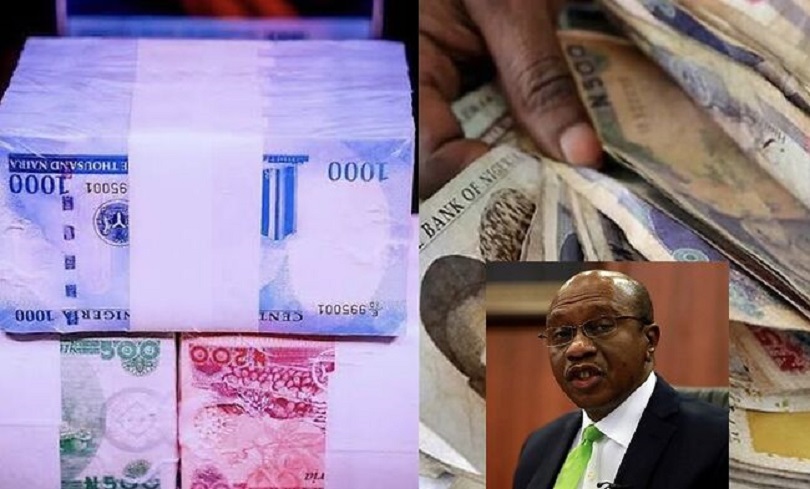
Currency Swap Will Stabilise, Strengthen Economy—Buhari
By Modupe Gbadeyanka
President Muhammadu Buhari has assured Nigerians that the currency swap policy of the Central Bank of Nigeria (CBN) would be beneficial to the country.
In a statement posted on Saturday night via the verified Twitter handle of the presidency, @NGRPresident, it was emphasised that the policy was not meant to make the citizens undergo undue hardship but to tackle corruption, currency counterfeiting and others.
According to the statement, the changing of the old Naira notes to the new ones will stabilise and strengthen the country’s economy.
In October 2022, the central bank said it was redesigning the N200, N500, and N1,000 notes and gave Nigerians till Tuesday, January 31, 2023, to deposit the old notes as they would no longer be legal tender.
Many Nigerians have called on the CBN to extend the deadline, while the candidate of the ruling All Progressives Congress (APC), Mr Bola Tinubu, believes that the policy was aimed at frustrating his chances of winning the presidential election on February 25, 2023.
But Mr Buhari “assured that government will ensure that citizens are unharmed in their businesses and no disruption is caused to the entire supply chain arising from the currency swap due to end shortly.”
Reacting to reports of long queues of people waiting for hours for their turn to deposit old notes and get new ones, triggering public anger and opposition’s criticism, “the President reiterated that the currency changes were aimed at people hoarding illicit funds and not the common man and that it had become necessary to prevent counterfeits, corruption, and terrorist funding. This, he assured, will stabilize and strengthen the economy.”
“While taking note that the poorest section of society is facing hardship as they often keep hard cash at home for various expenses, President Buhari gave strong assurances that the government will not leave them to their own fate.
“He reiterated that a number of initiatives by the CBN and all commercial banks are underway to speed up distribution of the new notes and do all that is necessary to forestall cash squeeze and chaos.”
Economy
NGX All-Share Index Rises 1.23% to 211,901.01 points
By Dipo Olowookere
For the fourth straight trading session, the Nigerian Exchange (NGX) Limited ended on a positive note with a further 1.23 per cent growth on Thursday.
This was influenced by demand for large-cap equities like MTN Nigeria, Aradel, First Holdco and others.
According to data from Customs Street, the energy index grew by 4.76 per cent, the banking counter appreciated by 2.49 per cent, and consumer goods sector expanded by 0.34 per cent.
But the insurance and the industrial goods indices came under selling pressure, losing 0.74 per cent and 0.03 per cent, respectively, which did not put the bourse at risk.
Consequently, the All-Share Index (ASI) closed higher by 2,583.60 points to 211,901.01 points from 209,317.41 points, and the market capitalisation grew by N1.663 trillion to N136.436 trillion from N134.773 trillion.
Guinea Insurance and Trans-Nationwide Express were the best-performing stocks for the session after gaining 10.00 per cent each to sell for N1.21 and N5.50 apiece, as Aradel chalked up 9.99 per cent to trade at N1,547.50, Ecobank appreciated by 9.97 per cent to N61.20, and DAAR Communications improved by 9.93 per cent to N1.66.
The worst-performing stock was Ikeja Hotel, which depleted by 9.73 per cent to N33.40. Coronation Insurance lost 8.77 per cent to quote at N2.60, CAP went down by 8.61 per cent to N95.00, International Energy Insurance crashed by 8.18 per cent to N3.03, and McNichols slumped by 5.82 per cent to N6.31.
Unlike the preceding session, investor sentiment was strong yesterday, with 43 price gainers and 21 price losers, showing a positive market breadth index.
A total of 585.0 million equities valued at N34.8 billion exchanged hands in 45,559 deals during the trading day versus the 706.4 million equities worth N41.9 billion traded in 46,231 deals on Wednesday, indicating a decline in the trading volume, value, and number of deals by 17.19 per cent, 16.95 per cent, and 1.45 per cent, respectively.
Zenith Bank remained the busiest stock for the day with 61.7 million units sold for N7.6 billion, as UBA traded 45.9 million units worth N2.1 billion, Access Holdings exchanged 42.8 million units for N1.2 billion, Secure Electronic Technology transacted 38.5 million units valued at N37.5 million, and GTCO recorded a turnover of 25.3 million units worth N3.2 billion.
Economy
MEXC vs Kraken: Which Is Better for Trading RWA Assets?
Key Takeaways
Here are the main points to consider when comparing these two exchanges for RWA trading.
- MEXC often provides promotional zero-maker fees for RWA spot trading, while Kraken uses a tiered fee structure starting at 0.16% for makers and 0.26% for takers.
- Both exchanges list certain RWA tokens like PACT, but access to tokenized equity is still limited and depends on user location.
- The on-chain RWA market is valued between $10 billion and $15 billion in 2026, with estimates pointing to continued growth due to tokenized treasuries.
- MEXC focuses on low trading costs and fast token listings, whereas Kraken prioritizes regulatory compliance and direct fiat currency access.
Understanding the basics of Real-World Assets (RWA) helps clarify their role in modern crypto portfolios.
RWA assets convert physical or traditional financial instruments, such as government treasuries and credit, into digital tokens on a blockchain. This connects traditional finance with cryptocurrency markets. The on-chain RWA sector has reached an estimated $10 billion to $15 billion in 2026, largely driven by institutional involvement. This comparison looks at MEXC and Kraken to see how they handle RWA trading in terms of fees, available tokens, and platform features.
What Are RWA Assets? Top Tokens 2026
Real-world asset tokens represent traditional financial items on a blockchain network.
The RWA sector digitizes traditional assets like government bonds for use within the crypto ecosystem. Tokenized treasuries currently lead this category. Protocols like Ondo provide tokens (such as USDY and OUSG) that offer yields backed by real-world financial reserves. Another notable example is the PACT token, which launched on both MEXC and Kraken in early 2026 to help transfer RWAs across different blockchain networks. The market has seen steady growth over the last two years, with tokenized credit and treasuries acting as the main drivers.
MEXC RWA Trading: Fees and Listings
MEXC attracts users by focusing on reduced trading costs and a fast listing process for new tokens.
MEXC offers a low-cost environment for RWA trading. It frequently runs promotions with 0% maker fees and 0.05% taker fees for spot trading. Futures trading fees are also low, typically at 0% for makers and 0.02% for takers. The platform supports several RWA pairs, including PACT/USDT, and tends to list early-stage projects quickly. This efficient listing process also includes other emerging digital assets like PI price today, providing users with early access to a diverse range of tokens. While it is highly suitable for active traders who want to minimize fees, direct access to tokenized equities remains limited.
Kraken RWA Trading: Features and Support
Kraken offers a structured trading platform with a strong emphasis on regulatory compliance and fiat integrations.
Kraken manages RWA trading using a tiered fee system based on 30-day trading volume. Base fees generally start at 0.16% for makers and 0.26% for takers, dropping as a user’s trading volume increases. The exchange provides access to crypto derivatives and regulated trading pairs, though direct tokenized equity is uncommon. Kraken maintains high liquidity, processing large daily trading volumes. It also features direct fiat on-ramps, making it practical for users who want to buy RWA tokens directly with traditional currency.
MEXC vs Kraken RWA Comparison Table
This table provides a direct comparison of the key features offered by both exchanges.
| RWA Trading Feature | MEXC | Kraken |
| Spot Fees (Maker/Taker) | 0% / 0.05% (promotional) | 0.16% / 0.26% (tiered) |
| RWA Tokens Listed | PACT, early RWA pairs | Select derivatives, limited equities |
| Liquidity Volume | Strong for newer altcoins | High overall volume (market-dependent) |
| Regulation | Focus on emerging markets | Complies with multiple frameworks, MiCA positioning |
| Fiat Support | P2P and third-party providers | Direct regulated fiat on-ramps |
RWA Security: MEXC vs Kraken Regulation
Security and regulatory compliance are critical factors when handling tokenized real-world assets.
Both exchanges implement standard industry security measures. Kraken holds operational licenses in multiple countries and adjusts its platform to meet regional regulations, including the MiCA framework in Europe. MEXC focuses on fund protection mechanisms designed for a high volume of new token listings. Both platforms use cold storage for the majority of user funds and conduct regular security audits to maintain platform integrity.
RWA Trading Fees Breakdown: MEXC vs Kraken
The fee structures on these platforms cater to different types of trading habits.
MEXC’s fee model benefits frequent retail traders through its promotional 0% maker and 0.05% taker fees. Users holding the MX token can further reduce these costs. Kraken uses a volume-based tiered system, which becomes more cost-effective for institutional or high-volume traders but starts higher for average retail users. For example, a standard $10,000 spot trade will generally incur lower direct fees on MEXC during promotional periods compared to Kraken’s base tier.
RWA Liquidity and Volume: MEXC vs Kraken
Adequate market liquidity ensures that traders can buy and sell tokens without causing large price changes.
Kraken maintains deep liquidity across its major trading pairs, processing high daily volumes that support stable execution during market fluctuations. MEXC also provides functional liquidity across its markets. Traders benefit from a reliable environment that mirrors the steady depth found in the BTC USDT order book, which helps ensure smooth trade execution for early-stage or lower-market-cap RWA tokens. As institutional money enters the RWA space, both exchanges are seeing increased trading volumes in these specific asset categories.
Best Exchange for RWA: User Tools Comparison
Both platforms offer additional tools to help users manage their RWA investments.
MEXC provides features like launchpools, which allow users to gain exposure to new RWA projects early. It also includes an active copy trading system within its application. Kraken focuses on advanced charting tools, detailed analytics dashboards, and educational resources aimed at intermediate to advanced traders. Both platforms provide functional interfaces, but they target slightly different user preferences.
Conclusion: Best RWA Trading Platform Choice
Choosing the right platform depends on individual trading priorities and regional availability.
MEXC is generally more suitable for traders looking for low transaction fees and early access to newly launched RWA tokens. Kraken is a better fit for users who prioritize regulatory compliance, direct fiat deposits, and advanced trading analytics. Both exchanges offer reliable entry points into the growing RWA market.
RWA Trading FAQ
Here are answers to common questions about trading RWA tokens on MEXC and Kraken.
Is MEXC Better Than Kraken for RWA Beginners?
Platform suitability for beginners depends on what features the user values most. MEXC’s lower fee structure can make it easier to start trading with small amounts. Kraken, however, provides a more regulated environment and comprehensive educational materials, which many new users find helpful.
MEXC vs Kraken: Supported RWA Tokens List?
Token availability differs based on the exchange’s listing strategy. MEXC frequently lists newer RWA pairs, including tokens like PACT. Kraken focuses on more established assets and select derivatives. Token lists on both platforms change regularly as the market develops.
Which Has Lower RWA Spot Trading Fees?
Fee differences are noticeable between the two platforms. MEXC generally has lower spot trading fees, frequently running promotions at 0% for makers and 0.05% for takers. Kraken’s base spot fees start at 0.16% and 0.26%, respectively, though they decrease for high-volume traders.
Are RWA Assets Safe on MEXC or Kraken?
Security is a standard priority for major cryptocurrency exchanges. Both platforms use industry-standard security practices, including holding the majority of assets in offline cold storage. Users should also implement personal security measures, such as two-factor authentication, to protect their accounts.
Can You Trade RWA with Fiat on Kraken vs MEXC?
Fiat funding options vary between the two exchanges. Kraken allows users to deposit fiat currency (like USD or EUR) directly through bank transfers. MEXC relies primarily on peer-to-peer (P2P) markets or third-party payment processors for fiat deposits.
Economy
NASD Index Slumps 0.73% to 3,874.09 points
By Adedapo Adesanya
The NASD Over-the-Counter (OTC) Securities Exchange recorded a 0.73 per cent loss on Wednesday, April 15, as a result of profit-taking.
This brought down the NASD Unlisted Security Index (NSI) by 28.31 points to 3,874.09 points from the preceding day’s 3,902.42 points, and crashed the market capitalisation by N16.95 billion to N2.317 trillion from N2.334 trillion.
The market was quite busy at midweek, with the volume of transactions rising by 809.3 per cent to 505,075 units from the 55,546 units recorded on Tuesday, as the value of trades surged 248.5 per cent to N28.9 million from N8.3 million, and the number of deals doubled by 100 per cent to 40 deals from the 20 deals executed a day earlier.
The most active equity by value on a year-to-date basis was Great Nigeria Insurance (GNI) Plc with the sale of 3.4 billion units worth N8.4 billion. The second spot was occupied by Central Securities Clearing System (CSCS) Plc after trading 58.5 million units for N3.9 billion, and the third position was taken by Okitipupa Plc with 27.6 million units traded for N1.8 billion.
GNI Plc also ended the day as the most traded equity by volume on a year-to-date basis with 3.4 billion units valued at N8.4 billion, Resourcery Plc followed with 1.1 billion units sold for N415.7 million, and Infrastructure Guarantee Credit Plc with 400 million units exchanged for N1.2 billion.
There were three price gainers and three price decliners at the bourse yesterday.
On the gainers’ chart, FrieslandCampina Wamco Nigeria Plc appreciated by N9.00 to N99.00 per share from N90.00 per share, MRS Oil Plc advanced by N1.10 to N181.50 per unit from N180.40 per unit, and Industrial and General Insurance (IGI) added 1 Kobo to close at 63 Kobo per share versus 62 Kobo per share.
On the flip side, 11 Plc depreciated by N8.20 to N192.80 per unit from N201.00 per unit, CSCS Plc declined by N6.39 to N59.16 per share from N65.55 per share, and First Trust Mortgage Bank Plc fell by 2 Kobo to N2.30 per unit from N2.32 per unit.
-
Feature/OPED6 years agoDavos was Different this year
-
Travel/Tourism10 years ago
Lagos Seals Western Lodge Hotel In Ikorodu
-
Showbiz3 years agoEstranged Lover Releases Videos of Empress Njamah Bathing
-
Banking8 years agoSort Codes of GTBank Branches in Nigeria
-
Economy3 years agoSubsidy Removal: CNG at N130 Per Litre Cheaper Than Petrol—IPMAN
-
Banking3 years agoSort Codes of UBA Branches in Nigeria
-
Banking3 years agoFirst Bank Announces Planned Downtime
-
Sports3 years agoHighest Paid Nigerian Footballer – How Much Do Nigerian Footballers Earn