Connect with us

Health

#OperationRehab Gives Succour to 1000 Disabled Africans

Published

on

By Dipo Olowookere

According to a Statistics South Africa report based on the last census, over 2.8 million people suffer from some form of disability in South Africa alone and around 600,000 are listed as severely disabled. This highlights the urgent need to empower disabled people and bring them into the mainstream of education and work so that they can continue to contribute to society, in line with the goals of President Jacob Zuma’s Presidential Working Group on Disability.

An initiative called #OperationRehab has offered to help disabled persons in Africa by offering them free treatment in India.

#OperationRehab is aimed to revolutionise the delivery of healthcare and education to disabled people in Africa by offering free or heavily subsidised medical treatment, rehabilitation, education and skills development to thousands of disabled Africans over the next few years, starting in South Africa.

Business Post gathered that the initiative will empower the beneficiaries, reduce the financial burden on their families and contribute to Africa’s economic growth.

#OperationRehab is modelled on the stellar work of the Disable Welfare Trust of India located in Gujarat State. The Disable Welfare Trust is a highly successful initiative offering free medical treatment, rehabilitation and vocational training to hundreds of underprivileged children in India.

To date, the Trust has treated and educated more than 4,000 children. The Trust’s founder, Shree Kanubhai Tailor, is a noted philanthropist and disabled people’s champion.

Shree Kanubhai Tailor will lend his expertise to the #OperationRehab project and oversee the replication of the Trust’s model in South Africa in partnership with local government officials, disabled people’s groups and corporate funders.

The initiative is led by South African marketing and advertising agency Media Revolution as a part of its corporate social responsibility programme.

Media Revolution has teamed up with Shree Kanubhai Tailor to allow thousands of beneficiaries to fly to India for treatment. The pair will also work to create treatment and rehabilitation centres in South Africa.

Dharmesh Nagar, Strategy Director at Media Revolution, noted that the project aims to restore dignity and empower those who are disabled.

“At #Operation Rehab, we help the poorest of the poor and help restore their dignity. Through the donation of medical treatment and assistive devices, we empower disabled people to take their place in the workforce and relieve them and their families of a significant financial burden. With the support of donors, beneficiaries are given hope and a new future.

In India, the Disable Welfare Trust is able to treat thousands of disabled people at no charge, thanks to the generous support of its sponsors. We hope to see South African and African companies stepping forward with a similar level of support.”

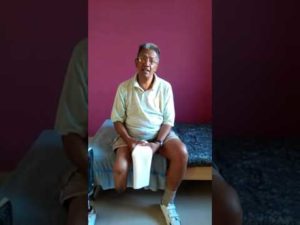
The first beneficiary of #OperationRehab, 55-year-old Sharad Narsai of Lenasia, returned to South Africa just before Christmas with the ultimate Christmas gift: a new, life-changing prosthetic leg. Speaking of his experience, Narsai said “I had never before experienced care on the level received at the Disable Welfare Trust centre.”

“It is mind-blowing and completely exceeded my expectations,” he added. “I have never been treated with such care and respect at a healthcare facility. And it is truly heart-warming to see how well the centre cares for the disabled children who are resident there. Many of them were abandoned by their parents because of their disabilities, but at the Disable Welfare Trust they are happy, loved and well-educated. The full-time art teacher at the centre’s school has no arms so he paints using his mouth. One young woman who spent her entire childhood there is now a qualified doctor and still goes back to work with the children. These success stories would not have been possible without the Disable Welfare Trust’s good work. South Africa desperately needs a facility like this,” declared Narsai.

The #OperationRehab initiative calls all like-minded organisations, companies and individuals to join forces and advance the goal of creating a highly efficient treatment, rehabilitation and vocational centre for disabled people in Africa.

All new partners and sponsors will benefit from the expertise of South African marketing and advertising agency Media Revolution to publicise and promote their role in restoring livelihoods and improving the lives of disabled people in Africa.


Dipo Olowookere is a journalist based in Nigeria that has passion for reporting business news stories. At his leisure time, he watches football and supports 3SC of Ibadan. Mr Olowookere can be reached via [email protected]

Click to comment

Leave a Reply

Your email address will not be published. Required fields are marked *

Health

NAFDAC Announces Recall of WAP Sensual Enhancement Capsules

Published

on

WAP Sensual Enhancement Capsules

By Aduragbemi Omiyale

The National Agency for Food and Drug Administration and Control (NAFDAC) has announced the recall of a sexual enhancement product known as WAP Sensual Enhancement Capsules.

In a statement on Monday, the Nigerian agency disclosed that the recall is due to “undeclared pharmaceutical ingredients” in the product, whose country of origin is unknown, but is marketed and distributed online in the US through eBay.

It was emphasised that the recall is being “voluntarily” made by the manufacturer, Best Supplements Best Prices Company.

The detection of the undeclared pharmaceutical ingredients was made by the US Food and Drug Administration (FDA).

Laboratory analysis by the US FDA revealed that the product contained undeclared sildenafil, tadalafil, and flibanserin, which were not mentioned on the product label. Such substances may include phosphodiesterase type-5 (PDE-5) inhibitors or related compounds commonly used for the treatment of erectile dysfunction, the statement by NAFDAC stated.

Sildenafil and tadalafil are ingredients in FDA-approved prescription drugs used to treat erectile dysfunction.

It was noted that these undeclared ingredients may interact with nitrates found in some prescription drugs, such as nitroglycerin, and may lower blood pressure to dangerous levels. Consumers with diabetes, high blood pressure, high cholesterol, or heart disease often take nitrates.

Flibanserin is the active ingredient in an FDA-approved prescription drug used to treat low sexual desire in women. Flibanserin can cause drowsiness, sedation, dangerously low blood pressure, and fainting, especially when combined with alcohol.

Consumers have been encouraged to report compromised products (medicines or medical devices) to the nearest NAFDAC office, call 0800-162-3322, or send an email to sf******@********ov.ng.

Continue Reading

Health

Tinubu Chooses Obi Adigwe Coordinator of Health Tech Data Analytics Office

Published

on

obi adigwe

By Modupe Gbadeyanka

Dr Obi Adigwe has been appointed as the pioneer National Coordinator of the National Health Technology and Data Analytics Office (NHTDAO).

The body was created by the Ministry of Health under the approval of President Bola Tinubu.

NHTDAO will be domiciled in the Office of the Coordinating Minister of Health and Social Welfare, a statement on Friday by the Special Adviser to the President on Information and Strategy, Mr Bayo Onanuga, stated.

The agency will serve as a meta-level national platform for coordinating the country’s digital-health agenda. It will reinforce, not replace, the existing statutory functions of relevant departments and agencies, it was emphasised.

The organisation will also harmonise and empower the public and private institutions across the health system, set the standards that connect them, and operationalise the National Digital Health Architecture, approved by the National Council on Health in November 2025.

It was stated that President Tinubu expects NHTDAO to accelerate Nigeria’s transition to a secure, interoperable and data-driven health system that improves outcomes for all citizens.

Mr Adigwe, as Director General of the National Institute for Pharmaceutical Research and Development, has leveraged science to catalyse interventions in artificial intelligence, translational research, and technology transfer.

He coordinated major projects, including the ¥300m Nanotechnology grant and the AFREXIMBank grant for Africa’s first API Training Facility. He led the roadmap development that underpinned an €18 million EU grant, the largest in Africa for the thematic area. During the last pandemic, Adigwe globally showcased African science by undertaking the world’s first analysis to debunk claims about the Covid Organics preparation.

The Office’s Steering Committee, which provides strategic direction and oversight, comprises:

  • Professor Muhammad Ali Pate, Coordinating Minister of Health and Social Welfare (Co-chair)
  • Mr Olaniyi Yusuf, Chairman of the Nigerian Economic Summit Group (Co-chair)
  • Dr Iziaq Adekunle Salako, Minister of State for Health and Social Welfare (Alternate Co-chair)
  • Ms Kachollom Daju, Permanent Secretary, Federal Ministry of Health and Social Welfare
  • Mr Idris Alubankudi Saliu, Special Adviser to the President on Technology and Digital Economy
  • Dr Muntaqa Umar-Sadiq, National Coordinator, SWAp Coordination Office
  • Dr Abdu Mukhtar, National Coordinator, Presidential Initiative to Unlock Healthcare Value Chain
  • Dr Muyi Aina, Executive Director, National Primary Health Care Development Agency
  • Dr Kelechi Ohiri, Director General, National Health Insurance Authority
  • Director, Health Planning, Research and Statistics, Ministry of Health and Social Welfare
  • National Information Technology Development Agency Representative
  • Six representatives of the State Commissioners of Health, one from each of the six geopolitical zones
  • Pharm Hamza Buhari, Stakeholder representing Industry and Community.
Continue Reading

Health

Lagos Commences Screening of Newborns for Sickle Cell Disease

Published

on

sickle cell disease screening Lagos

By Modupe Gbadeyanka

The Lagos State government has kicked off an initiative to ensure that every newborn is screened for Sickle Cell Disease within 48 to 72 hours after birth using a simple heel-prick test.

It was gathered that babies identified as being at risk will immediately be placed on preventive care while awaiting confirmatory testing.

The Head of the Haematology Department at the Alimosho General Hospital, Dr Olubukola Orolu, revealed that an estimated 150,000 babies are born annually with Sickle Cell Disease in Nigeria, giving the country one of the highest SCD burdens globally.

She, however, applauded the Lagos State Government and the Clinton Health Access Initiative (CHAI) for introducing the state-wide newborn screening programme, describing it as a major step towards reducing childhood deaths associated with the disease.

The commencement of this scheme coincides with the 2026 World Sickle Cell Day, themed Young Voices Rising for Sickle Cell Disease – Closing the Survival Gap: Equity in Sickle Cell Disease.

It highlights the importance of listening to the experiences and aspirations of young people living with Sickle Cell Disease.

Mrs Orolu noted that SCD warriors are increasingly breaking barriers as advocates, leaders, students and change-makers, adding that their voices have continued to reshape the narrative through advocacy for equitable, patient-centred healthcare, self-care and experience sharing.

She, therefore, called for equal access to quality healthcare, survival opportunities and dignity for everyone living with Sickle Cell Disease.

Also commenting, the chief executive of Alimosho General Hospital, Dr Akinyele Akinlade, described Sickle Cell Disease as an inherited blood disorder that is not contagious, noting that individuals living with the condition are more susceptible to infections.

He advised SCD warriors to stay well hydrated, avoid stress, and protect themselves from extreme cold or heat, as these are common triggers of sickle cell crises, adding that these preventive measures can significantly reduce the frequency and severity of crises.

One of the participants, Ms Borokini Zainab, an SCD warrior and student nurse, expressed appreciation to the organisers for the enlightenment programme.

Sharing her personal journey, she spoke about the challenges of balancing recurrent pain crises with her academic pursuits and personal life. Despite moments of frustration, she encouraged fellow warriors not to lose hope.

“Don’t let sickle cell put you down. Be encouraged from within. Don’t let your dreams be shattered because of this,” she said, adding that her personal experience with Sickle Cell Disease inspired her to pursue a career in nursing so she could support others living with the condition.

Continue Reading

Trending