Economy
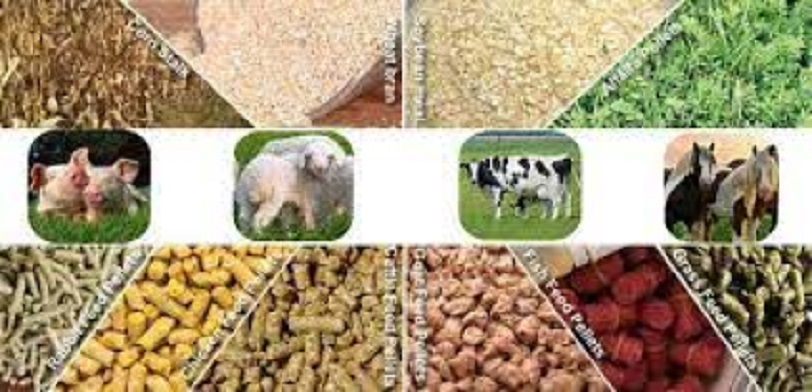
FG Maps Ways to Cut Production Cost, Volatile Prices of Animal Feeds
By Adedapo Adesanya
The Nigerian government, alongside its development partners, have proffered a roadmap to reduce the cost of production and the effects of incessant price volatility in the animal feed industry.
This was a core message delivered by the Minister of Agriculture and Rural Development, Mr Mohammad Mahmood Abubakar, at the 2nd National Animal Feed Summit held in Abuja recently.
He said that the summit, with the theme Harnessing Alternative Feed Resources for Sustainable Animal Feed Supply, aligned with the aspirations and agenda of the federal government to improve the animal feed policy, feed value chain, feed quality control and safety, and national strategic feed reserve, amongst others.
Mr Abubakar pointed out that “the role of animal feed in Nigeria’s agriculture sector was critical as it would provide essential nutrients and support for livestock and production”.
He noted that the animal feed market was characterized by a mix of small and large scale, traditional and modern methods coupled with challenges such as lack of access to credit and markets, low investment in research and development amongst others.
Speaking further, the Minister stated that to meet the increasing demand for animal feed in Nigeria, there was a need for innovation and technology to develop sustainable and efficient production methods which would support small-scale and rural communities.
He, therefore, charged stakeholders to deliberate on a single platform, and strategies and come up with a robust implementable national animal feed policy.
On his part, the Permanent Secretary in the Federal Ministry of Agriculture and Rural Development, Mr Ernest Umakhihe, represented by the Director of Fisheries and Aquaculture, Mr Imeh Umoh, revealed that the animal feed industry in Nigeria was far from meeting national sufficiency in production.
He said the reason was that Nigeria was known to produce an average of 5.5 million tonnes per annum comprising 85 per cent poultry feeds and has the potential to grow not less than 50 million metric tonnes per annum if the commercial ruminant and swine feeding sub-sectors were harnessed.
He stressed that the feed sector had the potential to engage over 20 million Nigerians, as the industry was yet to reach 25 per cent of its market size.
Mr Umakhihe noted that, Nigeria’s animal feed sector remained underdeveloped due to the high cost of ingredients and other production factors, which resulted in market dislocation and hampered access to products, thereby barring an average farmer out of supply net, noting that these challenges have necessitated the need for the National Animal Feed Summit.
Economy
Tinubu Seeks World Bank Support to Boost Agriculture, Economic Reforms
By Adedapo Adesanya
President Bola Tinubu has called on the World Bank to support Nigeria’s ongoing economic reforms, with a focus on agriculture, youth employment, and private sector growth.
The president sought this assistance when he received a delegation from the World Bank led by Anna Bjerde, Managing Director of Operations, at the State House, Abuja on Tuesday, noting that the bank’s support will boost his administration’s strategy to strengthen the economy and expand opportunities for Nigerians.
“Since we went into this tunnel of reform, we have our hands on the power and we’re never going to look back. Initially, it was painful and difficult, but those who win are not the ones who give up in difficult times,” Mr Tinubu said.
The president highlighted the importance of mechanization and modernization of agriculture to increase productivity and create opportunities for Nigeria’s large young population.
“We have mechanization centers to help farmers with improved seedings and fertilizers to enhance their programs. The goal is to move farmers from small-scale holders to large cooperatives that can create opportunities for Nigerians,” he explained.
Mr Tinubu also pointed to the petrochemical sector and other domestic industries as areas where the government is working to improve outputs and strengthen local markets. He stressed that reforms are continuous and must be grounded in transparency, accountability, and stability.
“The first reaction to reforms was high inflation, but it has come down dramatically, and the Naira is now stable. We want to help investors operate with ease, reduce bureaucracy, and develop the skills of our people,” he said.
On her part, Ms Anna Bjerde commended the administration for its consistent and steady approach to reforms over the past two years. She highlighted that Nigeria has become a global example of reform implementation, giving confidence to investors and policymakers worldwide.
“The results achieved in the last two years are commendable. Your steady communication of the importance of reforms has given confidence and clarity, and there is no turning back,” Ms Bjerde said.
She emphasized the importance of job creation, particularly for Nigeria’s youth, noting that Africa’s young population is growing rapidly and that SMEs are central to employment generation.
“Agriculture is a huge part of the economy and a major employer. Innovations in mechanization, cooperatives, value-chain development, and infrastructure can be scaled to create more opportunities,” Ms Bjerde said.
She also highlighted the World Bank’s financial support for Nigeria, including public sector financing of $17 billion, private sector support of $5 billion through the International Finance Corporation (IFC), and investment guarantees exceeding $500 million. These instruments are aligned with Nigeria’s reforms, including trade, digital initiatives, and inflation management, to stimulate private sector growth and human development.
“We want to work with Nigeria to accelerate growth, improve access to finance for SMEs, and support early childhood development as part of a comprehensive human development strategy,” she added.
Economy
OTC Securities Exchange Rises 0.96% to 3,641.30 Points
By Adedapo Adesanya
The NASD Over-the-Counter (OTC) Securities Exchange appreciated by 0.96 per cent on Tuesday, February 3, boosting the Unlisted Security Index (NSI) by 34.54 points to 3,641.30 points from the 3,606.76 points it ended a day earlier.
Equally, the market capitalisation of the trading platform was up during the session by N20.67 billion to end N2.178 trillion from the N2.158 trillion it ended on Monday.
The expansion witnessed by the OTC securities exchange yesterday was buoyed by the gains printed by four stocks on the bourse, with Central Securities Clearing System (CSCS) Plc up by N4.00 to sell at N44.00 per unit versus the previous day’s N40.00 per unit.
Further, Air Liquide Plc increased by N1.86 to end at N20.49 per share compared with Monday’s closing price of N18.63 per share, Afriland Properties Plc appreciated by 35 Kobo to N14.00 per unit from N3.65 per unit, and UBN Property Plc added 1 Kobo to settle at N2.20 per share, in contrast to the preceding day’s N2.21 per share.
On the flip side, there were two price losers led by FrieslandCampinaWamco Nigeria Plc, which shed 4 Kobo to close at N63.50 per unit compared with the previous day’s N63.54 per unit, and Geo-Fluids Plc lost 3 Kobo to finish at N6.81 per share compared with the N6.84 per share it traded in the preceding session.
Data showed that the volume of securities bought and sold by investors grew by 82.5 per cent to 7.0 million units from 3.9 million units, and the value of securities jumped by 5.2 per cent to N37.9 million from N36.0 million, while the number of deals decreased by 15 per cent to 34 deals from 40 deals.
CSCS Plc remained the most active stock by value (year-to-date) with 15.9 million units sold for N649.0 million, the second spot was taken by FrieslandCampina Wamco Nigeria Plc with 1.7 million units worth N110.9 million, while the third position was occupied by Geo-Fluids Plc with the sale of 11.1 million units for N73.1 million.
The most traded stock by volume (year-to-date) was still CSCS Plc with 15.9 million units exchanged for N649.0 million, followed by Mass Telecom Innovation Plc with 12.7 million units sold for N5.1 million, and Geo-Fluids Plc with 11.1 million units traded for N73.1 million.
Economy
Naira Firms to N1,372/$1 at Official Market, N1,455/$1 at Black Market
By Adedapo Adesanya
The Naira firmed up against the US Dollar in the various segments of the foreign exchange (FX) market on Tuesday, February 3, 2026, on the back of improved forex liquidity.
In the black market window, the local currency improved its value against the Dollar during the session by N10 to sell for N1,455/$1 compared with the previous day’s rate of N1,465/$1, and at the GTBank FX counter, it gained N33 gain to close at N1,386/$1 versus Monday’s closing value of N1,419/$1.
In the Nigerian Autonomous Foreign Exchange Market (NAFEM), the domestic currency appreciated against the greenback by N17.45 to trade at N1,372.91/$1, in contrast to the preceding session’s N1,390.36/$1.
In the same vein, the Nigerian currency chalked up N21.92 against the Pound Sterling yesterday in the official market to quote at N1,877.59/£1 compared with the N1,899.51/£1 it was exchanged a day earlier, and gained N24.76 against the Euro to settle at N1,619.76/€1 versus N1,644.52/€1.
The appreciation seen indicates that available supply is mopping up demand even without any intervention from the Central Bank of Nigeria (CBN) in recent weeks, showing that market-driven currency framework is driving a stronger Naira.
Enhanced price discovery following plans by the apex bank to undertake a comprehensive revamp of the FX manual is acting as a pillar of support.
At a recent forum, the Deputy Governor, Economic Policy, CBN, Mr Muhammad Sani Abdullahi, disclosed that the bank was revamping the manual, a key regulatory document used by banks for export proceeds and other foreign trade-related transactions.
According to him, the document was already undergoing significant reforms aimed at aligning market operations with current economic realities.
Mr Abdullahi explained that the revised manual would introduce clearer rules, stronger oversight and improved processes to support transparency and efficiency in the FX market.
He said the reforms are expected to close loopholes, reduce uncertainty for market participants, and support a more orderly functioning of the foreign exchange system.
Also, Nigeria’s external reserves, which provide the CBN with the capacity to support the Naira, have continued to rise, reaching $46.59 billion as of 2 February 2026, according to CBN data.
In the cryptocurrency market, most prices still remained down as sentiment among short-term traders remaining cautious after thin liquidity and heavy liquidations pushed prices sharply lower.
Global crypto investment products saw $1.7 billion in outflows last week, marking the second consecutive week of heavy redemptions, with Solana (SOL) down by 5.2 per cent to $98.41.
Further, Bitcoin (BTC) depreciated by 2.4 per cent to $76,638.44, Binance Coin (BNB) slumped by 2.0 per cent to $761.78, Ethereum (ETH) dropped by 1.9 per cent to $2,277.16, Ripple (XRP) declined by 0.6 per cent to $1.60, and the US Dollar Tether (USDT) lost 0.1 per cent to sell at $0.9985.
However, Dogecoin (DOGE) improved by 1.7 per cent to $0.1084, Cardano (ADA) expanded by 1.2 per cent to $0.2868, and Litecoin (LTC) increased by 0.9 per cent to $60.63, while the US Dollar Coin (USDC) remained unchanged at $1.00 apiece.
-
Feature/OPED6 years agoDavos was Different this year
-
Travel/Tourism9 years ago
Lagos Seals Western Lodge Hotel In Ikorodu
-
Showbiz3 years agoEstranged Lover Releases Videos of Empress Njamah Bathing
-
Banking8 years agoSort Codes of GTBank Branches in Nigeria
-
Economy3 years agoSubsidy Removal: CNG at N130 Per Litre Cheaper Than Petrol—IPMAN
-
Banking3 years agoSort Codes of UBA Branches in Nigeria
-
Banking3 years agoFirst Bank Announces Planned Downtime
-
Sports3 years agoHighest Paid Nigerian Footballer – How Much Do Nigerian Footballers Earn