General
Cape Verde to Make Right-to-Food Constitutional

By Dipo Olowookere
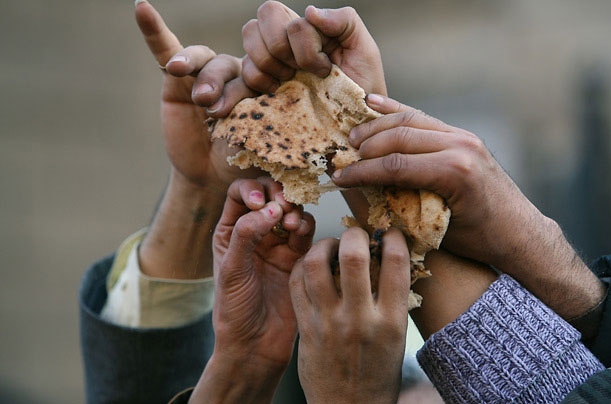
Cape Verde is advancing in the process of national ownership of the Right to Food with the support of FAO.
During the Ordinary Meeting of the National Council of Food Security and Nutrition, nearly 40 stakeholders discussed on the current status of the Right to Adequate Food in the country in order to advise the government on the policies that need to be implemented to guarantee this right.
The meeting, the first of the IX Legislative Term, was chaired by the Minister of Agriculture and Environment, Gilberto Silva, and included FAO presentations on a Diagnosis of the food rights and laws in the country.
Cape Verde has ratified most of the international conventions and legal instruments related to the Right-to-Food which, yet, is implicitly recognized in several articles of its constitution.
In addition, in the current legal system, several decrees-law have been passed that protect the access to food in the country, in all dimensions of food security: availability, access, utilization and stability.
The government has enabled the environment for the Right to Adequate Food, including it as a priority in the political programme of the current Legislative Term and adopting several national policies, including the National Strategy for Food Security and Nutrition (ENSAN 2020).
It is also aligned with the Strategy of the Portuguese Speaking Countries Community (CPLP), the National Action Plan for Food Security and Nutrition (PANSAN 2014-16), National Plan on Food and Nutrition (PNAN 2015-20) and the National Program of Schools Meals (PNAE 2012-20).
Cape Verde has not experienced severe famine since the 1950s and the economy has grown progressively until it graduated as Least Developed Countries (LDC) in 2008 and accessed the World Trade Organization. Nevertheless, food insecurity remains as a national issue affecting over 20% of the population and there are serious nutrition problems, particularly affecting children such as a high rate of iron deficiency anaemia.
The Diagnosis presentation highlighted the importance of strengthening the current legal instruments to protect the Right to Adequate Food and the effective operationalization, monitor and evaluation of the current policies to tackle food insecurity in the country. Likewise, it recommended to reinforce the information and education campaigns to make the population more aware of the right to food, as well as the engagement of Civil Society Organizations and Non-State Actors, enabling the conditions for their participation in regular consultations with the government specialized agencies.
A law proposal, elaborated with FAO support, will be presented at the next meeting of the National Council of Food Security and Nutrition scheduled during the second quarter of 2017.
Minister Gilberto Silva explained some of the key challenges of the sector, including the access to credit, informal structure of the agricultural production and need to register and certify the sector, water scarcity, land tenure, post-harvest treatment, sustainability of marine resources and others. The Minster also explained current initiatives that the Government is taking to overpass them, such as the densification of the food security networks in the country and the involvement of the local structures led by the Municipal Governments in these networks. The reinforcement of the national statistics system is another priority of the government in order to have accurate data for elaborating effective evidence-based policies.
Post-COP22 actions
The Government also organized a public conference on the theme “The challenges for the implementation of a public agenda for Food Security and Nutrition”, with the participation of the Prime Minister of Cabo Verde and the FAO Representative.
The Conference brought together nearly hundred stakeholders from the main public institutions working on Food Security, majors from several islands, and representatives from the International Organizations, Diplomatic Missions, Academia and Civil Society.
Prime Minister Ulisses Correia e Silva assured that Food Security is a national priority at highest level and recognized FAO’s role in enhancing Food Security and Nutrition in the country. “We are determined to end food insecurity in Cabo Verde; our policies have a special focus on increasing productivity in agriculture and fisheries, as well as the income generated bythese activities ”, said the Prime Minster.
FAO Representative in Cabo Verde, Rémi Nono Womdim, highlighted the political will of the country to tackle food insecurity and the need to increment the investments to reinforce the environmental and economic resilience of the small farmers and fishermen. “We are committed to continue supporting the country, providing technical assistance in the formulation of policies, strategies and projects for development in areas such as nutrition, agriculture, fisheries, forestry and land and natural resources management”, he underlined.
Some of the recommendations emphasized the need to articulate Food Security and Nutrition objectives with socioeconomic development, the national definition of Food Sovereignty and Right to Adequate Food, the implementation of a systemic Food Security policy, and the establishment of governing mechanisms of the Food Security and Nutrition.
General
Deep Blue Project: Mobereola Seeks Air Force Support
By Adedapo Adesanya
The Director General of the Nigerian Maritime Administration and Safety Agency (NIMASA), Mr Dayo Mobereola, is seeking enhanced cooperation between the agency and the Nigerian Air Force (NAF) with the aim of strengthening tactical air support within the Deep Blue project.
During a courtesy visit last week, Mr Mobereola told the Chief of Air Staff, Air Marshall S. K. Aneke at the NAF Headquarters in Abuja, that the Air Force was a strategic partner in enhancing maritime security in Nigeria and sustaining the momentum of the Deep Blue Project’s success.
According to the DG, “We are here to seek the Air Force’s support, given the importance of tactical air surveillance to the Deep Blue Project. Nigeria is the only African country with a record of zero piracy within the last 4 years. The Deep Blue Project platforms have been used to achieve zero piracy and sea robberies in the Gulf of Guinea, and we need your collaboration to sustain this momentum”.
He further emphasised that international trade depends on security, which is why vessels prefer to go to or transit through countries where they are secured. “With the traffic we have now, we need to show more security might through collaboration to strengthen our trade viability because of the risks attached to our route. We need these collaborations to sustain what we have achieved so far with the Deep Blue Project”.
The NIMASA DG expressed hope that the collaboration with the Nigeria Air Force will reduce response time.
On his part, the Chief of Air Staff, Air Marshall S.K. Aneke, noted that the Air Force desires to be “a very supportive and collaborative partner with NIMASA and is ready to match the Agency step by step and side by side to achieve the desired results.”
He noted that “collaboration between NIMASA and the Nigerian Air Force under the Deep Blue Project can be strengthened through a joint strategic framework, integrated command structures, and a standing steering committee to ensure shared objectives and accountability.
“Establishing a joint maritime domain awareness fusion cell will enable real-time intelligence sharing, synchronised surveillance, and faster response to maritime threats and ensure sustained operational effectiveness across Nigeria’s territorial waters and exclusive economic zone,” he said, according to a statement.
The Air Force Chief added that the Air Force can also support NIMASA outside the Deep Blue Project operations by providing its own ISR platforms, tactical air support, and rapid airborne deployment for interdictions and search and rescue missions.
While thanking the NIMASA DG for the basic trainings the Agency has provided the aircraft pilots under the Deep Blue Project, Air Marshall Aneke also highlighted areas of operational challenges needing NIMASA’s attention to include bridging the communication gap between NAF operators and NIMASA, higher level and in-depth maintenance trainings, readily available fueling of aircrafts to avoid delays on missions, and provision of flying kits among others.
He therefore pledged the Air Force’s collaboration and assured that the request by NIMASA has been noted and that things will begin to move at thrice its speed going forward.
General
Nigeria’s Democracy Suffocating Under Tinubu—Atiku
By Modupe Gbadeyanka
Former Vice President, Mr Atiku Abubakar, has lambasted the administration of President Bola Tinubu for the turnout at the FCT Area Council elections held last Saturday.
In a statement signed by his Media Office, the Adamawa-born politician claimed that the health of Nigeria’s democracy under the current administration was under threat.
According to him, “When citizens lose faith that their votes matter, democracy begins to die. What we are witnessing is not mere voter apathy. It is a direct consequence of an administration that governs with a chokehold on pluralism. Democracy in Nigeria is being suffocated slowly, steadily, and dangerously.”
He warned that the steady erosion of participatory governance, if left unchecked, could inflict irreversible damage on the democratic fabric painstakingly built over decades.
“A democracy without vibrant opposition, without free political competition, and without public confidence is democracy in name only. If this chokehold is not released, history will record this era as the period when our hard-won freedoms were traded for fear and conformity,” he stressed.
Mr Atiku said the turnout for the poll was below 20 per cent, with the Abuja Municipal Area Council (AMAC) recording 7.8 per cent.
He noted that such civic participation in the nation’s capital, the symbolic heartbeat of the federation, is not accidental, as it is the predictable outcome of a political environment poisoned by intolerance, intimidation, and the systematic weakening of opposition voices.
The presidential candidate of the People’s Democratic Party (PDP) in the 2023 general elections stated that the ruling All Progressives Congress (APC) under Mr Tinubu has pursued a deliberate policy of shrinking democratic space, harassing dissenters, coercing defectors, and fostering a climate where alternative political viewpoints are treated as threats rather than contributions to national development.
He called on opposition parties and democratic forces across the country to urgently close ranks and forge a united front, declaring, “This is no longer about party lines; it is about preserving the Republic. The time to stand together to rescue and rebuild Nigeria is now.”
General
Nigeria Eyes Full Entry into Council of Palm Oil Producing Countries
By Adedapo Adesanya
Nigeria is set to validate a technical committee report geared towards transitioning the country from observer status to full membership of the Council of Palm Oil Producing Countries (CPOPC) in April.
Mr Abubakar Kyari, Minister of Agriculture and Food Security, said this when the council’s mission visited him over the weekend in Abuja, noting that the ministry had constituted a technical committee to consider how the country would seamlessly transit from observer country to membership in CPOPC based on its strategic importance in palm oil production.
“We are conscious of the fact that the palm oil value chain is very strategic for us and identified it as an export crop that can drive foreign exchange for the country and ensure good health in terms of consumption.
“We are conscious of the fact that we need the support of CPOPC countries to provide the country with a new variety of seeds that are climate-smart and resistant so that they can be produced by farmers in the country,” he said.
Mr Alphonsus Inyang, President, National Palm Produce Association of Nigeria (NPPAN), said being a member of CPOPC Nigeria would target over 10 million tonnes of oil palm between 2026 and 2050.
“We are also targeting 2.5 million hectares from among Nigeria households who are out to produce one hectare each, geared towards a N20 trillion annual economy within this period from among Nigeria households.
“We are working side by side with the big players who will be developing plantations,” he said.
The Secretary-General of CPOPC, Ms Izzana Salleh, said the council’s mission to Nigeria was to see how the country could transit from observer status to full membership, among others
She said that the status of the country as an observer nation since 2024 would expire by November.
Ms Salleh assured the country of the council’s readiness to support its vision to strengthen domestic production, enhance food security and build a competitive and sustainable palm oil supply chain.
The official emphasised that being a member of the council would strategically position Nigeria for a greater future regarding oil palm production.
According to her, the visit is to strengthen the council’s engagement with Nigeria, including potential membership in CPOPC.
She said: “The council’s mission to Nigeria aims to advance both Nigeria’s national ambitions and Africa’s collective voice in global agricultural discussions.
“CPOPC was established to promote cooperation among producing nations, empower smallholders, advance sustainability, and ensure fair, science-based global dialogue on vegetable oils.
She emphasised that being a member of the council would strategically position the country for greater future prospects regarding oil palm production and the value chain, as well as export.
“We are ready to support Nigeria’s vision to strengthen domestic production, enhance food security, and build a competitive and sustainable palm oil supply chain,” she said.
-
Feature/OPED6 years agoDavos was Different this year
-
Travel/Tourism10 years ago
Lagos Seals Western Lodge Hotel In Ikorodu
-
Showbiz3 years agoEstranged Lover Releases Videos of Empress Njamah Bathing
-
Banking8 years agoSort Codes of GTBank Branches in Nigeria
-
Economy3 years agoSubsidy Removal: CNG at N130 Per Litre Cheaper Than Petrol—IPMAN
-
Banking3 years agoSort Codes of UBA Branches in Nigeria
-
Banking3 years agoFirst Bank Announces Planned Downtime
-
Sports3 years agoHighest Paid Nigerian Footballer – How Much Do Nigerian Footballers Earn