Connect with us

General

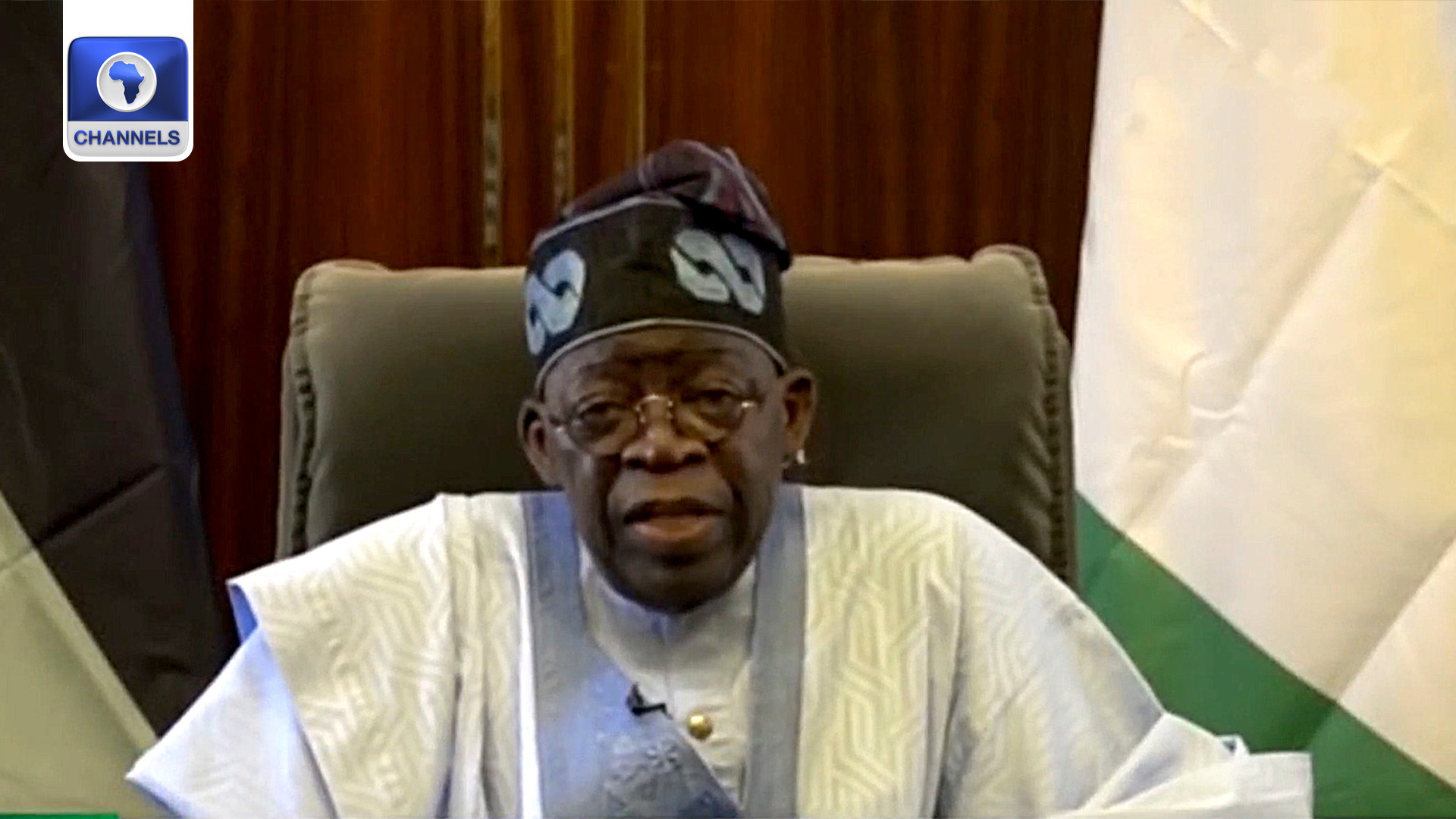
Full Text of President Tinubu’s Address to Nigerians on Current Economic Challenges

Published

on

president tinubu broadcast

After Darkness Comes the Glorious Dawn

My fellow citizens,

I want to talk to you about our economy. It is important that you understand the reasons for the policy measures I have taken to combat the serious economic challenges this nation has long faced.

  1. I am not going to talk in difficult terms by dwelling on economic jargon and concepts. I will speak in plain, clear language so that you know where I stand. More importantly, so that you see and hopefully will share my vision regarding the journey to a better, more productive economy for our beloved country.
  2. For several years, I have consistently maintained the position that the fuel subsidy had to go. This once beneficial measure had outlived its usefulness. The subsidy cost us trillions of Naira yearly. Such a vast sum of money would have been better spent on public transportation, healthcare, schools, housing and even national security. Instead, it was being funnelled into the deep pockets and lavish bank accounts of a select group of individuals.
  3. This group had amassed so much wealth and power that they became a serious threat to the fairness of our economy and the integrity of our democratic governance. To be blunt, Nigeria could never become the society it was intended to be as long as such small, powerful yet unelected groups hold enormous influence over our political economy and the institutions that govern it.
  4. The whims of the few should never hold dominant sway over the hopes and aspirations of the many. If we are to be a democracy, the people and not the power of money must be sovereign.
  5. The preceding administration saw this looming danger as well. Indeed, it made no provision in the 2023 Appropriations for subsidy after June this year. Removal of this once helpful device that had transformed into a millstone around the country’s neck had become inevitable.
  6. Also, the multiple exchange rate system that had been established became nothing but a highway of currency speculation. It diverted money that should have been used to create jobs, build factories and businesses for millions of people. Our national wealth was doled on favourable terms to a handful of people who have been made filthy rich simply by moving money from one hand to another. This too was extremely unfair.
  7. It also compounded the threat that the illicit and mass accumulation of money posed to the future of our democratic system and its economy.
  8. I had promised to reform the economy for the long-term good by fighting the major imbalances that had plagued our economy. Ending the subsidy and the preferential exchange rate system were key to this fight. This fight is to define the fate and future of our nation. Much is in the balance.
  9. Thus, the defects in our economy immensely profited a tiny elite, the elite of the elite you might call them. As we moved to fight the flaws in the economy, the people who grow rich from them, predictably, will fight back through every means necessary.
  10. Our economy is going through a tough patch and you are being hurt by it. The cost of fuel has gone up. Food and other prices have followed it. Households and businesses struggle. Things seem anxious and uncertain. I understand the hardship you face. I wish there were other ways. But there is not. If there were, I would have taken that route as I came here to help not hurt the people and nation that I love.
  11. What I can offer in the immediate is to reduce the burden our current economic situation has imposed on all of us, most especially on businesses, the working class and the most vulnerable among us.
  12. Already, the Federal Government is working closely with states and local governments to implement interventions that will cushion the pains of our people across socio-economic brackets.
  13. Earlier this month, I signed four (4) Executive Orders in keeping with my electoral promise to address unfriendly fiscal policies and multiple taxes that are stifling the business environment. These Executive Orders on suspension and deferred commencement of some taxes will provide the necessary buffers and headroom to businesses in the manufacturing sector to continue to thrive and expand.
  14. To strengthen the manufacturing sector, increase its capacity to expand and create good paying jobs, we are going to spend N75 billion between July 2023 and March 2024. Our objective is to fund 75 enterprises with great potential to kick-start a sustainable economic growth, accelerate structural transformation and improve productivity. Each of the 75 manufacturing enterprises will be able to access N1 Billion credit at 9% per annum with maximum of 60 months repayment for long term loans and 12 months for working capital.
  15. Our administration recognises the importance of micro, small and medium-sized enterprises and the informal sector as drivers of growth. We are going to energise this very important sector with N125 billion.
  16. Out of the sum, we will spend N50 billion on Conditional Grant to 1 million nano businesses between now and March 2024. Our target is to give N50,000 each to 1,300 nano business owners in each of the 774 local governments across the country.
  17. Ultimately, this programme will further drive financial inclusion by onboarding beneficiaries into the formal banking system. In like manner, we will fund 100,000 MSMEs and start-ups with N75 billion. Under this scheme, each enterprise promoter will be able to get between N500,000 to N1 million at 9% interest per annum and a repayment period of 36 months.
  18. To further ensure that prices of food items remain affordable, we have had a multi-stakeholder engagement with various farmers’ associations and operators within the agricultural value chain.
  19. In the short and immediate terms, we will ensure staple foods are available and affordable. To this end, I have ordered the release of 200,000 Metric Tonnes of grains from strategic reserves to households across the 36 states and FCT to moderate prices. We are also providing 225,000 metric tonnes of fertilizer, seedlings and other inputs to farmers who are committed to our food security agenda.
  1. Our plan to support cultivation of 500,000 hectares of farmland and all-year-round farming practice remains on course. To be specific, N200 billion out of the N500 billion approved by the National Assembly will be disbursed as follows:

-Our administration will invest N50 billion each to cultivate 150,000 hectares of rice and maize.

-N50 billion each will also be earmarked to cultivate 100,000 hectares of wheat and cassava.

  1. This expansive agricultural programme will be implemented targeting small-holder farmers and leveraging large-scale private sector players in the agric business with strong performance record.
  2. In this regard, the expertise of Development Finance Institutions, commercial banks and microfinance banks will be tapped into to develop a viable and an appropriate transaction structure for all stakeholders.
  3. Fellow Nigerians, I made a solemn pledge to work for you. How to improve your welfare and living condition is of paramount importance to me and it’s the only thing that keeps me up day and night.
  4. It is in the light of this that I approved the Infrastructure Support Fund for the States. This new Infrastructure Fund will enable States to intervene and invest in critical areas and bring relief to many of the pain points as well as revamp our decaying healthcare and educational Infrastructure.
  5. The fund will also bring improvements to rural access roads to ease evacuation of farm produce to markets. With the fund, our states will become more competitive and on a stronger financial footing to deliver economic prosperity to Nigerians.
  6. Part of our programme is to roll out buses across the states and local governments for mass transit at a much more affordable rate. We have made provision to invest N100 billion between now and March 2024 to acquire 3000 units of 20-seater CNG-fuelled buses.
  7. These buses will be shared to major transportation companies in the states, using the intensity of travel per capital. Participating transport companies will be able to access credit under this facility at 9% per annum with 60 months repayment period.
  8. In the same vein, we are also working in collaboration with the Labour unions to introduce a new national minimum wage for workers. I want to tell our workers this: your salary review is coming.
  9. Once we agree on the new minimum wage and general upward review, we will make budget provision for it for immediate implementation.
  10. I want to use this opportunity to salute many private employers in the Organised Private Sector who have already implemented general salary review for employees.
  11. Fellow Nigerians, this period may be hard on us and there is no doubt about it that it is tough on us. But I urge you all to look beyond the present temporary pains and aim at the larger picture. All of our good and helpful plans are in the works. More importantly, I know that they will work.
  12. Sadly, there was an unavoidable lag between subsidy removal and these plans coming fully online. However, we are swiftly closing the time gap. I plead with you to please have faith in our ability to deliver and in our concern for your well-being.
  13. We will get out of this turbulence. And, due to the measures we have taken, Nigeria will be better equipped and able to take advantage of the future that awaits her.
  14. In a little over two months, we have saved over a trillion Naira that would have been squandered on the unproductive fuel subsidy which only benefitted smugglers and fraudsters. That money will now be used more directly and more beneficially for you and your families.
  15. For example, we shall fulfill our promise to make education more affordable to all and provide loans to higher education students who may need them. No Nigerian student will have to abandon his or her education because of lack of money.
  16. Our commitment is to promote the greatest good for the greatest number of our people. On this principle, we shall never falter.
  17. We are also monitoring the effects of the exchange rate and inflation on gasoline prices. If and when necessary, we will intervene.
  18. I assure you my fellow country men and women that we are exiting the darkness to enter a new and glorious dawn.
  19. Now, I must get back to work in order to make this vision come true.
  20. Thank you all for listening and may God bless the Federal Republic of Nigeria.

Dipo Olowookere is a journalist based in Nigeria that has passion for reporting business news stories. At his leisure time, he watches football and supports 3SC of Ibadan. Mr Olowookere can be reached via [email protected]

Advertisement
Click to comment

Leave a Reply

Your email address will not be published. Required fields are marked *

General

Violence Mars APC Ward Congress in Oluyole

Published

on

APC congress

By Modupe Gbadeyanka

The ward congress of the All Progressives Congress (APC) in Oluyole Local Government Area of Oyo State on Saturday left several party members injured after a violence clash erupted.

According to reports, one of the injured persons was Mr Idowu Oyawale, who served as the campaign Director General of a House of Representatives member in the last general elections, Ms Tolulope Akande-Sadipe.

It was disclosed that he sustained severe injuries during the exercise and is currently receiving treatment at an undisclosed hospital.

The ward congress was organised by the ruling party to elect ward executives across the local government’s wards.

However, it was disrupted at Olomi Ward 7 by suspected heavily-armed political thugs allegedly linked to a member of the party.

It was claimed that the thugs invaded the congress venue at Olomi Basic School 1, dispersing party members and officials supervising the exercise, with stones, clubs and other weapons.

Eyewitnesses said tensions escalated unprovoked over delegates’ lists and ward executive positions. The disagreement reportedly degenerated into physical altercations before the violent attacks on some party members.

It was learnt that security operatives led a tactical team to restore order, peace, and disperse the attackers.

Reacting to the incident, some party leaders and elders condemned the violence, describing it as unfortunate and capable of undermining the credibility of the internal democratic process.

The leaders have called on party chieftains and President Bola Tinubu to immediately order an investigation into the violent attacks.

Continue Reading

General

A Call For United African Front on Slavery and Reparations

Published

on

African Front on Slavery and Reparations

By Princess Yanney

One message stood out; one particular briefing gave clarity and hope for better days ahead. Africa will be heard; willingly or unwillingly, and the resolution thereof will no longer be a hope for years to come, but a reality to actualise. At a press conference during the  39th AU Summit  in Addis Ababa, Ghana’s President  John Dramani Mahama urged African leaders to adopt a common continental strategy on the legacy of slavery and racialised chattel enslavement, which he described as “the gravest crime against humanity.”

In this context, one must understand; Reparations matter because colonialism was not simply an episode of foreign rule. It was an economic system. African land was seized, labour was coerced, institutions were reshaped to serve external interests, and entire economies were redesigned around the export of raw materials.

Long before independence, the transatlantic slave trade had already stripped the continent of people, skills and social stability, creating permanent demographic and developmental damage. Colonial rule then consolidated this destruction into a durable global structure of inequality.

President Mahama explained that Ghana’s proposed AU resolution, which received broad support from member states, was carefully drafted with extensive consultations involving the AU Committee of Experts on Reparations, legal experts, academic institutions and diaspora organisations. He said the resolution’s wording was deliberately chosen to reflect historical accuracy, legal credibility, and moral clarity.

“Ghana has undertaken extensive consultations to strengthen the resolution. We’ve engaged with UNESCO, the Global Group of Experts on Reparations, the Pan-African Lawyers Union, academic institutions, the African Union Committee of Experts on Reparations and the African Union Legal Experts Reference Group. We hosted the inaugural joint meeting of the African Union Committee of Experts on Reparations and the African Union Legal Experts Reference Group in Accra earlier this month to further refine the text of the resolution. We also began engagement with the diaspora at the Ghana Diaspora Summit held in December last year.”

Hence, come March 25, the resolution will be presented by one man, who will echo the voice of millions of African people and people of African descent. Because truly, a united Africa demanding reparations is not an Africa asking to be included in an unequal system, but rather, an Africa asserting its right to help redesign it. President Mahama stressed that the initiative goes beyond symbolism, providing a legal and moral foundation for reparatory justice and sustained engagement with the global community. The resolution is designed to facilitate dialogue with the United Nations and international partners while affirming Africa’s demand for recognition and accountability for centuries of exploitation and injustice.

“Informal consultations on the draft text are expected to take place between 23rd February and 12th March 2026. Our objective is simple: to build a broad consensus behind this resolution. The initiative is not directed at any nation; it is directed towards truth, recognition and reconciliation.”

He reiterated. Truth is, a united Africa is a strong global force that cannot be stopped or interrupted. But a divided Africa is an Africa liable to imperialism and Western domination. It is therefore a priority for all African people to join hands and stand together to ensure the aims of these resolutions are achieved.

“We call upon all member states to support and co-sponsor this resolution. The adoption of this resolution will not erase history, but it will acknowledge it. The trafficking in enslaved Africans and racialised chattel enslavement were foundational crimes that have shaped the modern world, and their consequences continue to manifest in structural inequality, racial discrimination and economic disparity.

Recognition is not about division; it is about moral courage. Adoption of the resolution will not be the end. Following the adoption, Ghana will continue engagement with the United Nations Secretary General, the African Union Commission, relevant UN bodies and interested member states,” said John Dramani Mahama as he called for unity.

The importance of today’s reparations consensus lies in its recognition that Africa’s underdevelopment is not an internal failure to be corrected through aid, reforms or external advice. It is the historical and continuing outcome of dispossession. Reparations, therefore, respond to a concrete injury, not an abstract moral wrong. Again, Reparations matter because colonialism was not simply an episode of foreign rule. It was an economic system. African land was seized, labour was coerced, institutions were reshaped to serve external interests, and entire economies were redesigned around the export of raw materials.

Long before independence, the transatlantic slave trade had already stripped the continent of people, skills and social stability, creating permanent demographic and developmental damage. Colonial rule then consolidated this destruction into a durable global structure of inequality. Which is why today’s fight, today’s struggle, is of utmost importance. It is a correction of a historical inhumane error. One that has to be amended and corrected, beginning with recognition.

“This is about a sustained dialogue on reparatory justice and healing. Distinguished ladies and gentlemen, this initiative presents us with a historic opportunity, an opportunity to affirm the truth of our history, an opportunity to recognise the gravest injustice in human history, and an opportunity to lay a stronger foundation for genuine reconciliation and equality. While the past cannot be undone, it can be acknowledged, and acknowledgement is the first step towards justice.” – John Dramani Mahama expressed to the media and all who were gathered to witness the briefing under the theme, “Ancestral Debt, Modern Justice: Africa’s United Case For Reparations”.

Continue Reading

General

APC’s Maikalangu Wins Abuja Municipal Area Council Election

Published

on

Christopher Maikalangu

By Adedapo Adesanya

The Independent National Electoral Commission (INEC) has announced the candidate of the All Progressives Congress (APC), Mr Christopher Maikalangu, as the winner of the Abuja Municipal Area Council (AMAC) election, held on Saturday.

The results for the keenly observed municipal chairmanship poll were announced at the INEC area office in Karu at about 4:30 a.m on Sunday.

The Collation Officer for AMAC, Mr Andrew Abue, said that Mr Maikalangu, who is the incumbent AMAC chairman, was returned elected, having scored the highest number of votes cast, 40,295 out of the total number of valid votes of 62,861 in the election.

“That Maikalangu of the APC, having certified the requirements of the law, is hereby declared the winner and is returned elected,” he declared.

Mr Abue stated that the African Democratic Congress (ADC) came second with 12,109 votes, while the Peoples Democratic Party (PDP) polled 3,398 votes.

According to him, a professor, the rejected votes were 2,336, and the total valid votes were 62,861, while the total votes cast were 65,197.

He added that the number of registered voters in AMAC was 837,338, while the total number of accredited voters was 65,676.

According to him, the scores of the political parties and their candidates that contested the AMAC chairmanship election are:

Agbon Vaniah of the Accord (A) – 403 votes

Nemiebika Tamunomiesam of the Action Alliance (AA) – 108 votes

Paul Ogidi of African Democratic Congress (ADC) – 12,109 votes

Richard Elizabeth of the Action Democratic Party (ADP) – 588 votes

Christopher Maikalangu of the All Progressives Congress (APC) – 40,295 votes

Eze Chukwu of the All Progressives Grand Alliance (APGA) – 1,111 votes

Chukwu Promise of the Allied Peoples Movement (APM) – 122 votes

Ugoh Michael of the Action Peoples Party(APP) – 32 votes

Thomas Happiness of the Boot Party (BP) – 43 votes

Jibrin Alhassan of the New Nigeria Peoples Party (NNPP) – 1,694 votes

Samson Usani of the National Rescue Movement (NRM) – 73 votes

Dantani Zanda of the Peoples Democratic Party (PDP) – 3,398 votes

Iber Shimakaha of the Peoples Redemption Party (PRP) – 90 votes

Simon Obinna of the Social Democratic Party (SDP) – 2,185 votes

Madaki Robert of the Young Progressives Party (YPP) – 421 votes

Swani Buba of the Zenith Labour Party (ZLP) – 189 votes.

Continue Reading

Trending