

Economy
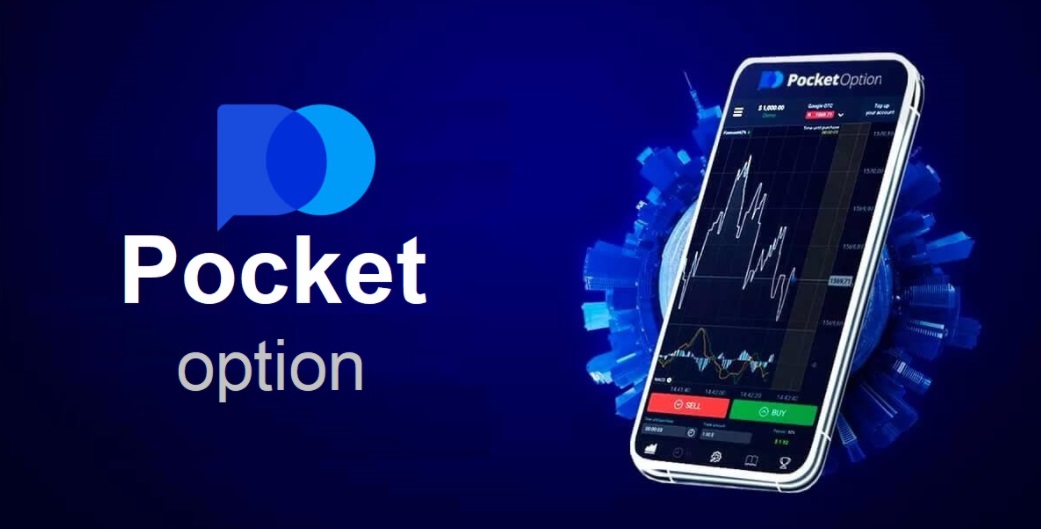
Pocket Option in Nigeria | Assessment By Trading Experts
Traders Union’s team of experts has conducted a comprehensive analysis of Pocket Option to ascertain its regulatory status in Nigeria and assess its suitability as a safe choice for potential clients. The research aimed to determine whether Pocket Option complies with the strict financial regulations of Nigeria and if it holds a valid license from the country’s regulatory authority. In their reviews, TU analysts thoroughly examined the broker’s credentials and legal status to provide accurate and reliable information to traders in Nigeria. By examining the regulatory status, the team aims to help traders make informed decisions when choosing a broker, including Pocket Option in Nigeria, for their trading needs.
A Brief Overview of Pocket Option
Launched in 2017, Pocket Option boasts a team of professional traders, IT, and FinTech experts. The broker offers access to trade various assets, including currency pairs, commodities, stocks, cryptocurrencies, and indices, providing clients access to over 100 global trading options. Operating in more than 95 countries, Pocket Option prioritizes high-quality customer service, continuous improvement of trading technologies, and financial innovations. The broker also offers beneficial bonus programs.
Advantages and Disadvantages of Trading via Pocket Option
Traders Union analysts have identified the main advantages and disadvantages of trading with Pocket Option.
Advantages:
- Low initial deposit starting from $50
- Fast verification process for the Personal Account and phone number
- Educational materials, video guides, and a demo account
- Social trading platform for passive income
- Trading indicators and signals
- Beneficial affiliate program
- Bonus programs
- Author’s Telegram Bot from Pocket Option
- Professional tech support in live chat
Disadvantages:
- Minimum withdrawal starting from $10
- The broker holds a license issued solely by the International Financial Market Relations Regulation Center.
- Live chat support requires a deposit
The Importance of Having a License in Nigeria
A financial license is crucial for any broker as it ensures compliance with financial regulations and laws. Traders should opt for brokers registered in their jurisdiction for several reasons:
- Any claims are filed in the broker’s registered country, making dispute resolution more accessible.
- A license from Nigeria guarantees compliance with local laws and regulations.
- Traders can claim compensation under government deposit guarantee programs in case of financial issues.
Pocket Option Regulation in Nigeria
Pocket Option is not regulated in Nigeria. While the company holds a certificate from the International Financial Market Relations Regulation Center (IFMRRC), it lacks a financial license from Nigeria. The strict regulations in Nigeria make obtaining a license challenging for scammers. It is essential to be aware of the risks involved when working with unregulated brokers.
Brokers Similar to Pocket Option
Aside from Pocket Option, several other brokers in Nigeria hold licenses from the country’s jurisdiction. To make an informed decision, it’s essential to compare Pocket Option with these competitors. TU analysts have prepared a comparison of licensed brokers operating in Nigeria’s market.
- RoboForex: Requires a minimum deposit of $10 with leverage up to 1:2000. Known for reliability, favorable trading conditions, and low spreads and commission fees. Recommended for both beginners and experienced traders.
- Exness: A trusted broker that complies with all payment obligations, ensuring timely payments to clients.
- Tickmill: Suitable for both professional and novice traders, excelling in robotic and short-term trading strategies.
- Vantage Markets: An excellent choice for traders who prefer ECN trading.
- InstaForex: Ideal for traders of all experience levels. Offers technological solutions for accurate analysis and comfortable starting conditions, including low minimum deposits, PAMM accounts, and social trading. Regulated by FSC and CySEC.
Besides the ranking of licensed brokers operating in Nigeria’s market, Traders Union website also features many other rankings such as Best Trading Apps in different countries.
Conclusion
Pocket Option does not possess regulation in Nigeria, but it has established a positive reputation and reliability among traders. While it may lack a Nigerian financial license, many traders in Nigeria still choose to work with the broker due to its attractive conditions. However, caution should be exercised when dealing with unregulated companies.
Economy
BNB Price Reflects Changing Dynamics in the Digital Asset Market
Economy
NASD Unlisted Security Index Crosses 4,000-point Benchmark Again
By Adedapo Adesanya
The NASD Over-the-Counter (OTC) Securities Exchange achieved a milestone on Friday, April 24, 2026, after five securities on the platform helped with a 1.85 per cent growth.
Data showed that the NASD Unlisted Security Index (NSI) again crossed the 4,000-point benchmark yesterday.
The index chalked up 73.64 points during the trading day to close at 4,052.59 points compared with the preceding session’s 3,978.95 points, while the market capitalisation added N5.38 billion to finish at N2.424 trillion versus Thursday’s closing value of N2.380 trillion.
The price gainers were led by Okitipupa Plc, which grew by N25.00 to sell at N305.00 per share compared with the previous price of N280.00 per share. Central Securities Clearing System (CSCS) Plc gained N6.92 to close at N76.26 per unit versus N69.34 per unit, Afriland Properties Plc appreciated by N1.00 to N17.00 per share from N18.00 per share, FrieslandCampina Wamco Nigeria Plc improved by 55 Kobo to N99.55 per unit from N99.00 per unit, and Food Concepts Plc increased by 5 Kobo to N2.70 per share from N2.65 per share.
However, there was a price loser, MRS Oil, which dipped by N21.75 to N195.75 per unit from N217.50 per unit.
During the final session of the week, the value of securities jumped 75.2 per cent to N41.3 million from N23.6 million units, and the number of deals expanded by 62.9 per cent to 44 deals from 27 deals, while the volume of securities declined marginally by 0.9 per cent to 447,403 units from 451,522 units.
At the close of trades, Great Nigeria Insurance (GNI) Plc was the most traded stock by volume (year-to-date) with 3.4 billion units worth N8.4 billion, trailed by Resourcery Plc with 1.1 billion units valued at N415.7 million, and Infrastructure Guarantee Credit Plc with 400 million units traded for N1.2 billion.
GNI was also the most active stock by value (year-to-date) with 3.4 billion units sold for N8.4 billion, followed by CSCS Plc with 59.6 million units transacted for N4.0 billion, and Okitipupa Plc with 27.8 million units exchanged for N1.9 billion.
Economy
Naira Slips to N1,358/$1 as FX Reserves, Policy Uncertainty Concerns
By Adedapo Adesanya
It was not a good day for the Nigerian Naira in the currency market on Friday, April 24, as its value depreciated against the major foreign currencies at the close of transactions.
In the Nigerian Autonomous Foreign Exchange Market (NAFEX), it lost N4.53 or 0.33 per cent against the United States Dollar yesterday to trade at N1,358.44/$1, in contrast to the N1,353.91/$1 it was exchanged on Thursday.
Equally, the domestic currency slipped against the Pound Sterling in the official market during the session by N8.14 to close at N1,834.02/£1, compared with the previous rate of N1,825.88/£1 and dropped N8.01 against the Euro to sell at N1,590.73/€1 versus N1,582.72/€1.
Also, the Naira depreciated against the US Dollar at the GTBank FX desk on Friday by N4 to quote at N1,370/$1 compared with the previous session’s N1,366/$1, and at the parallel market, it depleted by N5 to settle at N1,380/$1 versus the preceding day’s N1,375/$1.
Data published by the Central Bank of Nigeria (CBN) indicated that NFEM interbank turnover surged to N43.562 million across 68 deals, up from N28.117 million the previous day.
Despite the CBN’s reassurance that the recent drop in external reserves is not worrisome, the market remains unsettled by persistent concerns over liquidity constraints, policy transparency, and weakening confidence in Nigeria’s FX market as gross reserves continue to decline to $48.4 billion.
The outlook for the Dollar appears supported by broader macro risks, including elevated oil prices tied to the tanker traffic disruptions in the Strait of Hormuz and a continued US-Iran standoff over ceasefire negotiations.
A look at the digital currency market showed that investors are sitting on the edge as the US Dollar rebounded amid geopolitical and inflation risks despite continued inflows into US spot bitcoin Exchange Traded Funds (ETFs).
Solana (SOL) rose by 1.2 per cent to sell $86.45, Cardano (ADA) appreciated by 1.1 per cent to $0.2517, Dogecoin (DOGE) grew by 0.9 per cent to $0.0989, Ripple (XRP) improved by 0.3 per cent to $1.43, Ethereum (ETH) soared by 0.2 per cent to $2,316.83, and Binance Coin (BNB) chalked up 0.1 per cent to sell for $637.44.
However, TRON (TRX) depreciated by 1.3 per cent to $0.3235, and Bitcoin (BTC) lost 0.2 per cent to close at $77,562.27, while the US Dollar Tether (USDT) and the US Dollar Coin (USDC) closed flat at $1.00 each.
-
Feature/OPED6 years agoDavos was Different this year
-
Travel/Tourism10 years ago
Lagos Seals Western Lodge Hotel In Ikorodu
-
Showbiz3 years agoEstranged Lover Releases Videos of Empress Njamah Bathing
-
Banking8 years agoSort Codes of GTBank Branches in Nigeria
-
Economy3 years agoSubsidy Removal: CNG at N130 Per Litre Cheaper Than Petrol—IPMAN
-
Banking3 years agoSort Codes of UBA Branches in Nigeria
-
Banking3 years agoFirst Bank Announces Planned Downtime
-
Sports3 years agoHighest Paid Nigerian Footballer – How Much Do Nigerian Footballers Earn

Pingback: Pocket Option in Nigeria | Assessment By Trading Experts – African Budget Bureau
Pingback: Pocket Option in Nigeria | Assessment By Trading Experts - eNaira Online News

