Connect with us

Travel/Tourism

Azman Air Closes Shop, Sends Workers on Compulsory Leave

Published

on

AZMAN Air

By Modupe Gbadeyanka

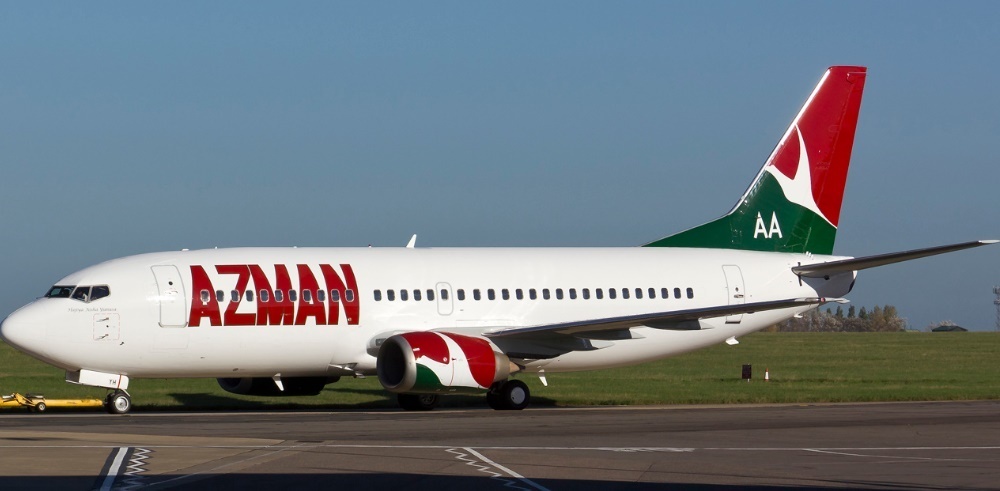
All the employees of Azman Air except for a few senior executives have been sent on compulsory after the management suspended the company’s operations.

The leave is without pay, according to a circular issued to members of staff, signed by the Human Resources Manager, Magaji Mohammed Misau.

According to Leadership Newspaper, the airline operator took this step because its Boeing 737 aircraft taken abroad for C-check maintenance was yet to return.

This has rendered the organisation’s commercial operations useless, especially after the conclusion of the Hajj operations last month.

“As you are aware that our domestic operations have been put on hold for a while due to the conveyance of our Aircraft for C-Checks, and the MROS’ has given a longer time of completion.

“In view of the above, management directed to write and communicate its decision that all staff have been placed on Leave Without Pay with effect from August 1, 2023.

“However, the under-listed staff and all Station Managers have been exempted from the above directive. They are as follows, Engr. Nuraddeen Aliyu; Engr. Zakaria Al-Najjar; Engr. Peter Abraham; Engr. Aliyu Suleiman Gambo; Engr. Thomas Foloronso; Usman Muhammad Sabo; Sabiu Sabo and Magaji Mohammed Misau

“Finally, you should be rest assured that you will be recalled to duty as soon as everything is put in place,” the notice dated August 3, 2023, and titled Placement Of Leave Without Pay, read.

Confirming the development to the newspaper, the spokesman of Azman Air, Mr Nurudeen Aliyu, explained that the aviation firm suspended its domestic operation on April 18, 2023.

“We are out of domestic operation from April 18, 2023. All our Boeing 737 aircraft are in for maintenance, and we have not been able to complete the maintenance.”

“Two of our aircraft are in maintenance, and three are due for C-check and that’s why we suspended our domestic operation. Our aircraft will be back in October.

“The overhead is heavy, so the management decided to put the company on hold,” Mr Aliyu stated.

Modupe Gbadeyanka is a fast-rising journalist with Business Post Nigeria. Her passion for journalism is amazing. She is willing to learn more with a view to becoming one of the best pen-pushers in Nigeria. Her role models are the duo of CNN's Richard Quest and Christiane Amanpour.

Travel/Tourism

Russia Facilitates Travel, Tourism for Africans

Published

on

Africa tourism russia

By Kestér Kenn Klomegâh

Russian Foreign Minister, Sergey Lavrov, has reiterated the official statement on expanding visa-free travel between Russia and Africa, signaling Kremlin’s earlier position on facilitating people-to-people movement and raising cultural interaction. The question of ‘visa-free’ travel and tourism dominated discussions during the first and second Russia-Africa summits, as a step to embrace new bilateral relations and soft-power diplomacy with Africa.

While ‘visa-free’ travel could be interpreted as a potential driver for boosting tourism business, Sergey Lavrov’s definition limited this policy only to ‘Africans holding diplomatic passports’ and largely excludes political elites and business executives looking to develop entrepreneurial connectivity to Russia. The broader ambition is to focus on Africa’s middle class, estimated at 380 million envision as the constituting a huge tourism market, which is twice Russia’s population.

The Russian Ministry of Foreign Affairs has further underlined the fact that the implementation of a ‘visa-free regime’ with all African countries aims at strengthening cultural relations with the continent. That announcement filled the local Russian media from Moscow to Vladivostok. Later, the Ministry clarified that the ‘visa-free regime’ for African countries was still under serious review. Diplomatic talks with various countries on the drafts of visa-free travel agreements were underway at different stages, as each had its specific requirements. There was a need to categorise African countries into groups.

This initiative is within the framework of the Joint Action Plan (2023-2026) adopted at the second summit in St. Petersburg. From investigations, Russia has ‘visa-free agreements’ with only six African countries. The visa-free regime only applied to African countries that signed agreements with the Foreign Ministry. Within the agreements, only holders of diplomatic passports are permitted under this consular agreement. According to sources monitored, agreements would be signed after successful negotiations with Russian authorities.

The Head of the Russian Foreign Ministry’s Consular Department, Alexey Klimov, explained in an interview with local Russian media: “Russia is currently working out travel agreements on abolishing visa requirements and providing visa-free entry for short-term trips, usually up to 90 days, with several friendly states, nine of them being the countries of Africa and the Middle East.”

“As always, we will immediately inform the public about the concrete results achieved and embodied in documented bilateral agreements,” Klimov concluded, the full transcript posted on the official ministry’s website.

With the changing times, Russia has been pursuing an integrative, multipolar approach in its relations with friendly countries around the world, including those in Africa. During these past few years, Asian countries, such as China and India, have been granted such short-term visa-free privileges. In practical terms, this policy boosts tourism. It is noticeable that Russia remains a holiday destination for Africa’s political elite, corporate business leaders, and the middle class. But undoubtedly, African politicians and corporate business leaders highly prefer to spend their vacation in the United States and Europe. Some Asian destinations are becoming increasingly popular as a preferred choice for recreation. That trend is unlikely to change; it will remain as such for the next few decades.

Tourism topic at Russia-Africa summits

Following the Russia-Africa summits, both Russia and Africa adopted joint declarations—in fact, comprehensive documents that outline various parameters for elevating cooperation to a new qualitative stage.

Tourism is one of the most highly praised spheres during discussions. Brilliant speeches called for the frequent exchange of cultural groups and the taking of comprehensive measures to promote a broad scope of cultural and tourism collaboration between Russia and Africa.

Ultimately, to boost compelling economic interests and foster cooperation, frequent interactions are necessary. The frequency of interaction should not be limited to summits and conferences alone. Some basic strategic steps and measures are also required to encourage simple holiday travels to both regions.

These are significantly missing in the current relations between Russia and Africa. Critics often argue that Russia is contributing considerably to its so-called isolation by closing its doors, especially when there are considerable opportunities to develop high-quality tourism. The African elite could visit Moscow, St. Petersburg, and coastal cities, including Sochi, as well as along the Volga River.

Indeed, playing with flexible visa regimes will not only promote tourism and strengthen cultural ties, but also, in practical terms, will build positive perceptions and further help to neutralise a high level of Western media disinformation across the continent. There is a need to adopt a pragmatic approach to these crucial questions and carefully examine social aspects to enhance people-to-people interactions.

Notably, Russian officials consider visits by heads of African states and ministers to be an essential pillar of their version of building relations in the anticipated multipolar world.

With the current geopolitical situation, Africa’s middle class, estimated at 380 million (twice the population of Russia), has suitable alternative holiday destinations. For now, Moscow and St. Petersburg are not their desired priority for spending vacations. Russian tour operators acknowledge, in a media query with this article’s author, that there is no bilateral entrepreneurial activity between Russia and the African tourism sector. However, on the other hand, African destinations such as Egypt, Morocco, the Maldives, Seychelles, South Africa, and Zanzibar are popular among Russian vacationers.

Most often, Russian and African experts have been discussing how best to promote exchanges of delegations, explore untapped resources, and explore the possibilities of boosting cooperation in the field of tourism, as well as the dissemination of information on tourism opportunities in the Russian Federation and African States.

Over the past few years, the summit declarations have remained tacitly as declarations. In practical terms, the visa-free regime for African countries has mainly remained as official declarations. The fundamental question often asked is for what purposes the summit declarations are made.

Current Tourism Challenges

Russian experts say Chinese, Indians and many Asians are the real potentials, taking advantage of the emerging opportunity to travel to Russia, more than Africa’s middle class and entrepreneurs. In addition, Africa is currently assessed as “reawakening to geopolitical changes” and less capable of taking their own development initiatives based on the huge resources on the continent.

The continent’s challenges still existed. Notwithstanding that, Africa is seemingly moving from the periphery toward the negotiating table. With tourism, engagement remains weak and fragmented. In comparison, in African and Asian tourism, that distinction matters. Africa has a demographic advantage, but the dynamics of tourism perceptions are low.

In the sense of uplifting bilateral partnerships, especially during this time at the heightening of geopolitics, Africa is not simply a reliable partner but has to be treated as such for operating at the tourism development scale. The future of the relationship can be an extremely positive lever, and to take important steps for mapping out diverse ways for its sustainability and expansion. Less arguably, Africa’s political leadership and business executives have explicitly understood the criticality of Russia’s ‘visa-free’ regime, as one of the most geopolitical rhetoric in the contemporary era.

Multifaceted relations with Russia

Russia is ready to build multifaceted relations with Africa. “If Russia Wins, Africa Wins!” remarked Azali Assoumani, President of Comoros, during the late July St. Petersburg summit plenary session in 2023.

With hopes for an enduring collaboration on long-term programs, the Secretariat of the Russia-Africa Partnership Forum was created. And it has since been networking, intending to promote Russia’s economic interests in Africa and to foster mutually beneficial cooperation with African countries.

The Director of the Department of Partnership with Africa of the Russian Foreign Ministry, Tatiana Dovgalenko, in an interview with the TV BRICS channel on July 9, 2025, emphasised that the importance of her new department is its functionality—focus on the comprehensive, integrated development of relations between Russia and the entire African continent, which are experiencing a genuine revival today. It implies that the main task is to implement the decisions which cover a wide range of cooperation areas, including culture and tourism.

While Russian officials focus on their work aimed at increasing Russian presence in Africa, the role of Africa in the Russian Federation is vastly underestimated. At these changing times, officials have to necessarily note with mutual interest the economic presence of Africa, beyond just training students, in the Russian Federation. And, of course, promoting African tourism is not only a promising niche but also a unique pathway for sustaining bilateral cooperation.

Still on the topic of bilateral tourism, Tatiana Dovgalenko rightly pointed out that more active participation by representatives of the African tourism industry in various events in Russia, along with the introduction of visa-free travel to African countries, would help increase the tourist appeal of Africa. Within the Action Plan of the Russia-Africa Partnership Forum for the period 2023-2026, it is anticipated that both Russia and Africa will hold constructive positions on mutual bilateral ties in this emerging multipolar world.

Continue Reading

Travel/Tourism

FAAN Launches Energy Efficient Shuttle to Support Abuja Airport

Published

on

FAAN abuja airport electric cars

By Adedapo Adesanya

The Federal Airport Authority of Nigeria (FAAN) has unveiled 30 airport electric shuttle which will be used to complement airside and landside logistics.

The shuttle, which comprises 10 vehicles and 20 saloon cars, will cost N10,000 per passenger from the Nnamdi Azikiwe International Airport, Abuja to the City Centre.

Speaking at the event, the governing board chairman of FAAN, Mr Abdullahi Ganduje, said: “Electric vehicles offer clear operational and environmental benefits. They are cleaner, quieter and more energy-efficient, significantly reducing carbon emissions and helping FAAN minimise its ecological footprint. Their use will contribute to healthier airport environments and a more comfortable work and travel experience.

“From a logistics standpoint, electric vehicles also enhance monitoring, coordination and compliance. Their predictable performance and lower maintenance demands improve operational planning, accountability and service reliability. Ultimately, this translates into more efficient, transparent and passenger-friendly services.

“This initiative directly supports global sustainability targets, including International Civil Aviation Organisation’s goal of achieving net-zero carbon emissions by 2050. By embracing electric mobility, FAAN is positioning Nigerian airports to remain competitive, responsible and future-ready.”

Mr Ganduje pledged the commitment of the board to ensure that the initiative is utilised, maintained, and expanded to other airports in the country.

On her part, the managing director of FAAN, Mrs Olubunmi Kuku noted that the agency has secured approval to deploy 100 electric vehicles to operate as airport shuttles at Lagos and Abuja airports.

“We have secured approval to deploy 100 Electric Vehicles (EVs) to operate as airport shuttles at both Murtala Mohammed International Airport, Lagos, and Nnamdi Azikiwe International Airport, Abuja. It is a monumental step towards greening our operations and reducing our carbon footprint.”

“We proudly begin this journey with the first phase: the launch of these 10 state-of-the-art electric shuttle buses. They represent more than just transport; they symbolise cleaner air, quieter terminals, and a to pioneering sustainable infrastructure in Nigerian aviation”.

She expressed optimism that the initiative would be replicated across all airports in the country.

The head of Fleet Operations of Possible EVS, Mrs Abimbola Gyer while stating that the transport fare would be subsidised for passengers, added that operations would commence from 7am to 7pm daily.

“We partner with NEV Electric, the manufacturer of the electric buses. We would be moving passengers from the airport to the city centre at the rate of N10,000 and as demand continues, we will expand our hub. The operations will start from 7 a.m. to 7 p.m daily,” she noted.

Continue Reading

Travel/Tourism

Quickteller Travel Secures IATA Certification

Published

on

Quickteller Travel

By Modupe Gbadeyanka

The travel and tourism service powered by Interswitch, Quickteller Travel, has been issued a certification from the International Air Transport Association (IATA).

With IATA certification, Quickteller Travel is now fully equipped to connect African travellers to global destinations, support airlines and partners with reliable distribution and settlement, and set a new standard for trusted, digitally enabled travel across the continent.

The IATA accreditation reinforces Quickteller Travel’s operational credibility, compliance standards, and ability to deliver secure, efficient, and globally recognised travel services.

It also strengthens the platform’s positioning as a reliable partner for airline bookings, corporate travel management, and end-to-end travel solutions across Africa and beyond.

The certification is a milestone that places the brand among a global network of trusted and accredited travel service providers.

This achievement comes at a time when Africa’s travel and tourism sector is experiencing renewed growth, driven by increased business travel, regional connectivity, and digital adoption.

With IATA certification, Quickteller Travel is poised to offer individuals, SMEs, corporate organisations, airlines, and other travel stakeholders a seamless digital experience, supported by Interswitch’s trusted payment infrastructure.

Integrated into the broader Quickteller and Interswitch ecosystem, Quickteller Travel combines global accreditation with local insight, offering African travellers and businesses a secure, seamless, and digitally empowered experience.

The Vice President for Transport Ecosystem at Interswitch, Ms Nnenna Ajanwachuku, said, “The IATA certification is a strong validation of Quickteller Travel’s operational standards, governance, and commitment to excellence. It enhances trust for travellers, corporate partners, and global airline stakeholders who rely on accredited platforms for secure and transparent travel transactions.

“For Interswitch, this milestone reinforces our mission to build technology-led solutions that unlock access, simplify commerce, and connect Africa to the global economy.”

Ms Ajanwachuku added that the approval would enable Quickteller Travel to deepen partnerships with airlines and travel service providers while offering customers greater confidence, choice, and value.

“Quickteller Travel is not just a booking platform; it is part of an ecosystem designed to make travel more accessible, reliable, and digitally enabled for Africans. Powered by Interswitch’s heritage of trust and innovation, we are building a platform that meets global standards while responding to local travel needs,” she said.

Continue Reading

Trending