Economy
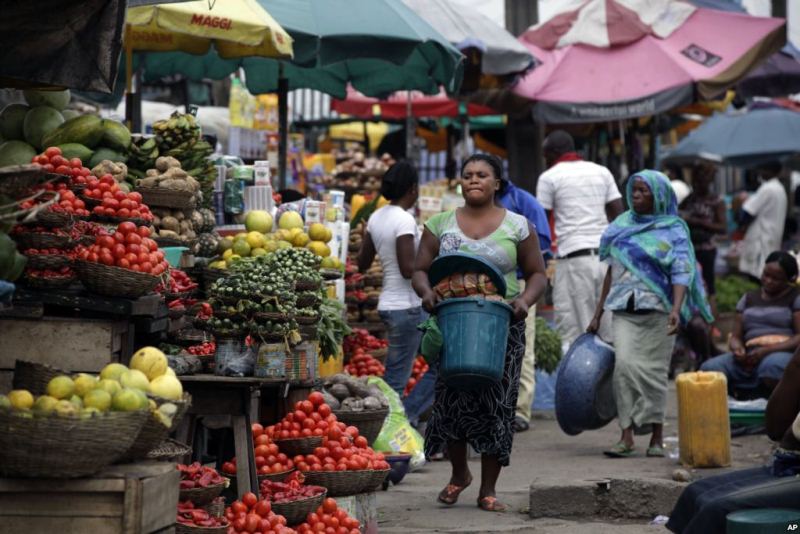
FG Sets Up Task Force on Food Prices Regulation

By Modupe Gbadeyanka
The President Muhammadu Buhari led administration has constituted a task force to ensure prices of food items in the market are reduced.
Inaugurating the panel on Wednesday in Abuja, the Acting President, Mr Yemi Osinbajo, pointed out that the move was borne out of the need to enhance affordability of food prices across country.
He said the Presidential Task Force will urgently consider measures that would ensure a steady flow of produce to the market and reverse recent price increases.
Giving the directive at the Federal Executive Council meeting, Mr Osinbajo expressed concern at some of the inflationary rates of food prices, noting that the Task Force will explore options to promote availability and affordability of food items to Nigerians.
According to him, the Task Force, which has seven days from to report back to the Council, will consider how to remove some of the cost-raising factors that come into play between the farms and the markets and therefore “bring relief to our people.”
While there have been reports of bumper harvests in parts of the country, the prices of food stuff still end up rather high, while some of the produce even end up wasted due to a number of reasons preventing effective transportation delivery to the markets.
One of the focus areas of the Task Force, the Acting President noted, would be to review the transportation and preservation processes, and see how government can intervene in those aspects to bring down food prices.
The Task Force, which would be meeting with Me Osinbajo in the discharge of its urgent assignment, will therefore draw out a practical plan and present same to the Council next week.
Members of the Task Force include the following Minister of Agriculture & Rural Development, Mr Audu Ogbeh; Minister of Finance, Mrs Kemi Adeosun; Minister of Industry, Trade & Development, Dr Okey Enelamah; Minister of Transportation, Mr Rotimi Amaechi; Minister for Water Resources, Engr. Suleiman Adamu; and Minister of Labour & Employment, Mr Chris Ngige.
Also, the Offices of the Chief of Staff to the President and the Senior Special Assistant to the President on Sustainable Development Goals (SDGs) would also be on the Task Force.
Economy
Oil Prices Climb Over 1% as Fragile US-Iran Truce Faces New Concerns
By Adedapo Adesanya
Oil prices settled higher by more than 1 per cent on Monday after attacks by the United States and Iran underscored the fragility of their interim peace deal.
Brent crude futures gained $1.16 or 1.61 per cent to sell at $73.15 a barrel, while the US West Texas Intermediate (WTI) crude appreciated by $1.52 or 2.2 per cent to $70.75 per barrel.
The latest price movement appears to suggest that the market is concerned about a reduction in tanker traffic through the Strait of Hormuz following attacks on two commercial vessels on Thursday and Friday last week, and a further flare-up over the weekend.
The Thursday attack on the container ship Ever Lovely prompted some shipowners to pull back and wait for additional information about how safe transiting the Strait is. The US military on Friday carried out strikes on Iran in response to the attack on the vessel.
On Saturday, an Iranian attack on a Panama-flagged oil tanker, Kiku, while it was transiting the Strait of Hormuz, prompted additional strikes by the U.S. forces.
After the flare-up this weekend, the US and Iran appear to have agreed to cease attacks ahead of tentatively planned new talks this week.
Iranian and US technical teams working on the implementation of an interim peace deal are expected to meet in Doha in the coming days, even after both sides carried out strikes over the weekend that threatened to derail the accord.
Iranian Deputy Foreign Minister Kazem Gharibabadi said Iranian and Omani experts will start talks on redefining transit paths through the Strait of Hormuz in the coming days, adding that his country will try to obstruct vessels outside of defined paths.
Analysts cautioned that traffic through the strait is far from being fully recovered, helping keep prices somewhat elevated as outbound Persian Gulf crude exports are quickly rebounding to at least 75 per cent of pre-war levels.
Middle East producers are pushing ahead with loading oil and Liquefied Natural Gas (LNG) despite fresh ship attacks in the Strait of Hormuz and renewed strikes between the US and Iran in recent days.
Saudi oil giant Aramco resumed crude oil loadings on Friday at its Ras Tanura terminal, west of the Strait of Hormuz, after they were halted for nearly four months. Loadings continued even after a helicopter belonging to the company crashed on Sunday at Ras Tanura, killing 14 nationals. The cause of the crash was unknown.
Economy
Customs Steps up Push on Green Tax Awareness Ahead of July 1 Launch
By Adedapo Adesanya
The Nigeria Customs Service (NCS) has intensified its nationwide sensitisation campaign on the implementation of the Green Tax Surcharge and related fiscal adjustments ahead of the policy’s commencement on July 1, 2026.
The service disclosed this in a statement published on its official X handle on Monday, saying the initiative is aimed at promoting environmental sustainability, reducing carbon emissions and encouraging the importation of cleaner vehicles into the country in line with global environmental standards.
According to the statement, the latest sensitisation programme was held at the Apapa Area Command on Friday, June 26, 2026, under the theme, “Implementation of the Green Tax Surcharge and Related Fiscal Adjustments.”
The event brought together customs officers, licensed customs agents, freight forwarders, importers and other key stakeholders to familiarise them with the new policy ahead of its implementation.
Representing the Comptroller-General of Customs, Mr Adewale Adeniyi, the Zonal Coordinator for Zone A, Mr Mohammed Babadende, said the exercise was organised to ensure stakeholders fully understand the policy and its implementation framework before it takes effect.
“This sensitisation is designed to ensure that every stakeholder clearly understands the policy before implementation. Our objective is to eliminate uncertainty, promote voluntary compliance and guarantee uniform application of the Green Tax Surcharge across all commands,” Mr Adeniyi said.
He stressed that effective stakeholder engagement would help ensure a seamless rollout of the policy while improving compliance across the country’s ports and border stations.
Delivering a technical presentation, the Comptroller in charge of Tariff, System Audit and Coordination, Mr Murtala Muazu, explained that the Green Tax Surcharge differs from conventional fiscal measures and would therefore require a separate assessment process.
Mr Muazu disclosed that the agency has introduced a simplified implementation mechanism through the Harmonised System (HS) Code declaration platform to facilitate accurate assessment and ease compliance by importers and clearing agents.
He further revealed that the federal government has simultaneously reviewed existing import charges on vehicles to cushion the effect of the new environmental levy.
According to him, import levies on vehicles have been reduced from 20 per cent to 10 per cent, while duties on used vehicles have been cut from 15 per cent to five per cent.
The customs said the reductions are intended to offset the impact of the Green Tax Surcharge while supporting legitimate trade and ensuring businesses are not unduly burdened by the new policy.
Area Controllers who attended the sensitisation programme urged importers, licensed customs agents and members of the public to support the initiative, noting that the reduction in import levies would lower the cost of doing business, facilitate legitimate trade and ultimately contribute to reducing transportation costs across the country.
Stakeholders at the event welcomed the initiative but called for sustained public awareness campaigns to ensure broader understanding, minimise confusion and encourage voluntary compliance as the rollout date approaches.
The Green Tax Surcharge is scheduled to take effect on July 1, 2026, as part of the federal government’s broader efforts to promote environmentally friendly transportation and align Nigeria’s import policies with global climate and sustainability objectives.
Economy
Access Holdings, Fidelity Bank, Chams Emerge Busiest Equities
By Dipo Olowookere
The three busiest equities on the floor of the Nigerian Exchange (NGX) Limited last week were Access Holdings, Fidelity Bank, and Chams Holdco.
The trio accounted for 20.90 per cent and 5.69 per cent of the total trading volume and value, respectively, after trading 485.749 million units worth N7.656 billion in 17,843 deals.
In the week, investors transacted 2.324 billion shares valued at N134.486 billion in 249,328 deals versus the 3.075 billion shares worth N254.614 billion executed in 287,157 deals in the previous week.
The financial services space led the activity chart with 1.523 billion stocks sold for N47.542 billion in 105,230 deals, contributing 65.53 per cent and 35.35 per cent to the total trading volume and value, respectively. The ICT industry exchanged 198.821 million shares worth N32.622 billion in 29,905 deals, and the consumer goods sector posted a turnover of 151.635 million shares worth N10.933 billion in 23,951 deals.
In the five-day trading week, 22 equities appreciated versus 11 equities a week earlier, 57 equities depreciated versus 78 equities of the previous week, and 67 equities remained unchanged versus 57 equities in the preceding week.
McNichols gained 26.47 per cent to trade at N8.60, International Energy Insurance appreciated by 14.43 per cent to N5.79, GTCO expanded by 10.69 per cent to N127.90, First Holdco jumped by 10.00 per cent to N55.00, and Airtel Africa also climbed 10.00 per cent to settle at N4,358.80.
On the flip side, Trans-Nationwide Express declined by 26.79 per cent to N3.28, Deap Capital slipped by 23.31 per cent to N3.75, Abbey Mortgage Bank lost 20.30 per cent to trade at N8.05, Aradel Holdings contracted by 19.00 per cent to N1,417.50, and Regency Assurance dropped 18.56 per cent to close at 79 Kobo.
The All-Share Index (ASI) and the market capitalisation, which measures the performance level of Customs Street, depreciated last week by 1.65 per cent and 1.60 per cent each to 232,049.02 points and N148.905 trillion, respectively.
Similarly, all other indices finished lower except the CG, banking, AFR Bank Value, AFR Div Yield and MERI Value indices, which grew by 2.40 per cent, 3.51 per cent, 3.28 per cent, 9.93 per cent and 0.56 per cent, respectively.
-
Feature/OPED6 years agoDavos was Different this year
-
Travel/Tourism10 years ago
Lagos Seals Western Lodge Hotel In Ikorodu
-
Showbiz3 years agoEstranged Lover Releases Videos of Empress Njamah Bathing
-
Banking8 years agoSort Codes of GTBank Branches in Nigeria
-
Economy3 years agoSubsidy Removal: CNG at N130 Per Litre Cheaper Than Petrol—IPMAN
-
Banking3 years agoSort Codes of UBA Branches in Nigeria
-
Banking3 years agoFirst Bank Announces Planned Downtime
-
Sports3 years agoHighest Paid Nigerian Footballer – How Much Do Nigerian Footballers Earn