Economy
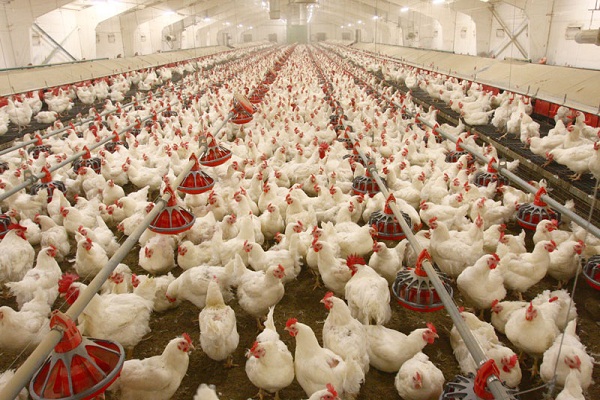
South Africa Expresses Commitment to Resolve Poultry Crises

By Dipo Olowookere
A number of interventions are being identified which include measures to boost competitiveness, value-addition and technology upgrading; trade measures; export support to assist the domestic industry to access foreign markets; industrial finance and incentives with conditions for improving competitiveness; and measures to promote growth and transformation of the poultry industry among others.
This was said by the Department of Trade and Industry officials during a briefing to the Select Committee on Trade and International Relations about the challenges facing the Poultry Sector in Parliament today.
The poultry industry employs 48 000 and 63 000 direct and indirect jobs respectively and is therefore important to ensure the sustainability of the industry.
The Deputy Director General of Industrial Development at the dti, Garth Strachan said stakeholders need to do everything in their power to save jobs in the poultry. “There is a broad agreement that manufacturing-led growth is critical for high economic and employment growth and the poultry sector is critical to this effort. To this effect, government through the establishment of the Action-focused Government Task Team has taken the support for the sector to another level through the structured mechanism. This team will develop a common response to the complex challenges facing the domestic industry,” he adds.
“The team will receive inputs and undertake research where required; identify possible areas for intervention; engage with different stakeholders; make recommendations for intervention and unblock areas for intervention,” Strachan.
According to Strachan, shared responsibilities between the state, private sector and labour are vital to the sector. This he says will allow growth, competitiveness, job retention, raise production, raise exports and market share.
The Deputy Director-General at the Department of Trade and Industry (the dti), Ms Xolelwa Mlumbi-Peter emphasised the need for the poultry industry to take advantage of new market access opportunities in the Gulf as this would assist to avert job loses.
The committee also heard that while there are US imports of chickens, these are not the source of the present crisis of the poultry. In 2015 South Africa and the US made a breakthrough in the long-standing dispute of the export of bone-in chicken pieces from the US. The deal secured South Africa’s participation in the African Growth and Opportunity Act (Agoa) for the next 10 years!
According to the Paris agreement, the US was allowed to export of 65 000 tons a year to South Africa. However, it has emerged that the US has not fully utilised the quota optimally. Therefore, Agoa is not the main contributor for the current poultry crises.
Economy
Moniepoint Research Shows Diminishing Role of Cash in Nightlife Payments
By Modupe Gbadeyanka
A new report released by Africa’s leading all-in-one financial ecosystem, Moniepoint Incorporated, has revealed that the use of cash for financial transactions is gradually dying due to security concerns.
The study, which looked into transaction data of over 27,000 clubs, bars, and lounges, showed that bank transfers dominated, followed closely by card payments, with cash actively discouraged. It was observed that transfers outpace card payments by nearly 2 million transactions during peak nighttime hours across its network.
In the research titled The Business of Community Nightlife in Nigeria, findings provided a rare, data-driven look into the country’s informal night economy.
While high-end Detty December venues grabbed headlines with daily revenues of N360 million and table prices reaching N1.2 million, Moniepoint’s study shifted the spotlight to the “community nightlife” where roadside bars, suya spots, and neighbourhood joints form the bedrock of social life for millions of Nigerians.
One of the study’s most operationally significant findings concerns the timing of spending. Nightlife in Nigeria runs late, but economically, the night is decided early.
Transaction volumes begin climbing sharply from 8 pm, peak before midnight, and then decline steadily even as venues remain full. By the time the night is at its longest, purchasing activity has already wound down.
However, for bar operators, this has clear practical implications – the most critical hours for staffing, stocking, vendor payment and cash flow management are the earliest hours of the day between midnight and 6 am.
The report further underscores the sector’s role in employment, noting that local bars typically expand their workforce by 30-50 per cent on peak nights. Conservative estimates suggest that at least 54,000 people are engaged in nightlife labour every night across Nigeria.
It was also observed that the most common transaction narrations from the data sourced – “food”, “pay”, “sent”, “pos”, “cash” – reflect the full breadth of nightlife spending: street food, club entry, lounge tabs, transport, and afterparties. Digital payments have gained huge traction in Nigeria’s social space.
While alcohol remains a key revenue driver, the data shows that food is the quiet stabiliser of Nigeria’s night economy, particularly in local and informal settings. In several neighbourhood venues, bottled water and meals outsell beer and spirits, especially early in the evening.
Lagos leads in sheer concentration of nightlife establishments, with 4,856 bars, clubs, and lounges on the Moniepoint network. FCT follows with 2,515, then Rivers (2,362), Delta (1,930), and Edo (1,574).
Katsina leads the country in nighttime food truck payment value, with vendors pulling in over N130 million in the last 12 months. Kwara State leads in transaction count. Nigeria’s nightlife economy is distributed, not overly elitist.
On the lending side, the report noted that a significant share of loan requests from bar and lounge operators is directed toward renovations, furniture, lighting, and sound systems, showing that investments are intended to attract and retain customers in a competitive sector where ambience plays a decisive role.
Commenting on the report, the chief executive of Moniepoint, Mr Tosin Eniolorunda, said, “Nigeria’s local bars and night-time operators are not peripheral to the economy; they are a critical part of its architecture. We see a substantial and sustained economic sector that employs hundreds of thousands of Nigerians every night and deserves the same attention we give to agriculture, healthcare, and retail.
“Our goal is to make sure every one of those businesses has the tools to grow. From giving credit to finance renovations and sound systems to providing same-day settlement that allows vendors to restock and with tools like Moniebook that power inventory management and reconciliation, Moniepoint is ensuring that this vital artery of the nation’s economy remains viable and empowering.”
Economy
CBN Reduces Interest Rate by 50 Basis Points to 26.50%
By Adedapo Adesanya
The Central Bank of Nigeria (CBN) has cut the interest rate by 50 basis points to 26.50 per cent from 27 per cent.
Nigeria’s apex bank announced this during its two-day 304th Monetary Policy Committee (MPC) meeting, which concluded on Tuesday in Abuja.
This comes after the country’s interest rate cooled in January to 15.10 per cent from 15.15 per cent, according to the National Bureau of Statistics (NBS), strengthening the case for a reduction.
The CBN Governor, Mr Yemi Cardoso, said all members of the MPC unanimously agreed upon the decision.
“The committee decided to reduce the monetary policy rate by 50 basis points to 26.50 per cent,” he said.
Mr Cardoso stated that the liquidity ratio was maintained at 30 per cent, and the standing facilities corridor was adjusted to +50 to -450 basis points around the monetary policy rate.
He said the committee retained the Cash Reserve Ratio (CRR) at 45 per cent for commercial banks and 16 per cent for merchant banks, while the 75 per cent CRR on non-TSA public sector deposits was equally maintained.
The CBN uses the MPR, which works as the benchmark interest rate, to manage inflation, macroeconomic stability, and liquidity.
Last November, the MPC retained the Monetary Policy Rate (MPR) at 27.00 per cent. The last time the apex bank cut interest rates was in September last year, to 27 per cent from 27.50 per cent after a series of easing in inflation.
Market analysts had argued for higher interest cuts due to results seen in the CBN’s inflation targeting framework. Meanwhile, some say the 50 basis points reduction will offer a temporary reprieve as inflation heads for a single-digit target in the coming months.
Economy
Grey to Cut Cross-Border Payment Costs with New USD Offering
By Adedapo Adesanya
A cross-border payments solutions company, Grey has expanded its business banking platform to include US Dollar corporate accounts, bulk international payments, and USDC stablecoin support, all integrated into a single system.
The company is positioning itself as a low-cost, faster alternative to traditional international banking, particularly for businesses in emerging markets as it enables companies to open US Dollar accounts, receive global payments, and send payouts to 170+ countries, including bulk transfers, within minutes.
Grey aims to solve common cross-border payment challenges, particularly the high transfer costs that often range between 6 and 7 per cent of transaction value, prolonged settlement cycles that can stretch across several days, and the limited access many businesses face when trying to open and operate foreign currency accounts. In addition, companies frequently contend with hidden intermediary fees and poor foreign exchange transparency, both of which undermine cost predictability and effective cash flow management.
By integrating USD business accounts and USDC stablecoin functionality into its platform, Grey enhances its value proposition around faster settlement, clearer pricing structures, improved cost efficiency, and broader global accessibility. The expanded capabilities enable businesses to manage international transactions with greater speed, transparency, and operational control.
“Businesses may operate without borders today, but access to reliable global banking remains uneven, particularly for companies in high-growth markets,” said Mr Idorenyin Obong, Co-founder and Chief Executive Officer of Grey. “We’re closing that gap and enabling businesses to move money faster, with greater transparency and control, wherever their clients or partners are based.”
“When payments are delayed, or costs are unpredictable, growth stalls,” added Mr Joseph Femi Aghedo, Chief Operating Officer and Co-founder of Grey. “Grey eliminates those friction points, giving businesses a faster, simpler way to manage payroll, supplier payments, and partner payouts across borders. Adding USD and stablecoin capabilities makes these benefits accessible to even more customers.”
Established in Africa in 2020, Grey has a presence in key markets, including the United States, the United Kingdom, and Europe, and has recently expanded its services and operations into Latin America and Southeast Asia.
Since its inception, the company has consistently enhanced its services to empower digital nomads worldwide, regardless of location. Grey’s offerings include multi-currency accounts, low-cost international money transfers, a virtual USD card, expense management tools, and robust security measures.
-
Feature/OPED6 years agoDavos was Different this year
-
Travel/Tourism10 years ago
Lagos Seals Western Lodge Hotel In Ikorodu
-
Showbiz3 years agoEstranged Lover Releases Videos of Empress Njamah Bathing
-
Banking8 years agoSort Codes of GTBank Branches in Nigeria
-
Economy3 years agoSubsidy Removal: CNG at N130 Per Litre Cheaper Than Petrol—IPMAN
-
Banking3 years agoSort Codes of UBA Branches in Nigeria
-
Banking3 years agoFirst Bank Announces Planned Downtime
-
Sports3 years agoHighest Paid Nigerian Footballer – How Much Do Nigerian Footballers Earn