Education
Nigerian Universities And Resolution Abolishing Acceptance Fees
By Jerome-Mario Utomi
Recently, Governor Sheriff Oborevwori of Delta State approved a 25 per cent reduction in acceptance fees payable in the four state-owned universities as part of palliatives for students. The governor’s approval was contained in a statement issued by Festus Ahon, his chief press secretary, on Wednesday, in Asaba.
According to the statement, the reduction in the acceptance fee was in line with measures taken by the Delta State government to cushion the effect of the fuel subsidy removal on citizens. Ahon further said that the 25 per cent reduction was applicable to new students at the state-owned Delta State University, Abraka; Delta State University of Science and Technology, Ozoro; University of Delta, Agbor, and Dennis Osadebay University, Anwai-Asaba.
Essentially, the Governor’s action is understandable and appreciated, particularly when one remembers that the governor had earlier approved the payment of N10,000 to workers for three months and payment of N5.522bn to 50,196 workers as promotion arrears and palliatives to civil servants across the state, this piece however, holds the opinion that the issue that has to do with demand for acceptance by leaderships of tertiary institutions in the country, under any guise ought not arise in the first instance.
The reason for the above assertion is predicated on the fact that there exists a resolution by the Federal House Of Representatives abolishing the demand of Acceptance Fees by tertiary institutions of higher learning in the country, not even in Delta state-owned universities or any federally-owned university in Nigeria. In fact, any public officeholder who breaks the law is a threat to those very structures of the government he pledged to protect.
Adding context to the discourse, it is factually supported that in November 2019, Nigeria’s House of Representatives, following public outcry against the excruciating acceptance fee charged by the nation’s institutions of higher learning moved a motion through Honourable Emeka Chinedu, PDP-Imo (Ahiazu Mbaise/Ezinihitte Federal Constituency), abolishing the payment of such fees in all tertiary institutions in Nigeria.
Leading the debate, Mr Chinedu, according to the reports observed that one of the factors contributing to poor access to tertiary education is the “predatory admission policies being enforced by tertiary institutions, particularly the requirement for payment of non-refundable acceptance fees as a condition precedent for admission”.
He said in part; “it should bother the lawmakers that Imo State University charges N70,000 as acceptance fee. “Other institutions like the University of Ibadan charge 35,000; University of Lagos, 20,000; Ahmadu Bello University, 30,000; Lagos State University, N20,000; University of Uyo, 25,000, and University of Benin hovers between N60, 000.00 to N75, 000.00, depending on the department and faculty”.
In the end, the plenary presided over by the Former Speaker, Femi Gbajabiamila, (present Chief of Staff to President Bola Tinubu) described acceptance fees as exploitative and called on the Federal Government, to immediately abolish the payment of such fees in tertiary institutions in Nigeria.
Without a doubt, when parents and their wards heard of this resolution, they were happy.
But reacting to the development via a piece, I described the resolution as a two-edged sword. First, it portrayed the House as both a responsive and responsible body capped with the listening capacity to the yearning of the poor Nigerians. The piece in question also argued that the House of Representatives resolution shows that the survival of freedom depends upon the rule of law.
But on second thought, I submitted that the validity of the resolution will largely depend on how the university authorities in the country respect, interpret and enforce such promulgation, particularly, as demand for acceptance fees in the institutions of higher learning in Nigeria has become a ‘culture’ that will be too difficult to uproot.
Today, such fear can no longer be described as unfounded.
The early warning that led to my expression of fear was nourished by perennial underfunding of the nation’s education sector and exacerbated by reluctant respect University leaderships in the country have paid to similar directives in the past.
Take, as an illustration, Idowu Olayinka, vice chancellor of the University of Ibadan,(as he then was), while informing the media of his institution’s readiness to comply with the directive on acceptance fee, explained that the amount accruing to the University of Ibadan, for instance, in a year is not enough to fund the university in a month. “Therefore, the school has to look for alternative means to source for funds”.
“Someone has to take up the bill,” he said. “We have to make up our mind on what we really want. You can’t even run a creche without funds. In a year, we spend at least N200 million on our clinic contractors. Add this to the electricity bill and diesel, then you’re talking of over N800 million. “What the university is getting for overhead is less than N100 million. So where do you think the remaining N700 million will come from? Unless you want to close down the whole university,” he added.
For me, why all Nigerians of goodwill should worry about these blanket inability by tertiary schools in Nigeria to comply with the House’s directive on acceptance fee is that instead of schools acting in compliance, many contrary to expectation and to the surprise of stakeholders/observers retained the prevailing fees while the rest in absolute disobedience and challenge to the new order had an upward review of their acceptance fees.
Also deeply troubling is the awareness that school authorities demanding acceptance fees from new students have not been able to explain what the payment signifies or provide answers as to why students must pay acceptance fee for an admission they voluntarily expressed interest and paid examination fees, took time to study in order to be admitted.
Expressly, it will be convenient for many to argue that the crushing weight arising from education funding in Nigeria and globally has become too heavy for only the government to shoulder, and therefore, our collective responsibility to ensure that our schools work and our children are properly educated at the right time in ways that will necessitate payments such as acceptance fees.
This fact notwithstanding, it does not in any way justify the demand for acceptance fees.
To therefore curb this illicit collection, Nigerian universities and other institutions of higher learning in the country as well as the Federal and state governments must in the first instance consider education as the bedrock of development; that with sound educational institutions, a country is as good as made -as the institutions will turn out all rounded manpower to continue with the development of the society driven by well thought out ideas, policies, programmes, and projects.
We must also come to the collective recognition that across the world, children enjoy the right to education as enshrined by a number of international conventions, including the International Covenant on Economic, Social and Cultural Rights which recognizes a compulsory primary education for all, an obligation to develop secondary education accessible to all, as well as the progressive introduction of free higher education/obligation to develop equitable access to higher education.
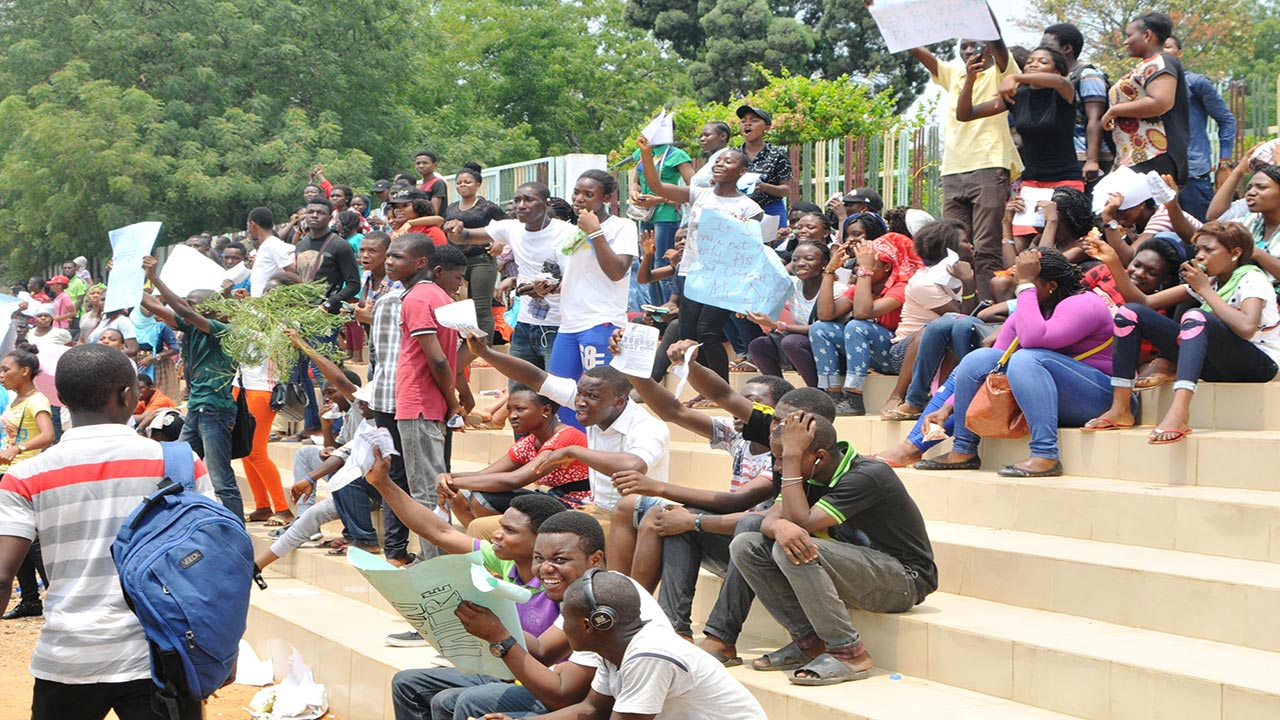
Finally, the government and of course universities in the country must not use it to deny our youths the opportunity to be educated. If we do, chances are that most of them will run to the streets. And as we know, the streets are known for breeding all sorts of criminals and other social misfits who constitute the real threat such as armed robbers, thugs, drug abusers, drunkards, prostitutes and all other social ills that give a bad name to society.
Jerome-Mario Utomi is the Programme Coordinator (Media and Policy) at Social and Economic Justice Advocacy (SEJA), Lagos. He could be reached via [email protected]/08032725374.
Education
Mine Bitcoin and Dogecoin for Free With DL Mining! UK Compliance Platform Officially Opened
Traditional cryptocurrency mining often requires huge capital investment, complex equipment configuration, and high electricity costs. However, DL Mining is subverting this industry, providing users with simple, low-cost BTC and DOGE cloud mining services. As a legal platform certified by the British authority, DL Mining makes mining no longer limited by expensive hardware and technical barriers, and truly enables everyone to participate. With top-level security protection, minimalist operation experience, and stable daily income guarantee, DL Mining has become one of the most promising cloud mining platforms in the encryption field.
Functions of DL Mining
DL Mining is committed to creating a safe, efficient and profitable mining experience for all users. The core advantages of the platform include:
✅ Top security protection
Using McAfee® and Cloudflare® dual encryption technology to fully protect user data and asset security
✅ Completely transparent and zero fees
No management fees are charged, no hidden costs are required, and 100% of the income belongs to the user
✅ Stable mining guarantee
The server runs 100% stably, and cooperates with a 24/7 professional customer service team to ensure continuous profitability
✅ Flexible mining in multiple currencies
Supports 6+ mainstream cryptocurrencies such as USDT,USDC,BTC, LTC, DOGE, XRPand free investment portfolio selection
✅ Newcomer exclusive benefits
Sign up and get a $15 investment package, enjoy $0.6 free income every day, and start mining at 0 cost

How to start cloud mining for free with DL Mining?
DL Mining provides an easy-to-use cloud mining getting started guide. Users can start mining in three simple steps:
Step 1: Register an account get $15 bones
The creation process is very smooth and only requires an email address. After registration, users can immediately access DL Mining’s mining dashboard to monitor their earnings in real time.
Step 2: Select a cloud mining service provider.
DL Mining offers a $15 free mining plan to simplify the mining process without expensive mining hardware. This free plan allows users to earn $0.6 in passive income per day for free without taking any financial risk.
Step 3: Choose a mining contract
DL Mining offers a variety of contract options to meet the needs of different investment levels. Each contract guarantees a fixed return and predictable daily returns, ensuring a transparent and profitable mining experience.
LTC [basic contract]: investment amount: $100, contract period: 2 days, daily income of $4, expiration income: $100 + $8
LTC [basic contract]: investment amount: $500, contract period: 5 days, daily income of $8, expiration income: $500 + $37
BTC [classic contract]: investment amount: $1,000, contract period: 10 days, daily income of $16, expiration income: $1,000 + $160
BTC [classic contract]: investment amount: $3,000, contract period: 16 days, daily income of $51, expiration income: $3,000 + $816
BTC[Advanced contract]: investment amount: $10,000,contract period: 35 days, daily income of $215, expiration income: $10,000 + $7525
BTC[Super contract]: investment amount: $50,000,contract period: 45 days, daily income of $1250, expiration income: $52,000 + $67080
Why DL Mining stands out in the field of cloud mining
Easy to get started
DL Mining is designed for both new and experienced miners. The user-friendly interface ensures that even people who know nothing about cryptocurrency mining can seamlessly participate and earn rewards.
Profitability and flexibility:
Unlike traditional mining models that require long-term commitments and large investments, DL Mining offers flexible contract terms and guaranteed returns. Users can withdraw earnings daily, reinvest for higher returns, or exit at any time.
Worry-free experience
DL Mining handles all technical issues of mining, including equipment maintenance and energy costs. This allows users to focus on maximizing earnings without worrying about the complexity of operations.
DL Mining leads the new wave of cloud mining: a new choice for compliant, efficient and sustainable crypto income
The rise of the cloud mining platform DL Mining is completely changing the way people participate in cryptocurrency mining, and its innovative model may become a key force in promoting industry change:
Four core driving forces of industry change
Authoritative compliance guarantee
As an official British certification platform, DL Mining has established industry trust with perfect regulatory compliance, effectively solving the most concerned security and reliability issues in the field of cloud mining.
Green mining practice
With efficient and energy-saving cloud solutions, DL Mining significantly reduces the carbon footprint of traditional mining and provides a sustainable way of participation for environmentally conscious investors.
Broad market prospects
With the surge in demand for passive income, retail and institutional investors have flocked to the field of crypto mining, indicating that innovative platforms such as DL Mining will usher in explosive growth.
Disruptive cost advantage
Compared with traditional mining that requires the purchase of ASIC mining machines and high electricity bills, DL Mining has redefined industry standards with a nearly zero-threshold participation method and a stable income structure.
Future Outlook
DL Mining is driving the entire industry towards a more convenient, safer and more profitable direction through its innovative cloud mining model. The zero-cost entry, stable daily income and extremely simplified user experience provided by the platform make it an ideal choice for BTC and DOGE mining enthusiasts.
As the cryptocurrency market continues to expand, DL Mining is expected to grow into a leading platform in the cloud mining field, providing investors with a high-quality alternative to traditional mining. Whether you are a novice who is new to crypto mining or a veteran player pursuing stable returns, DL Mining deserves your attention.
Explore new opportunities in cloud mining now
Download APP or Official website: dlmining.net
Education
Prodigy Finance Unveils NovaGrad AI-enabled Planning Tool for Students
By Aduragbemi Omiyale
An Artificial Intelligence (AI) platform giving LATAM and African students a clearer path to global universities known as NovaGrad has been launched by Prodigy Finance.
This tool allows users to plan their study-abroad journeys with confidence. The goal is to give every ambitious student the clarity, guidance, and confidence they need regardless of their background.
Many students still face steep tuition fees, shifting visa rules, complex admissions processes and limited access to reliable information.
The initiative has been created to make those first steps clearer and easier to manage. As interest grows across LATAM and Africa, universities have also stepped into the mission, recognising that students who arrive prepared are far more likely to succeed.
The platform is an AI-enabled planning tool that supports students throughout their study-abroad journey. It helps them explore courses, compare universities, understand their financial options and prepare strong, clear applications.
Students can research programmes across the United States, United Kingdom, Europe and many other countries, understand what each university expects and organise their plans in one place.
With visa policies evolving globally, students can also turn to the platform to make sense of timelines, documentation and opportunities in newer destinations.
The tool supports students as they prepare to apply for university and their student visa. The platform helps them understand each step of the process and gives them the confidence to submit a strong, well-planned application.
“2025 has been one of our strongest years yet. We launched several scholarship programmes globally, and the interest from students across Africa and LATAM was remarkable.
“Even though each cycle can only support a small number of winners, our recent Prodigy Finance Awards granted close to $40,000 to eight international students, including learners from Africa and Mexico. It became clear that we needed a broader solution for this region,” the Global Chief Business Officer at Prodigy Finance, Ms Sonal Kapoor, said.
”After nearly a year of work, we have launched a platform where students can explore multiple scholarship options, receive guidance on choosing universities and prepare their statements of purpose with confidence. That is why we built this service.
“It gives learners clarity about their choices and helps them plan their journey with purpose. This isn’t the kind of AI that replaces talent, it’s the kind that helps students unlock it,” she added.
Also commenting, the Head of Acquisition Strategy at Prodigy Finance and spokesperson for NovaGrad, Ms Mariana Alcocer, said, “I grew up in Colombia, and I know what it feels like to want something bigger than the place you grew up in.
“Many students across LATAM and Africa carry that same determination. They are ambitious and ready to work hard, yet the path in front of them isn’t always clear. The platform gives students the kind of guidance I wish I had in the past, a place where your options make sense and you don’t feel lost or alone.”
“Students aren’t looking for shortcuts. They want clarity. They want to know which universities align with their goals and how to present a strong application.
“The service brings all of that into one space. When students have the right tools, they move from doubt to confidence. That shift is exactly what the platform is built for,” she noted.
Prodigy Finance, a popular brand known for funding international students, has helped more than 45,000 masters students from 150 countries and has disbursed over $2.3 billion in funding.
Education
Human Rights Watch Urges FG to Protect Schools from Attacks
By Adedapo Adesanya
Human Rights Watch (HRW) has called on the Nigerian government to secure the safe release of students and teachers recently kidnapped in the country’s northwest and take concrete steps to protect schools and communities from further attacks.
In a statement on Tuesday, the rights body said, “The groups responsible for the kidnappings should immediately release the students and teachers they are holding captive.”
On November 18, 2025, over 20 schoolgirls were kidnapped by unidentified armed men from the Government Girls Comprehensive Secondary School in Maga, Kebbi state.
Just three days later, on November 21, about 303 students and 12 teachers were kidnapped at St. Mary’s Catholic Primary and Secondary School in Papiri, Niger state.
“These mass school kidnappings once again lay bare the deliberate targeting of students, teachers, and schools in Nigeria’s deteriorating security environment,” said Ms Anietie Ewang, Nigeria researcher at Human Rights Watch. “The deepening crisis underscores the government’s failure to protect vulnerable communities.”
Human Rights Watch said it spoke with parents of two of the girls abducted in Kebbi state. Mrs Isa Nazifi, whose 13-year-old daughter Khadija Nazifi, a junior secondary school student, was among those abducted.
“I immediately took a motorbike and rushed to the school, where I found my second daughter, also a student at the school. She told me Khadija had been taken. We are extremely worried. My wife is in tears. I will stay here at the school until my daughter returns. If I go home without her, what will I tell my family?”
Also, Mr Sani Zimri, whose daughter, Salima Sani Zimri, is a senior secondary school student who was also abducted, said he had heard rumors from other parents of a possible attack by bandits the week before the incident.
“We developed confidence after seeing military operatives surveilling the area, only to realize that there were no security operatives on the premises for the entire three hours that the incident occurred,” he was quoted in a statement by HRW.
The rights group also noted that the development was not new and dates back as far as 2014 and has been occuring with successive governments.
Human Rights Watch said Nigerian authorities have failed to apply lessons from previous attacks to create early warning systems and other measures that could prevent these atrocities.
In response to the recent kidnappings, the government has promised to rescue the kidnapped students and hold those responsible accountable. President Bola Tinubu directed security agencies to act swiftly to bring the girls back while also urging local communities to share intelligence.
The authorities have also shut down 47 federal secondary schools known as Federal Unity Colleges, and some states including Katsina, Taraba, and Niger have also closed schools or restricted school activities, particularly boarding institutions.
The rights group lamented that while these measures are aimed at protecting students, they have disrupted learning for thousands of children, denying them access to education and the social and psychological support schools provide.
“Without concrete measures to provide alternative learning opportunities to ensure continuity in their education, the students are at risk of falling behind academically and facing long term setbacks in their development,” the statement added.
It explains that since Nigeria is a signatory to the Safe Schools Declaration, the government should move with urgency to advance a proposal to introduce legislation to implement the Safe Schools Declaration.
“Children in Nigeria have the right to go to school without fearing for their lives,” Ms Ewang said. “Nigerian authorities should prioritize the safe release of the kidnapped children and their teachers and bring those responsible for their abduction to justice.”
-
Feature/OPED6 years agoDavos was Different this year
-
Travel/Tourism9 years ago
Lagos Seals Western Lodge Hotel In Ikorodu
-
Showbiz3 years agoEstranged Lover Releases Videos of Empress Njamah Bathing
-
Banking7 years agoSort Codes of GTBank Branches in Nigeria
-
Economy2 years agoSubsidy Removal: CNG at N130 Per Litre Cheaper Than Petrol—IPMAN
-
Banking3 years agoFirst Bank Announces Planned Downtime
-
Banking3 years agoSort Codes of UBA Branches in Nigeria
-
Sports3 years agoHighest Paid Nigerian Footballer – How Much Do Nigerian Footballers Earn