Connect with us

Economy

FG, PwC Establish Partnership on Mining Sector Development

Published

on

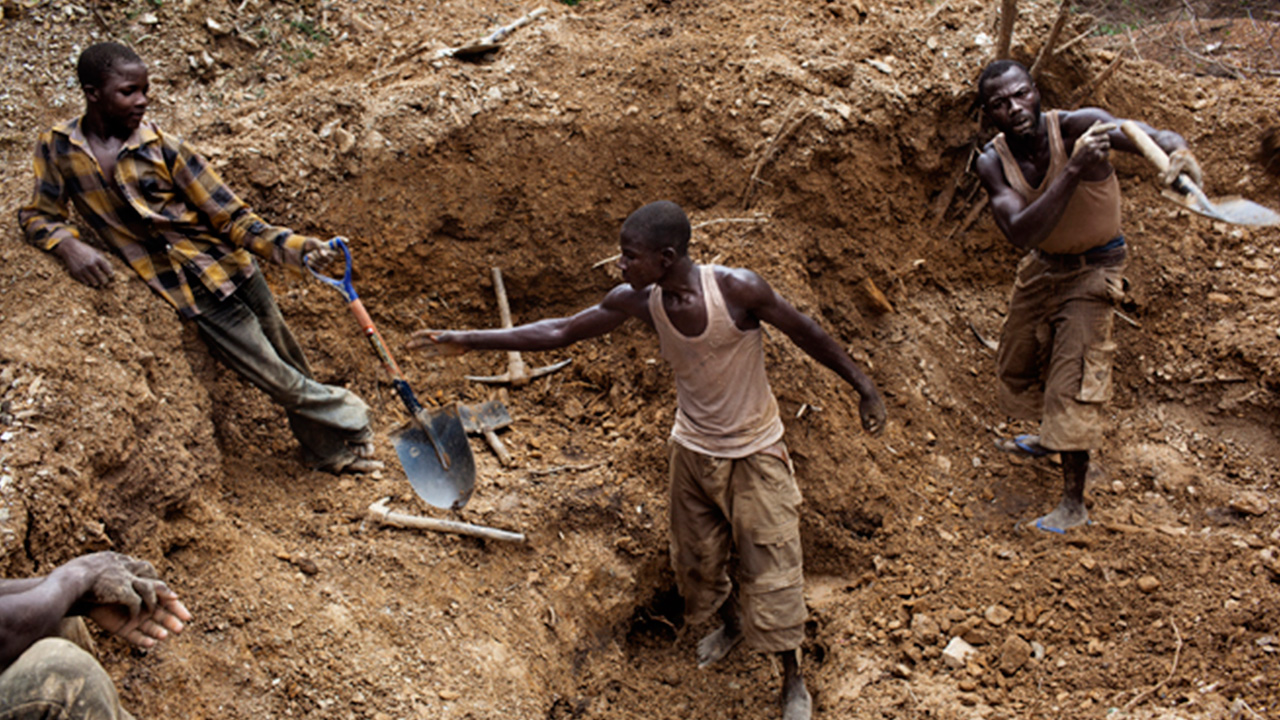
Illegal mining miners

By Adedapo Adesanya

The federal government and a consultancy giant, PricewaterhouseCoopers (PwC), have announced a collaboration that will help the Ministry of Solid Minerals Development execute the policies under the seven-point roadmap to transform the country’s mining sector and drive Foreign Direct Investment (FDI) to the country.

The Minister of Solid Minerals Development, Mr Dele Alake, made it known that the government would work with a foremost consulting firm when he received the PWC partner on mining, Mr Habeeb Jaiyeola.

He said President Bola Tinubu is focusing on the sector as a game changer to reposition the country for lasting prosperity and commended the company for its role in the just-concluded Nigerian Mining Week and the first phase of the bitumen concession programme.

Mr Alake thanked the consulting firm for its contribution to the mining sector over the years, assuring that the expertise and ideas of PwC will be factored into reforms of the mining sector and implementation of the seven-point agenda.

Presenting the thoughts of PwC on the seven-point agenda, Mr Jaiyeola expressed the readiness of PwC to partner with the ministry in achieving the agenda’s objectives which seeks to make the solid minerals a key sector to attract FDIs.

” We summarised our thoughts on the seven-point agenda, looking at it and suggesting how to bring it to life whilst advising on pitfalls and how to avoid them. The major thing is that at the end of the tenure of the administration, there will be key deliverables that can be monitored, and the roadmap on how each of them is going to be achieved and projected.

“We will be open to further deliberations on how we can proceed by comparing notes,” Mr Jaiyeola emphasised.

The minister when he took over the post reeled out a seven-point agenda tagged Agenda for the Transformation of the Solid Minerals Sector for International Competitiveness and Domestic Prosperity, which includes the creation of the Nigerian Solid Minerals Corporation, Big Data on specific seven priority minerals and their deposits, and comprehensive review of all mining license amongst others.


Adedapo Adesanya is a journalist, polymath, and connoisseur of everything art. When he is not writing, he has his nose buried in one of the many books or articles he has bookmarked or simply listening to good music with a bottle of beer or wine. He supports the greatest club in the world, Manchester United F.C.

Advertisement
Click to comment

Leave a Reply

Your email address will not be published. Required fields are marked *

Economy

Court Convicts AAC Consulting Over N30.5m Theft from Chevron Contract Staff

Published

on

EFCC Abuja forex traders

By Adedapo Adesanya

A Lagos Special Offences Court has convicted AAC Consulting Limited for stealing over N30.5 million belonging to contract staff of Chevron Nigeria Limited.

The judge, Justice Rahman Oshodi, found the firm guilty of stealing N30,564,635.81, following its prosecution by the Lagos Zonal Directorate 1 of the Economic and Financial Crimes Commission (EFCC).

The conviction followed the company’s guilty plea to an amended one-count charge of stealing, contrary to Section 285(1) of the Criminal Code, Laws of Lagos State, 2011, sealing a long-running fraud case that exposed how outsourced workers’ salaries were diverted by their own payroll handlers.

The case dates back to June 5, 2023, when AAC Consulting Limited and its Managing Director, Anthony Adeoye, were arraigned on a 50-count charge bordering on stealing and issuance of dud cheques. Both defendants initially pleaded not guilty, forcing the EFCC to open full trial.

During proceedings, prosecuting counsel, Mr I.O. Daramola, called two witnesses, while several documents were tendered and admitted as exhibits by the court to establish how the funds meant for Chevron contract staff were allegedly misappropriated.

However, the trial took a dramatic turn after the full repayment of the stolen sum to the petitioner in December 2023.

Following the refund, the defendants changed their plea to “guilty”, prompting the EFCC to amend the charge, dropping the multiple counts and proceeding against the company alone on a single count of stealing.

The amended charge stated that AAC Consulting Limited, “on or about April 27, 2013, at Lagos, dishonestly converted to its own use the aggregate sum of N30,564,635.81, property of contract staff of Chevron Nigeria Limited.”

After reviewing the plea and evidence before the court, Justice Oshodi convicted the company and imposed a N5 million fine, with a stern warning.

The court ordered that the fine must be paid within 14 days, failing which AAC Consulting Limited will be wound up.

The conviction sends a strong message to outsourcing and payroll management firms, particularly those handling funds for multinational oil companies, that refund of stolen money does not erase criminal liability.

For the affected Chevron contract staff, the judgment closes a 13-year chapter of financial abuse, while reinforcing EFCC’s stance that corporate entities will be held accountable for payroll fraud and breach of trust in Nigeria’s corporate and labour ecosystem.

Continue Reading

Economy

Nigerian Startups Account for 8% of Africa’s $3.8bn Raise in 2025

Published

on

Nigerian startups

By Adedapo Adesanya

Nigeria recorded its lowest funding share since 2019 but the highest number of deals in 2025, according to Africa Investment Report 2025 published by Briter, a market intelligence platform focused on emerging markets.

According to the report, African companies disclosed a total of $3.8 billion in funding in 2025, representing a 32 per cent increase in deal volume and an 8 per cent rise in the number of announced transactions compared to the previous year ($2.8 billion in 2024).

However, Nigeria accounted for only 8 per cent of total funding, trailing behind South Africa (32 per cent), Kenya (29 per cent), and Egypt (15 per cent).

Despite the drop in funding share, Nigeria’s performance reflects a shift toward smaller, early- and growth-stage transactions, rather than mega-deals. The country recorded the highest number of deals on the continent, indicating strong entrepreneurial activity but limited access to large-ticket funding.

According to Briter, among the ‘Big Four’, Nigeria raised around $315 million alone last year from 205 estimated deals compared to South Africa which raised $1.2 billion from 130 deals, Kenya followed with $1.1 billion from around 16o deals, and Egypt came third with $595 million in 115 deals.

Nigeria which used to occupy the top two among this group has faced steep challenges including the 2023 currency devaluation which made it harder for startups to generate Dollar returns.

As a result, Briter explains that fewer mega-rounds happened in Nigeria, making the totals lower. However, it allowed for newer, upcoming startups to raise in 2025.

The report noted that fintech and digital financial services remained the most funded sector by both value and deal count, reinforcing Nigeria’s position as Africa’s fintech hub. However, climate-focused solutions recorded the fastest growth, raising more than three times their 2024 total, with solar energy emerging as the most funded category.

The surge in solar investment reflects growing investor appetite for infrastructure-like clean energy projects offering predictable returns, particularly in countries like Nigeria where power deficits remain a major economic constraint.

Briter noted that Artificial Intelligence (AI) attracted increased attention from investors in 2025, though funding remained largely concentrated in applied use cases such as financial services, logistics, and health tech rather than deep research and development.

In 2025, 63 acquisitions were announced, though only five disclosed transaction values. Notably, half of those involved startups acquiring other startups, pointing to early signs of consolidation within the ecosystem.

The report added that equity financing remained dominant, but debt funding surpassed $1 billion for the first time in a decade, signaling growing confidence in structured finance across African markets. It also noted a rise in capital from non-Western sources, particularly Japan and Gulf Cooperation Council (GCC) countries, as traditional Western investors scaled back.

Despite increased funding activity, Briter pointed out that the gender gap remains stark as less than 10 per cent of total funding went to companies with at least one female founder, highlighting ongoing challenges in inclusive capital access across Africa.

Continue Reading

Economy

NASD OTC Exchange Drops 0.44%

Published

on

NASD OTC stock exchange

By Adedapo Adesanya

The NASD Over-the-Counter (OTC) Securities Exchange dipped by 0.44 per cent on Tuesday, January 27, with the market capitalisation declining by N9.70 billion to N2.174 trillion from N2.184 trillion, and the NASD Unlisted Security Index (NSI) falling by 16.21 points to 3,634.73 points from 3,650.94 points.

The bourse was under pressure from two securities, which lost weight, overpowering the gains recorded by three securities.

Business Post reports that FrieslandCampina Wamco Nigeria Plc lost N5.70 to sell at N64.00 per share compared with Monday’s price of N69.70 per share and Central Securities Clearing System (CSCS) Plc dropped 17 Kobo to close at N40.50 per unit, in contrast to the preceding day’s N40.67 per unit.

On the flip side, Air Liquide Plc added N1.69 to settle at N18.63 per share versus the previous session’s N16.94 per share, UBN Property Plc appreciated by 20 Kobo to N2.20 per unit from N2.00 per unit, and Industrial and General Insurance (IGI) Plc gained 6 Kobo to trade at 69 Kobo per share versus 63 Kobo per share.

During the session, the volume of securities traded by investors fell further by 80.9 per cent to 1.3 million units from 6.8 million units, the value of securities went down by 57.3 per cent to N57.3 million from N156.7 million, and the total number of deals shrank by 13.6 per cent to 38 deals from 44 deals.

At the close of business, CSCS Plc was the most traded stock by value on a year-to-date basis with 14.4 million units traded for N586.1 million, the second spot was occupied by FrieslandCampina Wamco Nigeria Plc with 1.6 million units worth N107.9 million, and the third spot was taken by MRS Oil Plc with 297,101 units valued at N59.3 million.

CSCS  Plc also ended as the most active stock by volume on a year-to-date basis with 14.4 million units valued at N586.1 million, followed by Geo-Fluids Plc with 1.6 million units worth N107.9 million, and Mass Telecom Innovation Plc with 6.4 million units sold for N2.6 million.

Continue Reading

Trending