Connect with us

Economy

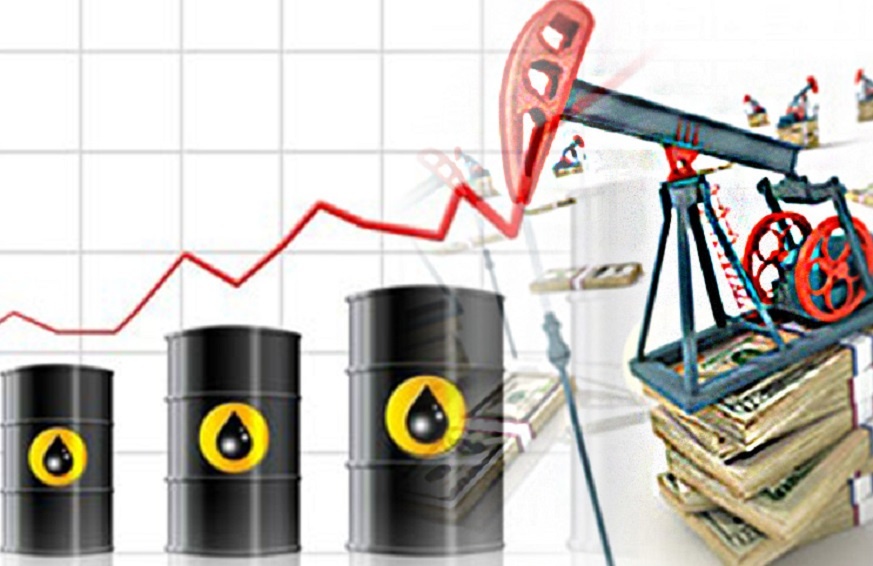
Brent Soars to $77 on Weaker Dollar, Positive Oil Demand Signal

Published

on

brent crude oil

By Adedapo Adesanya

Brent crude rose by 4 per cent or $3.00 on Thursday to trade at $77.26 per barrel following a weaker Dollar and the lifting of oil demand forecast for next year by the International Energy Agency (IEA).

Also, the US West Texas Intermediate (WTI) crude climbed by $2.89 or 4.2 per cent to $72.36 per barrel, as the market turned around after hitting its lowest in nearly six months during Wednesday’s session.

The boost came as the IEA said world oil consumption will rise by 1.1 million barrels per day in 2024, which is up 130,000 barrels per day from its previous forecast, citing an improvement in the outlook for the US and lower oil prices.

The IEA, which advocates a speedy transition from fossil fuels, also cut its global demand growth forecast for the current quarter by almost 400,000 barrels per day to 1.93 million barrels per day due to a worsening economic outlook.

The 2024 estimate is less than half the forecast of the Organisation of the Petroleum Exporting Countries (OPEC) which sees demand growth of 2.25 million barrels per day.

In the report, the IEA also trimmed its forecast for oil demand growth in 2023 by 90,000 barrels per day to 2.3 million barrels per day with China accounting for 80 per cent of this year’s global rise.

The extension of OPEC+ supply cuts into the first quarter of next year had done little to boost prices, the IEA said, adding oil market sentiment turned decidedly bearish in November and early December.

In 2024, supply from producers outside OPEC+ is set to rise by 1.2 million barrels per day, a slowdown from this year’s 2.2 million barrels per day growth led by the US, the IEA forecast. This plus the slowdown in demand could be a headwind for OPEC+.

Crude prices also got a boost as the Dollar weakened after the US Federal Reserve on Wednesday signalled lower borrowing costs for 2024.

The Dollar fell to a four-month low on Thursday after the US central bank indicated interest rate hikes have likely ended and lower borrowing costs are coming in 2024.

Lower interest rates reduce consumer borrowing costs, which can boost economic growth and oil demand. A weaker Dollar makes oil less expensive for foreign purchasers.

On its part, the European Central Bank (ECB) pushed back against bets on imminent cuts to interest rates on Thursday by reaffirming that borrowing costs would remain at record highs despite lower inflation expectations.


Adedapo Adesanya is a journalist, polymath, and connoisseur of everything art. When he is not writing, he has his nose buried in one of the many books or articles he has bookmarked or simply listening to good music with a bottle of beer or wine. He supports the greatest club in the world, Manchester United F.C.

Click to comment

Leave a Reply

Your email address will not be published. Required fields are marked *

Economy

Oil Market Falls 3% as Trump Signals Confidence in Iran Deal

Published

on

global oil market

By Adedapo Adesanya

The oil market fell about 3 per cent ​to a seven-week low on Tuesday after Iran and Israel said they had halted attacks on each other following an ‌appeal from US President Donald Trump.

Brent futures dropped $2.80 or 3.0 per cent to settle at $91.45 a barrel, while the US West Texas Intermediate (WTI) crude slid $3.10 or 3.4 per cent to trade at $88.20 a barrel.

President Trump said he remained confident a deal with Iran could be reached soon, even as many expressed scepticism. He also said Iran shot down an American helicopter in the Strait of Hormuz, threatening retaliation.

Tensions were still simmering between Israel and Iran, after the two countries struck each other for the first time in weeks, and CNN noted that the American President had promised an impending deal on at least 37 occasions.

Meanwhile, the rift between the US president and Israeli Prime Minister Benjamin Netanyahu widened further, complicating any agreement.

According to Reuters, Iran has so far held back from attacking even though Israel struck the historic port city of ​Tyre in southern Lebanon, killing at least eight people.

However, Iran continued to block most shipping through the Strait of Hormuz, which, before the ​war, carried a fifth of the world’s crude oil and liquefied natural gas. The US has imposed its own blockade of Iranian ports.

Market analysts noted that when the strait ultimately reopens, Iran and Oman will set new conditions for passage, including transit fees.

China’s May crude imports slumped 29 per cent to their lowest level in eight years, extending a sharp decline in the world’s largest oil importer that is helping keep a lid on global oil prices.

The American Petroleum Institute (API) estimated that crude oil inventories in the United States fell by 9.119 million barrels in the week ending June 5. Official data from the Energy Information ​Administration (EIA) will be released later on Wednesday.

The EIA projected the Iran war would ​slash world petroleum production to ⁠an average of 99.0 million barrels per day in 2026, down from a record 106.1 million barrels per day in 2025. The agency also forecast that world oil demand would slide to 102.9 million barrels per day in 2026 from a record ​104.0 million barrels per day in 2025.

Continue Reading

Economy

IMF Warns Over Nigeria’s Proposed $5bn Swap Deal with First Abu Dhabi Bank

Published

on

map of nigeria

By Adedapo Adesanya

The International Monetary Fund (IMF) has warned of risks surrounding Nigeria’s plan to borrow up to $5 billion through a derivatives agreement with First Abu Dhabi Bank.

In its latest Article IV review following the conclusion of its latest mission in Nigeria, the global lender said such transactions are ‌often opaque and complex.

The Senate in April gave its approval to the agreement put forward by President Bola Tinubu, who said his administration intends to use proceeds from the total return swap to refinance expensive debt and pay for infrastructure.

“Our view is that the transactions in these types of structures carry risks. Usually they are opaque, so the terms are not always ⁠very transparent when we reviewed these instruments across countries,” according to the IMF’s mission chief in Nigeria, Mr Christian Ebeke.

Mr Ebeke said Nigeria could instead issue eurobonds to finance its deficits or other means to raise funding, including on concessional terms.

The Fund also praised Nigeria’s sweeping reforms, saying they had strengthened economic stability and investor confidence, but warned that the benefits had yet to ‌reach ⁠millions of citizens and could be undermined by global shocks, including the Middle East conflict.

“Strong reforms over the past three years have yielded improved macroeconomic outcomes and built resilience. Still, conditions for many Nigerians remain difficult,” the IMF stated.

However, it cautioned that the reforms ⁠were also contributing to social strain, with poverty levels at 63 per cent and millions facing food insecurity, underscoring a widening gap between macro gains and household realities.

“Conditions remain difficult for many Nigerians, with poverty and food insecurity likely to worsen in the current external environment,” the IMF Executive Board stated.

The IMF said improved policy credibility and forex ⁠reforms had helped Nigeria regain access to international capital markets and attract portfolio inflows, while reducing risk premiums.

It, however, warned that reliance on volatile foreign portfolio investment poses rollover risks and urged a shift towards more stable, long-term capital such as foreign direct investment.

The lender also warned that non-performing loans had risen to eight per cent in the third quarter of 2025, above prudential limits.

The IMF then urged Nigerian authorities to accelerate structural reforms in electricity, infrastructure, agriculture and human capital development to drive inclusive growth and economic diversification.

Continue Reading

Economy

FG Opens New Channels for Tax Complaints, Accountability

Published

on

tax base traders VAT

By Adedapo Adesanya

The federal government has urged Nigerians to help drive transparency in the country’s tax system as it launched the toll-free call centre and website of the Tax Ombud Office.

The Minister of Information and National Orientation, Mr Mohammed Idris, during the unveiling, described the development as a major step toward improving public confidence in the country’s tax system and enhancing access to complaint-resolution services for taxpayers.

“This is a major milestone in strengthening public trust, improving accessibility, and promoting fairness in Nigeria’s tax administration system. Effective communication and citizen engagement remain central to the success of ongoing economic reforms such as this,” the minister said.

He noted that the Bola Tinubu administration was focused on implementing reforms aimed at strengthening revenue generation, ensuring fiscal sustainability and driving national development.

According to him, “Under the visionary leadership of His Excellency, President Bola Ahmed Tinubu, the Federal Government remains steadfast in its commitment to building a stronger, more resilient, and prosperous economy through bold and strategic reforms.”

The minister stressed the importance of taxation in national development, saying it provides resources needed for investments in critical sectors such as infrastructure, healthcare, education, transportation and security.

He, however, maintained that tax administration must be built on trust, transparency and fairness rather than enforcement alone.

“Tax administration cannot succeed on enforcement alone. It must be supported by public trust, transparency, fairness, and effective communication,” Idris stated.

He explained that the Tax Ombud Office was created to serve as a bridge between taxpayers and tax authorities by providing a fair and professional platform for handling complaints and resolving disputes.

The minister also commended the introduction of the toll-free call centre and official website, describing them as important tools for improving public access to information and removing communication barriers.

“The launch of the Toll-Free Call Centre demonstrates a commitment to removing communication barriers and ensuring that Nigerians can easily seek information, make enquiries, and resolve complaints without unnecessary difficulties or financial burden,” he added.

Mr Idris further emphasised the need for sustained civic education and public enlightenment to encourage voluntary tax compliance and responsible citizenship.

“Tax education is not just about revenue generation; it is about building a culture of national participation and shared responsibility,” he said.

The minister warned that misinformation and poor communication often weaken public trust in reforms, calling for stronger collaboration among government institutions, the media, civil society groups and other stakeholders.

“Misinformation and inadequate communication often contribute to distrust and resistance to reforms. This underscores the importance of strategic media engagement and sustained public communication,” he noted.

He pledged the continued support of the Federal Ministry of Information and National Orientation in sensitising Nigerians on tax reforms, taxpayers’ rights and available complaint-resolution mechanisms.

Continue Reading

Trending