Feature/OPED
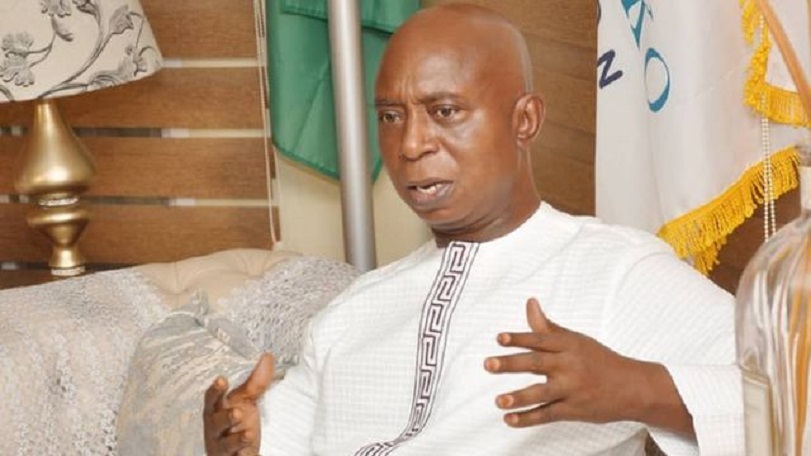
Why Ned Nwoko’s Anti-Gas Flaring Motion Should Be Applauded by All
By Jerome-Mario Utomi
There are clear thinkers, muddled thinkers and people that fall in between. Clear thinkers -are the ones that can cull everything down into the right points-are very hard to find. But if you get yourself a team of clear thinkers, the possibilities are endless. These are men who see tomorrow, trailblazers and high-level executives, but most often misunderstood by some fellow countrymen still stuck in the old normal of yesterday.
Without any shadow of the doubt, Distinguished Senator, Prince Chinedu Munir Nwoko, popularly known as Ned Nwoko, a Nigerian lawyer, philanthropist, politician and Senator representing Delta North Senatorial District in the Nigeria’s Upper Legislative Arm, falls into the bracket of a clear thinker as outlined by Justin Merkins above. This assertion is gleaned in his harvest of baskets of bills and motions in his seven months sojourn so far in the nation’s Upper Legislative Arm, the Senate, popularly called the red chamber. This is signposted in his scorecard of resourcefulness, ingenuity and vivid understanding of legislative procedures.
Some of these bills and motions coming from Senator Nwoko includes but not limited; Motion On Urgent Need for African Nations to Attain Veto Power at the United Nations Security Council, “A bill for an Act to alter the 1999 Constitution (as altered) to provide for Diaspora Voting and for related matters” holds several advantages, particularly in the area of inclusivity and representation for Nigerian citizens living abroad. Motion on urgent Need to Investigate the Brutal Murder of a Two-Year-Old Boy by Operatives of (NDLEA). Motion on the Need to Demand Reparations for Historical Injustices and Mitigation of Neo-colonialism in Nigeria, African Nations.
Others include; the motion titled “Need for the Establishment of Social Media Platform Offices in Nigeria for Economic Advancement and Efficient Dispute Resolution. Motion on Urgent Need for African Nations to Attain Veto Power at the United Nations Security Council. Motion on Investigating Crude Oil Theft in the Niger Delta. Motion on the Need for Redress, Healing and Reconciliation for the Grievous 1967 Asaba Massacre. Need to Demand Reparations for Historical Injustices and Mitigation of Neo-Colonialism in Nigeria, African Nations. Motion on the urgent need to stop gas flaring and enforces anti-gas flaring regulations in Ndokwa Land and the Niger Delta Region among others.
Beginning with the last which focused on urgent need to stop gas flaring and enforces anti-gas flaring regulations in Ndokwa Land and the Niger Delta Region among others, there exists several reasons that qualifies the motion as not only timely and a right step taken in the right direction, but carries several advantages essential for the well-being of the people and the environment.
The motion maintained that gas flaring contributes significantly to air and water pollution, which has detrimental effects on the environment, wildlife, and public health. He argued that by addressing this issue, the motion aims to protect the ecological balance and biodiversity in the affected regions, safeguarding the long-term environmental sustainability.
Of course, the Lawmaker’s argument is not only in order but should be perfectly appreciated by all Niger Deltans of goodwill.
The reason is not far-fetched.
Going by commentaries, what is currently happening as regards gas flaring in the Niger Delta region and Delta state in particular may no longer be the first half of a reoccurring circle, but, rather the beginning of something negatively new and different.
In fact, the aforementioned motion in my opinion will be more appreciated if one takes a tour by boat of creeks and coastal communities of Warri South West and Warri North Local Government Areas of Delta state. Such a trip will amply reveal that the much-anticipated end in sight of gas flaring is actually not in sight. In the same manner, a journey by road from Warri via Eku-Abraka to Agbor, and another road trip from Warri through Ughelli down to Ogwuashi Ukwu in Aniocha Local Government of the state, shows an environment where people cannot properly breathe as it is littered by gas flaring.
The above account further highlights as true the argument by the Idumuje Ugboko born Senator that gas flaring releases harmful pollutants such as sulphur dioxide, nitrogen oxides, and particulate matter into the atmosphere, posing serious health risks to nearby communities.
Aside from seeking improved public health and reducing the prevalence of respiratory diseases and other health complications associated with exposure to flared gas emissions, also worthy of commendation is Prince Nwoko’s recognition that the negative impacts of gas flaring extends to the economic well-being of the affected communities- and his understanding that addressing this issue, will create the potential for sustainable economic development, promotes alternative uses for associated gas, such as power generation, which can create employment opportunities and support local livelihoods.
Tragically unique and a major reason why Nwoko’s motion should be applauded is the experts explanation that the major reason for flaring of gases is that when crude oil is extracted from onshore and offshore oil wells, it brings with it raw natural gas to the surface and where natural gas transportation, pipelines, and infrastructure are lacking, like in the case of Nigeria, this gas is instead burned off or flared as a waste product as this is the cheapest option. This has been going on since the 1950s when crude oil was first discovered in commercial quantities in Nigeria.
Further posturing Senator Nwoko’s position on economic losses as a result of gas flaring as true is a recent newspaper report (Saturday December 23, 2023), which among other remarks noted that despite the continuous shortage of gas for electricity generation companies to power their turbines with, Nigeria is still losing massive revenue and generation potential to the persistent gas flaring by oil companies operating in the country.
The report observed that the country has continued to suffer losses from its gas, as companies operating in the country’s petroleum industry flared 241.1 million standard cubic feet, MSCF, of gas in the first 11 months (January – November) 2023, according to latest data from the National Oil Spill Detection and Response Agency, NOSDRA.
NOSDRA put the value of the 241.1 MSCF flared in the said period of 2023 at $843.7 million, adding that going by the Central Bank of Nigeria (CBN)’s current official exchange rate of N832.32/$, this translates to a loss of N702.2 billion potential revenue.
Away from inherent health and economic losses associated with gas flaring, the motion also mooted some alluring imperatives arising from compliance with regulations. Enforcing anti-gas flaring regulations, it noted, is crucial for upholding environmental laws and standards. By urging the enforcement of these regulations, the motion promotes adherence to legal frameworks designed to minimize the environmental impact of oil and gas operations, ensuring that companies operating in the region comply with environmental regulations and best practices.
Senator Ned said something else.
On community empowerment, he insisted that the motion for cessation of gas flaring, which has been a source of contention and dissatisfaction among the residents of the Niger Delta region, will not only address the issue, but aims at giving voice to the affected communities and involve them in the decision-making processes that impact their environment and well-being.
While noting that Gas flaring contributes to greenhouse gas emissions, which exacerbate climate change, Nwaoko underlined that by taking steps to stop gas flaring, the motion aligns with global efforts to mitigate climate change by reducing carbon emissions, which is crucial for the long-term sustainability of the planet.
Whereas it will demonstrate Nigeria’s commitment to environmental stewardship and sustainable development, potentially improving the country’s international reputation and strengthening its position in global environmental initiatives and agreements, also working in favour of the motion is its willingness to encourage government agencies to be accountable for the oversight of oil and gas operations, while ensuring that environmental regulations are effectively implemented and enforced.
This accountability can lead to improved governance and regulatory oversight, enhancing transparency and responsibility in the management of natural resources. Nwoko concluded.
For me, issues raised by Senator Nwoko are not political but moral, environmental and economic concerns aimed at improving the life chances of Niger Deltans and therefore, should be given the needed support by all irrespective of party affiliations.
Utomi is the Programme Coordinator (Media and Public Policy) for Social and Economic Justice Advocacy (SEJA), Lagos. He could be reached via je*********@***oo.com or 08032725374
Feature/OPED
How Christians Can Stay Connected to Their Faith During This Lenten Period
It’s that time of year again, when Christians come together in fasting and prayer. Whether observing the traditional Lent or entering a focused period of reflection, it’s a chance to connect more deeply with God, and for many, this season even sets the tone for the year ahead.
Of course, staying focused isn’t always easy. Life has a way of throwing distractions your way, a nosy neighbour, a bus driver who refuses to give you your change, or that colleague testing your patience. Keeping your peace takes intention, and turning off the noise and staying on course requires an act of devotion.
Fasting is meant to create a quiet space in your life, but if that space isn’t filled with something meaningful, old habits can creep back in. Sustaining that focus requires reinforcement beyond physical gatherings, and one way to do so is to tune in to faith-based programming to remain spiritually aligned throughout the period and beyond.
On GOtv, Christian channels such as Dove TV channel 113, Faith TV and Trace Gospel provide sermons, worship experiences and teachings that echo what is being practised in churches across the country.
From intentional conversations on Faith TV on GOtv channel 110 to true worship on Trace Gospel on channel 47, these channels provide nurturing content rooted in biblical teaching, worship, and life application. Viewers are met with inspiring sermons, reflections on scripture, and worship sessions that help form a rhythm of devotion. During fasting periods, this kind of consistent spiritual input becomes a source of encouragement, helping believers stay anchored in prayer and mindful of God’s presence throughout their daily routines.
To catch all these channels and more, simply subscribe, upgrade, or reconnect by downloading the MyGOtv App or dialling *288#. You can also stream anytime with the GOtv Stream App.
Plus, with the We Got You offer, available until 28th February 2026, subscribers automatically upgrade to the next package at no extra cost, giving you access to more channels this season.
Feature/OPED
Turning Stolen Hardware into a Data Dead-End
By Apu Pavithran
In Johannesburg, the “city of gold,” the most valuable resource being mined isn’t underground; it’s in the pockets of your employees.
With an average of 189 cellphones reported stolen daily in South Africa, Gauteng province has become the hub of a growing enterprise risk landscape.
For IT leaders across the continent, a “lost phone” is rarely a matter of a misplaced device. It is frequently the result of a coordinated “snatch and grab,” where the hardware is incidental, and corporate data is the true objective.
Industry reports show that 68% of company-owned device breaches stem from lost or stolen hardware. In this context, treating mobile security as a “nice-to-have” insurance policy is no longer an option. It must function as an operational control designed for inevitability.
In the City of Gold, Data Is the Real Prize
When a fintech agent’s device vanishes, the $300 handset cost is a rounding error. The real exposure lies in what that device represents: authorised access to enterprise systems, financial tools, customer data, and internal networks.
Attackers typically pursue one of two outcomes: a quick wipe for resale on the secondary market or, far more dangerously, a deep dive into corporate apps to extract liquid assets or sellable data.
Clearly, many organisations operate under the dangerous assumption that default manufacturer security is sufficient. In reality, a PIN or fingerprint is a flimsy barrier if a device is misconfigured or snatched while unlocked. Once an attacker gets in, they aren’t just holding a phone; they are holding the keys to copy data, reset passwords, or even access admin tools.
The risk intensifies when identity-verification systems are tied directly to the compromised device. Multi-Factor Authentication (MFA), widely regarded as a gold standard, can become a vulnerability if the authentication factor and the primary access point reside on the same compromised device. In such cases, the attacker may not just have a phone; they now have a valid digital identity.
The exposure does not end at authentication. It expands with the structure of the modern workforce.
65% of African SMEs and startups now operate distributed teams. The Bring Your Own Device (BYOD) culture has left many IT departments blind to the health of their fleet, as personal devices may be outdated or jailbroken without any easy way to know.
Device theft is not new in Africa. High-profile incidents, including stolen government hardware, reinforce a simple truth: physical loss is inevitable. The real measure of resilience is whether that loss has any residual value. You may not stop the theft. But you can eliminate the reward.
Theft Is Inevitable, Exposure is Not
If theft cannot always be prevented, systems must be designed so that stolen devices yield nothing of consequence. This shift requires structured, automated controls designed to contain risk the moment loss occurs.
Develop an Incident Response Plan (IRP)
The moment a device is reported missing, predefined actions should trigger automatically: access revocation, session termination, credential reset and remote lock or wipe.
However, such technical playbooks are only as fast as the people who trigger them. Employees must be trained as the first line of defence —not just in the use of strong PINs and biometrics, but in the critical culture of immediate reporting. In high-risk environments, containment windows are measured in minutes, not hours.
Audit and Monitor the Fleet Regularly
Control begins with visibility. Without a continuous, comprehensive audit, IT teams are left responding to incidents after damage has occurred.
Opting for tools like Endpoint Detection and Response (EDR) allows IT teams to spot subtle, suspicious activities or unusual access attempts that signal a compromised device.
Review Device Security Policies
Security controls must be enforced at the management layer, not left to user discretion. Encryption, patch updates and screen-lock policies should be mandatory across corporate devices.
In BYOD environments, ownership-aware policies are essential. Corporate data must remain governed by enterprise controls regardless of device ownership.
Decouple Identity from the Device
Legacy SMS-based authentication models introduce avoidable risk when the authentication channel resides on the compromised handset. Stronger identity models, including hardware tokens, reduce this dependency.
At the same time, native anti-theft features introduced by Apple and Google, such as behavioural theft detection and enforced security delays, add valuable defensive layers. These controls should be embedded into enterprise baselines rather than treated as optional enhancements.
When Stolen Hardware Becomes Worthless
With POPIA penalties now reaching up to R10 million or a decade of imprisonment for serious data loss offences, the Information Regulator has made one thing clear: liability is strict, and the financial fallout is absolute. Yet, a PwC survey reveals a staggering gap: only 28% of South African organisations are prioritising proactive security over reactive firefighting.
At the same time, the continent is battling a massive cybersecurity skills shortage. Enterprises simply do not have the boots on the ground to manually patch every vulnerability or chase every “lost” terminal. In this climate, the only viable path is to automate the defence of your data.
Modern mobile device management (MDM) platforms provide this automation layer.
In field operations, “where” is the first indicator of “what.” If a tablet assigned to a Cape Town district suddenly pings on a highway heading out of the city, you don’t need a notification an hour later—you need an immediate response. An effective MDM system offers geofencing capabilities, automatically triggering a remote lock when devices breach predefined zones.
On Supervised iOS and Android Enterprise devices, enforced Factory Reset Protection (FRP) ensures that even after a forced wipe, the device cannot be reactivated without organisational credentials, eliminating resale value.
For BYOD environments, we cannot ignore the fear that corporate oversight equates to a digital invasion of personal lives. However, containerization through managed Work Profiles creates a secure boundary between corporate and personal data. This enables selective wipe capabilities, removing enterprise assets without intruding on personal privacy.
When integrated with identity providers, device posture and user identity can be evaluated together through multi-condition compliance rules. Access can then be granted, restricted, or revoked based on real-time risk signals.
Platforms built around unified endpoint management and identity integration enable this model of control. At Hexnode, this convergence of device governance and identity enforcement forms the foundation of a proactive security mandate. It transforms mobile fleets from distributed risk points into centrally controlled assets.
In high-risk environments, security cannot be passive. The goal is not recovery. It is irrelevant, ensuring that once a device leaves authorised hands, it holds no data, no identity leverage, and no operational value.
Apu Pavithran is the CEO and founder of Hexnode
Feature/OPED
Daniel Koussou Highlights Self-Awareness as Key to Business Success
By Adedapo Adesanya
At a time when young entrepreneurs are reshaping global industries—including the traditionally capital-intensive oil and gas sector—Ambassador Daniel Koussou has emerged as a compelling example of how resilience, strategic foresight, and disciplined execution can transform modest beginnings into a thriving business conglomerate.
Koussou, who is the chairman of the Nigeria Chapter of the International Human Rights Observatory-Africa (IHRO-Africa), currently heads the Committee on Economic Diplomacy, Trade and Investment for the forum’s Nigeria chapter. He is one of the young entrepreneurs instilling a culture of nation-building and leadership dynamics that are key to the nation’s transformation in the new millennium.
The entrepreneurial landscape in Nigeria is rapidly evolving, with leaders like Koussou paving the way for innovation and growth, and changing the face of the global business climate. Being enthusiastic about entrepreneurship, Koussou notes that “the best thing that can happen to any entrepreneur is to start chasing their dreams as early as possible. One of the first things I realised in life is self-awareness. If you want to connect the dots, you must start early and know your purpose.”
Successful business people are passionate about their business and stubbornly driven to succeed. Koussou stresses the importance of persistence and resilience. He says he realised early that he had a ‘calling’ and pursued it with all his strength, “working long weekends and into the night, giving up all but necessary expenditures, and pressing on through severe setbacks.”
However, he clarifies that what accounted for an early success is not just tenacity but also the ability to adapt, to recognise and respond to rapidly changing markets and unexpected events.
Ambassador Koussou is the CEO of Dau-O GIK Oil and Gas Limited, an indigenous oil and natural gas company with a global outlook, delivering solutions that power industries, strengthen communities, and fuel progress. The firm’s operations span exploration, production, refining, and distribution.
Recognising the value of strategic alliances, Koussou partners with business like-minds, a move that significantly bolsters Dau-O GIK’s credibility and capacity in the oil industry. This partnership exemplifies the importance of building strong networks and collaborations.
The astute businessman, who was recently nominated by the African Union’s Agenda 2063 as AU Special Envoy on Oil and Gas (Continental), admonishes young entrepreneurs to be disciplined and firm in their decision-making, a quality he attributed to his success as a player in the oil and gas sector. By embracing opportunities, building strong partnerships, and maintaining a commitment to excellence, Koussou has not only achieved personal success but has also set a benchmark for future generations of African entrepreneurs.
His journey serves as a powerful reminder that with determination and vision, success is within reach.
-
Feature/OPED6 years agoDavos was Different this year
-
Travel/Tourism10 years ago
Lagos Seals Western Lodge Hotel In Ikorodu
-
Showbiz3 years agoEstranged Lover Releases Videos of Empress Njamah Bathing
-
Banking8 years agoSort Codes of GTBank Branches in Nigeria
-
Economy3 years agoSubsidy Removal: CNG at N130 Per Litre Cheaper Than Petrol—IPMAN
-
Banking3 years agoSort Codes of UBA Branches in Nigeria
-
Banking3 years agoFirst Bank Announces Planned Downtime
-
Sports3 years agoHighest Paid Nigerian Footballer – How Much Do Nigerian Footballers Earn