Showbiz
Rising Stars of West Africa: Spotify Spotlights Must-Hear Talents for 2024
Africa is a treasure trove of creative talents and building on from the massive success that African music experienced in 2023, this year promises the unveiling of exciting new voices that should grab the attention of musical lovers across the continent and even beyond.
From soulful singers to trailblazing artists, these emerging talents are going to be the ones to watch this year as they put in work to captivate audiences and redefine the pulse of Africa’s music scene.
Spotify, the world’s leading streaming platform, has taken notice, unveiling a captivating list of rising stars from Sub-Saharan Africa (SSA) poised to make their mark on the local and global music scenes in 2024.
These fresh voices embrace familiar sounds, while adding their innovative twists, creating a melting pot of potential that could shift the musical landscape. Think Afrobeats infused with jazz improvisation or hip-hop spiked with electronic flourishes, resulting in sonically captivating sound blends bound to captivate listeners all over. They are woven from across the diverse threads of Nigeria and Ghana, bringing a rich tapestry of styles, cultures, and perspectives to the forefront.
NIGERIA
Meet Chimamanda Pearl Chukwuma, better known by her stage name Qing Madi, a 17-year-old Nigerian prodigy taking the music world by storm. Her journey began at 16 with the viral sensation See Finish, a single that ignited the internet and showcased her raw talent. The Nigerian Afropop singer and a Spotify EQUAL Africa artist won the hearts of many with her track Ole and its remix featuring a Bnxn. Her self-titled EP slowly climbed up the charts with tracks like Vision and American Love quickly becoming favourites, proving her versatility and depth as an artist. We anticipate a blooming 2024 for Qing Madi.
Let’s dive into the world of Guchi, whose real name is Ugochi Lydia Onuoha, a vibrant and talented Nigerian Afropop singer making waves in the music scene. Her music has made her incredibly popular in Nigeria, and she’s seen as one of the top emerging female artists in the country. The Nigerian singer and songwriter went viral with tracks like All Over You last year and doubled down with Feeling Good featuring Bayanni. Her sound is simple yet truly characteristic of Afrobeats singers like Yemi Alade and Tiwa Savage. She is definitely an artist to watch.
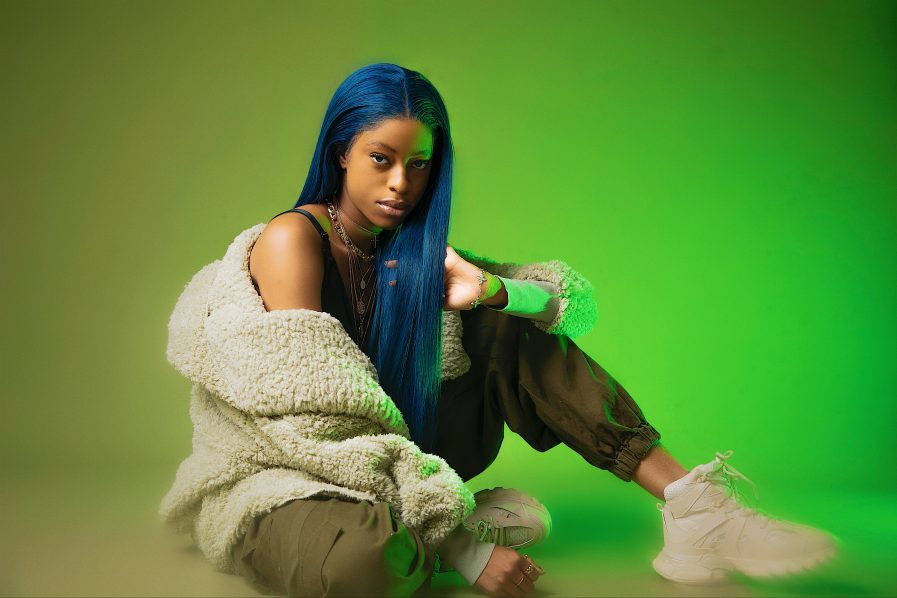
Popularly known as Seddy, SGaWD is a Nigerian rapper currently making waves in the industry. The multi-hyphenate singer has played in the realms of Alte, R&B and HipHop the last few years but her experimentation with Jersey Club, Mara/ Street Music and Rap last year with tracks like Boytoy
and Dump All Your Worries on The Dance Floor put SGawD on a pedestal this year as one to watch when it comes to fusion and cross-continent export.
From Fresh Finds alum to chart-topping sensation, YKB (Yusuf Oluwo Gbolaga) is making his mark on Nigerian music. Tracks like san siro and his captivating duet This Must Be Love with King Promise showcase his vibrant Afropop sound and growing talent. YKB isn’t afraid to get creative, from cult followings to captivating covers, he’s wiggling his way into the hearts of fans – and the Nigerian music scene itself. This is just the beginning for YKB, so keep your ears open for more infectious energy and hit songs.
GHANA
O’Kenneth’s a supernova blazing across the Ghanaian music scene. This hip-hop and drill artist, known for his deep tenor vocals and lyrics, is a leading voice in the Asakaa movement. While his track LONELY ROAD, with Xlimkid, ripped through the final quarter of 2023, his versatile features throughout the year proved his undeniable talent. So 2024 get ready, O’Kenneth’s poised for a stratospheric rise.
Ghanaian music is experiencing a soulful surge with the arrival of Kelvin Black alias AratheJay. This rising star blends traditional African sounds with contemporary beats, weaving intricate stories through his vocals. Tracks like Sankofa – Remix and PRACTICE showcase his introspective songwriting and resonate deeply with listeners. Not only does AratheJay effortlessly navigate between rap and hiplife, but he injects the Ghanaian music scene with exciting freshness. Could 2024 be the year his unique sound would catapult him to stardom?
Showbiz
Carnival Calabar to Unveil 2026 Theme May 31 in Lagos
By Aduragbemi Omiyale
The theme for the 2026 edition of the prestigious Carnival Calabar will be unveiled on Sunday, May 31, at the Eko Hotel Convention Centre, Lagos.
This theme-unveiling event is being organised by the Cross River State Carnival Commission.
The theme guides the bands in their choreography and the presentation of the whole carnival. It also allows the state to engage with stakeholders, sponsors, and the diplomatic community as part of preparations for the yearly programme.
For this year’s unveiling event, Ambassador Gautier Mignot of the European Union (EU) is expected to be the special guest of honour, with Ambassador Paulo Santos of Portugal as the guest of honour.
As part of the activities leading up to the unveiling event, the Chairman of Carnival Calabar, Dr Gabe Onah, paid a strategic visit to Multichoice Nigeria Canal + Company. He was accompanied by the Lead Marketing Consultant of Carnival Calabar, Mrs Mary Ephraim Egbas.
The delegation was received by the chief executive of Multichoice Nigeria Canal + Company, Ms Kemi Okunola, and the Executive Director, General Entertainment, Multichoice Nigeria, Dr Busola Tejumola.
The delegation briefed Multichoice on plans for digital transformation and streaming to a global audience for this year’s event, as well as this Sunday’s event.
Carnival Calabar is the biggest Street Dance Parade in Africa, held every December in Cross River State. It is one of the biggest tourism events in West Africa, drawing millions of visitors to Cross River every year.
Showbiz
The Evolution of Home Viewing in Nigeria
There was a time in Nigeria when watching movies at home wasn’t strictly a “home” experience. People rented VHS tapes and later DVDs from local video clubs around the neighbourhood, and in many cases, viewing extended to video centres or where groups gathered to watch films and sports. It was a shared setup shaped by access, availability, and a very communal way of consuming entertainment.
As time went on, analogue television became the main form of home viewing. Families would gather around a single TV set in the living room, with limited channels and fixed programming schedules. Content was not really something you chose; it was something you aligned your day around. Antenna adjustments were part of the routine, and despite the limitations, TV became a central part of everyday household life.
The introduction of satellite and pay-TV services marked a major shift. Viewers suddenly had more control, more variety, and more access. Local and international content expanded significantly, covering movies, sports, news, and entertainment in a way that changed viewing habits from passive scheduling to active choice.
This is where platforms like GOtv became relevant in the Nigerian context. By making premium entertainment more affordable and widely accessible, GOtv helped bridge the gap between content quality and everyday households. It wasn’t just about more channels; it was about making consistent access to entertainment more realistic for a wider audience.
Today, home viewing has become more flexible and audience-driven. People are no longer tied to fixed schedules; viewing is now based on preference, timing, and convenience. At the same time, shared viewing still exists, especially around live sports and major TV moments, where entertainment becomes a collective experience again, just in a more modern form.
From rented tapes and video centres to satellite TV and now more structured, accessible entertainment platforms, the evolution of home viewing in Nigeria has been a steady shift toward more choice and control. Throughout that journey, GOtv has remained part of the ecosystem, supporting how everyday audiences access and experience entertainment at home.
Showbiz
How Far Would You Go For the People You Love? Stripped Answers This
Five episodes in, and Africa Magic’s limited series, Stripped, has quietly got people talking. Not because of the stripping, though yes, that is very much part of it, but because of what sits underneath all of it. The guilt. The shame. The quiet, suffocating pressure of being a man in Lagos who is supposed to have it all together but simply does not.
The premise sounds simple. Five friends, all broke, all stuck, all too proud to say it out loud, stumble into a stripping gig at an upscale club called Trabaye after its sharp and seductive owner, Yvonne (Constance Owoyemi) spots them at a birthday party and sees something worth paying for. What follows is anything but simple.
Kelechi “Kel” Okere (Daniel Etim Effiong) is the one carrying the most weight. A former marketing executive now driving Uber to keep his wife and children afloat, Kel is the kind of man who will smile through a crisis so nobody worries. His wife, Ada (Future Lolo Lamai), thinks he is still closing big deals. His children need school fees. The rent is overdue. And every night he comes home, the lie gets a little heavier.
Bolaji (Mofe Duncan), who is loud, charming and energetic, watches his cafe dream bleed out quietly. Suppliers want cash; customers want credit, and charm, it turns out, cannot patch a leaking roof.
Damina (Efa Iwara) is the cool bachelor whose carefully constructed life collapses the moment his pregnant ex walks back through the door. Mensah (Ian Wordi) is a Ghanaian-Nigerian architect and youth pastor caught in a relationship that is slowly erasing him. And Voke (Kunle Remi) is running out of time to free his imprisoned father, one clever scheme at a time.
Their first night at Trabaye is overwhelming. The music, lights, money, and the strange, intoxicating feeling of being wanted. They laugh in the car afterwards and call themselves “Strip Gawds.” For one night, the bills don’t exist. But nothing in Lagos stays clean for long.
Bolaji’s wandering eye pulls the group into dangerous territory. Voke’s schemes start bleeding into the club’s shadier edges. Kel finds himself dangerously close to a line he cannot cross, pulled back only by the sound of his wife’s voice on the phone. And Mensah quietly wonders how many layers of himself he can strip away before there is nothing left worth keeping.
The show’s most devastating moment comes in Episode 4, when Kel has a panic attack. There is no dramatic score, just a man cracking under the weight of everything he has been holding alone. Viewers have not stopped talking about it since. It is the kind of scene that does not just tell you about a character; it shows you something true about the world.
Etim Effiong, who also serves as executive producer, said it plainly. “Men need to catch a break. It’s a really tough world for men, and we deserve some credit.” Episode 5 offers a brief exhale before the walls begin closing in again. The money is good. But the shadows are getting closer.
Stripped is no longer just a show about five men taking their clothes off for money. It is about what men carry in silence, what friendship costs when survival is on the line, and whether the things you do to save your life can also be the things that cost you your soul.
If you have not started watching, you should start now. Catch up on all five episodes now on DStv Stream, and tune in for the final episode this Sunday at 8 PM on Africa Magic Showcase, DStv Channel 151, and GOtv Channel 8.
-
Feature/OPED6 years agoDavos was Different this year
-
Travel/Tourism10 years ago
Lagos Seals Western Lodge Hotel In Ikorodu
-
Showbiz3 years agoEstranged Lover Releases Videos of Empress Njamah Bathing
-
Banking8 years agoSort Codes of GTBank Branches in Nigeria
-
Economy3 years agoSubsidy Removal: CNG at N130 Per Litre Cheaper Than Petrol—IPMAN
-
Banking3 years agoSort Codes of UBA Branches in Nigeria
-
Banking3 years agoFirst Bank Announces Planned Downtime
-
Sports3 years agoHighest Paid Nigerian Footballer – How Much Do Nigerian Footballers Earn