Connect with us

General

Court Nullifies N800bn Rivers 2024 Budget Signed Into Law by Fubara

Published

on

rivers assembly

By Adedapo Adesanya

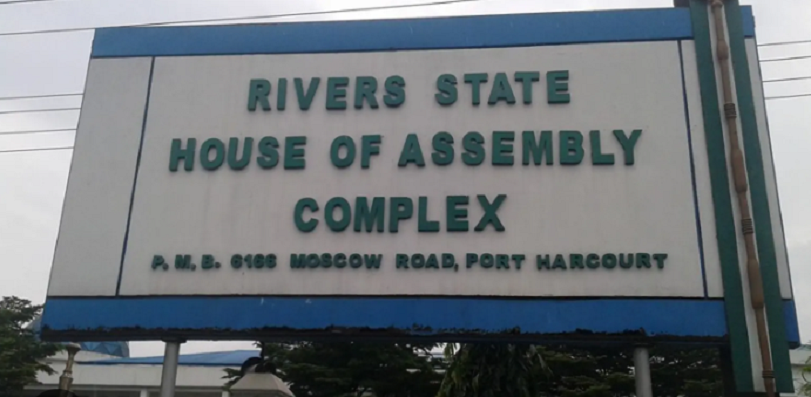
Justice James Omotosho of the Federal High Court Abuja has nullified the N800 billion 2024 budget passed by the Edison Ehie-led group of the Rivers State House of Assembly and signed into law by Governor Siminalayi Fubara.

The court also upheld the suit filed by the Assembly and the now-recognized Speaker of the House, Mr Martin Amaewhule, against Mr Fubara, which sought an order of injunction restraining the governor from frustrating the Assembly under his leadership as a speaker, among others.

Recall that in October 2023, a political crisis rocked the South-South state after a fire burnt the Assembly complex, which led to its demolition in December. In the midst of these issues, Mr Fubara presented the 2024 budget proposal of N800 billion to five out of a supposed 31 members of the State Assembly led by the then-factional speaker, Mr Ehie.

The presentation was done at the Government House in Port Harcourt, following the demolition of the Assembly Complex by the state government and after a court restrained Mr Amaewhule, from using the Assembly Complex.

Mr Ehie and the other pro-Fubara lawmakers passed the budget estimates under 24 hours and the Governor signed the bill into law, saying it is aimed at promoting economic development through inclusive growth and addressing socio-economic inequality in the state.

Mr Ehie would later resign from the House and Mr Amaewhule was restored as the Assembly’s Speaker after both sides met with President Bola Tinubu in Abuja.

Mr Amaewhule and 25 other lawmakers loyal to ex-Governor Nyesom Wike subsequently demanded that Fubara present the 2024 budget estimates to the Assembly afresh and the matter was taken to court.

On Monday, Mr Ken Njemanze, who is counsel for Mr Amaewhule, accused the governor of interfering with the performance and functions of the state lawmakers contrary to the doctrine of the separation of powers.

The plaintiff also sought an order of injunction restraining the respondents from denying the Assembly the due funds for running its affairs including the payment of salaries, allowances, emoluments, and meeting its financial obligations no matter how described.

In his response, Justice Omotosho observed Mr Ehie could not sue or be sued in the case as he is no longer the Speaker or a member of the Assembly.

On the preliminary objection challenging the jurisdiction of his court, Justice Omotosho held the suit was properly constituted before him.

He disagreed with the plaintiffs on the powers of the governor, noting that the power to make laws in a state is shared between the executive, the state Assembly, and local government areas.

Concerning the National Assembly taking over the functions of the State Assembly, the judge said that can only happen when the state lawmakers are no longer sitting and transacting business as enshrined in the 1999 Constitution and other relevant laws.

On the removal of the Clerk of the Rivers State House of Assembly, Mr Emeka Amadi, who was redeployed by the Rivers State Head of Service, Justice Omotosho declared it null and void and invalid in the face of the law.

Justice Omotosho said the constitution is clear that the appointment of a Clerk and Deputy Clerk is done by the Rivers State Speaker and is subject to confirmation by the lawmakers, and that their appointment and remuneration are governed by the Rivers State House Of Assembly Law, even though they are civil servants.

The judge said the first plaintiff is entitled to funds or amount standing to the credit of Rivers Assembly in the state’s Consolidated Revenue Fund, including salaries and emoluments and that same cannot be stopped by anyone including the governor.

The judge declared that the governor of Rivers State, by himself or by members of the staff of the Rivers State Public Service is not entitled to take steps aimed at interfering with the affairs of the River State House of Assembly, and the Speaker, in the performance of their duties.

The judge said the governor cannot withhold the due funds of the lawmakers in the state’s Consolidated Revenue Fund and he restrained the National Assembly from accepting any requests from the governor.

The judge also observed that the governor’s legal team had withdrawn all his processes in the matter, adding that it means that he admitted all the facts stated by the plaintiffs.

The judge held that based on facts before his court, Mr Amaewhule remained the valid Speaker of the Rivers State Assembly and said the purported sitting of Ehie and four other lawmakers who sat to pass the budget of the state is null and void.

Justice Omotosho said the court found it strange that the governor would destroy the Rivers State Assembly building as well as present an appropriation bill to five lawmakers.

He declared the presentation of the bill to the five lawmakers void and granted the order setting aside the purported Appropriation Bill signed, despite the interim order of his court, restraining him.

The judge also granted the order restraining the governor from continuing the demolition or construction of the Rivers State building.

The court said all the acts of the governor with four lawmakers is a nullity and he should go through the lawmakers presided by Mr Amaewhule.


Adedapo Adesanya is a journalist, polymath, and connoisseur of everything art. When he is not writing, he has his nose buried in one of the many books or articles he has bookmarked or simply listening to good music with a bottle of beer or wine. He supports the greatest club in the world, Manchester United F.C.

Advertisement
Click to comment

Leave a Reply

Your email address will not be published. Required fields are marked *

General

NIMASA Rallies Stakeholders’ to Develop National Action Plan

Published

on

NIMASA revenue

By Adedapo Adesanya

The Nigerian Maritime Administration and Safety Agency (NIMASA) has pledged its commitment to provide the regulatory leadership, technical coordination, and stakeholder engagement required to successfully develop and implement a robust National Action Plan on maritime decarbonization in Nigeria.

The Director General of the agency, Mr Dayo Mobereola, made this known during the National Stakeholders’ workshop on the development of a National Maritime Decarbonization Action Plan, further describing the workshop as a critical step in actualising the Federal Government’s blue economy and climate objectives.

Represented by the Executive Director, Operations, Mr Fatai Taiye Adeyemi, the NIMASA DG underscored the significance of the IMO GreenVoyage2050 Project, a technical cooperation initiative /designed to support developing countries in implementing the IMO GHG Strategy.

According to him, the National Action Plan being developed will reflect national realities, leverage existing capacities, address identified gaps, and align with broader economic and environmental priorities of the federal government.

Mr Mobereola stressed that “this transition is not merely about compliance with international obligations, it is about safeguarding our marine environment, protecting public health, strengthening the blue economy, and ensuring that our maritime industry remains competitive and future-ready”, the DG said.

Also speaking at the event was the Technical Manager of the IMO GreenVoyage2050 Project, Ms Astrid Dispert, who highlighted that the overarching objective of the initiative is to advance a coherent and globally aligned regulatory framework to accelerate maritime decarbonization.

She also emphasised that NIMASA plays a pivotal role in driving the project at the national level.

The IMO GreenVoyage2050 Project provides technical expertise and institutional support to assist countries in developing and implementing National Action Plans that promote sustainable shipping practices, encourage investment in clean technologies, and strengthen capacity for long-term emissions reduction.

Through this collaboration, the federal government is advancing deliberate steps towards maritime decarbonization, reinforcing its commitment to global climate goals and ensuring a cleaner, greener, and more sustainable future for the sector.

Continue Reading

General

BPP Mandates Digital Submission for MDAs From March 1

Published

on

procurement standard BPP

By Adedapo Adesanya

The Bureau of Public Procurement (BPP) has directed all Ministries, Departments and Agencies (MDAs) to comply with its digital submission process effective March 1.

The directive was contained in a circular signed by the Director-General of the Bureau, Mr Adebowale Adedokun, noting that the move was part of the bureau’s commitment to digital transformation and paperless governance.

It explained that the transition followed an earlier circular of Aug. 4, 2025, which introduced electronic submission procedures.

According to the bureau, it has successfully moved from physical filings to a dedicated e-mail service for document submissions and is now advancing to a more robust and integrated system.

The circular announced the inauguration of the BPP Digital Submission Portal, a web-based platform designed to enable MDAs submit procurement-related documents directly to the Bureau.

It stated that the automated platform would streamline the submission process, enhance transparency and ensure accelerated tracking of procurement-related documents and petitions.

“With effect from March 1, all MDAs will be required to use the portal to submit requests for ‘No Objection’ Certificates, approvals for ‘No Objection’ for special procurements, clarifications and status updates on submissions,” the bureau said.

It added that the portal would be hosted on the Bureau’s official website and would become fully operational from the effective date.

The bureau warned that physical submissions or manual hand-deliveries would no longer be prioritised and would eventually be rejected following the full transition to the digital platform.

It urged accounting officers to brief their procurement departments and ICT units on the development to ensure seamless processing of procurement activities from March 1.

It further advised MDAs to contact the Bureau via its official email for information on the onboarding process and integration into the portal.

The bureau emphasised that full compliance by all MDAs was required to ensure a smooth transition and avoid delays in the implementation of the 2026 fiscal year procurement processes.

Continue Reading

General

Senate Seeks Removal of CAC Boss Hussaini Magaji

Published

on

Hussaini Magaji CAC boss

By Adedapo Adesanya

The Senate has asked President Bola Tinubu to remove the Registrar General of the Corporate Affairs Commission (CAC), Mr Hussaini Ishaq Magaji, from office.

The Senate Committee on Finance, while passing a resolution in Abuja on Thursday, accused Mr Magaji, a Senior Advocate of Nigeria (SAN), of failing to honour the Senate’s invitations to account for the finances of his agency.

“He refused on so many occasions to honour our invitation to appear before this committee.

“We have issues with the reconciliation of the revenue of CAC.

“Each time we invite him, he gives us excuses,” the Chairman of the committee, Mr Sani Musa, said as the committee passed the resolution.

CAC was part of a group of agencies that the House of Representatives Public Accounts Committee (PAC) recommended zero allocation for the year 2026, for allegedly failing to account for public funds appropriated to them.

The committee, at an investigative hearing held two weeks ago, accused CAC and some other ministries, departments and agencies (MDAs) of shunning invitations to respond to audit queries contained in the Auditor-General for the Federation’s annual reports for 2020, 2021 and 2022.

The PAC chairman, Mr Bamidele Salam, stated that the National Assembly should not continue to appropriate public funds to institutions that disregard accountability mechanisms, saying this will create fiscal discipline and strengthen transparency across federal institutions and conform with extant financial regulations and the oversight powers of the parliament.

“Public funds are held in trust for the Nigerian people. Any agency that fails to account for previous allocations, refuses to submit audited accounts, or ignores legislative summons cannot, in good conscience, expect fresh budgetary provisions. Accountability is not optional; it is a constitutional obligation,” he said.

Continue Reading

Trending