General
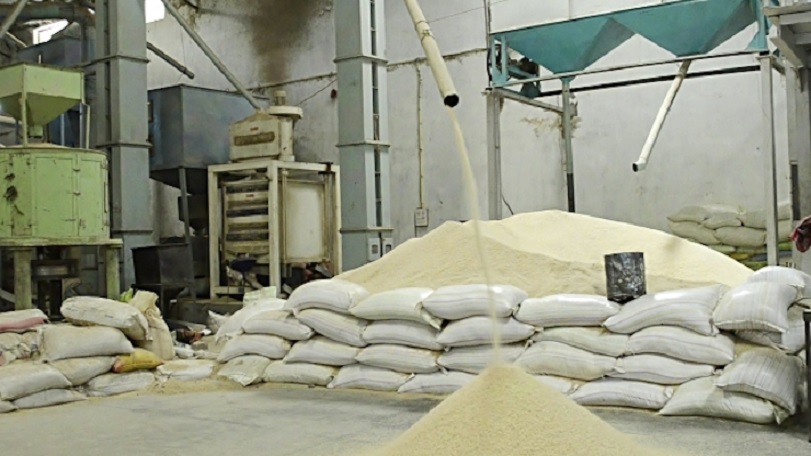
FG Releases Rice, Maize, Others to Crash Food Prices
By Adedapo Adesanya
To address the rising food prices in the country, the federal government has released 102,000 metric tonnes of rice, maize, millet, and garri from the nation’s reserves and stores of rice millers to the Nigerian market.
This came after a three-day meeting of the Special Presidential Committee on Emergency Food Intervention, headed by Chief of Staff to the President, Mr Femi Gbajabiamila, at State House, Abuja.
It was also agreed that it would henceforth clamp down on hoarders of food items in the country, stressing that it may import commodities as a last resort in efforts to address the current shortages.
After the meeting at State House, the Minister of Information and National Orientation, Mr Mohammed Idris, said while the Federal Ministry of Agriculture and Food Security would make available 42,000 metric tonnes of maize, millet, garri, and other commodities, the rice millers, through their association, would release 62,000 metric tonnes of rice from their reserves.
“The first one is that the Ministry of Agriculture and Food Security has been directed to immediately release about 42,000 metric tons of maize, millet, garri, and other commodities in their strategic reserve so that these items will be made available to Nigerians.
“The second one is that we have held meetings with the Rice Millers Association of Nigeria, those who are responsible for producing this rice, and we have asked them to open up their stores.
“They’ve told us that they can guarantee about 60,000 metric tons of rice. This will be made available and we know that is enough to take Nigerians for the next one month to six weeks, perhaps, up to two months. They’ve agreed that they will make that available to Nigerians to bring it out to the market so that food can be made available.
“Now, the whole idea of this is to crash the cost of these food items. And these are measures that will happen immediately.
“42,000 metric tons from the strategic government reserve, about 60,000 metric tons of rice from the rice millers association, they have them in all their storage facilities and government, in conjunction with them, after this exhaustive meeting, has directed that they also bring this out immediately so that the price of rice will come down significantly.”
FG Mulls Import as Short-Term Solution, Investment, and Sanctions
The Minister also disclosed that as a last resort government might import commodities to augment available supplies.
“Now, the third item is that the government is also looking at the possibility, if it becomes absolutely necessary as an interim measure on the short run, to also import some of these commodities immediately so that these commodities can be made available to Nigerians within the next couple of weeks.”
Mr Idris stressed that the government had firmed up arrangements to invest massively to have a better farming season, in conjunction with farmers and other stakeholders.
“Now, with all these emergency measures, there is, of course, a directive to the Federal Ministry of Agriculture and Food Security to invest massively, in conjunction with Nigerian farmers and other producers, so that we can have better season coming up shortly.
“We all know that dry season farming is happening, that will take effect very shortly, and that we hope will also contribute, because as soon as the dry season farming gets underway, it is the hope of government that food prices will also come down.
“In the long run, the Federal Ministry of Agriculture is going to invest massively, so that Nigeria will recover its potential as a food basket and we don’t expect that going forward, we are going to be faced with these challenges again.”
He also disclosed that government would view seriously any attempt to hoard the food items, saying, “Government, of course, is also looking at all those who are hoarding these commodities, because, actually, these commodities are available in the stores of many traders.
“Government is appealing to them, that they should open up these stores, make these commodities available in the interest of our nation. There is no point when the whole country is looking for this food, you are locking up these products so that you make more money and then Nigerians suffer.
“Of course, the government will not fold its arms. We know where all these major traders are. We know where all these major stores are. And if they don’t respond by bringing these commodities to the market, the government will take appropriate measures to ensure that these products are made available to Nigerians.”
On possible sanctions against those hoarding food products, Mr Idris said, “You cannot hold the nation to ransom. You cannot have these commodities and you’re hoarding them in your stores, when we all need them. We are in an emergency situation and we will take emergency measures to make sure that this food is available to Nigerians.”
General
INEC Shifts 2027 Presidential, N’Assembly Elections to January 16
By Adedapo Adesanya
Nigeria will hold next year’s presidential and National Assembly elections a month earlier than planned, after the Independent National Electoral Commission (INEC) revised the polling schedule.
The elections will be held on January 16, instead of the previously announced date of February 20, INEC said in an X post, signed by Mr Mohammed Kudu Haruna, National Commissioner and Chairman, Information and Voter Education Committee.
There were also changes to the Governorship and State Houses of Assembly elections initially fixed for Saturday, March 6 2027, in line with the Electoral Act, 2022, have now been moved to Saturday, February 6, 2027.
The electoral commission said the changes were caused by the enactment of the Electoral Act, 2026 and the repeal of the Electoral Act, 2022, which introduced adjustments to statutory timelines governing pre-election and electoral activities.
“The Commission reviewed and realigned the schedule to ensure compliance with the new legal framework,” it said.
INEC said party primaries (including resolution of disputes) will commence on April 23, 2026 and end on May 30, 2026, after which Presidential and National Assembly campaigns will begin on August 19, 2026, while Governorship and State Houses of Assembly campaigns will begin on September 9, 2026.
It noted that campaigns will end 24 hours before Election Day, and political parties have been advised to strictly adhere to the timelines.
INEC also stated it will enforce compliance with the law.
The electoral body also rescheduled the Osun Governorship election which was earlier scheduled for Saturday, August 8 2026, by a week to Saturday, August 15, 2026.
INEC noted that some activities regarding the Ekiti and Osun governorship elections have already been conducted, and the remaining activities will be implemented in accordance with the Electoral Act, 2026.
Speaking at a news briefing in Abuja two weeks ago, the chairman of INEC, Mr Joash Amupitan, expressed the readiness of the commission to conduct the polls next year.
The timetable issued by the organisation for the polls at the time came when the federal parliament had yet to transmit the amended electoral bill to President Bola Tinubu for assent.
Later that week, the Senate passed the electoral bill, reducing the notice of elections from 360 days to 180 days, while the transmission of results was mandated with a proviso.
General
NIMASA Rallies Stakeholders’ to Develop National Action Plan
By Adedapo Adesanya
The Nigerian Maritime Administration and Safety Agency (NIMASA) has pledged its commitment to provide the regulatory leadership, technical coordination, and stakeholder engagement required to successfully develop and implement a robust National Action Plan on maritime decarbonization in Nigeria.
The Director General of the agency, Mr Dayo Mobereola, made this known during the National Stakeholders’ workshop on the development of a National Maritime Decarbonization Action Plan, further describing the workshop as a critical step in actualising the Federal Government’s blue economy and climate objectives.
Represented by the Executive Director, Operations, Mr Fatai Taiye Adeyemi, the NIMASA DG underscored the significance of the IMO GreenVoyage2050 Project, a technical cooperation initiative /designed to support developing countries in implementing the IMO GHG Strategy.
According to him, the National Action Plan being developed will reflect national realities, leverage existing capacities, address identified gaps, and align with broader economic and environmental priorities of the federal government.
Mr Mobereola stressed that “this transition is not merely about compliance with international obligations, it is about safeguarding our marine environment, protecting public health, strengthening the blue economy, and ensuring that our maritime industry remains competitive and future-ready”, the DG said.
Also speaking at the event was the Technical Manager of the IMO GreenVoyage2050 Project, Ms Astrid Dispert, who highlighted that the overarching objective of the initiative is to advance a coherent and globally aligned regulatory framework to accelerate maritime decarbonization.
She also emphasised that NIMASA plays a pivotal role in driving the project at the national level.
The IMO GreenVoyage2050 Project provides technical expertise and institutional support to assist countries in developing and implementing National Action Plans that promote sustainable shipping practices, encourage investment in clean technologies, and strengthen capacity for long-term emissions reduction.
Through this collaboration, the federal government is advancing deliberate steps towards maritime decarbonization, reinforcing its commitment to global climate goals and ensuring a cleaner, greener, and more sustainable future for the sector.
General
BPP Mandates Digital Submission for MDAs From March 1
By Adedapo Adesanya
The Bureau of Public Procurement (BPP) has directed all Ministries, Departments and Agencies (MDAs) to comply with its digital submission process effective March 1.
The directive was contained in a circular signed by the Director-General of the Bureau, Mr Adebowale Adedokun, noting that the move was part of the bureau’s commitment to digital transformation and paperless governance.
It explained that the transition followed an earlier circular of Aug. 4, 2025, which introduced electronic submission procedures.
According to the bureau, it has successfully moved from physical filings to a dedicated e-mail service for document submissions and is now advancing to a more robust and integrated system.
The circular announced the inauguration of the BPP Digital Submission Portal, a web-based platform designed to enable MDAs submit procurement-related documents directly to the Bureau.
It stated that the automated platform would streamline the submission process, enhance transparency and ensure accelerated tracking of procurement-related documents and petitions.
“With effect from March 1, all MDAs will be required to use the portal to submit requests for ‘No Objection’ Certificates, approvals for ‘No Objection’ for special procurements, clarifications and status updates on submissions,” the bureau said.
It added that the portal would be hosted on the Bureau’s official website and would become fully operational from the effective date.
The bureau warned that physical submissions or manual hand-deliveries would no longer be prioritised and would eventually be rejected following the full transition to the digital platform.
It urged accounting officers to brief their procurement departments and ICT units on the development to ensure seamless processing of procurement activities from March 1.
It further advised MDAs to contact the Bureau via its official email for information on the onboarding process and integration into the portal.
The bureau emphasised that full compliance by all MDAs was required to ensure a smooth transition and avoid delays in the implementation of the 2026 fiscal year procurement processes.
-
Feature/OPED6 years agoDavos was Different this year
-
Travel/Tourism10 years ago
Lagos Seals Western Lodge Hotel In Ikorodu
-
Showbiz3 years agoEstranged Lover Releases Videos of Empress Njamah Bathing
-
Banking8 years agoSort Codes of GTBank Branches in Nigeria
-
Economy3 years agoSubsidy Removal: CNG at N130 Per Litre Cheaper Than Petrol—IPMAN
-
Banking3 years agoSort Codes of UBA Branches in Nigeria
-
Banking3 years agoFirst Bank Announces Planned Downtime
-
Sports3 years agoHighest Paid Nigerian Footballer – How Much Do Nigerian Footballers Earn